
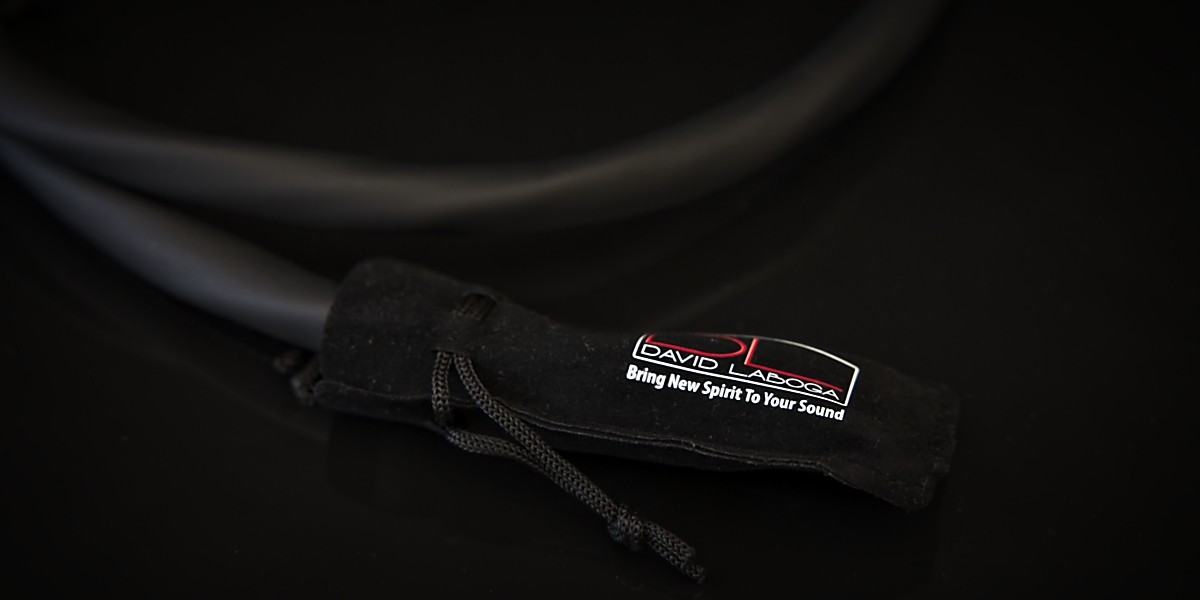
DL Custom Audio Akoya USB cable is the new top-of-the-line developed by this renowned Polish manufacturer. As a satisfied user of the cheapest Expression Emerald USB, I waited rather impatiently for my chance to check it out in my system. Here’s what I’ve found out about it – (spoiler alert) it’s terrific!
Introduction
David Laboga Custom Audio is yet another Polish brand that I sort of watched (and rooted for) from the start. Actually, in this case, it was from the moment they decided to expand their activity to the home audio segment of the market, or, as we like to call it, to the audiophile world. So what it means is that I was first introduced to it around 5 years ago. For another 15 years before that, Mr. David Laboga specialized in instrument cables (particularly, but not limited to, ones for electric guitars). Importantly, it was not the only experience he brought to the table when approaching audiophiles, as before ‘targeting’ us, he developed several cables for professional use as well.
Long story short, the man behind the cable I am about to present to you has been working with musicians, providing them with instrument cables, but also with cabling used at live performances on the stage, with producers, recording, mixing, and mastering engineers, and he’s been doing it for years. Such a versatile practical experience in the whole music creation, recording, and performing process is quite rare. And that’s also exactly what allowed him to develop several lines of quite special cables to help us, audiophiles and music lovers, reproduce recorded music at home.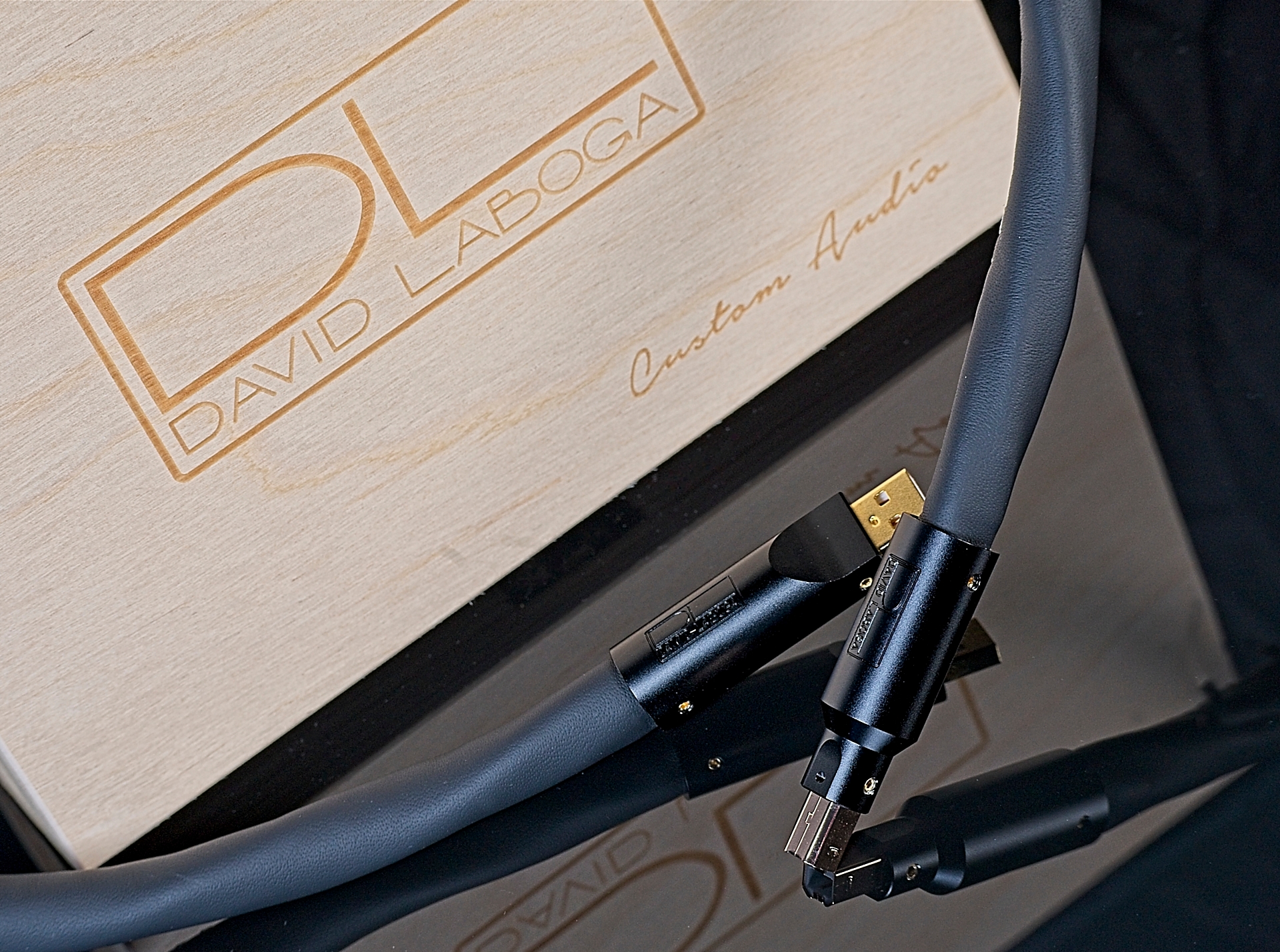 I have tested some of them and have been using the aforementioned USB, but also power cables in my setup for quite a while now. No need to explain, I hope, that I have used them because they did an exceptional job in delivering, first of all, an excellent performance rivaling competitors from around the world, some even significantly more expensive. Secondly, I have truly liked the way they presented music in its entirety, sounding amazingly natural and engaging. So as you can see, with the DL Custom Audio cables, one can get two birds with one stone, as they say, which is not that common in audio.
The previous top USB cable, called Ruby, was and still is an excellent proposition for those who expect the top quality sound delivered in a particularly musical, natural way. In fact, all the audio cables, whether power, analog, or digital, offered by David Laboga Custom Audio share not only these two, but also many other features and qualities, and what makes them special is a particular mix of those I’ll discuss later. That is why, after experiencing and appreciating just one or two of them, one can be sure other models will offer the same sonic character – you may like it or not, that’s individual choice, but if you do, you may want to stick to the brand for a long, long time. It’s the price level that will determine how much quality, how much ‘goodness’ you’ll get with the selected model.
That is why Ruby USB (you can find the review HERE) sounded a lot like Expression Emerald (check out the review HERE) that I had tested before it, also in its MK2 incarnation that was introduced a while back, only better, significantly better. Ruby, by the way, is currently offered already in its third incarnation, which shows you that the designer never stops working in an effort to offer even higher sound quality and, particularly in the case of USB cables, better compatibility.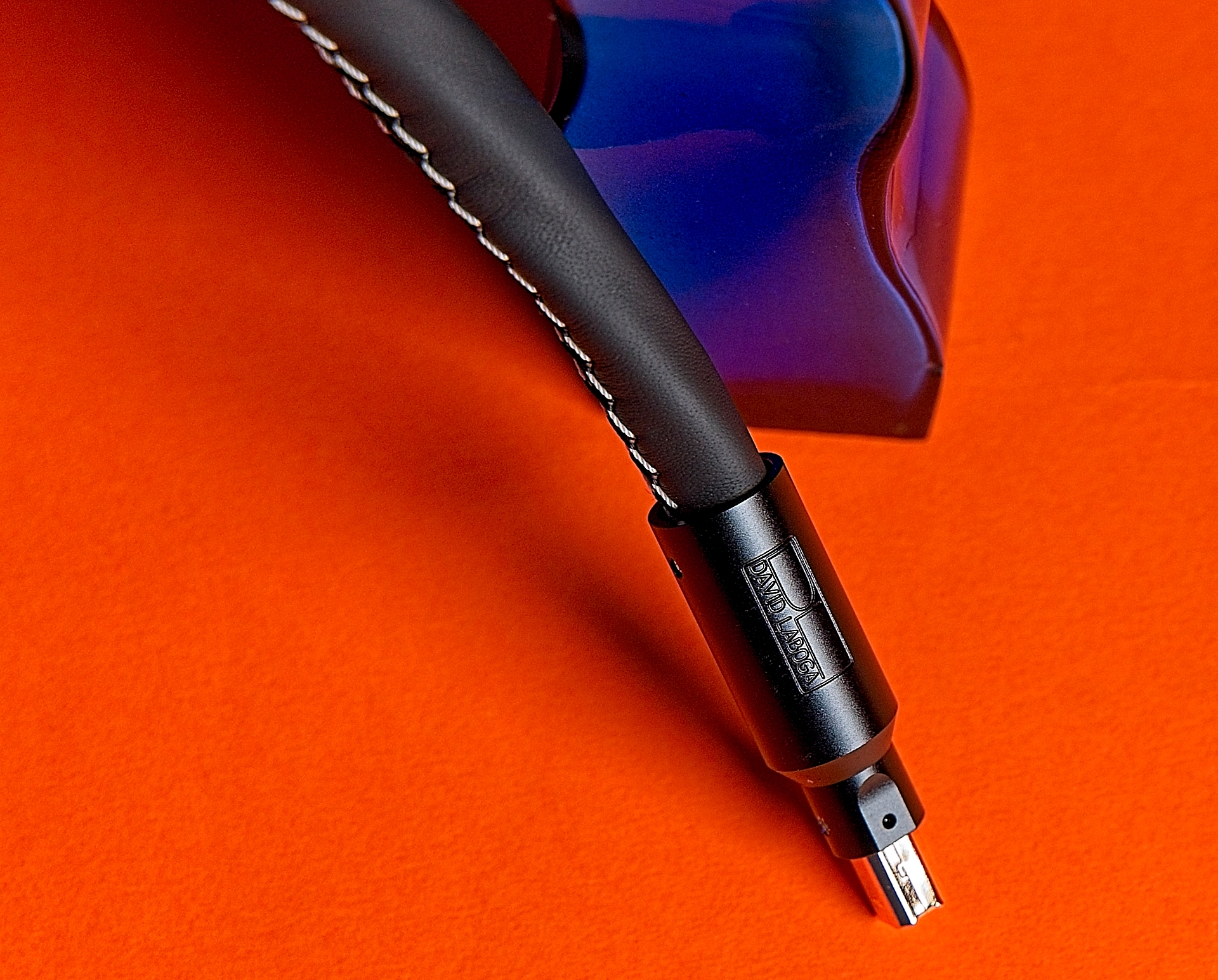 As the recent experience with NxLT Ether set (you can check it out HERE) from another very interesting Polish manufacturer proved, sometimes designers sort of break off with the previous ‘sonic characteristics’ of their products to offer something different. To be clear, NxTL was the first example that came to my mind, but it’s more of a common practice among cable manufacturers, as their lines tend to significantly differ. Back to the point – I wondered, especially based on Mr. Laboga’s claim, that Akoya was a clearly better cable than Ruby, whether the former broke off with the company’s sound philosophy or continued it? Before I try to answer that question, let’s see what Mr. David Laboga had to say about his new creation:
The AKOYA cable is the culmination of the last five years of work on the development of our digital cables. Our company has been creating audio cables since 2019, while we have been producing cables from the Guitar / PRO series for almost 20 years.
In recent years, we have been constantly working on improving the stability of USB cable transmission, eliminating connectivity issues that many manufacturers still struggle with today. Introducing new design solutions required numerous tests and experiments, but trial and error allowed us to achieve fully stable and reliable cables. The results of this work have also been implemented in other models, including the RUBY MK3 and EMERALD MK2. At the same time, we strove to create something unique – a cable that would not only be an improvement on the RUBY model, but a real step forward.
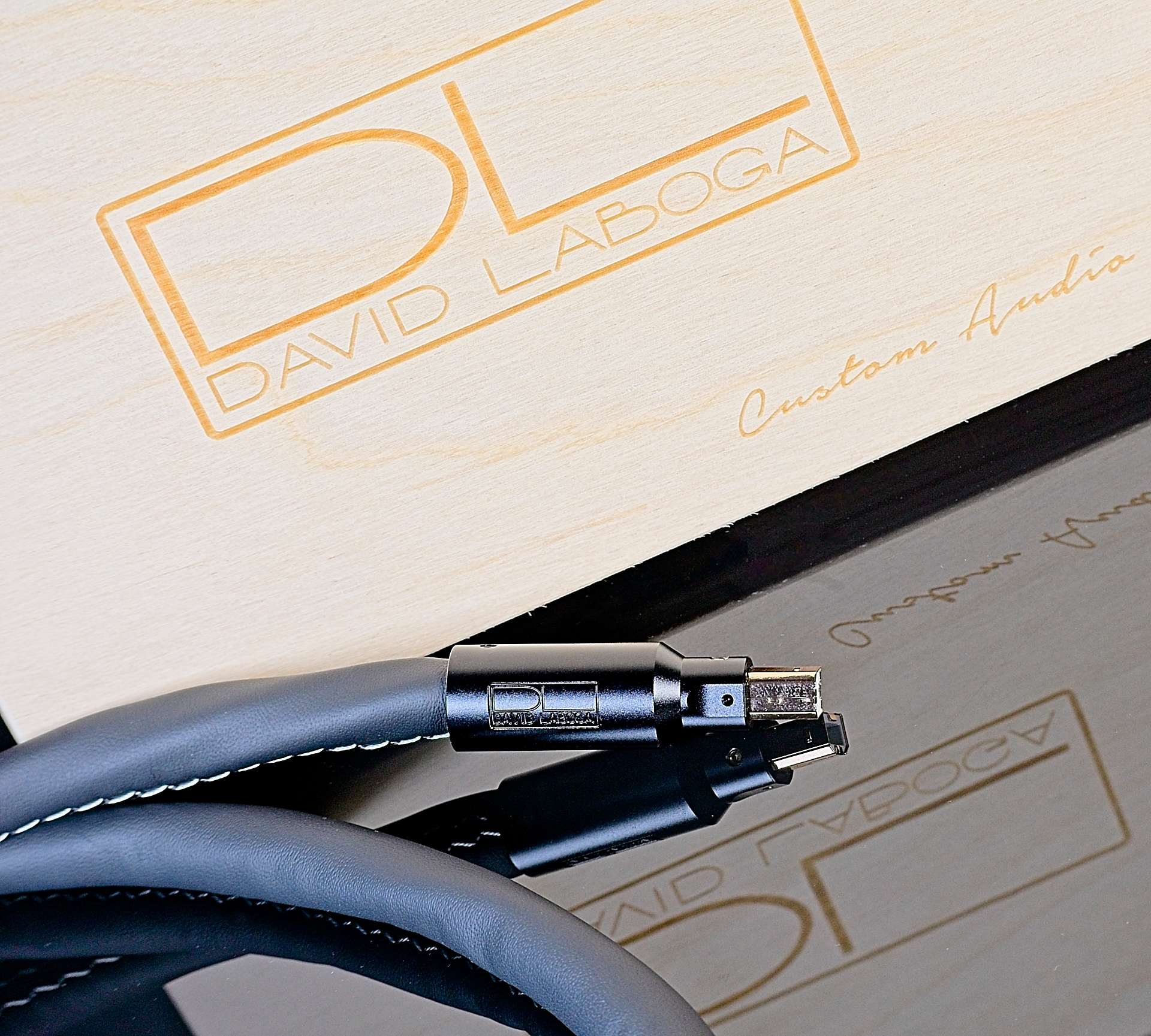
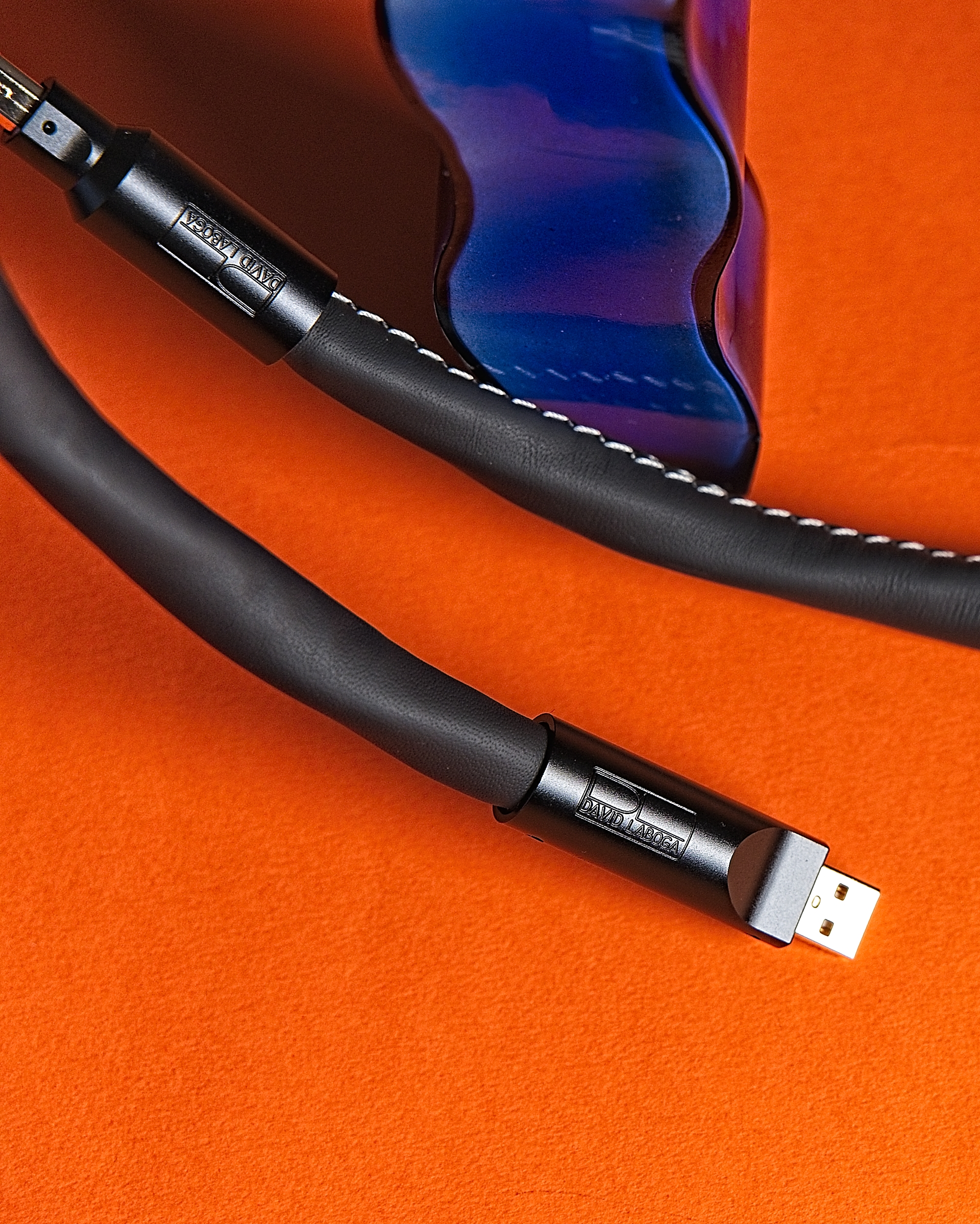
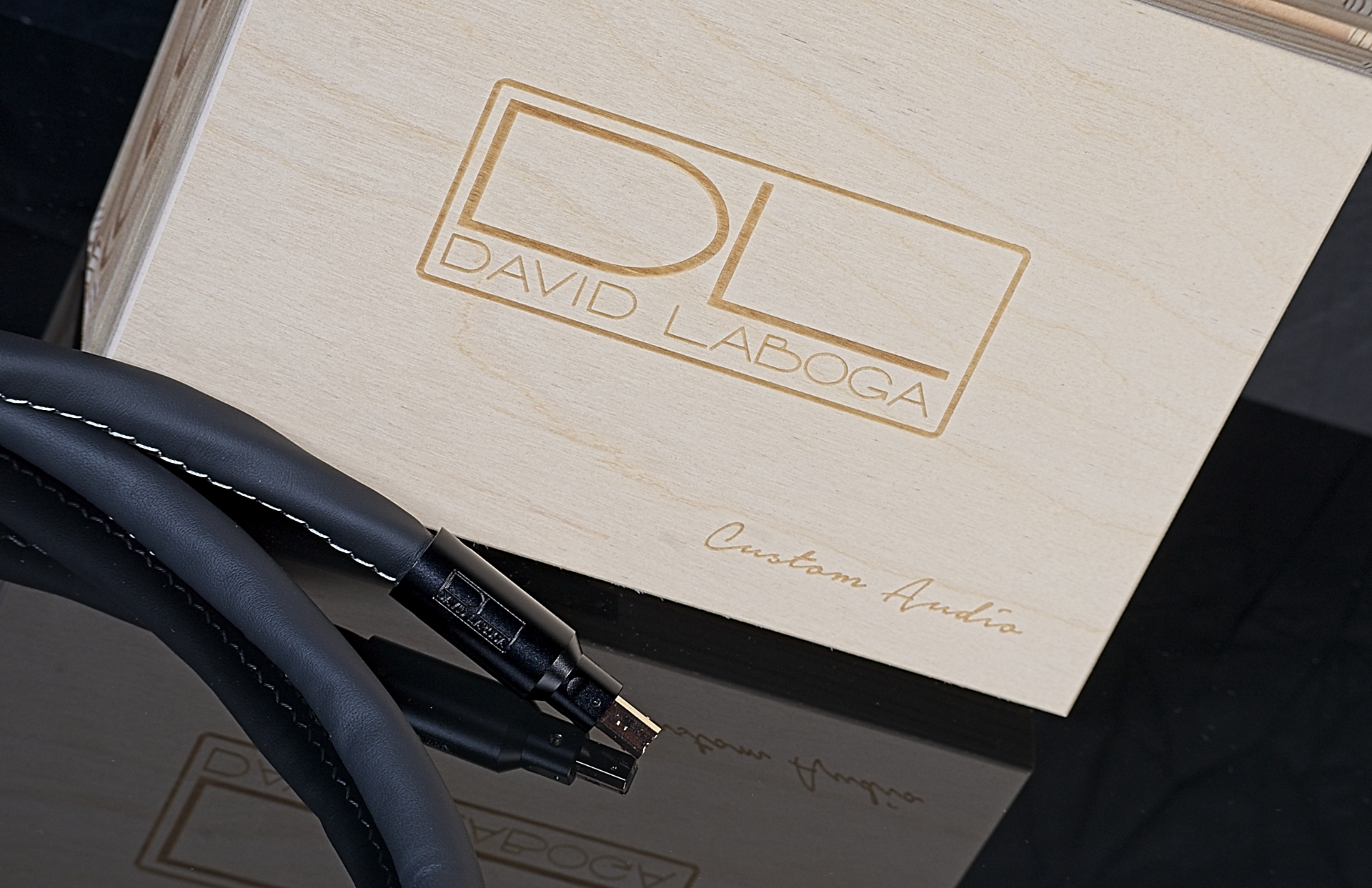
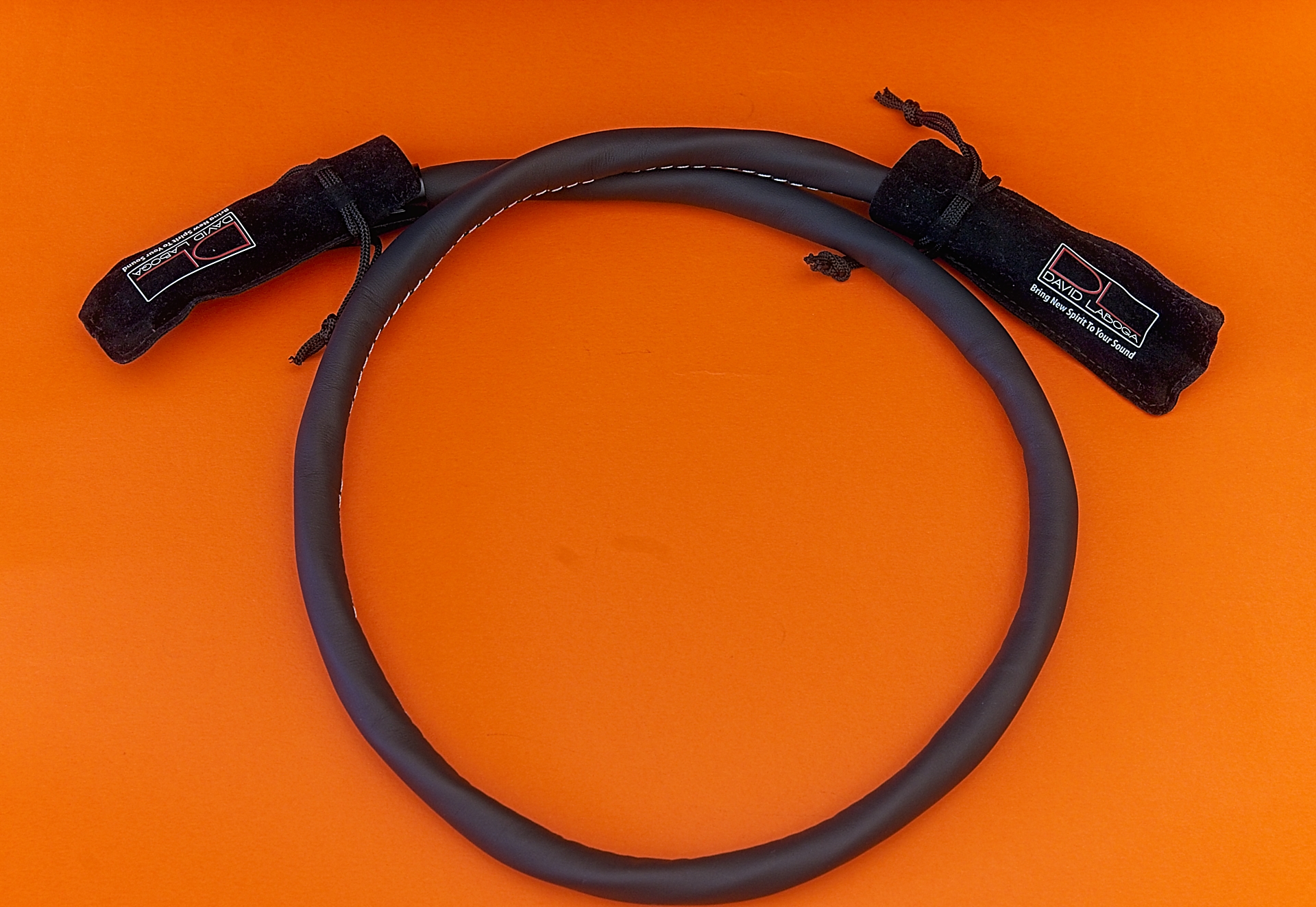
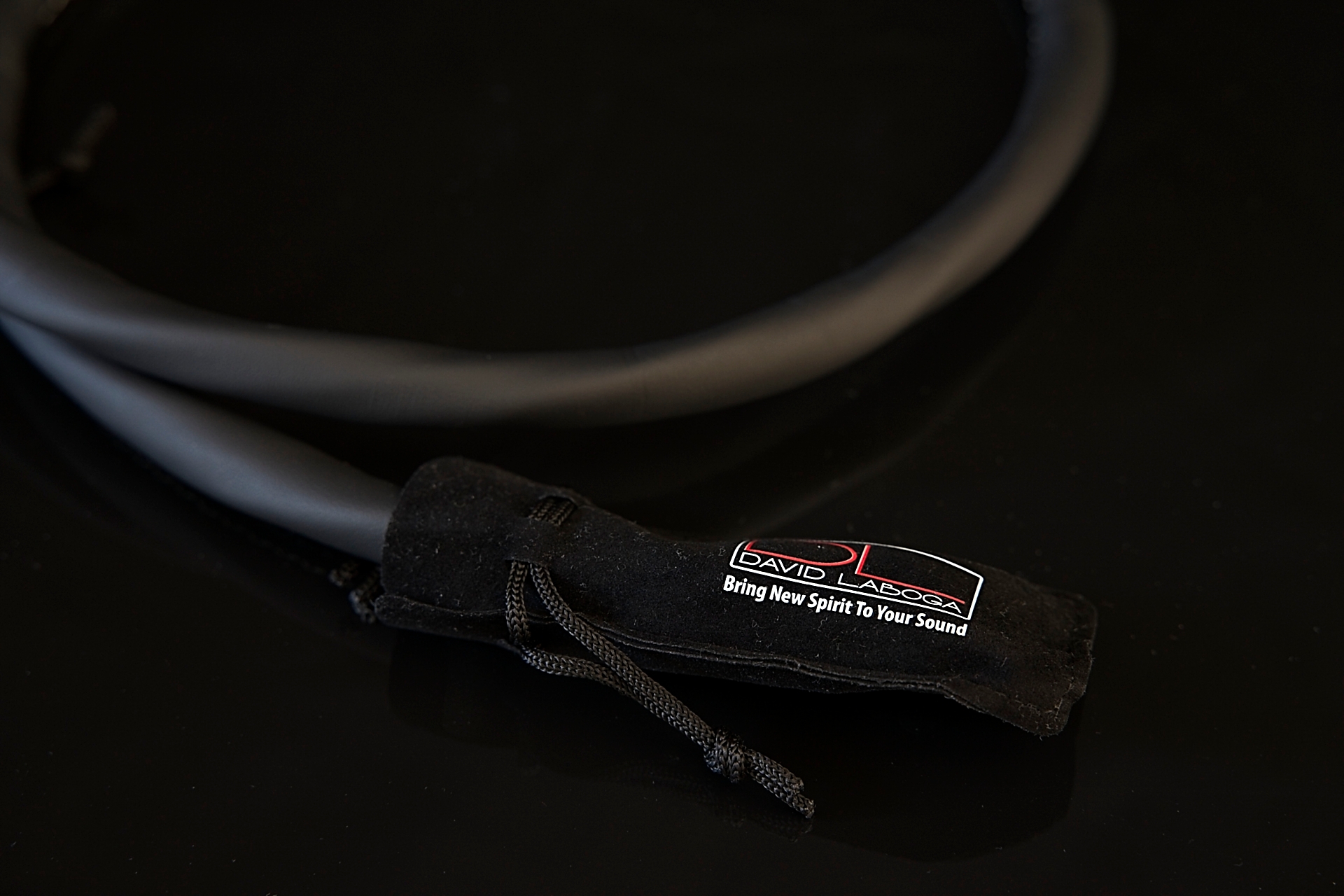
The cable is made of high-quality copper conductor. As in our other models, we use conductors of varying cross-sections and purity to achieve the best possible sound, without being overly influenced by measurements, because in the end, we listen to music, we don’t measure it. The cable’s jacket is hand-covered with calfskin leather, and the plugs are custom-made from a single block of aluminum.
Compared to earlier models, such as the RUBY MK2, the new AKOYA (the same as the RUBY MK3) is lighter, more flexible, and much more comfortable to use, which gives you more freedom in arranging the cable in your system.
The standard length we offer is 1.25 m, but there is also a 1 m version. We do not make shorter or longer versions for the sake of sound quality and transmission stability.
Design and features
I met and talked to Mr. David Laboga some time ago, when he was almost ready with his new cable, but struggled a bit with a name for it. He also wondered how he could make Akoya look even more elegant and luxurious than the stunning Ruby. Let me remind you that before the introduction of the new top-of-the-line, there were three models named Emerald, Sapphire, and Ruby, or three gemstones. Each of them featured a jacket in a color related to the respective name. Emerald, as the most affordable, used an ‘industry standard’ green jacket, while the two more expensive models featured stunning leather jackets and tiny pieces of stones embedded in their plugs. One was blue, the other kind of red (ruby). Now, David developed a cable he was sure outperformed Ruby, but the problem was how to name it, how to ‘top’ Ruby? Ultimately, he decided on Akoya, which is a beautiful and extremely rare black pearl.
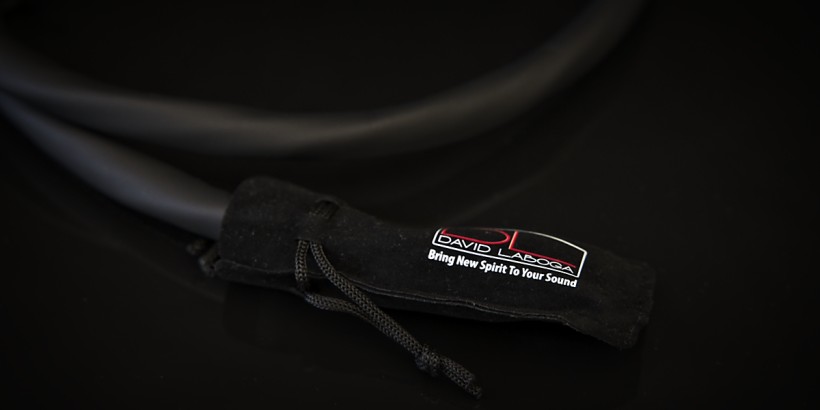
How about its aesthetics? The new top-of-the-line features a black leather jacket. Ruby had both plugs’ bodies finished with black leather, and Akoya features new, beautifully finished ‘naked’ black plugs milled from aluminum block. The make and finish feel superior to previous models, even though those were absolutely flawless. The color of the jacket (black, obviously) and new plugs are less flashy (not that Ruby or Sapphire are). In other words, with Akoya USB, it is more about modest elegance than ‘wow’ effect.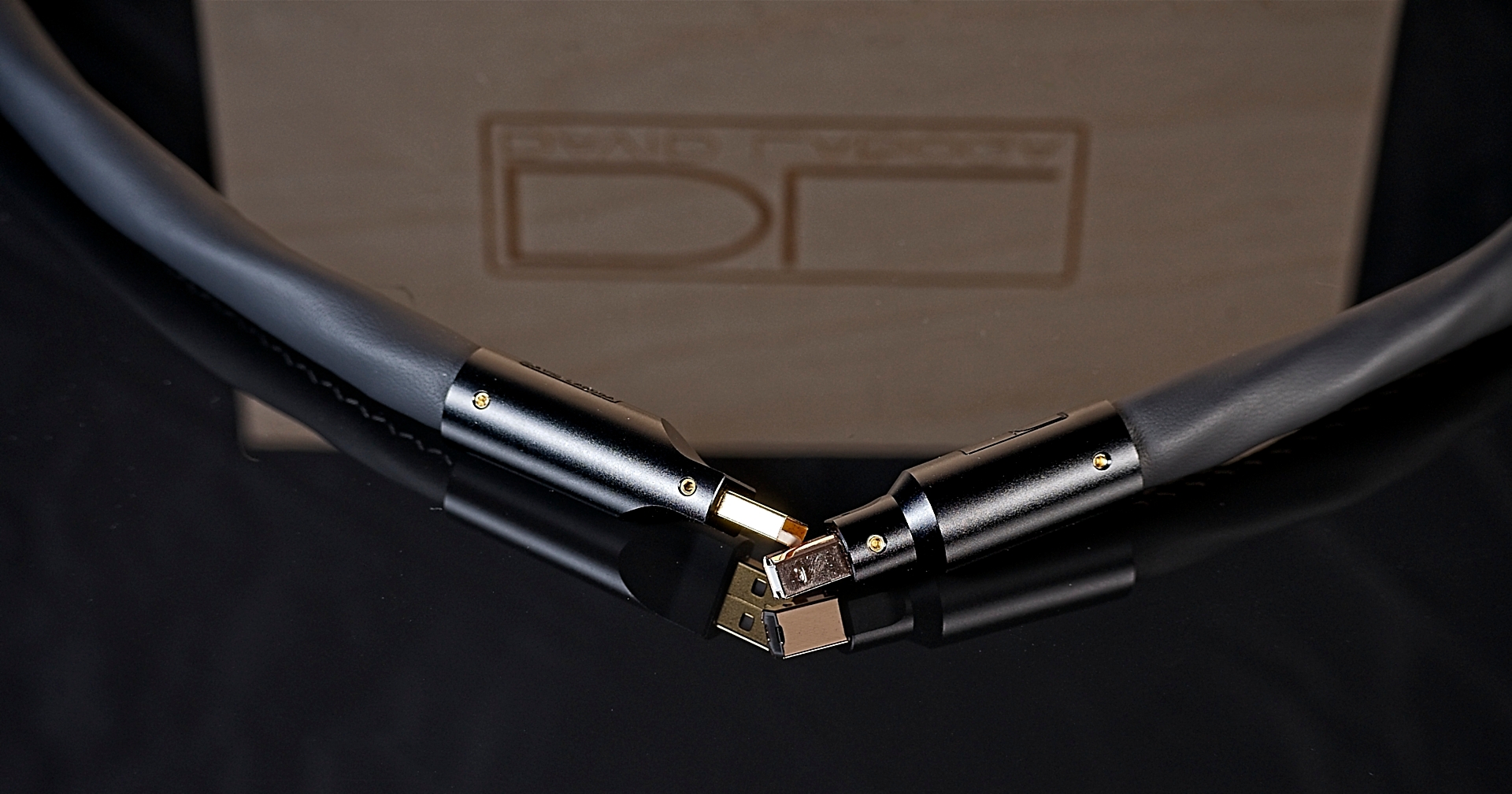 As for the particulars of the design, I can’t offer you anything else apart from the few crumbs of information shared by Mr. Laboga above. On the practical side, the cable is relatively flexible, so it shouldn’t take much effort to connect it on both sides. Also, remember that the standard length is 1,25 m and it is a result of meticulous tests aimed at finding an optimal combination of ultimate performance and stability. There is an option to order a 1m unit, but the 1,25m is recommended. Let’s move on to what’s really important: the performance.
Sound
I tested Ruby USB over four years ago, which means it’s been quite a while since, and I didn’t have a chance to check out its latest version (MK3), which, I assume, is even better than its predecessor. I reached for my own review of the original Ruby to refresh my memory, but head-to-head constitutes a much better base for a comparison between any two components than a ‘memory refresh’. This time, however, a head-to-head wasn’t possible, so I had no choice but to rely on my memory and notes. That is why, since I have been using Expression Emerald continuously in my system for several years now (first the original, later the MK2 version), it made more sense to compare it directly to Akoya USB and only later try and figure out if, and if so how, the new cable tops the Ruby.
The shortest version of this review, based on head-to-head, could go like that: holy cow! The difference between these two (Emerald and Akoya) cables is striking; it is huge! Akoya USB is simply put much, much better in every possible respect of sound reproduction, maybe except for how musical and natural performances delivered by both of these cables are (although the longer I listened to Akoya, the clearer it became that it did have an edge also in this regard). The latter is clearly better, but not so different after all, as there is still a lot of shared DNA. Probably less than the Emerald, Sapphire, and Ruby share, but the main focus or the key strength of the new top cable is still music reproduction with its natural flow, coherence, emotions, and so on, as it was for each and every other DL Custom Audio cable I listened to before.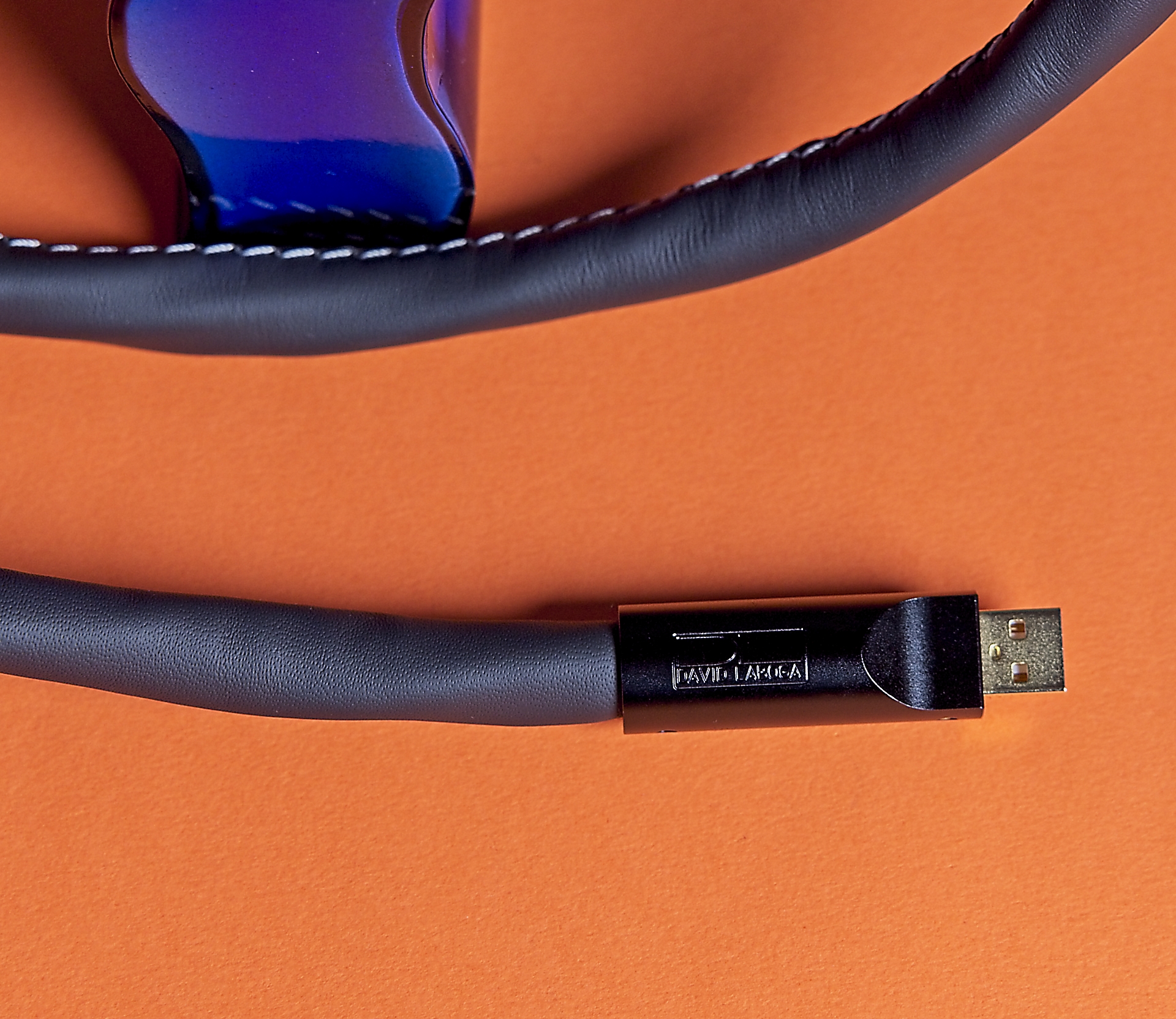 What struck me first when, after listening to the music in my regular setup with Expression Emerald conveying signal between my custom music server and the input of the LampizatOr Poseidon for a while, I finally replaced it with Akoya, was how much the sound opened up, and filled in or got richer at the same time. To be clear, I did not really miss either quality with Emerald, but the improvement was huge anyway. The whole soundstage with all the instruments, voices, and the space inbetween filled in with air, giving them all way more breath, but the sounds, the music itself, became at the same time much denser, more saturated, and as a result, also more intense.
What happened was, on the one hand, a feeling as if a veil was lifted up between me and the music, which in audiophile terms means a (significantly) improved transparency and clarity of the presentation, but also a lower background noise and, as a result, a beautiful black background. On the other hand, it didn’t take long to realize that the sound was also so much richer and deeper, there was so much more information in it, which was a sign of (again, significantly!) improved resolution. I switched back and forth between the two cables a few times to make sure it wasn’t just a wow effect of a change (of a cable) that would quickly disappear, but the result was the same each time. An unnerving side effect of that, now confirmed, scope of the superiority of Akoya was the realization that going back to Emerald after the test would be very, very hard for me.
Then it struck me that, as I remembered it, going back to Emerald from Ruby hadn’t been easy either, yet I didn’t recall it as such a ‘traumatic’ experience as the present situation seemed to imply to become at some point in the future (I mean, after the return of the Akoya to the manufacturer). It could suggest that the difference between Emerald and Akoya was even bigger, hence the latter performed even better than Ruby… Yes, it definitely seemed so, and every next piece of music I listened to only confirmed this initial thought, ultimately turning it into certainty. That would be a problem for later, though, for now, I had to return to my assessment and try to be as objective about it as possible.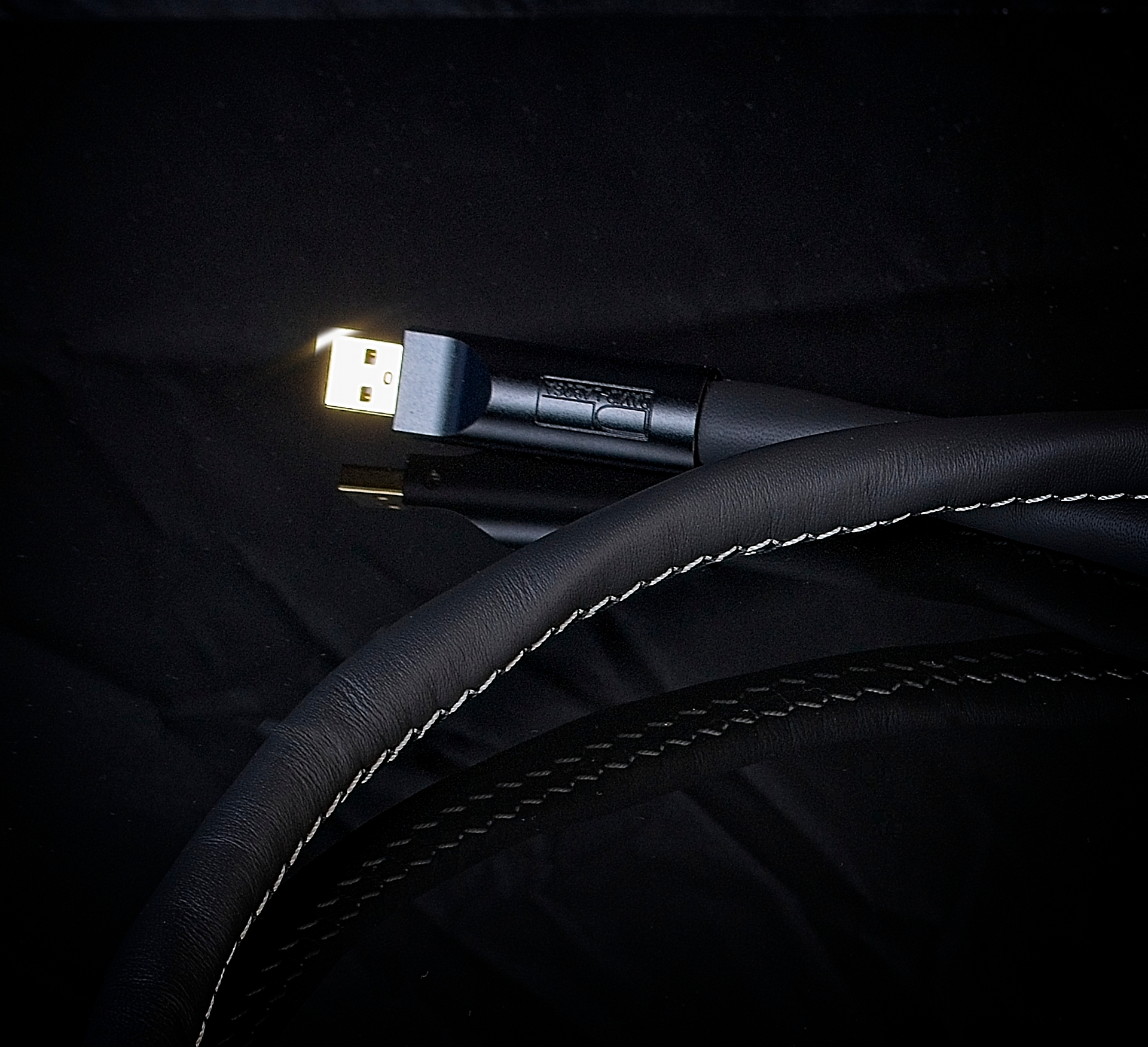 The realization of the difference between the two models came when listening to the very first album, namely Chick Corea’s Trilogy. On this brilliant, extensive, live release, maestro is accompanied by two other great musicians, Christian McBride on bass, and Brian Blade on drums. While with Emerald it had already sounded great every time I’d listened to it before this test, it was the Akoya that did the album the ultimate justice. In both cases, the presentation was highly engaging, yet the Akoya’s ability to resolve even the tiniest details and subtleties of both sound and performance allowed me to experience this music in an even more complete, more moving, engaging way.
The sound with the tested cable was incredibly rich, saturated, and every intricate detail was there for me to reach for it whenever I wanted. And yet, just like all other cables by DL Custom Audio, Akoya treated music and performance holistically. It delivered those as a super-coherent, smooth whole, combined them with the acoustics of the venue, audience reactions, and the atmosphere, and served it hot and spicy, so to speak. Because the presentation was also highly energetic, explosive at times (when needed), full of, but also inspiring, true emotions. It was really fun to listen to this album with Emerald, but Akoya took the experience to yet another level.
Another difference emphasizing the superiority of the tested cable was its ability to differentiate tracks much better. When listening to this album with the entry-level USB cable by DL Custom Audio, it seemed as if one very long performance. Sure, the tracks were differentiated to a point, but it wasn’t obvious that the recordings were actually taped in the course of several performances. It was only Akoya that made it perfectly clear that the tracks were recorded in several venues over the course of several nights. With the tested cable, it was sort of apparent, because the ambiance of each venue differed from others, the audiences reacted differently, and the recordings, all of high quality, were still slightly different as well.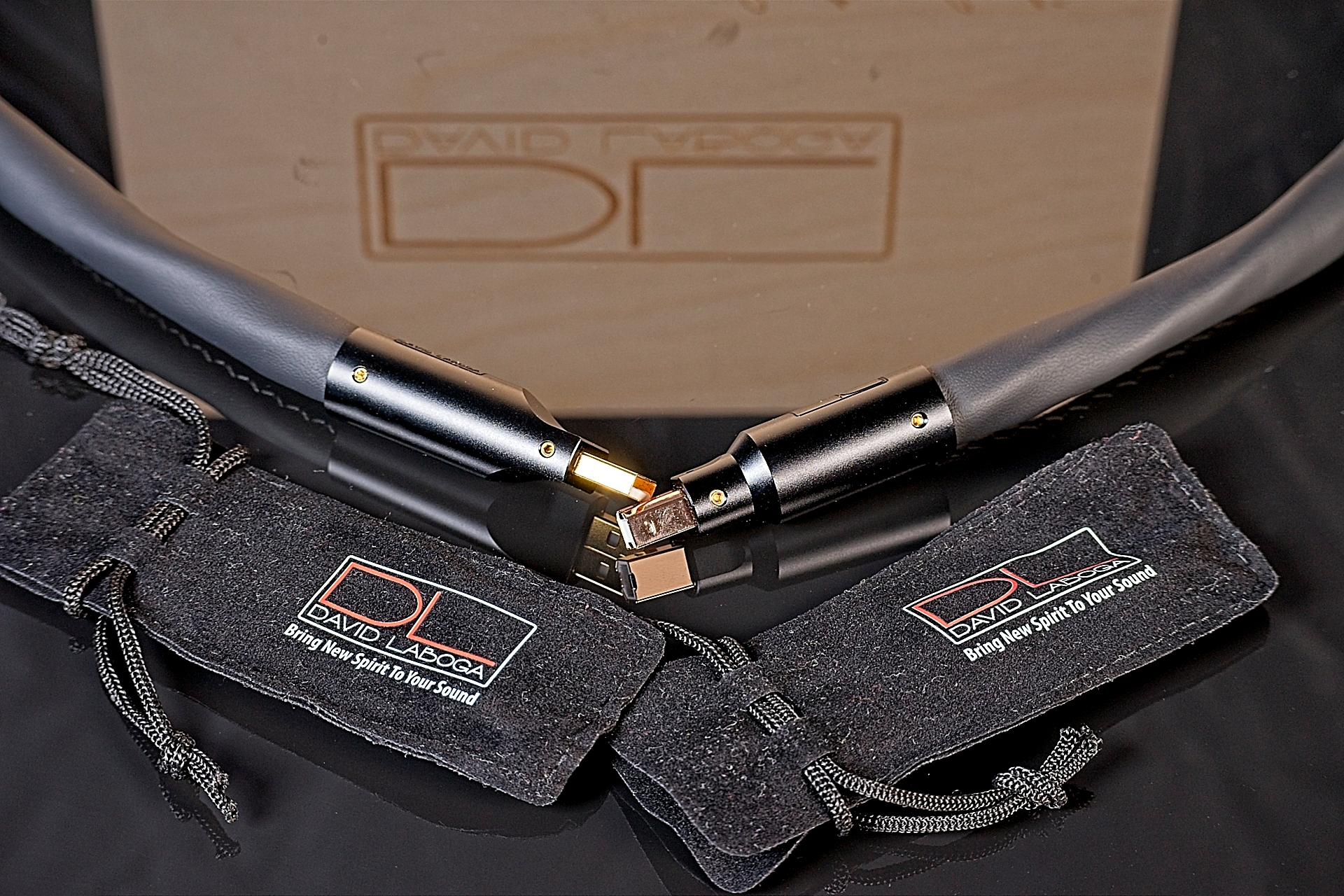 As a fan of live recordings, I continued to cue that type in. With every one of them (mind you, the selection included only quality recordings), I was impressed with how deep Akoya USB allowed me to delve at any time into the performances, and focus solely on either of the musicians, and ‘see’ or rather experience even the tiniest details of their performances. The top cable outperformed my Emerald in terms of not only stunning resolution but also with its ability to clearly and precisely present all, even the tiniest tonal and dynamic contrasts. That’s what made the presentation so rich and so realistic.
And yet, I have to emphasize it again, while so well-differentiating, so insightful and revealing, the Akoya USB always seemed to put the music as a whole first. So if, at any time, I chose to just relax in my chair and let the music carry me away, it let me do just that without forcing all those myriad tiny bits of information on me. To be honest, that’s the type of presentation I prefer, one that gives me a choice to study readily available details, or ‘consume’ and experience music in a ‘concert-way’, which doesn’t involve studying details, but rather feeling the music and the atmosphere and enjoying a unique experience.
That’s what Akoya USB had to offer. Because, rather than being an ‘analytical’ cable, it featured another quite unique quality (I hope it is clear that the whole system must allow it, or in other words, be good enough so that you could enjoy what this cable has to offer!). Namely, while fully capable of dazzling listeners with how resolving, detailed, and transparent it was, it never tried to do so. Its prime focus was to retrieve as much information from any recording as possible and combine every single last drop of them all into a genuine, coherent musical experience. In other words, even though the presentation brimmed with details, they were treated as building blocks for the greater whole. They were what made it so rich, so complete, so lively, and so unique.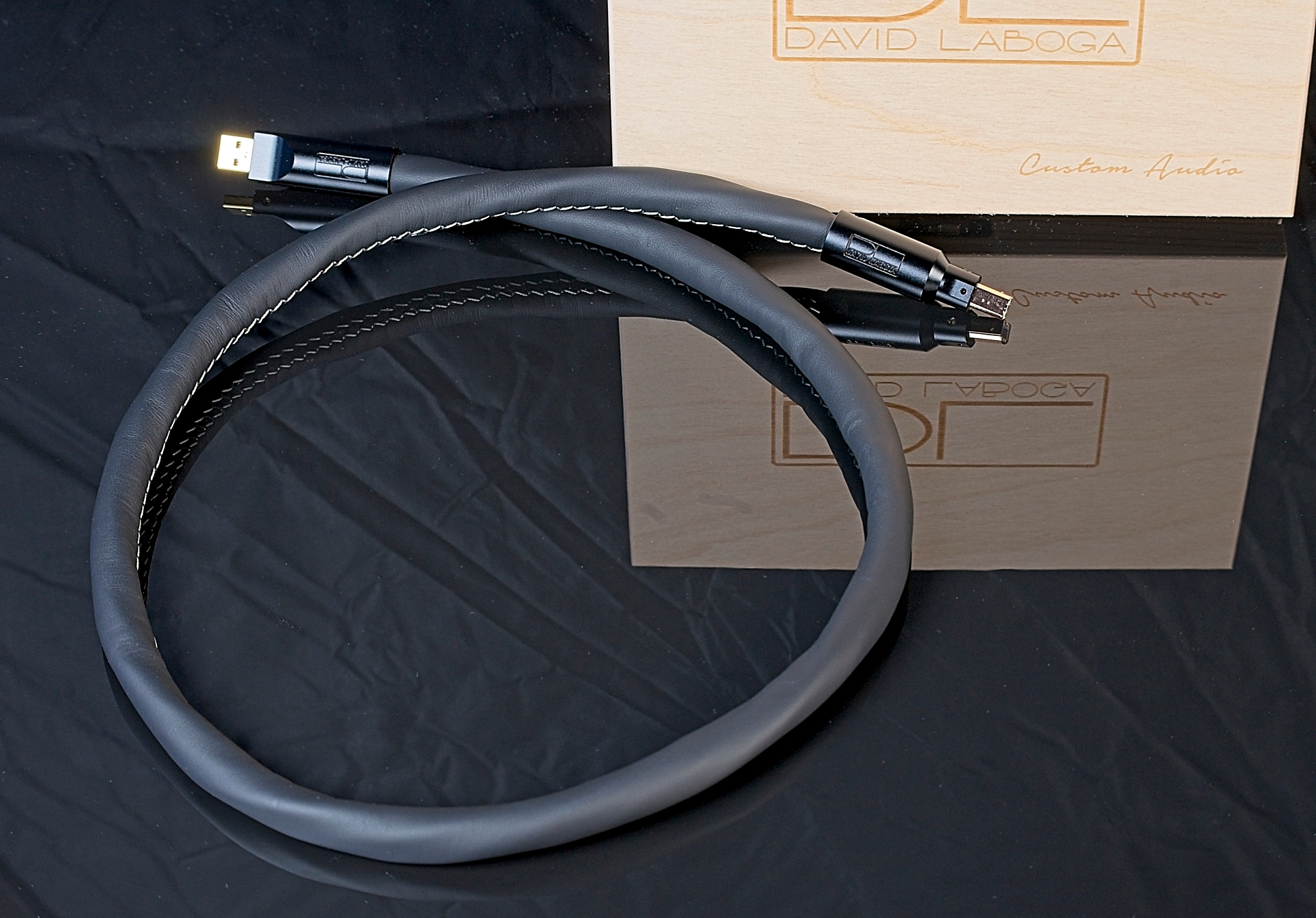 One of such exciting experiences came when I cued in the Dark Side Of The Moon A Capella. No instruments, just eight singers and one ‘vocal percussionist’ who delivered their version of one of the most famous (and best, if you ask me) rock albums of all time. Akoya USB not only beautifully rendered all the voices and harmonies, making them sound so natural, deep, and present, but also perfectly recreated the ambiance and mood of the album. Again, everything was deeper, fuller, and even more spatial than with Emerald USB, but at this point, I didn’t expect anything less from the tested cable (or my setup supported by the cable).
Next, I had a lot of fun listening to Al Di Meola’s One Of These Nights. Akoya USB made sure that I would benefit from all the advantages of live recording. I could ‘see’ the venue due to perfectly utilized acoustic cues generously captured in the recording. I could feel like a member of the audience because, on the one hand, all of their reactions were right there on display, and on the other hand, the way the tested cable presented music was quite realistic and immersive, turning me once more into an audience member rather than a passive outside observer. It felt even more real because the energy of the performance was high, and so was the dynamics (both conveyed this way, too).
There was a really good drive when needed, and excellent insight into the intricate details of the maestro’s performance when I focused on him. Both the leader and the band supporting him were precisely rendered on quite a large, deep soundstage, further enhancing my impression of participation in the event rather than that of listening to a recording. It wasn’t as energetic, as present as I remember it from last year when I actually went to Al Di Meola’s concert, but no recording and no setup can match the level of a live event. All we can get at home is a sort of approximation of it, and some components get us closer to it. Akoya USB, no doubt, is one of them, which, I guess, is a result of David Laboga’s experience from working with many top musicians performing on stages around the world.
Tony Levin’s Bringing It Down To The Bass was an even better display of Akoya’s dynamic capabilities. Lots of heavy, deep electric bass, explosive drumming, and electric guitars combined together into a raw power of music. Remember when I mentioned that Akoya USB was amazingly smooth and natural? It’s true. This time, to be true to this music, it had to convey the power, energy, drive, and perfect PRAT, and it did so as effortlessly as with any music I’d played before. The bass extended really low and even way there, in the depths, it carried a lot of energy, had proper kick, and was as tight or loose as needed.
Turning to more complex and more powerful music in the form of the soundtrack from Gladiator II proved quickly that dynamics, both on macro and micro scale, the scale of presentation, and the momentum, were yet another huge advantage of the tested cable. When I tested Ruby, at first it seemed calmer than Emerald, but in the long run it turned out to be more dynamic and more energetic. With Akoya USB, the dynamic range and high energy of the presentation were obvious right from the start, but albums like this one (or Tony Levin’s) allowed me to fully appreciate its capabilities.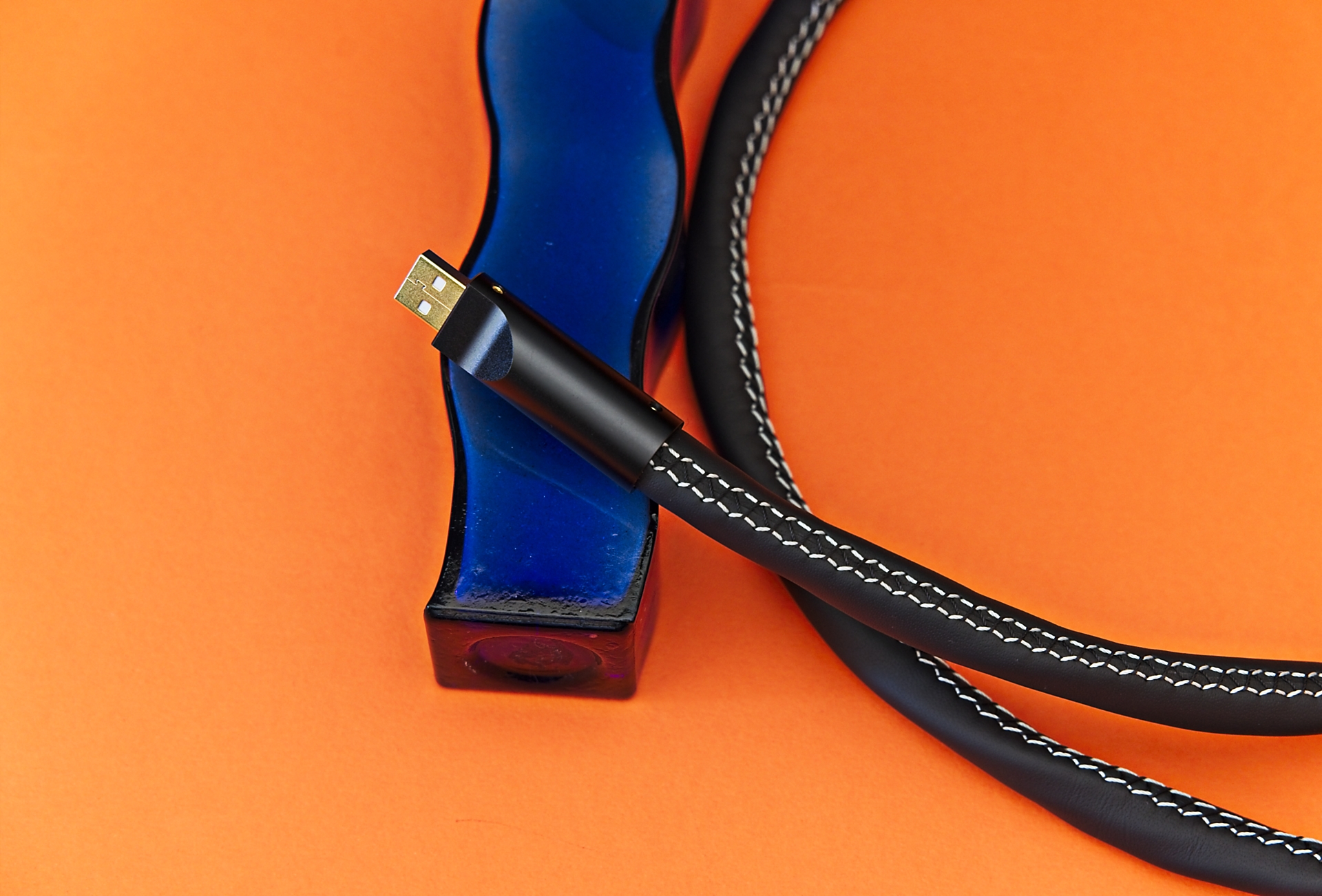 The ‘calm’ I initially associated with Ruby was in fact a combination of precision and excellent control over every aspect of the presentation. The tested new top-of-the-line elevated these features to yet another level. It held a firm grip on every element of every piece I played with it. Therefore, even in the hottest, most powerful tracks from Gladiator II, the music was served in a highly orderly, yet powerful, and sort of passionate fashion. The latter is one of the inherent features of all DL Custom Audio cables I know. They do convey emotions in a unique, amazingly convincing way regardless of music genre. With Akoya USB, its designer seems to have mastered the art of perfectly conveying not only the music, but also a rich bouquet of emotions it carries.
Summary
The basic purpose of this test was to assess whether the Akoya was the best USB cable in David Laboga Custom Audio’s range (at least, for now). I believe it is that, but also one of the best USB cables money can buy today. Even without having a chance to compare it to the latest version of Ruby, it seems to me that the progress in terms of refinement of the presentation is so huge compared to Emerald, and to the original Ruby (as I remember it), that one looking for an ultimate solution for a high end system should definitely choose this latest addition to the range. It is not only about how resolving, insightful, and dynamic Akoya is, but also how incredibly musical, natural, and non-digital sounding.
Its sound is purely addictive, so be warned – once you add it to your system, most likely, you won’t be able to listen to the music again without it. So try it out at your own risk… of becoming obsessed with this totally immersive, incredibly refined, energetic, open, highly expressive, and yet smooth, fluid, and coherent presentation. It will allow you to experience music in a deeply engaging, touching way that many music lovers, particularly those who love live performances, dream about. It has just become my personal favorite!
Prices (when reviewed):
- DL Custom Audio AKOYA USB 1m: 4,800 EUR
- DL Custom Audio AKOYA USB 1,25m: 5,200 EUR
Manufacturer: David Laboga
Associated equipment:
- Digital source: a custom passive server with WIN10, Roon, Fidelizer Pro 7.10, JCAT NET XE, and JCAT USB XE cards with FERRUM HYPSOS Signature power supply, KECES P8 (mono) linear power supply for the server, JCAT USB Isolator
- D/A Converter: LampizatOr Poseidon +Ideon Audio 3R Master Time (USB signal regenerator)
- Analog front end: J.Sikora Standard MAX turntable, J.Sikora KV12 & J.Sikora KV12 MAX tonearms, AirTight PC-3, Audio Technica PTG33 Prestige & LE SON LS10 MKII cartridges, Grandinote Celio MK IV & ESE Lab Nibiru V 5 phono stages.
- Power amplifiers: GrandiNote Shinai, Circle Labs M200, Art Audio Symphony II (modified)
- Preamplifier: Circle Labs P300
- Loudspeakers: GrandiNote MACH4, Ubiq Audio Model ONE Duelund Edition.
- Interconnects: Bastanis Imperial RCA x2, Soyaton Benchmark RCA, Hijiri Million Kiwami RCA, Hijiri HCI-20 RCA, TelluriumQ Ultra Black RCA, KBL Sound Himalaya 2 XLR, NxLT Ether XLR, David Laboga Expression Emerald MK2 USB, David Laboga Digital Sound Wave Sapphire Ethernet
- Speaker cables: Soyaton Benchmark Mk2, WK Audio TheRAY Exclusive
- Power cables: DL Custom Audio 3D-S-AC Connect, LessLoss DFPC Signature, Gigawatt LC-3
- Power: Gigawatt PF-2 MK2 and Gigawatt PC-3 SE Evo+; a custom power line with Gigawatt LC-Y in-wall cable; Gigawatt G-044 Schuko and Furutech FT-SWS-D (R)
- Network: Silent Angel Bonn N8 + Silent Angel Forester F1 + optical LAN isolator
- Racks: Base VI, Rogoz Audio 3RP3/BBS
- Anti-vibration accessories: ROGOZ-AUDIO SMO40 and CPPB16 platforms and ROGOZ AUDIO BW40MKII feet, OMEX Symphony 3S, Franc Accessories Ceramic Disc Slim Feet and Wood Block Platform, Graphite Audio CIS-35 and IC-35 Premium