
Audio Video Show in Warsaw is not only one of the two biggest and most important shows in Europe, but also a place where one can meet people behind one’s favorite products. For me, it was a chance to talk to Mr. Giorgio Tomasini from Fonica International.
Marek Dyba (MD): It is very nice to finally meet you, Giorgio. Usually, I meet designers first and talk to them, and only later review some of their work. This time, however, I already had a chance to review two models of your speakers, Flag M (you can find the Polish version HERE) and Flag L (you can find the Polish version HERE), and only now, since you came to the Warsaw Audio Video Show 2025, I can ask you some questions. Let’s start with a bit of history. There is not much about the company’s story on your website, but maybe there is something you could share with our readers?
Giorgio Tomasini (GT): I am focused more on the present than the past, but sure, let me offer you a bit of a background. Everything started with love for music and speakers. My uncle was a Hi-Fi dealer in Italy, and so I started selling Hi-Fi, too. After a while, I moved to repairing Hi-Fi systems, especially speakers. I particularly loved planar speakers, electrostatic and magnetostatic or isodynamic ones. But these speakers have a lot of issues because they are very fragile. So at some point, I started to think about building something myself. My first design was a tweeter for the car market. And then I developed my planar speakers, and the process resulted in two patents concerning the speakers.
The most important patent is the one that I utilize in this line of speakers, where I use two diaphragms, one in the front, one in the back, and the magnets in the middle. This is like a push-pull system. It’s very important because when the diaphragm moves far away from the magnets, it loses flux. On the other hand, when it moves close to the magnets, the flux increases. When that happens, there is no constant flux, and the shape of the wave is not symmetrical. So if I put two diaphragms, one opposite in respect to the other, there are two opposite errors, and the sum of two opposite errors is the correct shape. That’s what allows our speakers to deliver a great bass without giant dimensions. Our speakers offer a deep bass, excellent dynamics, and everything else. I mean, our flagship is so as this is an uncompromising design.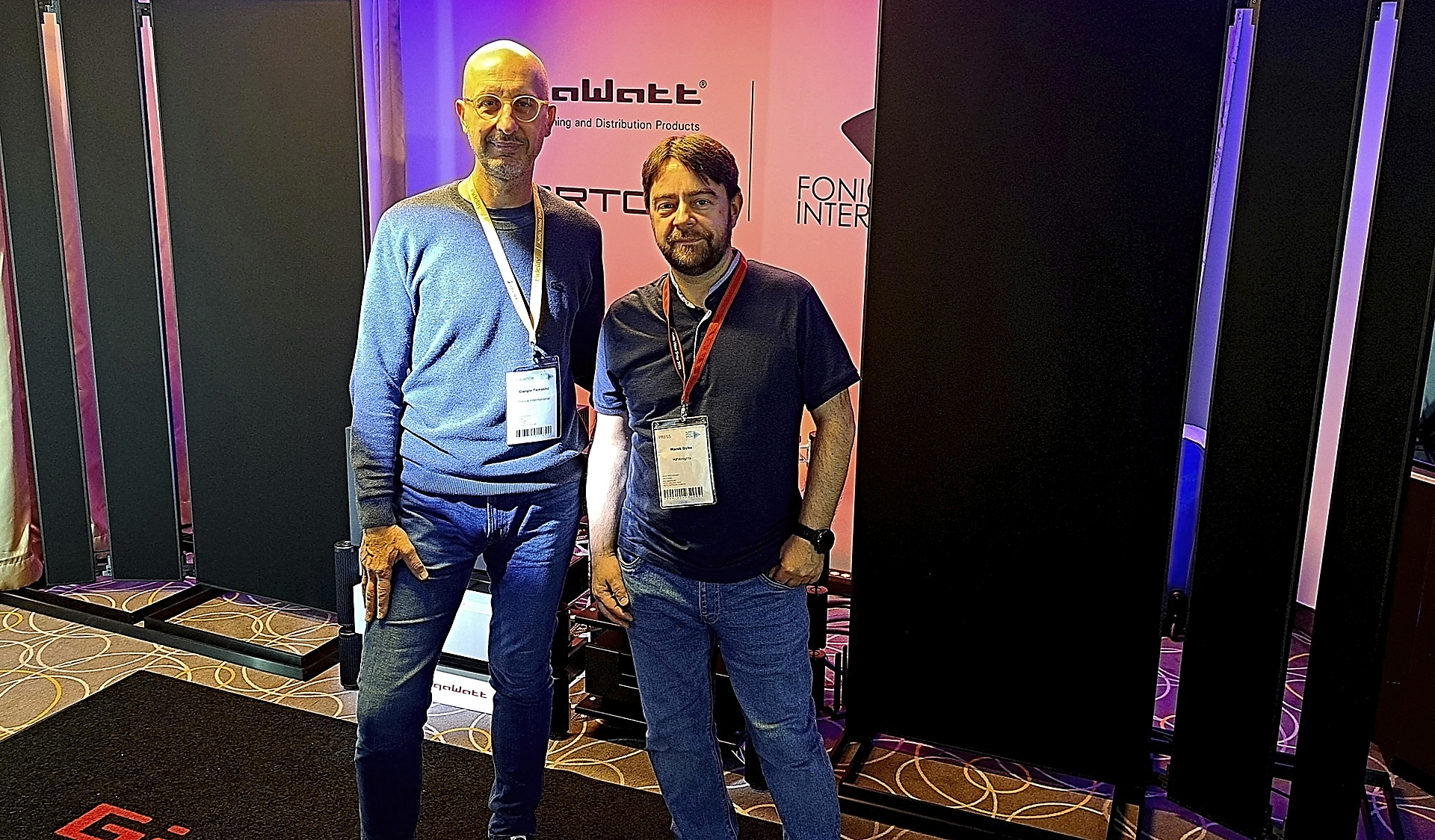
MD: I tested the Flag L, and these are also big, almost two meters tall speakers.
GT: Yes. Exactly. This is also sort of a big model.
MD: It seems to me that there are more planar-magnetic headphones than speakers.
GT: Yes. Sure.
MD: Some of them actually use a slightly different solution. I mean one diaphragm between two sets of magnets. But in your case, there is one set of magnets between two diaphragms, and you are the one who introduced this solution to the speakers?
GT: Yes.
MD: How long have you been designing planar speakers?
GT: I have been working on this project for around 12 years. And it’s been obviously a continuous work resulting in progress and an increase in the performance of the speakers.
MD: What makes Fonica International speakers different from the competition?
GT: One of the most important things is the precision when you build a speaker. I mean, every speaker has to be the same and offer the same performance, with the same frequency response, and this is very difficult to achieve with planar speakers because you need very high precision components, a very high precision process to build them. Some competitors, I can say this because I measured their products, have a problem with matching speakers. That’s something they need to do, but I don’t need to match the speakers. I can produce 20 Flag L, for example, and each of them always tests the same. Another important feature is durability. I mean, the speakers have to perform at the same level for years and years. They can’t lose the tension of the diaphragm, for example. That’s very important.
MD: Do you make diaphragms yourself?
GT: No! It’s a six-micron-thick Mylar. It’s made by DuPont. As you surely know, DuPont invented everything :). I mean, Kevlar, Mylar.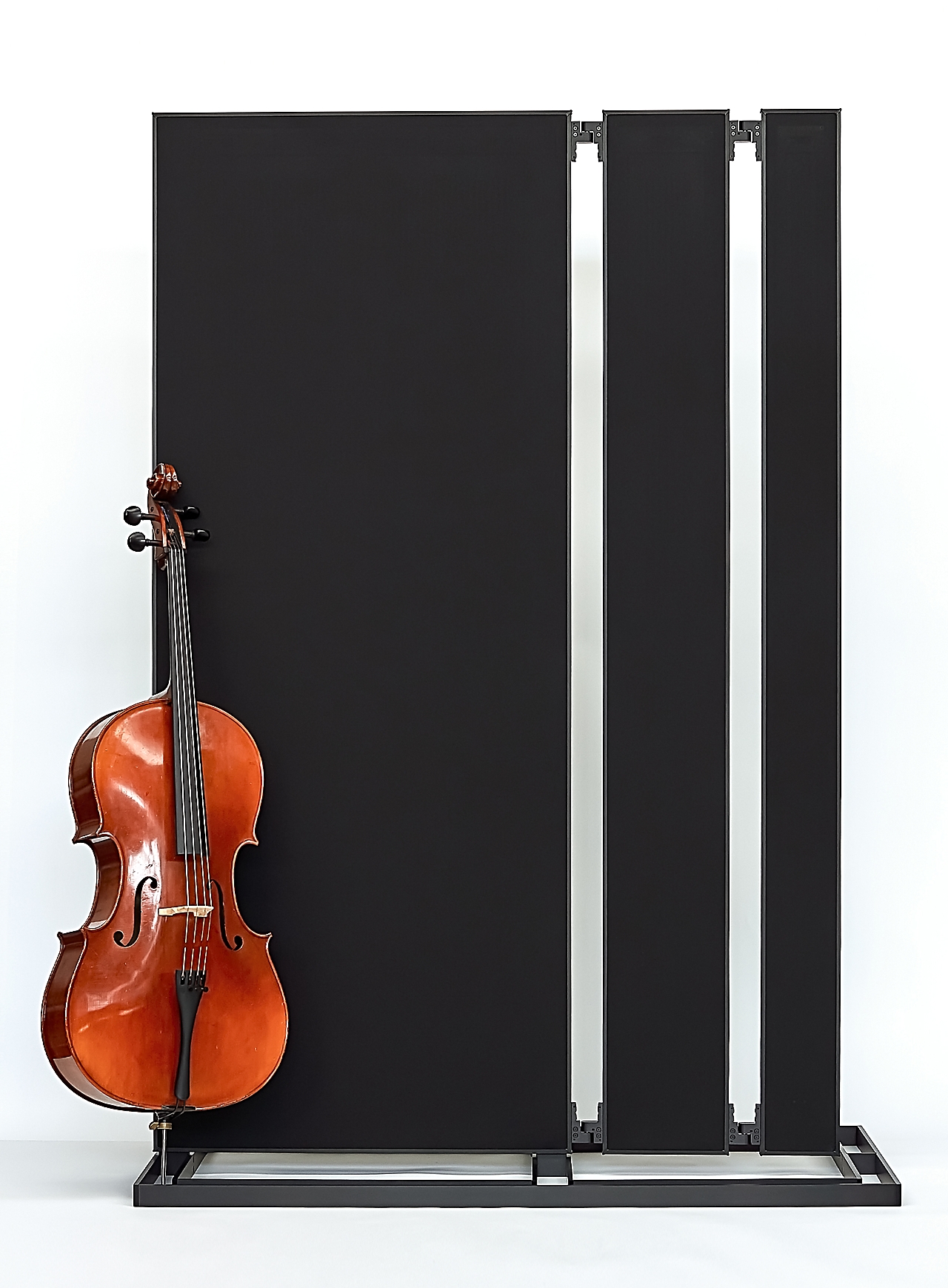
MD: You spoke of the importance of matching the components for your speakers. Does it mean you have to match diaphragms as well? Are they always the same, or do you also have to check them?
GT: It’s always the same, but for every model we use a different tension in the two directions, vertical and horizontal. Because you must know, that vertical and horizontal tension is different. Also, it changes depending on the model.
MD: That’s because of the size?
GT: Yes, because of the size or dimensions, but also the shape ratio. It’s very important because you have to control the resonance of the panel. Mylar is stretched and glued first, and then cut using a special machine. I don’t put the coil on the diaphragm by hand because the precision of the coil placement is very important; it has to be placed exactly in one specific position. It’s very important.
MD: And what about the magnets? Do you need to match them, too?
GT: No, I use N38 neodymium magnets in all models for all the drivers. I don’t use ferrite or any other type of magnet. The choice of the magnets is also very important because I need a constant flux and, as a result, a constant drive to the diaphragm. I don’t use a few huge magnets but rather a lot of small ones. Which makes it quite difficult because for La Grande, I have to use hundreds of those magnets.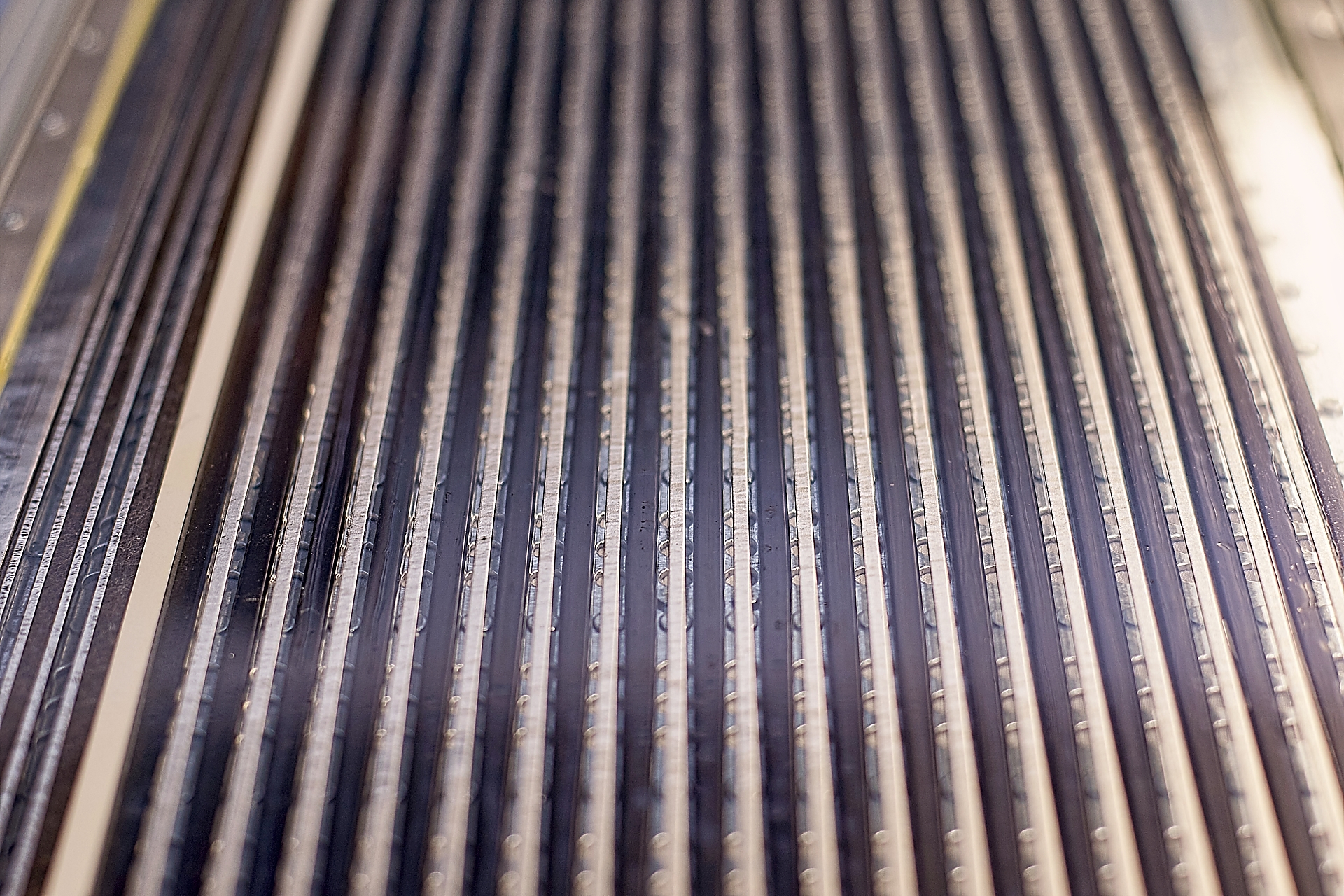
MD: So they must be quite small?
GT: Yes, they are small. It’s 5 cm by 5 mm by 2.5 mm. So they are very small, and you have to put hundreds of them precisely. And there is another important thing. The neodymium magnet may have problems. One magnet in every 1 million magnets can have a damaged surface. If the surface is damaged, there might be some tiny loose parts of the magnet that go against the diaphragm and produce noise. To prevent this issue, I put all the magnets in a plastic tube. So the magnets are protected, and this problem never occurs. Putting all the magnets in a plastic tube takes a lot of time. I made a special tool to introduce all the magnets into these tubes, and then I put the tubes on the iron plate. The iron plate is machined by Amada tools, which is the only machine able to make so many holes without deformation of the iron plate. Long story short, there are so many aspects of the designs, including small details, that are important to achieve both top performance and long-term reliability.
MD: So it’s an iron plate with holes, and you put magnets in the holes?
GT: No, there is a plate with holes, and I put the magnets between the holes.
MD: Let’s talk about yet another element of the design that caught my attention when I tested your speakers, the base. I mean the base or stand one puts each panel on. So first of all, there are two kinds of material they are made of, iron and aluminum, correct?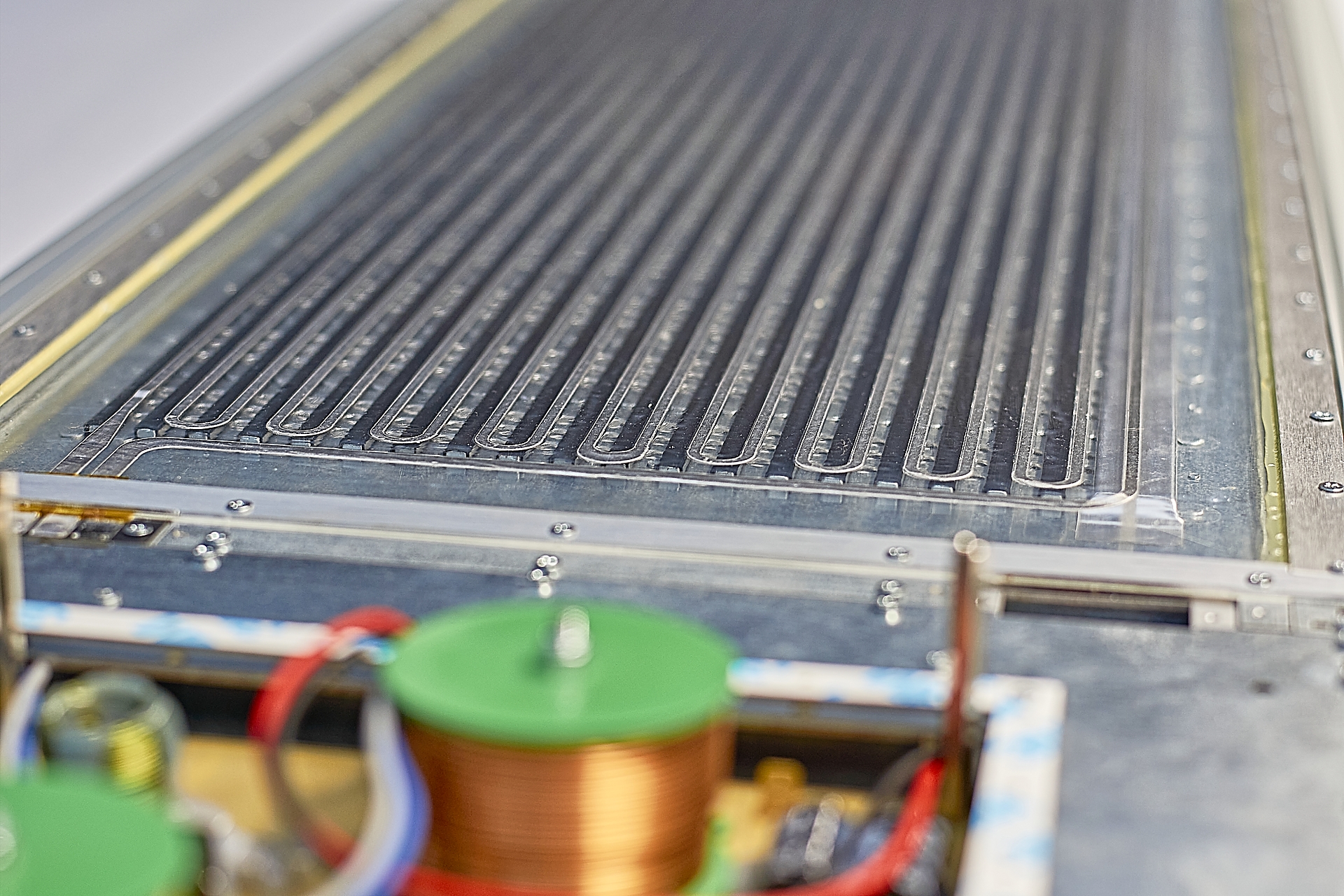
GT: Yes, that’s right.
MD: And there is a type that allows you to place the panel vertically, or another one that tilts the panel backward a little.
GT: Yes. For the one that tilts it backward, the reason is very simple. It’s a physical law. When you have a ribbon tweeter, it is like a strip, okay? With it, there is a perfect dispersion in the horizontal plane, but not in the vertical one. For this reason, the Flag M may not be high enough, at least for some listeners. And for this reason, I use the tilt. The aluminum frame is a bit more rigid, and you can additionally put the spikes under the base. Some people prefer to use them because the sound is a little clearer with them. With the bigger model L, most people use the „upward” base, so they are in a vertical position because it is big enough to avoid problems with the tweeter not playing at ear height. Normally, when you sit in the chair, your ears are at the half of the height of the speaker. But for the M, you need the version with a little tilt.
MD: So the ribbon tweeter runs along the whole height of the speaker?
GT: Yes. It’s not a real ribbon, though; it is a planar driver with a Mylar diaphragm. Let me emphasize it because a ‘pure’ ribbon tweeter usually features an aluminum ribbon.
MD: What about the crossover? Usually, it is a crucial part of any speaker (except for a single-driver one). Many designers say that developing a crossover is one of the most difficult parts of the job. How difficult was it in your case?
GT: It was not very difficult because the midrange woofer and the tweeter are very linear, so it’s not so difficult. I use a 12 dB crossover, and I cut the frequency around 2.5 kHz. It depends on the model, obviously. I use high-quality components because they’re very important in order to achieve a certain level of performance. For the Gigawatt, our Polish distributor, we made the L Supreme version featuring super-selected components. We used a special version of the Mundorf capacitor, a special coil, a special section of the copper wire, and a special core. When you compare the standard version and the custom one, you can hear a difference, of course.
MD: What is the important factor when driving your speakers? I mean, what kind of amplifier do they need?
GT: For planar speakers, it is current that is very important. They are quite easy to drive. I mean, they will perform really well with a 20-watt amplifier. It’s not a problem. But if you have more power, you’ll get more dynamics, and you can listen to more and more various music genres. So, for example, here with the Marton, that is very revealing, you can hear things that you have not heard before with other amplifiers. And Fonica La Grande speakers can reproduce it, but it depends not on how many watts the amplifier can output, but on how much quality current, because that decides how well an amplifier can drive speakers. At this point, the components of the crossover become crucial, because if you use a small inductor, it is not able to follow all the current from the amplifier, and it may cause a core saturation phenomenon.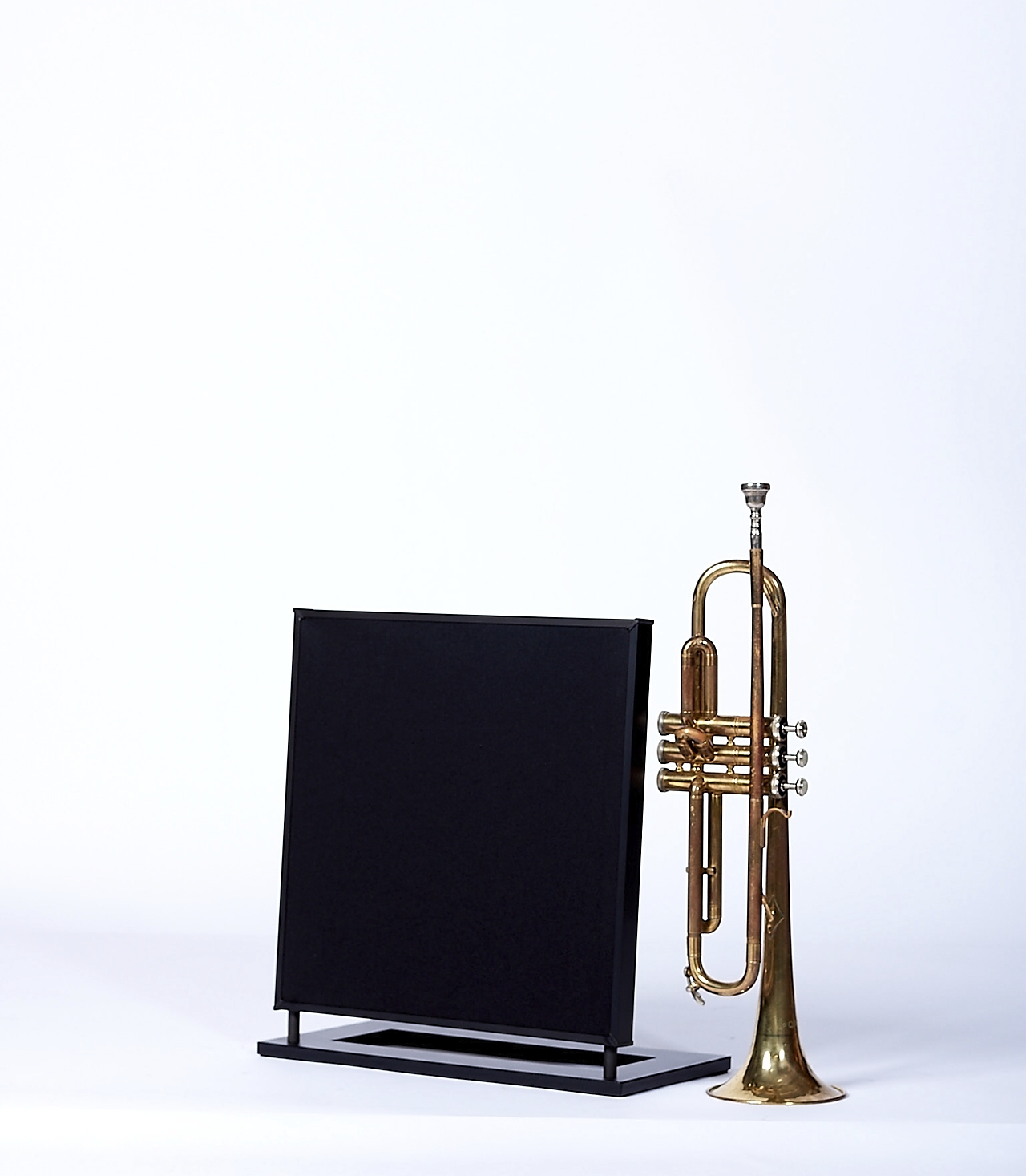
MD: OK, I see. Did you prepare this special version only for Gigawatt, or is this something available for the customers?
GT: I prepared this version exclusively for them at first, but now I am considering offering it also for anyone in the near future.
MD: Okay. Now, another topic. For now, we discussed only passive versions of your speakers, but you also offer active ones, don’t you?
GT: Yes, that’s true.
MD: I guess that audiophiles don’t like the active versions very much, do they? I mean not because of their performance, but because they cannot change anything in the system, they can’t play with various amplifiers, D/A Converters, and so on. I’m not asking for numbers, obviously, but let me ask: are the active versions popular?
GT: Thank you for this question because it’s a very important thing. You say that audiophiles do not particularly like active speakers because they can’t change anything in the setup. That’s true. That’s absolutely true. Some also say they do not like the active speakers because they don’t sound well, and that’s not true! I mean, I am an audiophile. I started my adventure in the audio world with mono triode tube amps and horn speakers, so I know very well what we are talking about. I mean, sound quality is important. But there are a few class D amps that sound great, too. For example, Hypex, which I use. So when you use an active speaker, you don’t use only an amplified speaker, but also speakers with digital input and DSP. When you use digital input and DSP, you don’t need a crossover because that function is executed by the DSP. So, it’s true, you can’t change or try out much in such a system. Also, it is nothing like La Grande, driven by Marton. You will never achieve this kind of top-level quality, for sure. But when you balance benefits and costs, there is no competition to active speakers. Especially when it comes to the costs of a system, active speakers are a much better choice. Why? Because you don’t need a preamplifier. You don’t need an amplifier. You don’t need crossover. You don’t need cables. You also have to keep in mind how much quality you lose if all these units are not of the top quality. That’s the problem, okay? So when you use a multimedia source connected using a digital cable to the active speakers, and you don’t need anything else, and the sound quality is very high. Also, the DSP offers some additional qualities because using the DSP, you can perfectly match the speakers to the room.
MD: But can really ‘regular’ people do it? It is not that simple to use DSP in such a way to truly optimize the performance.
GT: Yes. You you you are right, absolutely. So I think that the future is that the dealers are the experts and they help customers with the setup. But, honestly, most audiophiles continue to buy passive speakers. And all the other people who want to listen to the music with a high-quality system, with a design system, simple system, prefer active solutions. So I think that these are two different markets, two different customer groups. Still, I have performed a lot of tests comparing active and passive setups, and in 80% of cases, active speakers win. Of course, if you have a Marton or another top amplifier, there is no competition, and a passive system will sound better. But unless one uses top-quality components in a passive system with our speakers, the active version may offer better results.
That is why I produce both versions. But it’s a very interesting project in my opinion, because what you can do with the DSP is something that you can’t do with the passive version. Now, Hypex has introduced the FIR filter. So you can cut the crossover frequency without phase shift. So you can do so many things that benefit the sound. And the Hypex amplifier sounds very well. Maybe not quite like a Class A traditional amplifier, but the gap is much smaller these days. That’s my opinion.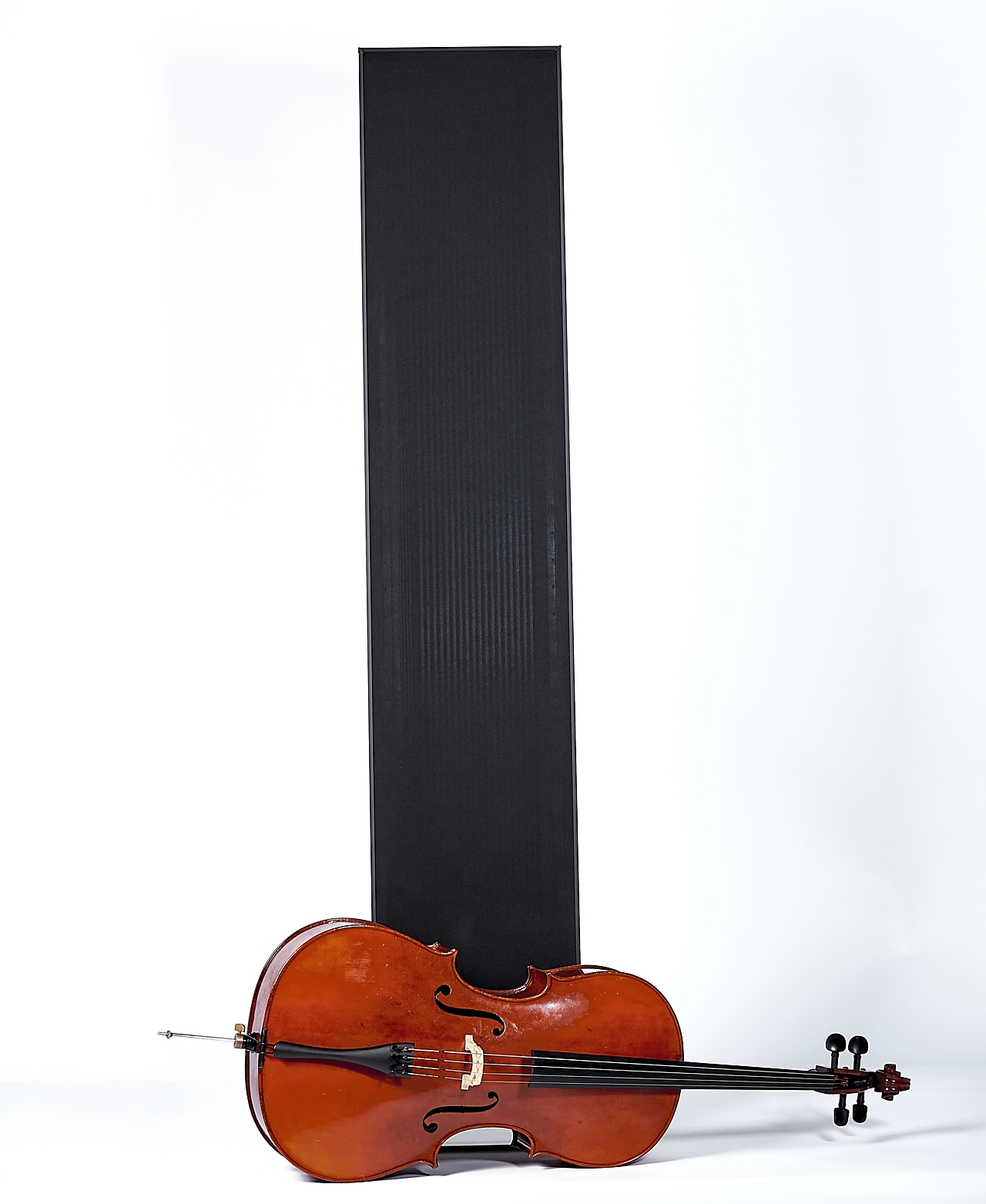
MD: To be honest, I’m not a huge fan of Class D amps, although there are some exceptions like Japanese SPEC.
GT: I like those too. Of course, I love OTL tube amplifiers, but there are some things they can not do, like high damping factor, for example, so you need to consider that Class D offers a lot of benefits.
MD: Every solution in audio means some compromises. And that’s also true for the active speakers. You get a certain sound with them, and you cannot really change it because the D/A converter is inside, and the amplifier is inside.
GT: Yeah. You are right. So cost-wise active system is a winner, and if you like the sound, you will be happy with such a setup. It is a very simple system, and it sounds good.
MD: I believe that you also make the in-wall speakers, right? How does a dipole speaker work in a wall?
GT: Okay. With the in-wall speakers, we are far from high-end and hi-fi level. We make them because of architects’ and interior designers’ requests. They came to us asking if we had planar speakers that they could put in the wall. Obviously, these have to be active, because you need a strong equalization, okay? And the reason that you can use these speakers in the wall is that they have a very high-power motor. I mean, if you try to do this with an electrostatic speaker, it’s impossible because this technology has a low efficiency and low power applied to every square centimeter to push the diaphragm. My speakers have a lot of power. So they can move the air also when they are closed in a small volume cavity in a wall. 10 cm behind the speaker is enough for a good performance. Not the best performance, but with the DSP, you can make the equalization, and they will sound good.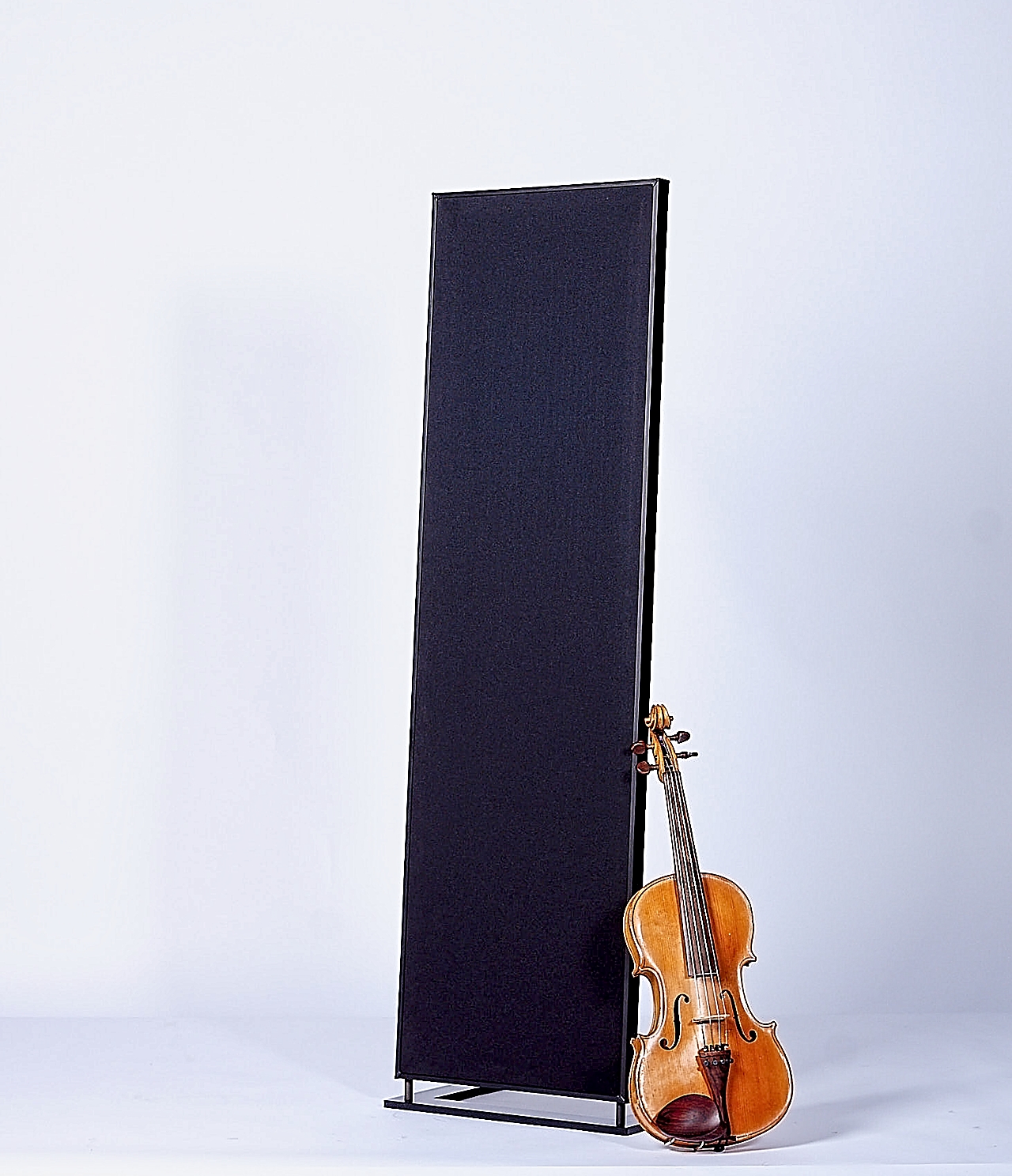
MD: Only 10 cm?
GT: Yes. That’s enough. It’s been an extreme solution to design, but we built such systems, and they sounded great. It is not a dipole in this case, of course.
MD: But it still produces the sound wave also on the back, and it has to bounce back, even if it’s only 10 cm.
GT: Yes, but you load the low frequency. So, for example, the L that is able to reproduce sound down to 35Hz, when used in an in-wall enclosure, will go down to around 80 Hz. And you cut the low frequency with a digital filter. That means that if you still want the lowest bass, for an audio-video system, for example, you need an additional subwoofer. So it is not so difficult solution to design.
MD: Are there any types of amplifiers that you recommend with your speakers? Which ones do you think sound best? Not particular brands, just types.
GT: I think transistor amps rather than tube amps because while tube amps sound very good, in my opinion, you need more power, more dynamics, and a higher damping factor to bring the best out of our speakers. So I think this is the best technology, and not because Piotr (from Gigawatt, ed.) is here with us, but I believe that the match with Marton is fantastic. It’s incredible.
MD: Do you have recommendations regarding the size of the speakers in relation to room size?
GT: Yes. That’s a very important thing. I’ll answer honestly, maybe against my interest, okay? You cannot use great planar speakers in a small room. No way. One of my dealers, who will remain unnamed, made a great mistake at a Hi-Fi show because he used Flag L in a very small room, and the performance wasn’t good. So, small room – use M, medium room – go for L, and if you have a big room, you can use La Grande. If you don’t have a big room, don’t use La Grande because they won’t deliver their best performance.
MD: Okay, but what is a big room?
GT: I mean for La Grande at least a room like this one (around 40 square meters, ed.), which in a traditional home, I think, is considered a big room, or even a bigger one. As for the L, in my opinion, at least 35 meters. It also depends on the acoustics of the room. That’s a very important thing. I mean, if you have carpet, if you have a library, if you have things that absorb the sound.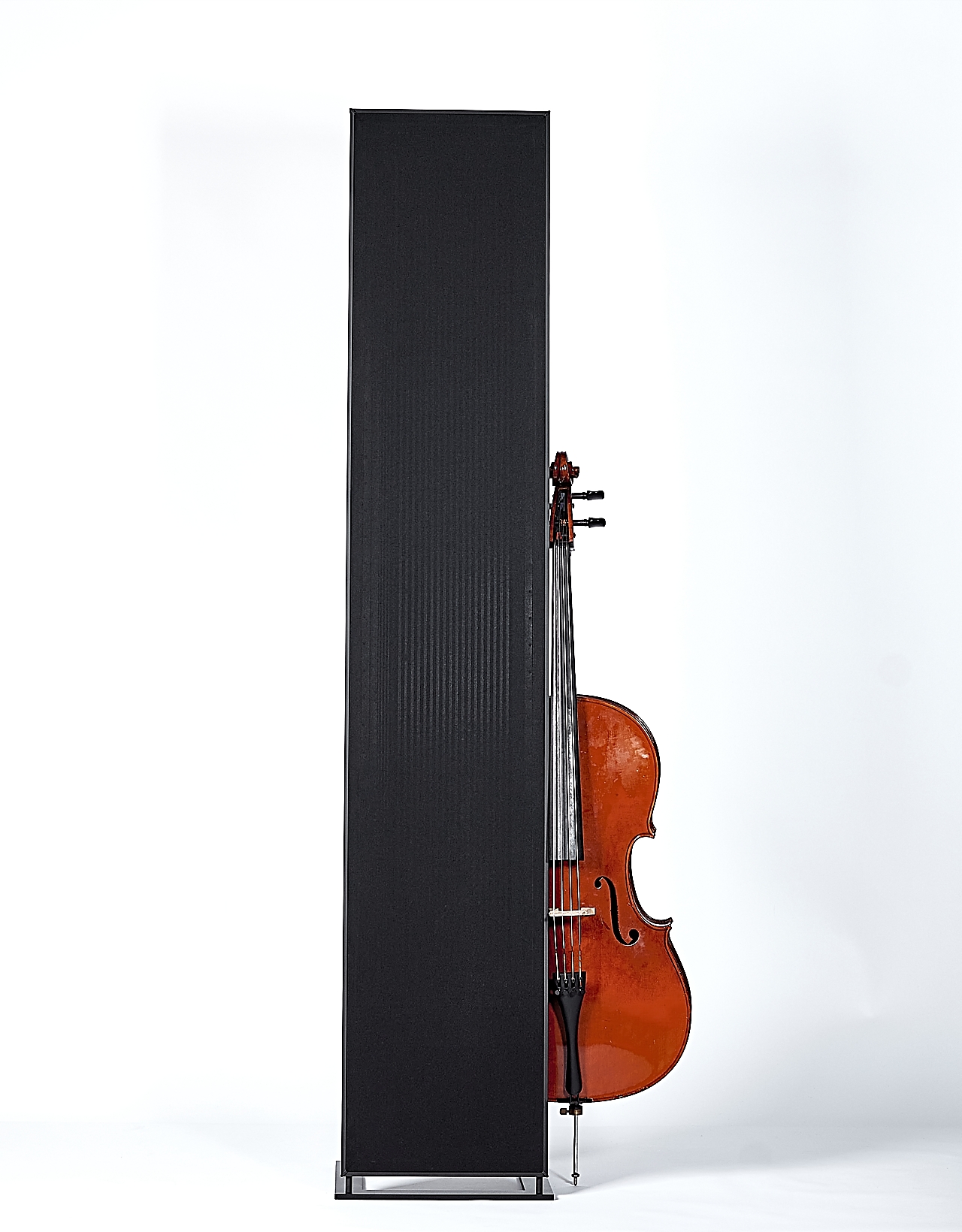
MD: Dimensions are one thing, but I imagine there should also be some minimal distance between the speaker and where you sit. In my room (24 sqm, 3 m high), the L were a bit too big because the distance between the speakers and me was only about 2.5 meters.
GT: Okay. You need a little bit more. So in your room, the M probably worked better, right?
MD: Yes. The Ls had some advantages, and we used a vertical version of the base with them.
GT: I think you need at least 3 meters and even more for the L. But they don’t need so much space in the back like a usual dipole planar speakers do, because they are not so large and because they have a lot of power moving the diaphragm. You have to remember that the diaphragm in the L and M has uh something like a 6 mm excursion. It’s not like in the electrostats, where the excursion is like 1 mm.
MD: 6 mm? That’s a lot.
GT: Yes. That’s the maximum. Usually, it moves up to 5 mm.
MD: What else should any potential user know about your speakers?
GT: Another thing is that with the La Grande, you can adjust the position of the midrange and the tweeter, because there are hinges between the panels. In La Grande there are three parts: the tweeter, midrange, and the bass. Its (measured) bass extension reaches 20 hertz.
MD: Wow. That’s really deep. Did you measure them in a room or in an anechoic chamber?
GT: In a room.
MD: Since you have decided at some point to make planar speakers, you must have believed that they had some advantages over other types of speakers. What are they?
GT: The advantage of this design is the low distortion. They are also very easy to listen to. They don’t stress you. You can listen for hours and hours. I mean, I love horn speakers, but I can listen to them for maybe one hour because after that, I get a little bit stressed. With planar speakers, I also love the effect of a linear source. The energy decreases in a linear mode with respect to the distance from the speakers. For the traditional uh speakers, I mean dynamic ones featuring woofer and tweeter, also and bookshelf ones, it’s not the same, because the energy decreases in a quadratic rate with the distance. And so if you are too close to the speaker, the level is too high. And if you are too far from the speaker, the level is too low. That’s the thing I love about the planar speakers. The sound is detailed, there is a great sound stage, and low distortion. The thing I like less is that in order to have a solid bass, you need to move a big diaphragm a lot, so you need neodymium magnets, you need my patents, and so on. And another thing that I dislike about them is that they are very difficult to build. At least if you want to make a planar speaker, that has no problem. I know the problems of such speakers very well because I repaired a lot of planar speakers.
MD: One more thing. If I remember correctly, you offer some standard but also custom finishes, right?
GT: It’s possible to order a custom finish. The regular one is either a black or silver frame and a black or gray grill. But if someone asks for a different finish, a different color, we can do that. Not every possible one. I mean, there are 12 colors we can anodize the frame in. If you don’t like any of them, we have to paint it, which is a little bit difficult. So yes, a custom finish is possible, but we need to discuss each case with the customer. If you want Ferrari red, okay, we can do that.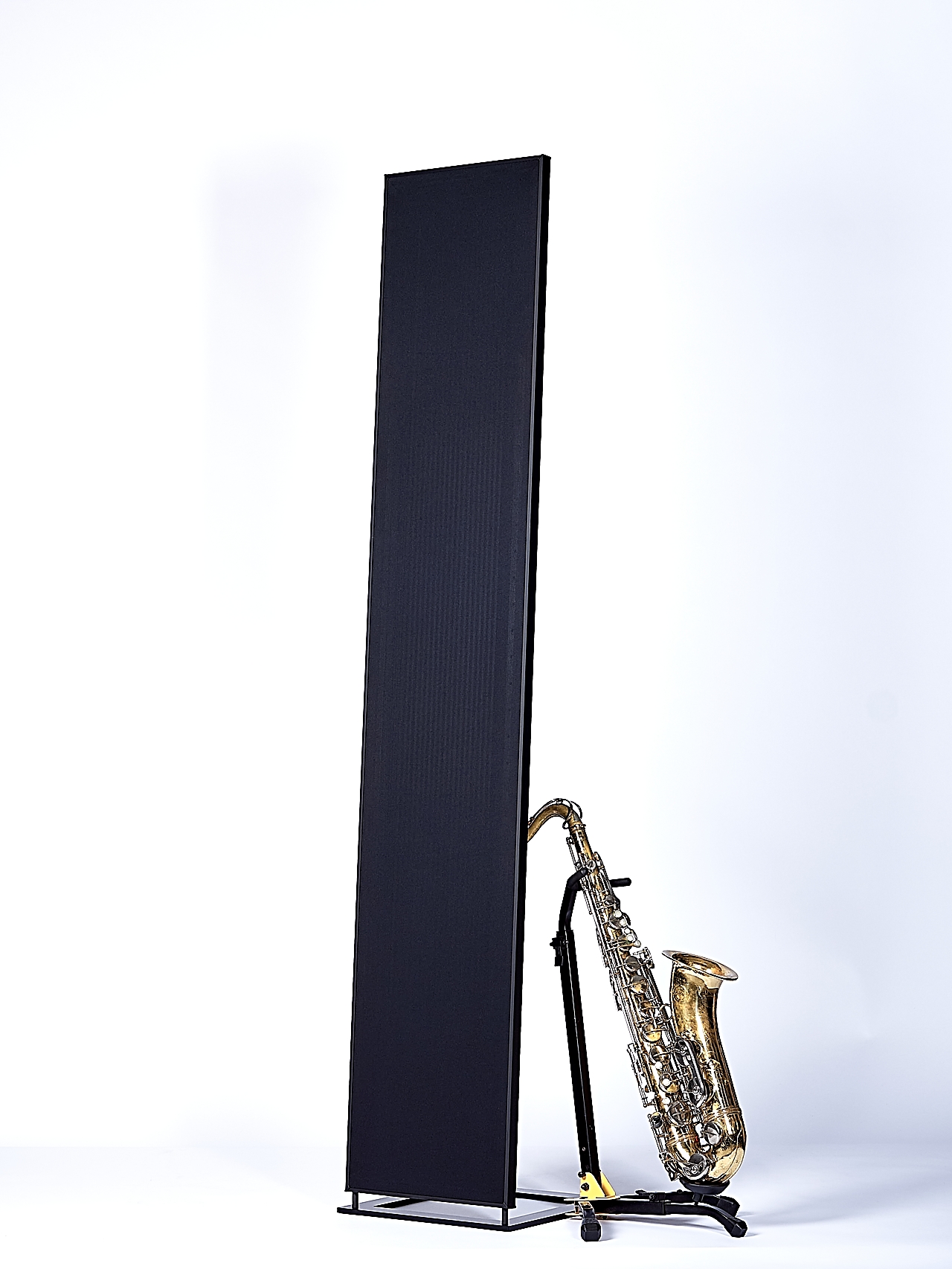
MD: I can imagine that some people might want just plain white speakers that match the interior of their apartment or house.
GT: Yes. We have done a white version for the German market. I don’t know why, but Germans seem to like that finish. You need to remember, though, that such a finish is delicate, easy to scratch. But we can do it for you. We have the white fabric, we have a white frame, a white edge of the corner, everything. So if you need something that is not a standard finish, you can contact our dealer or us, and we will tell you if we can prepare a custom one for you.
MD: Giorgio, thank you very much for your time.