

High End Vienna marked a new beginning for the industry’s largest gathering, while Audio Group Denmark arrived with new hardware, familiar ambitions and a healthy disregard for convention. Enjoy!
The World Didn’t End
Before heading to Vienna, I had mixed feelings about the entire endeavor. Not because the relocation itself seemed problematic, but because in the months leading up to the event I had far too many conversations with manufacturers, distributors and industry insiders, each convinced they had accurately predicted its fate. The forecasts ranged from cautiously optimistic to outright catastrophic.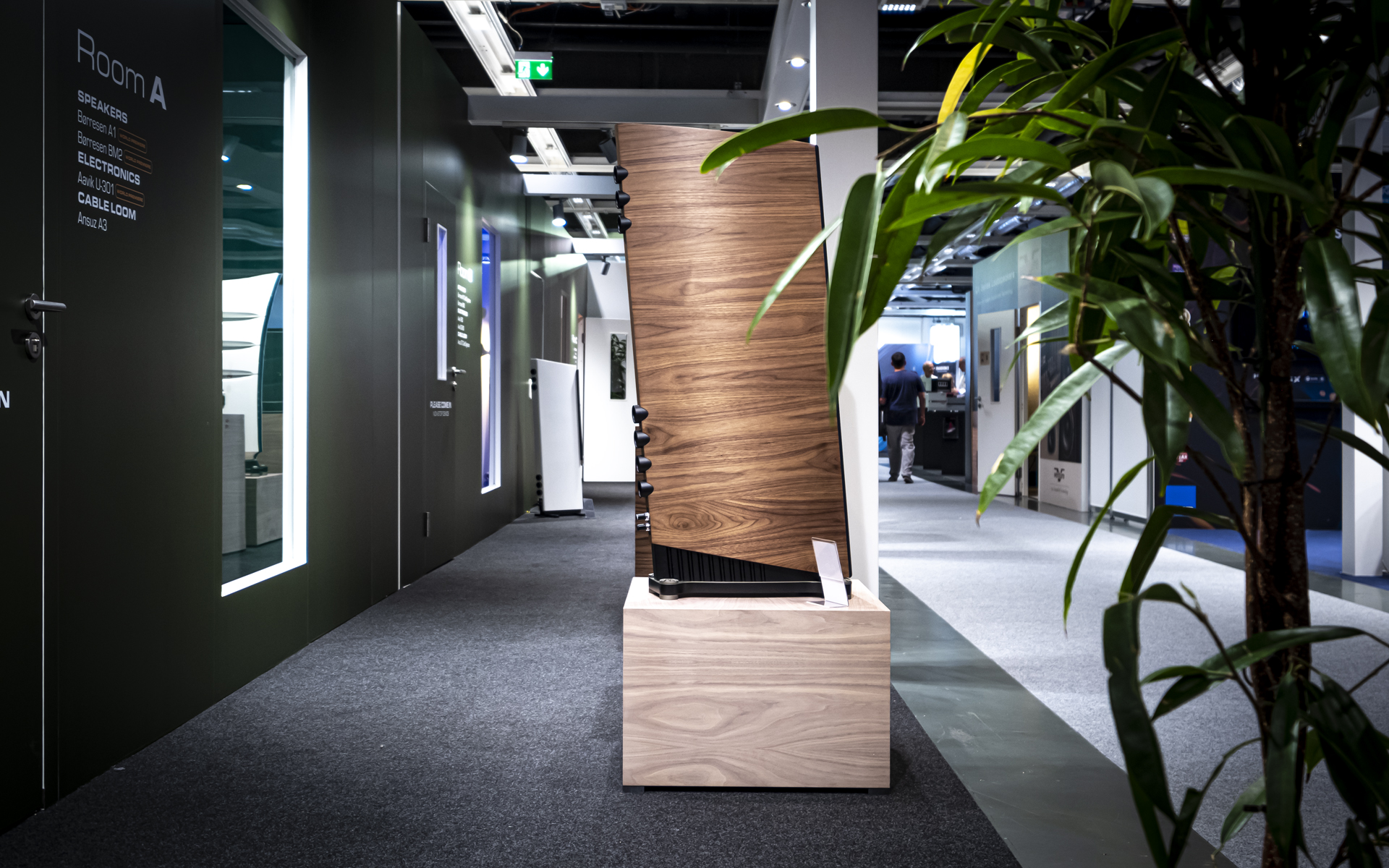 Those intimidated by the logistical burden and organizational reshuffling often painted a bleak picture. To them, leaving Munich meant abandoning a proven formula. Many had already begun speaking about the old venue in the past tense, as if the industry’s annual pilgrimage had reached its natural conclusion. Nostalgia arrived unusually early this year. Others took a far more pragmatic view. Every major change creates inconvenience, but it also creates opportunities. The move to Vienna forced many exhibitors to rethink long-established routines, particularly those fortunate enough to secure the same rooms year after year in Munich. What had once been a carefully refined presentation suddenly required adaptation, creativity and, in some cases, a complete reset.
Meanwhile, exhibitors accustomed to building custom spaces inside the MOC halls seemed largely unfazed. For them, the surroundings had changed, but the underlying exercise remained much the same. New venue, same challenge. Design the space, move the hardware, tune the system, welcome the visitors and talk. Then talk more. And more. Rinse and repeat until your throat is sore and the prospect of another conversation starts to feel vaguely threatening.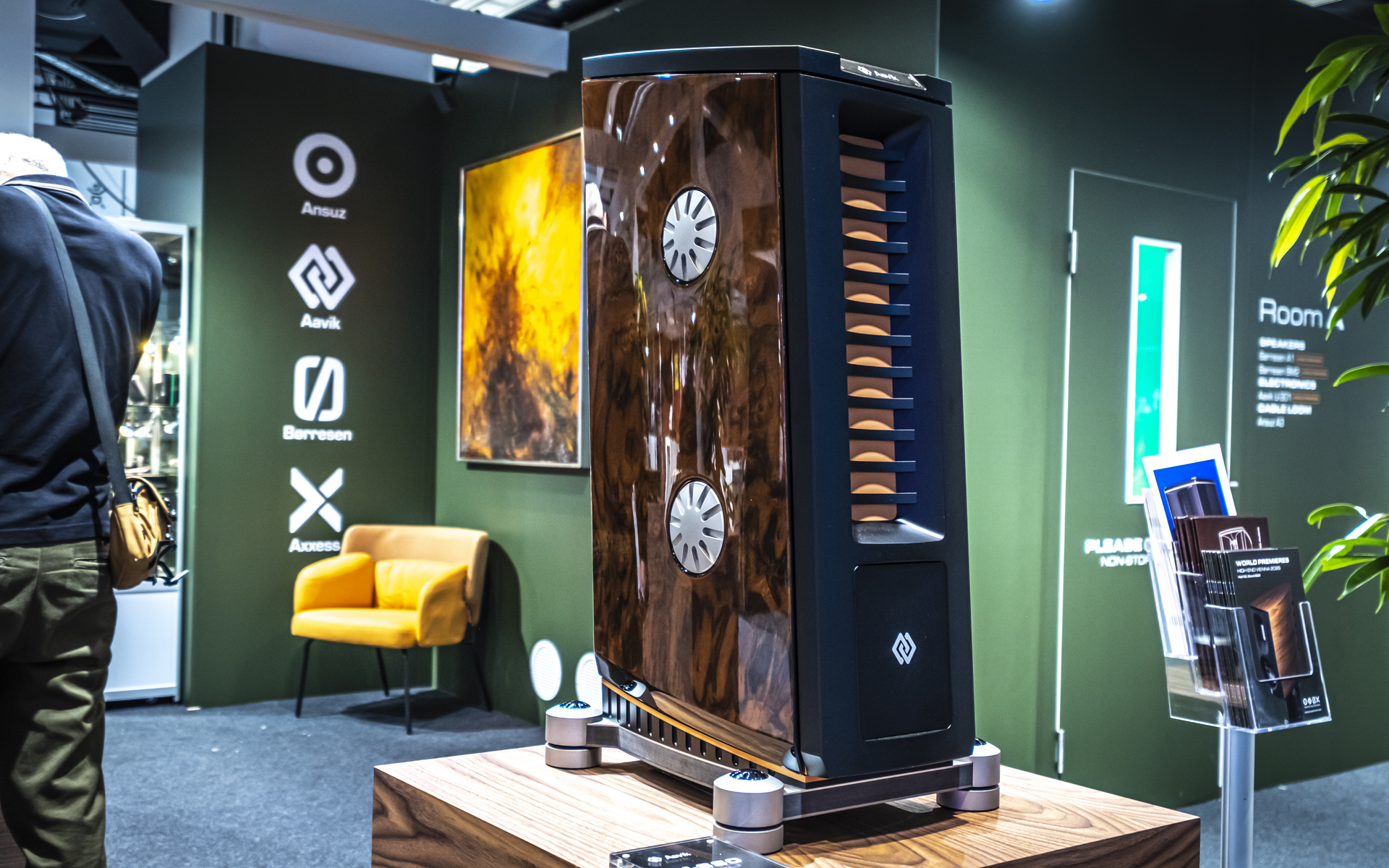 The closer the event drew, the more polarized opinions became. From my perspective, there appeared to be very little middle ground left. Vienna was destined to become either an expensive lesson in why some traditions should remain untouched, or a convincing demonstration that the industry is far more adaptable than many had assumed. Now that the dust has settled and the final listening sessions are behind us, the verdict seems remarkably straightforward. Vienna worked. Not merely in the sense that the doors opened and people showed up, but in the far more important sense that the event retained its identity while simultaneously proving capable of evolving. If anything, the first Austrian chapter demonstrated that the annual high-end spirit is larger than any single venue. The city changed, the routine shifted, the floor plans looked unfamiliar, yet the essence remained intact.
As for the venue itself, the external surroundings felt like an upgrade. The area was easier on the eye and generously populated with attractions beyond the exhibition grounds. In that regard Vienna scored points before I even stepped inside the building. The interior, however, wasn’t all cherries. At least not right away. Compared to the MOC, the Austria Center Vienna felt surprisingly sprawling and somewhat disorienting at first. For the first two days I genuinely missed the old place. Years of routine had made navigating Munich almost instinctive. There I could move from one room to another on autopilot. Vienna required recalibration. It took a while to understand how the various halls and floors connected, where the natural traffic routes formed and how to move between them efficiently without constantly checking the map and backtracking too much.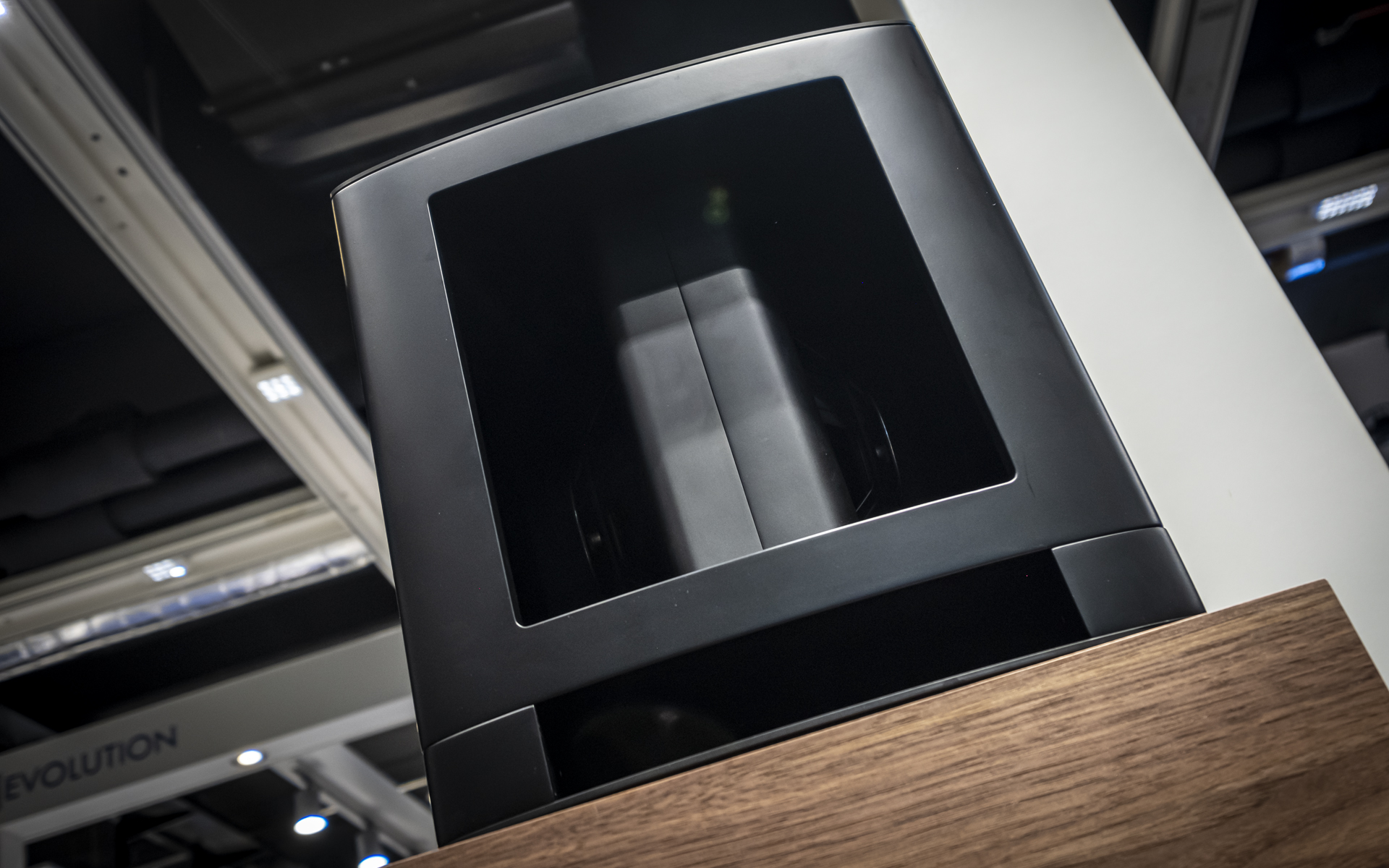 Whether the ACV ultimately hosted more visitors than the MOC, fewer, or roughly the same amount is something we’ll learn once the official numbers arrive. Judging by foot traffic alone, however, the place certainly didn’t feel empty. In fact, my perspective changed considerably once the event opened to the public. The ACV’s wide corridors handled traffic remarkably well. During peak hours, moving around the venue felt noticeably easier than at the MOC, where bottlenecks were practically part of the experience. In that sense the Austrian venue reminded me somewhat of Warsaw’s National Stadium during our local Audio Video Show. Large communication areas did an excellent job of dispersing crowds and keeping foot traffic flowing. If anything, after several days spent walking the ACV’s halls and floors, Vienna’s venue actually felt larger. Whether that impression reflects reality or merely stems from a different layout is difficult to say, but by the end of the show the building no longer felt disorienting.
At this point some readers might wonder why they’re reading a show report on HifiKnights in the first place. After all, I stopped doing these many years ago. Just so we’re clear, being lazy has nothing to do with it. Rather, it’s a practical matter. To me, industry events are social gatherings first and foremost. Whenever I attend one, most of my time is spent talking to people. Manufacturers, designers, distributors, engineers, fellow reviewers and industry veterans. That’s my primary motivation for showing up in the first place. The rooms themselves, packed with audio systems and eager listeners, are something I can and often do enjoy as an enthusiast. As a reviewer, however, the experience is considerably less useful.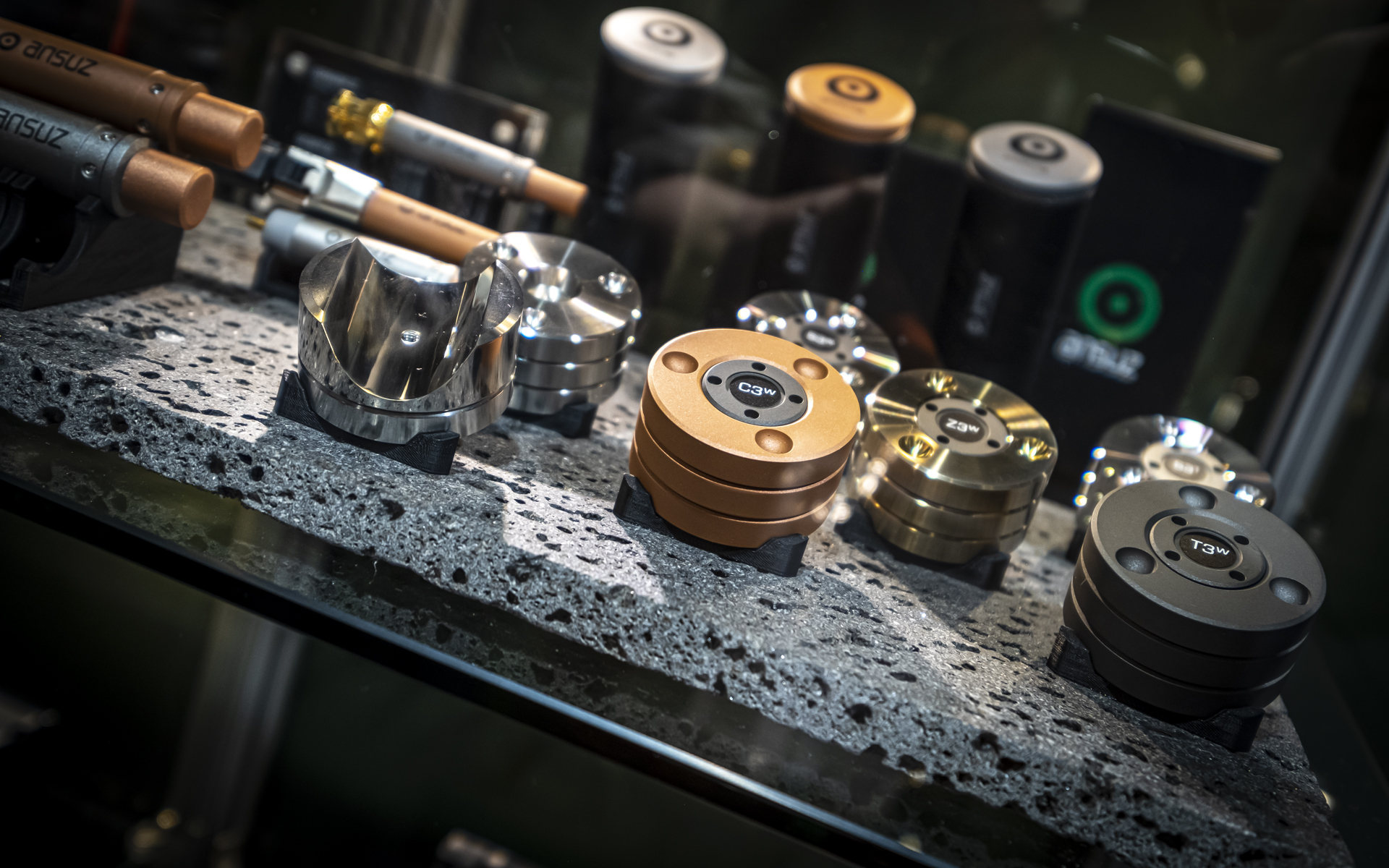 In most cases I don’t know which component is responsible for what. Room acoustics are a giant question mark. Music choices rarely align with my preferences. Under such circumstances, commenting on sound quality with any meaningful degree of confidence feels largely pointless to me as a self-styled audio reviewer. Since the social element remains a private matter and whatever sonic observations I might make rarely tell the full story, I gradually lost interest in producing conventional show coverage.
Truth be told, taking hundreds of photographs and sprinkling them with brief descriptions, if that, no longer appeals to me. I promised myself that if I ever returned to covering an industry event, the result would have to be targeted, specific and substantial. Not another gallery masquerading as journalism, but a story with a clear focus and enough substance to justify the reader’s time. Several weeks ago Audio Group Denmark presented me with a fitting incentive to do exactly that. “Come visit us. We’d like to have you there and celebrate with us”. That was essentially the message. No expectations, no requests and no conditions attached. Because they didn’t want anything in return, they’re getting this article.
Like a Fish in Water
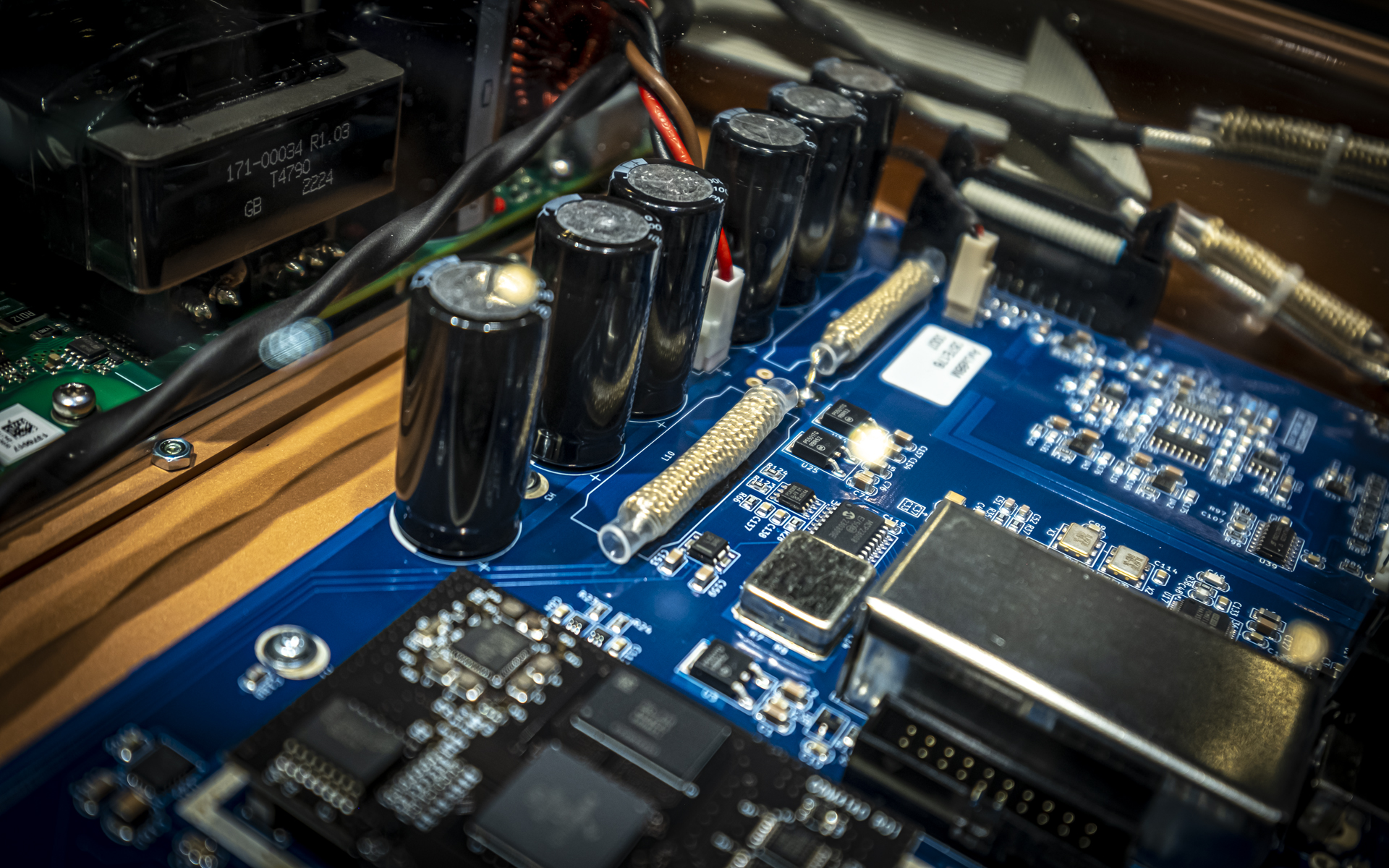
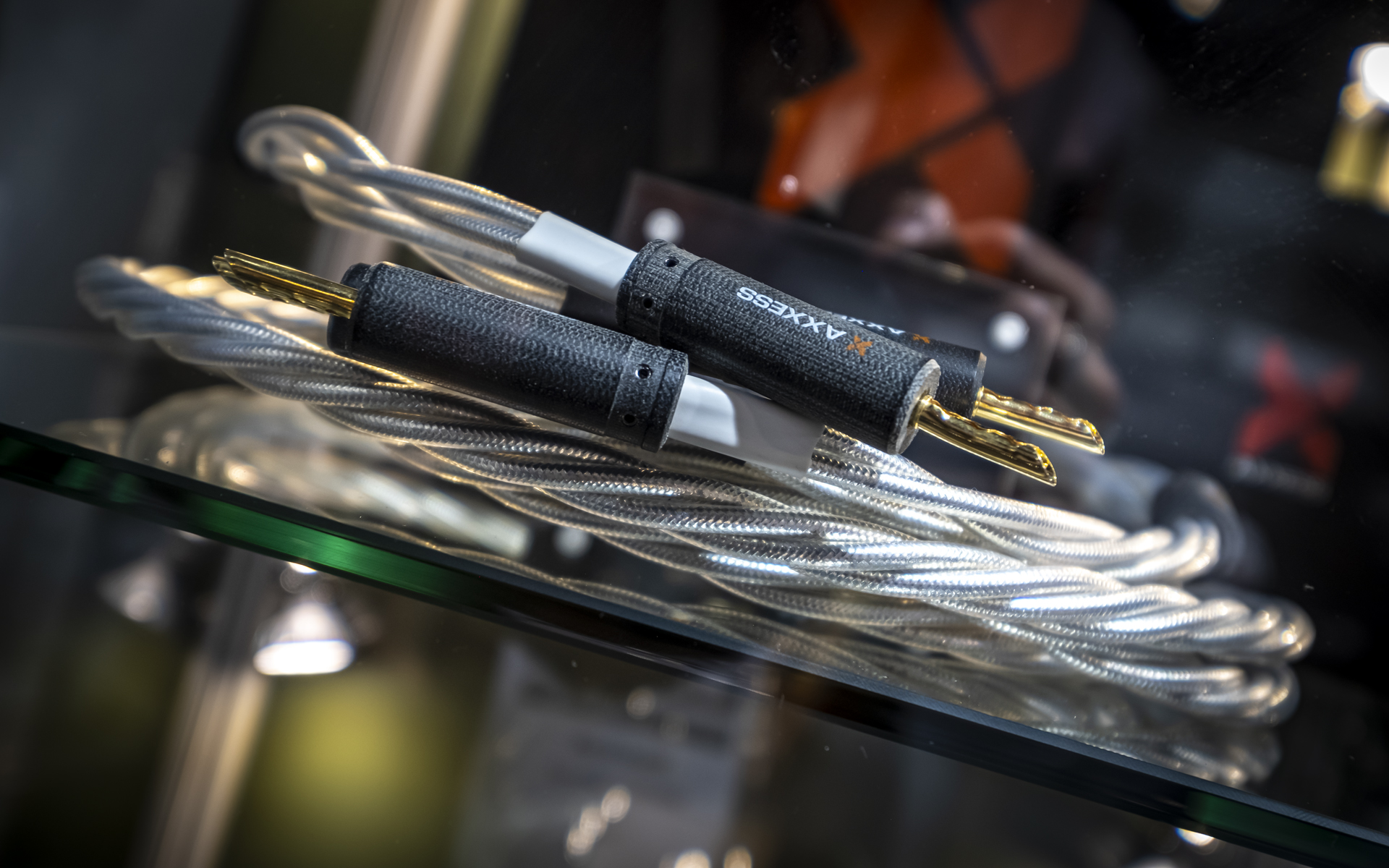
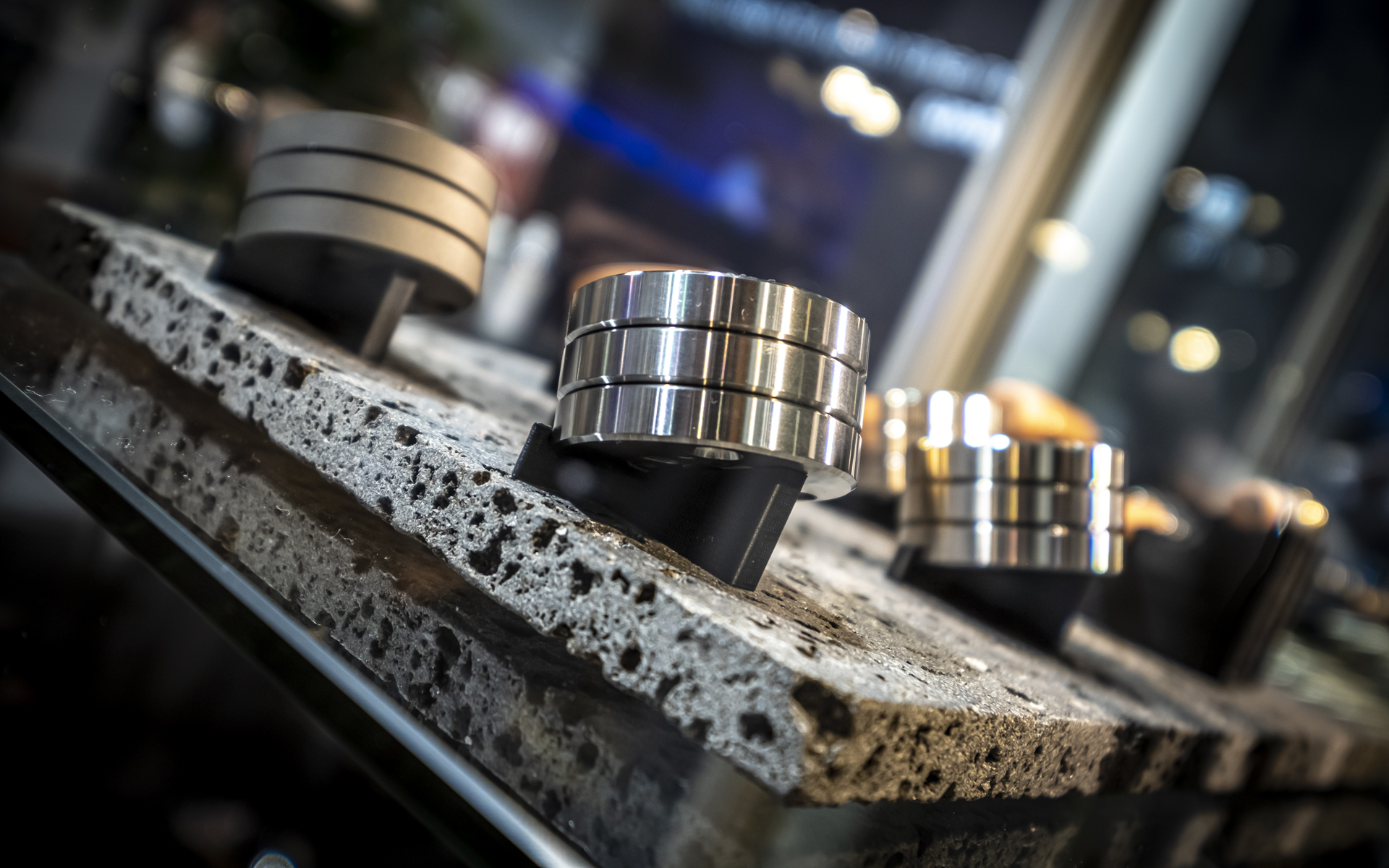
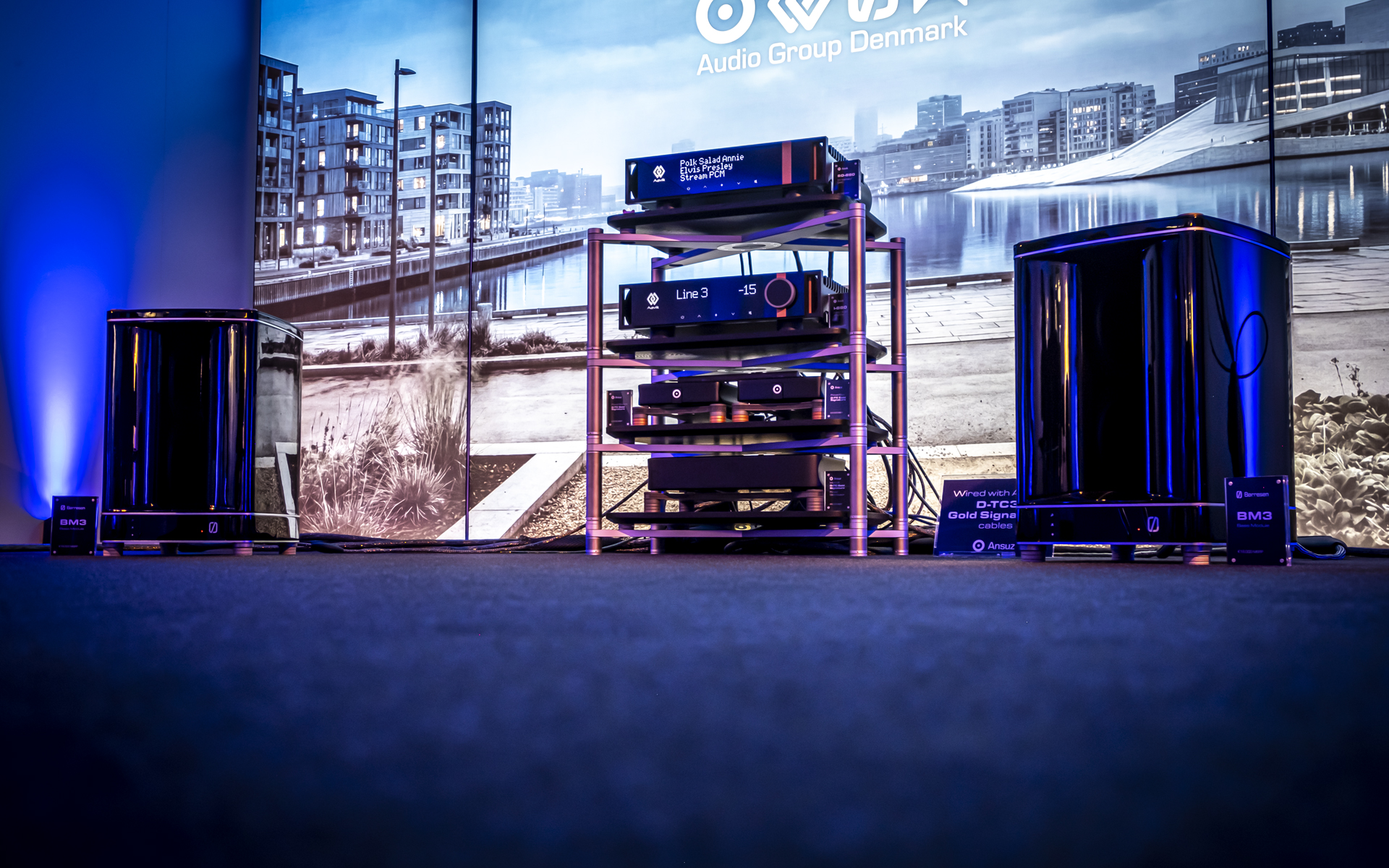
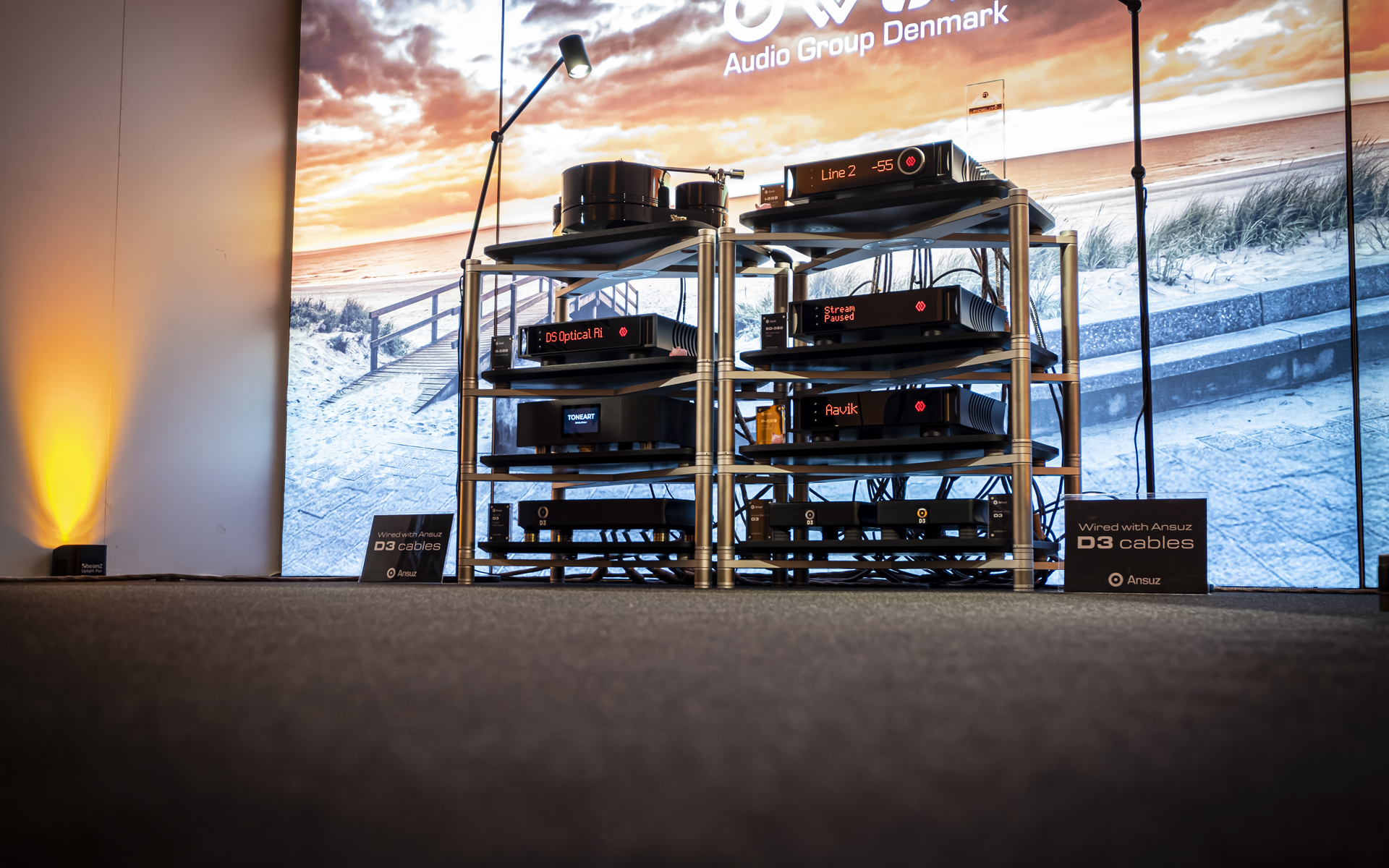
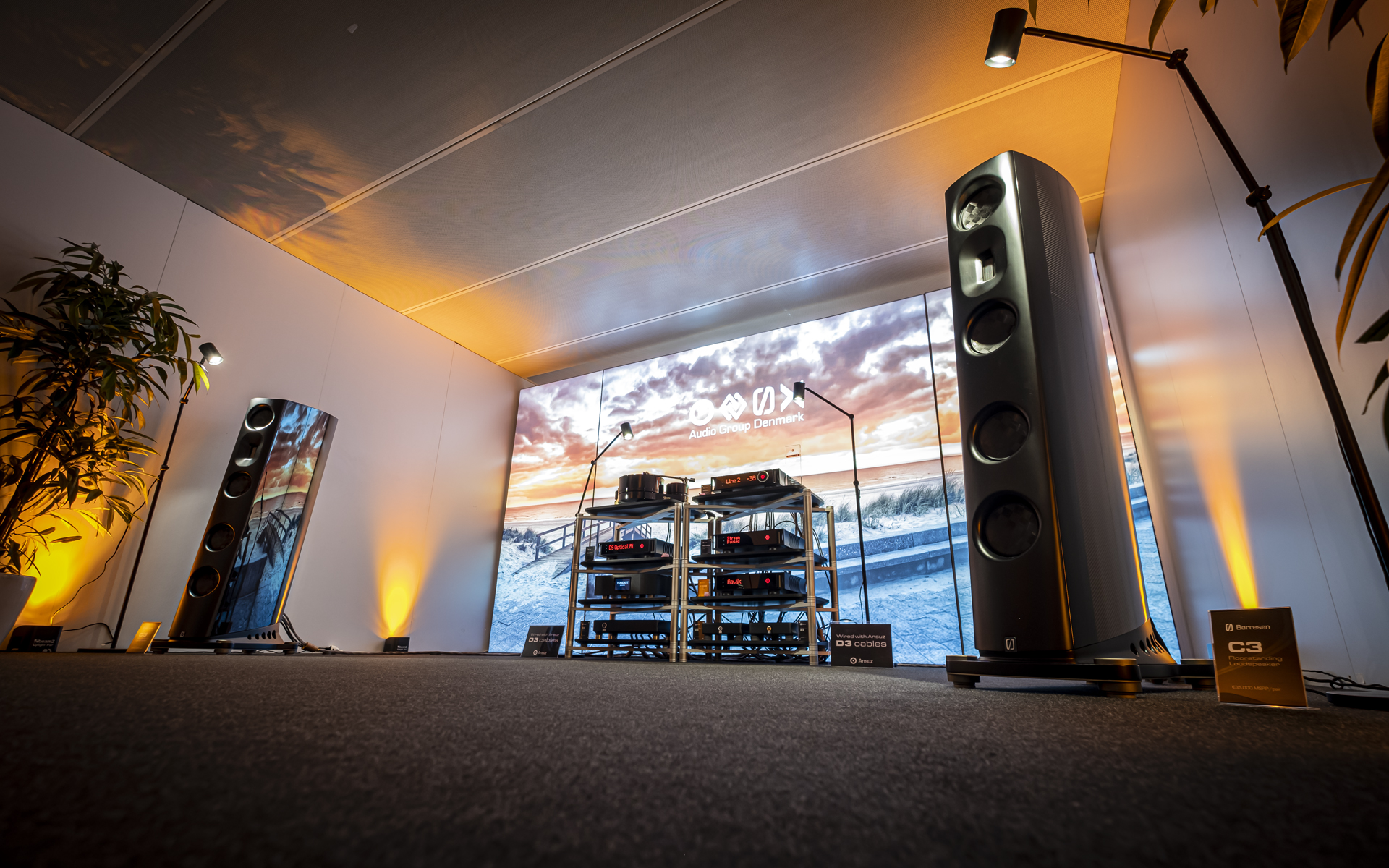
Audio Group Denmark was among those manufacturers who didn’t complain about Vienna in the slightest. They embraced it for what it was: the industry’s new reality. While the venue itself was new to them, just as it was to everyone else, logistics, finances and everything else associated with establishing a visible presence at the industry’s largest event remained very much business as usual to them. Whereas many exhibitors dread building their own booths and all that such an undertaking entails, the Danes attend numerous shows throughout the year and are perfectly accustomed to turning these temporary spaces into their battleground.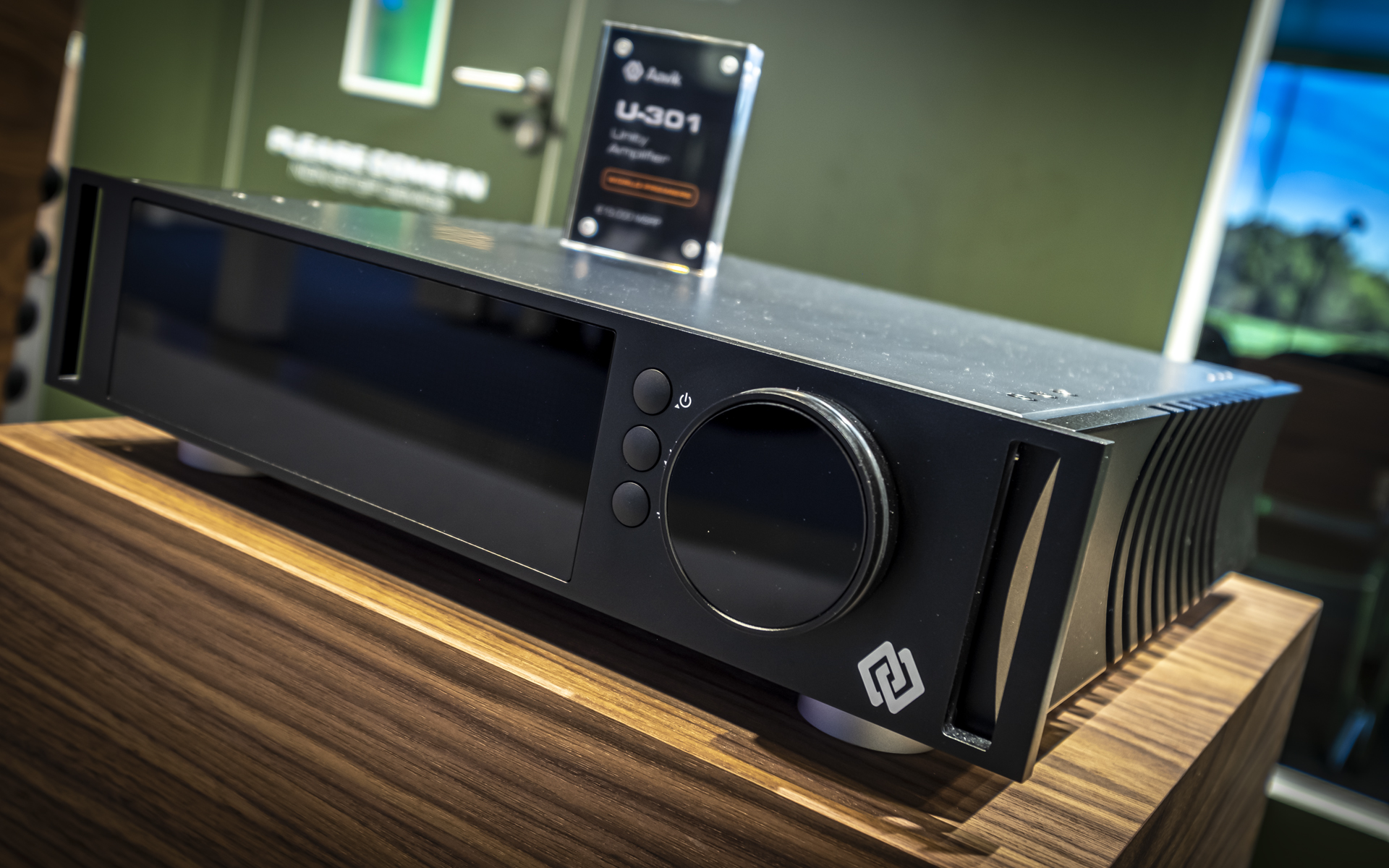 In that regard they operate like a well-oiled machine. Experience certainly helps, but so does a clear understanding of how to present a brand. Audio Group Denmark has long mastered the art of making its presence difficult to overlook, and Vienna was no exception. Unsurprisingly, this year the company’s footprint occupied a sizeable section of the venue, much as it had in previous years in Munich. A semi-open lounge dedicated to business meetings branched into an open area with various products, circuits, and parts on display and three dedicated listening rooms arranged side by side. Each hosted a different system, served a different purpose and offered its own distinct atmosphere. Together they formed a presentation that was not only extensive, but also smart. Rather than putting all of its eggs into a single basket, Audio Group Denmark spread its efforts across three separate environments, each capable of appealing to a somewhat different audience. More about that later.
The Message
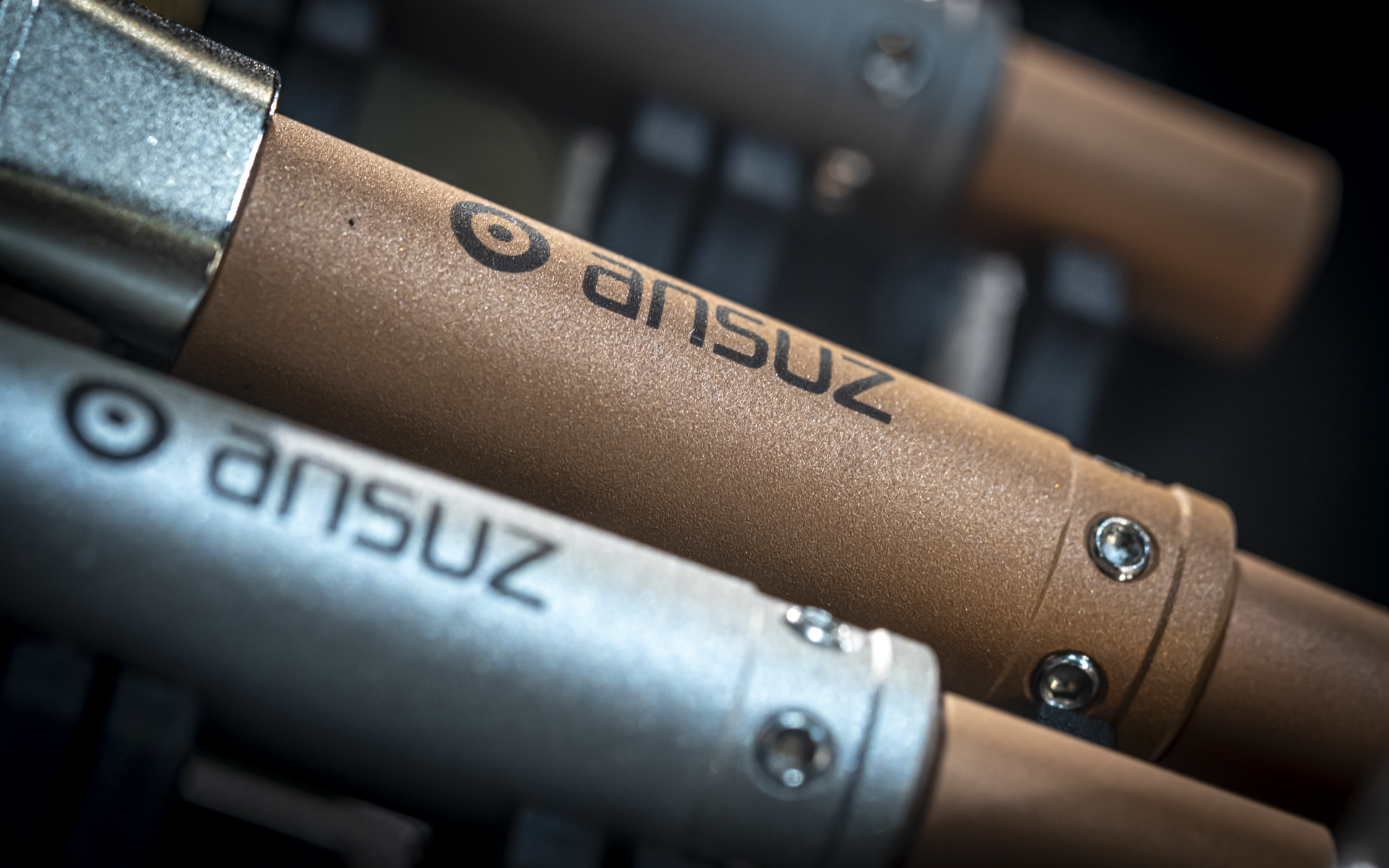
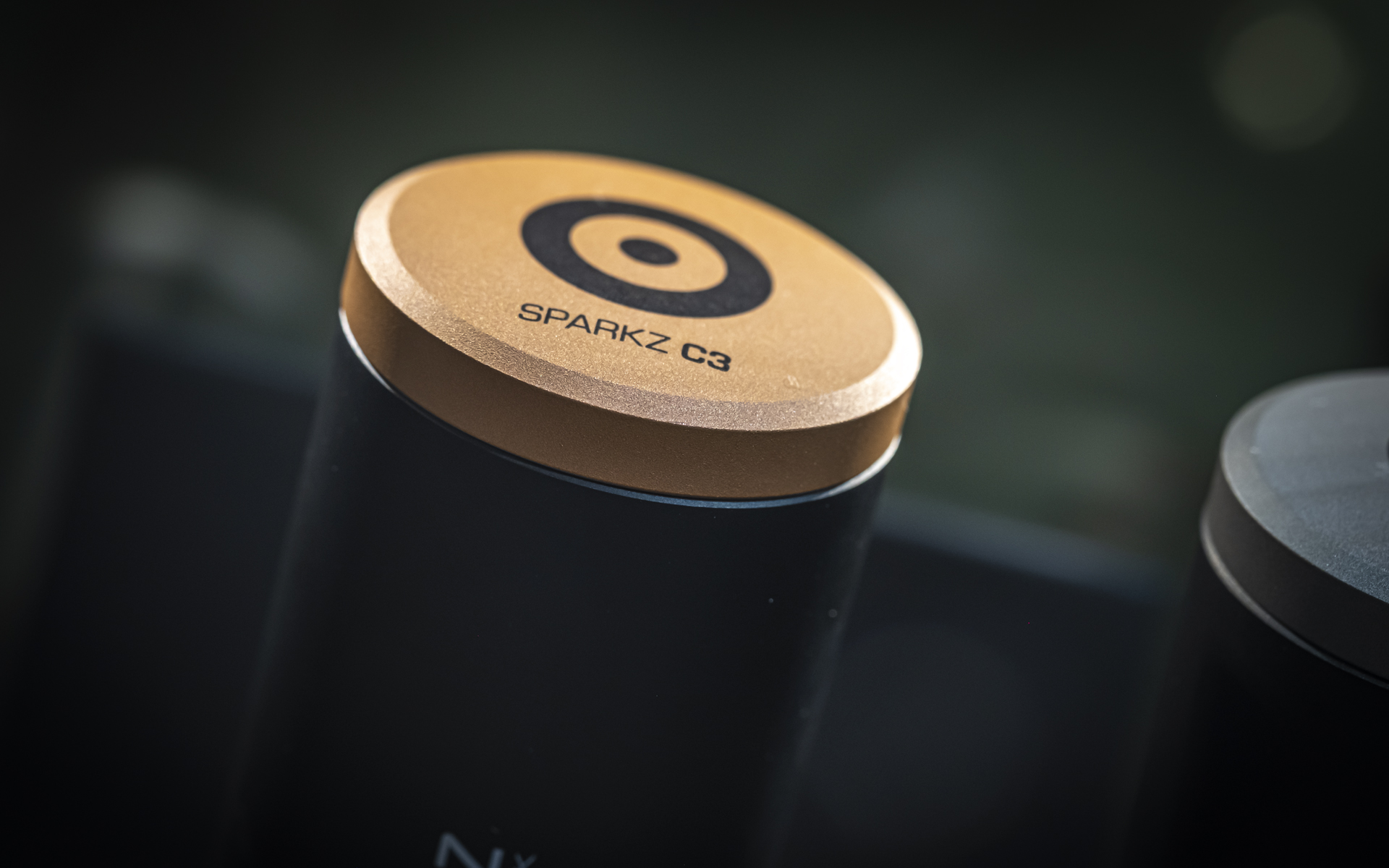
Audio Group Denmark’s current portfolio is enormous and, perhaps more importantly, self-sustainable. The company can easily assemble several complete audio systems exclusively from its own building blocks. Ansuz provides cables, power-distribution products, racks and various accessories. Børresen supplies loudspeakers. Electronics come courtesy of Aavik. Simple. Everything stays in the family.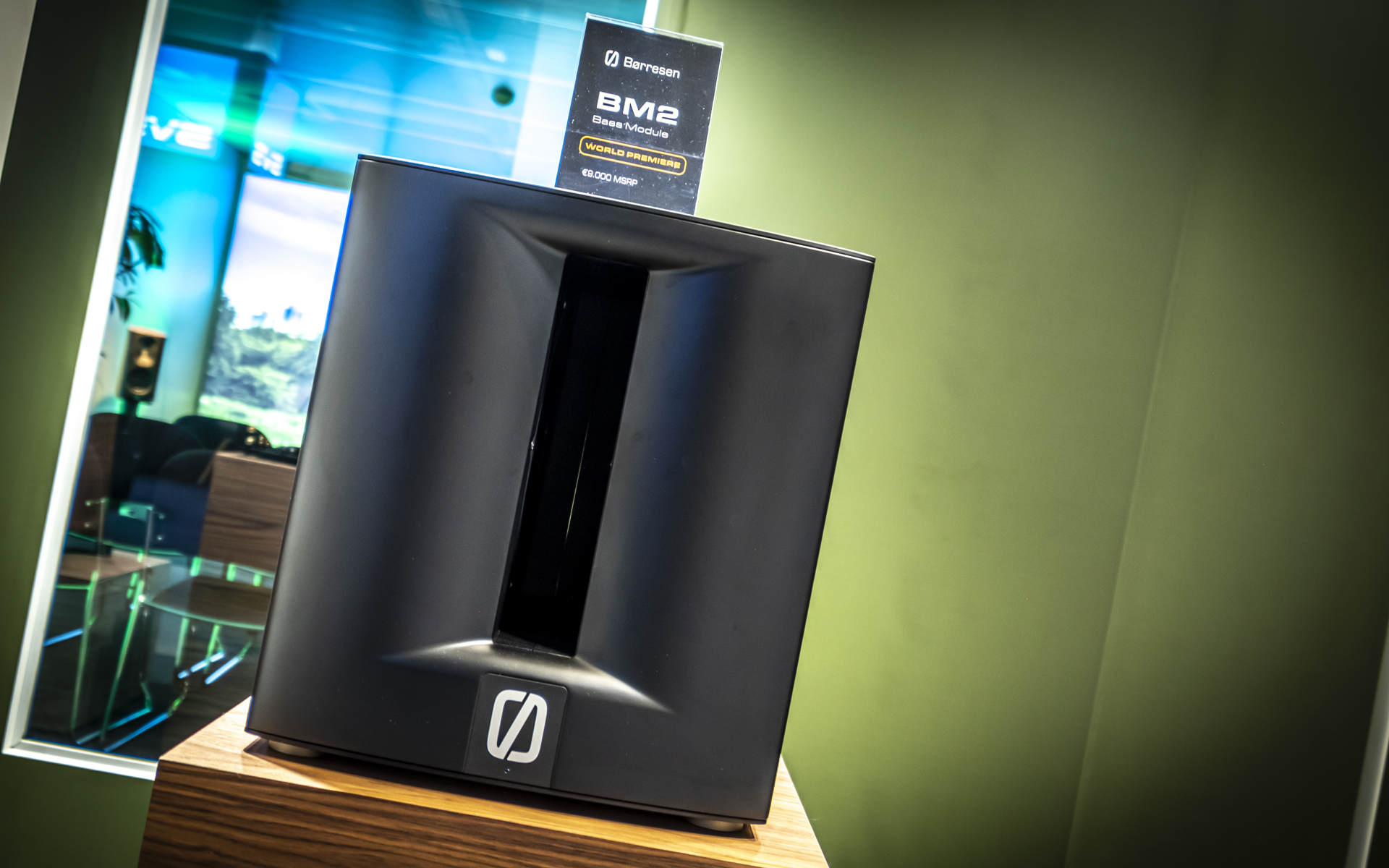 In this business, being a control freak is often a surprisingly practical trait. The more variables one can eliminate, the easier it becomes to shape the final outcome and ensure consistency from one presentation to another. My hosts have always operated that way. They’re remarkably specific about what they want to achieve at audio shows and equally particular about how they intend to put those plans into motion. Having virtually every critical component under one corporate roof certainly helps.
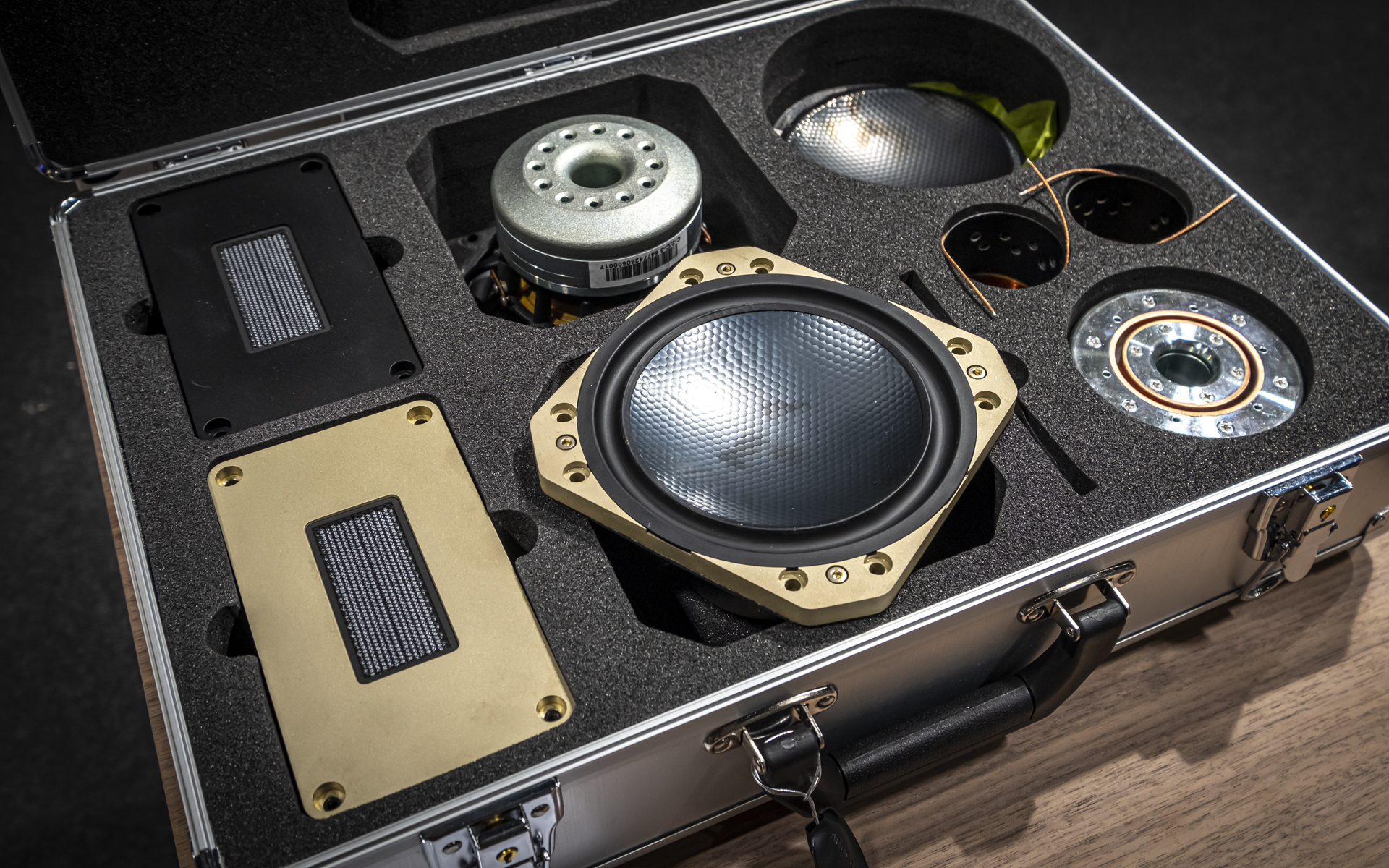
More importantly, however, Audio Group Denmark recently did something bold and, dare I say, courageous. Ever since the company’s early days and all the way up until February this year, its loudspeakers remained faithful to ported bass. Then the Børresen M8 Gold Signature arrived. The flagship packed twelve 8-inch woofers per channel arranged in a RiPol configuration that the Danes refer to as a folded dipole principle. What makes this development particularly interesting to me is not the hardware itself, but the message behind it.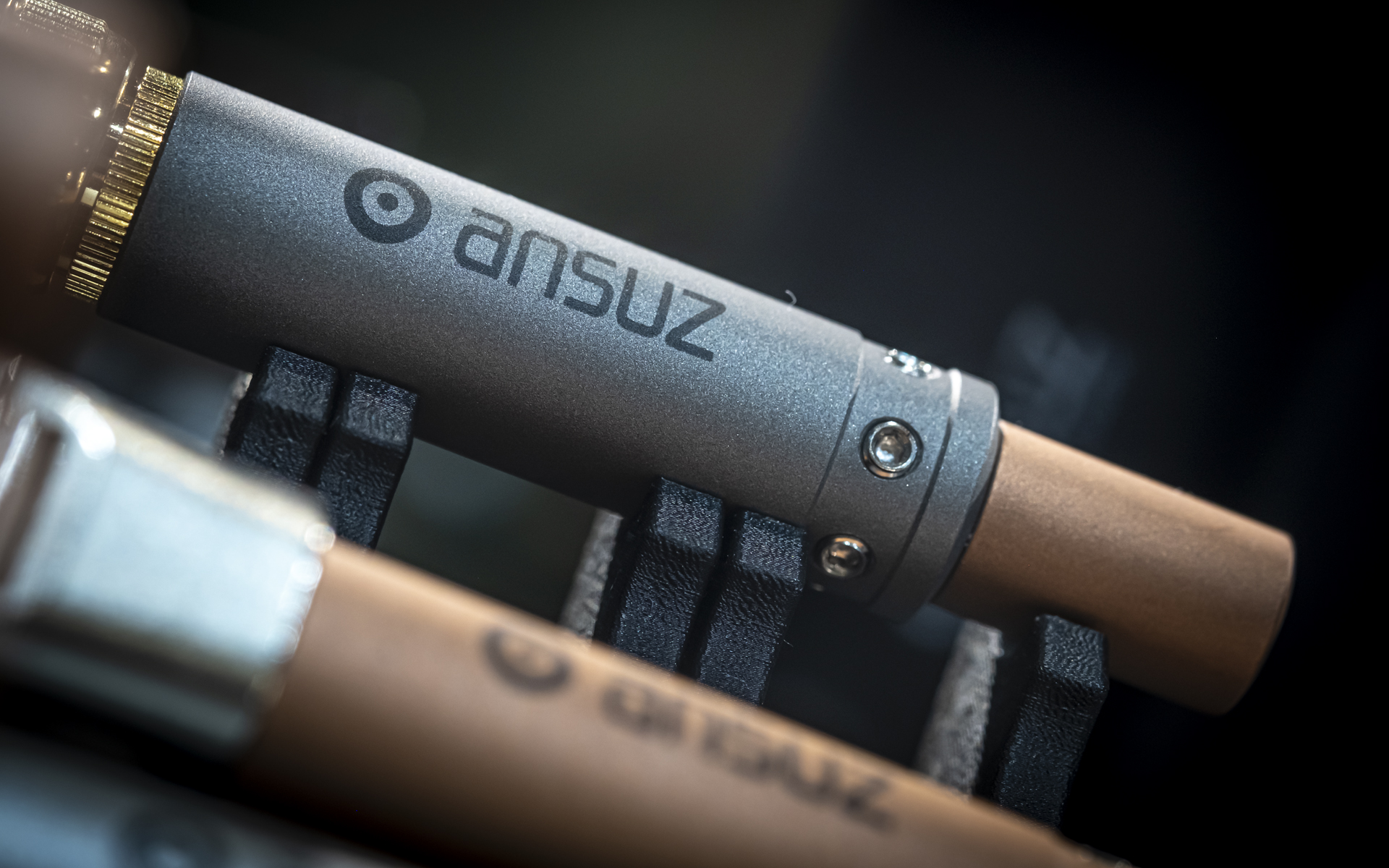 Asked about the transition, the people at Audio Group Denmark openly state that they have found a better way of reproducing bass and that the dipole route is it. That is a remarkably strong statement coming from a company that spent years refining ported designs to an exceptionally high standard. I am not aware of another upper-echelon loudspeaker manufacturer deeply invested in conventional ported or sealed architectures that would so openly admit to finding a superior alternative and then proceed to pursue a radically different concept at the very top of its range. Whether one agrees with that conclusion is almost secondary. The willingness to challenge one’s own established formula is risky business and rare enough. Doing so after years of commercial success and technical refinement is rarer still.
Bass Smarts
The way I see it, the M8 Gold Signature stands tall as a unicorn in this industry. Considering what it is, there’s simply nothing else like it to compare it to, regardless of how much money one has to spend. Not even in audio’s uppermost echelon. It’s a full-fledged one-off affair with no obvious alternative in sight. There’s more. RiPol subwoofers are exceedingly rare. Only a handful of boutique manufacturers offer them, which makes Børresen’s decision all the more interesting. With the M8 Gold Signature, the Danes effectively put a substantial spotlight on this unusual bass concept and significantly raised awareness of it among enthusiasts. In my book that’s a very good thing, particularly because I’m a sucker for RiPol subs. If you’re not aware of them yet, you should be too.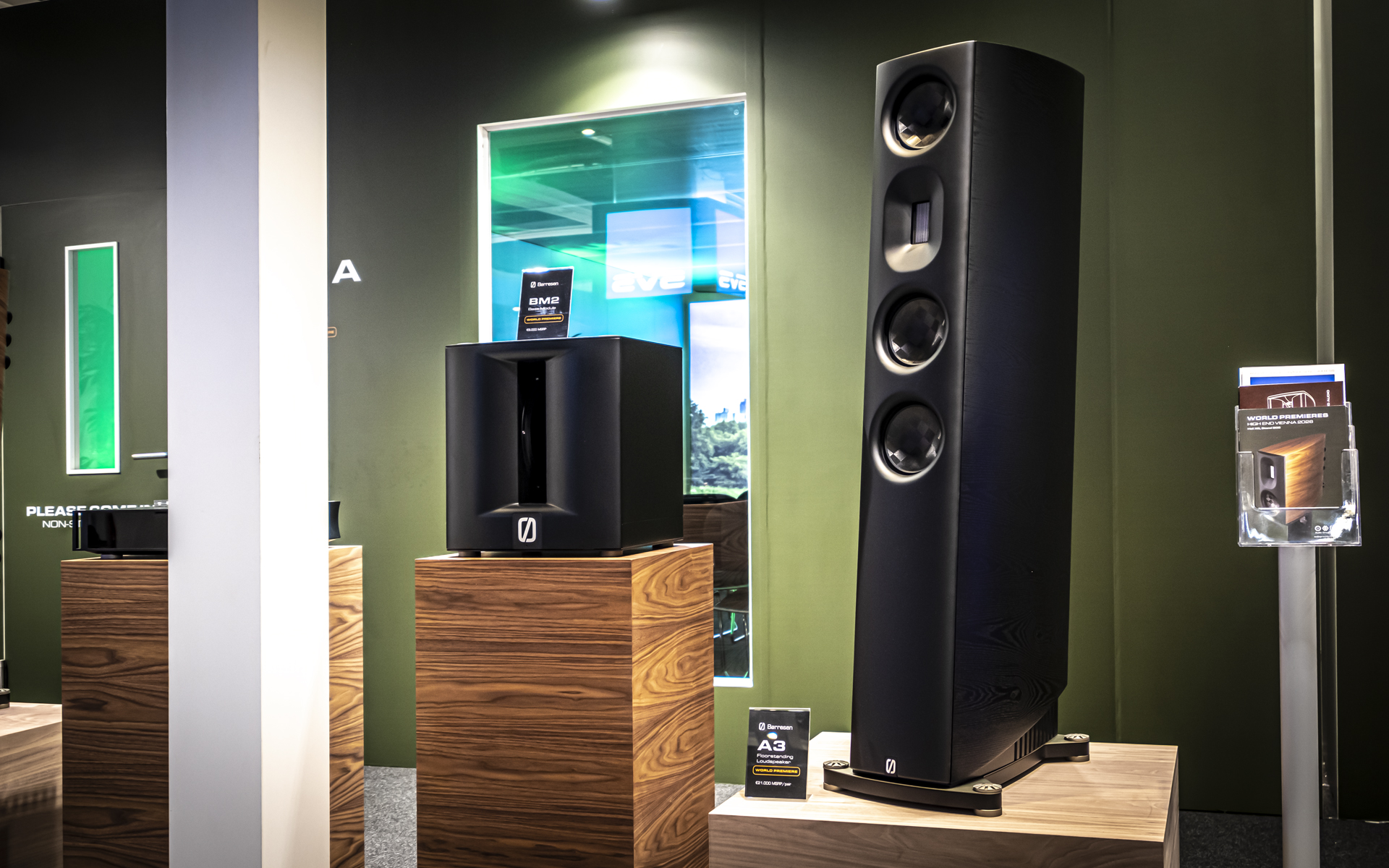 To me such subs represent the most elegant, high-performance and user-friendly way of doing bass, especially in regular living rooms where acoustic treatment is either undesirable or simply not an option. These niche arrangements are dipole by nature, so their sidewall cancellation zones allow them to excite room modes far less than conventional omnipolar subs and integrate with listening spaces far more gracefully in the process. They’re also air-velocity converters with remarkable self damping, not pressure generators. The distinction is important because it directly affects how low frequencies interact with the room and effectively us as listeners. The result is bass that to the ear registers as cleaner, faster and tighter; capable of genuinely tectonic scale and reach, yet accompanied by a noticeable reduction in room-induced excess and bloom. It is also inherently directional. There’s very little to dislike here, and knowing prior to the Vienna gig that AGD had plans to show two systems with such subs, I was fully sold on the idea of spending a lot of time there.
Listen Up!
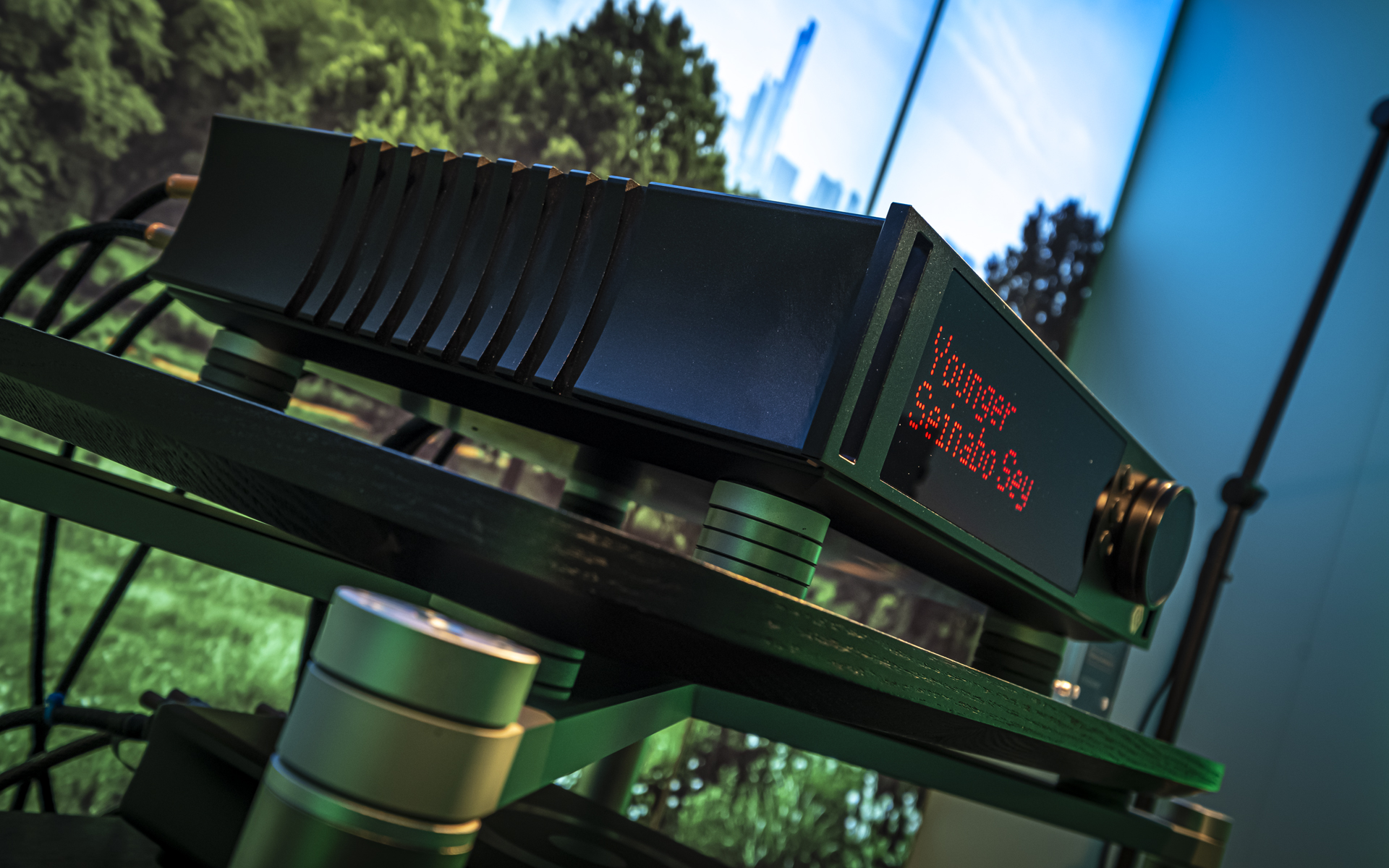
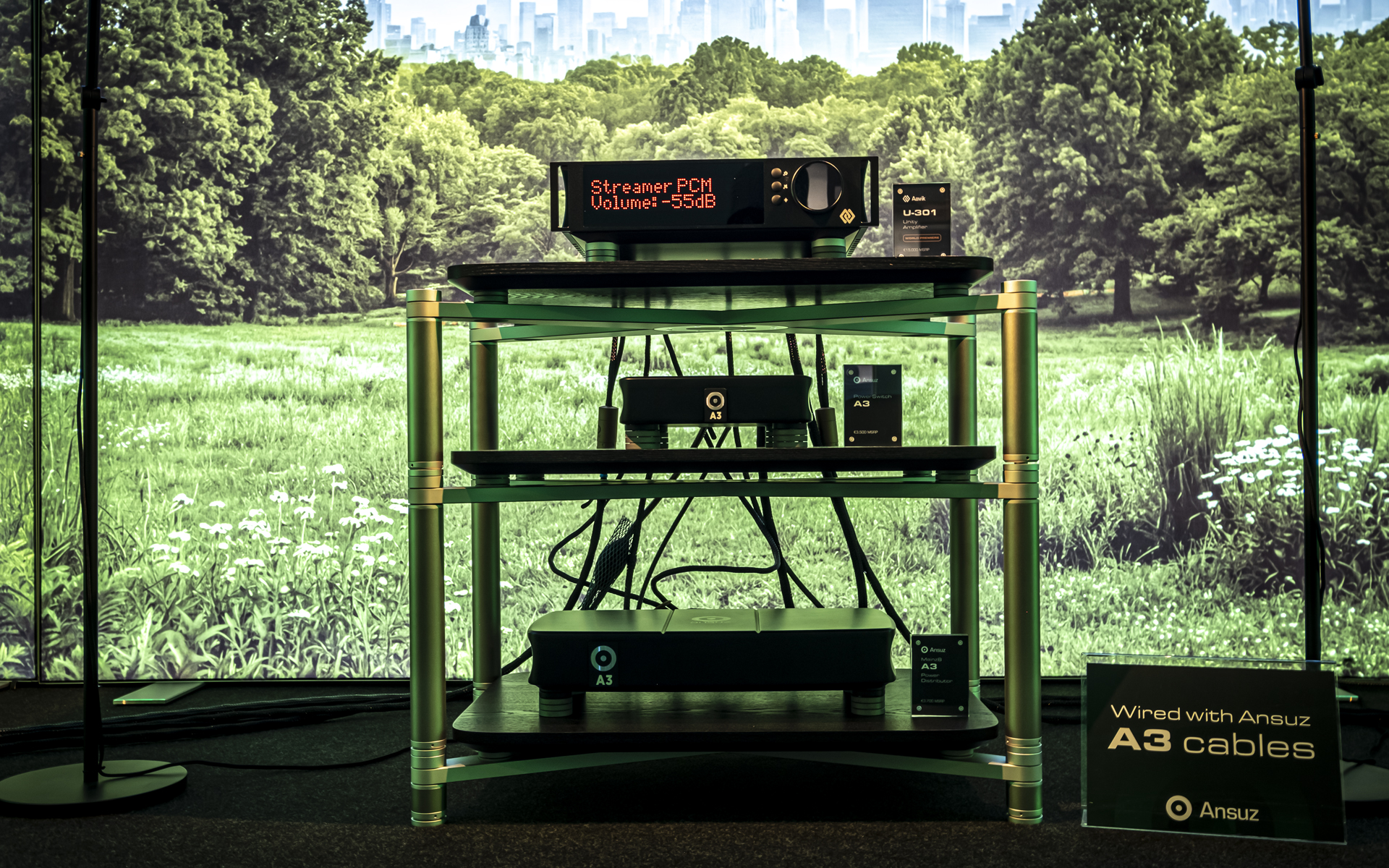
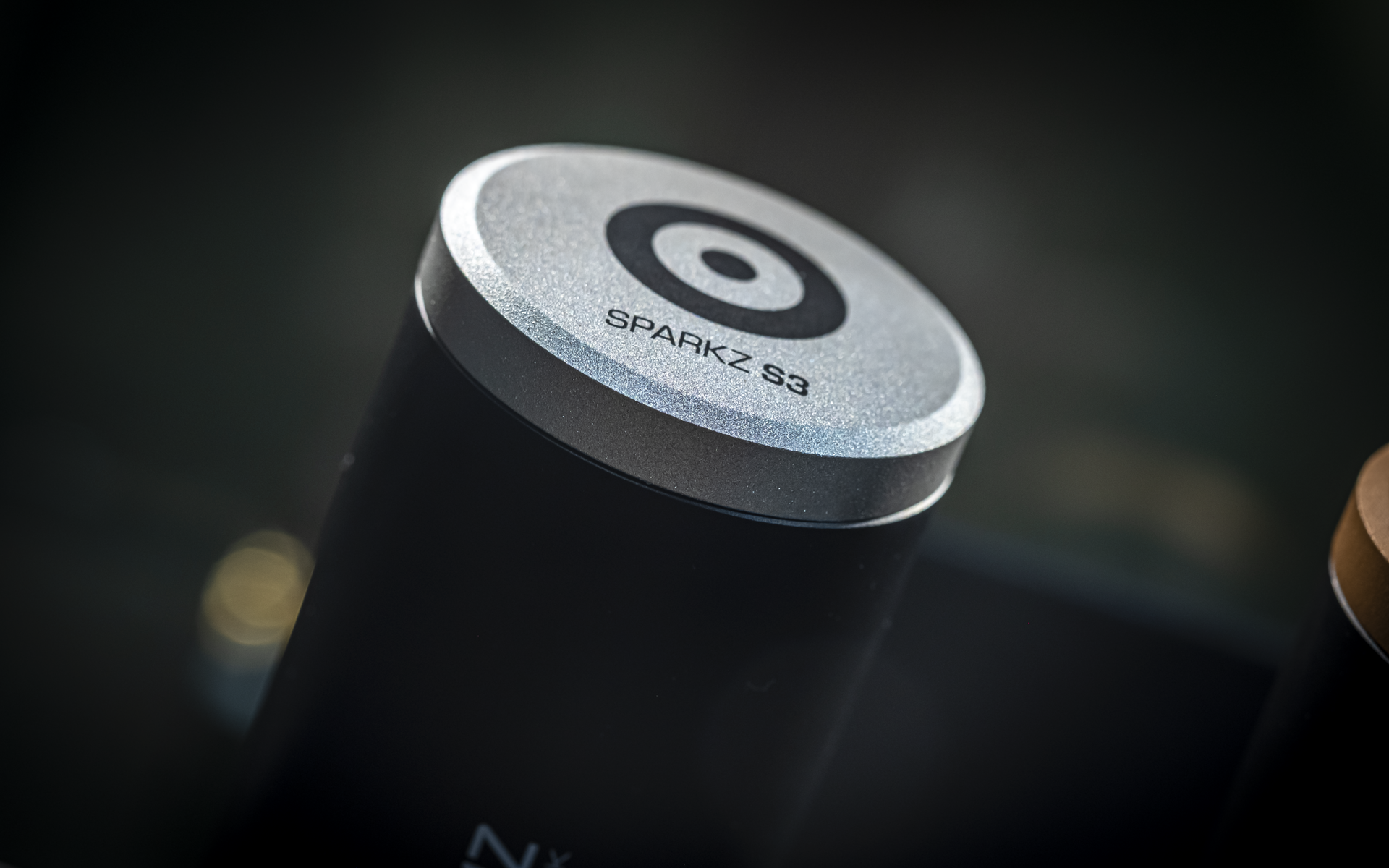
By Audio Group Denmark standards, the first listening room was not exactly entry-level, but affordable nonetheless. It also happened to be packed with new arrivals. The Børresen A1 monitors dressed in walnut veneers, priced at €10’000/pr and perched atop visually classy, well-matched stands, were clearly inspired by the brand’s long-discontinued O-series, the brand’s very first loudspeaker range. The same applied to the A3 floorstanders positioned at the front of the room, and busy with matte-black finned plinths, visual cues very much in line with the design language of Flemming E. Rasmussen.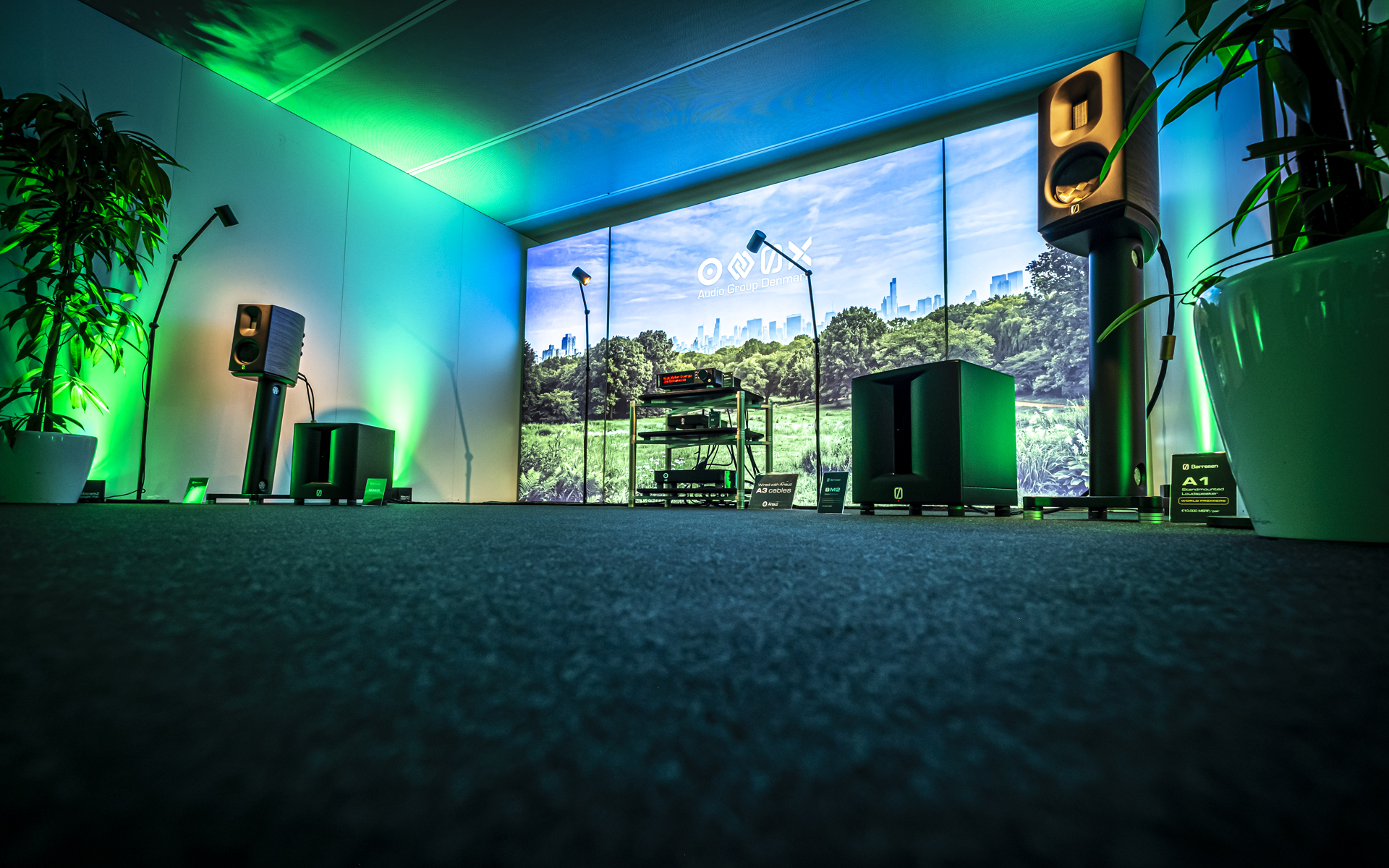 Sharing the spotlight was the latest Aavik U-301 unity amplifier, a visually attractive all-in-one machine that combines streamer, DAC, preamplifier and power amplifier duties within a single enclosure. Priced at €15’000, this product pays homage to the very first Aavik integrated amplifier ever made. That original design was so visually successful that, years ago, Chinese clones of its enclosure could be found without much effort. The U-301 was conceived to bridge the gap between the Axxess Forte 3 platform and the Aavik U-188. As such, it is a more streamlined interpretation of the latter concept, equipped with a simpler chassis and fewer noise-rejecting technologies, yet retaining the same power supply architecture, digital circuitry and output stage. It also has one damn fine enclosure to boot, unmistakably Flemming’s handiwork.
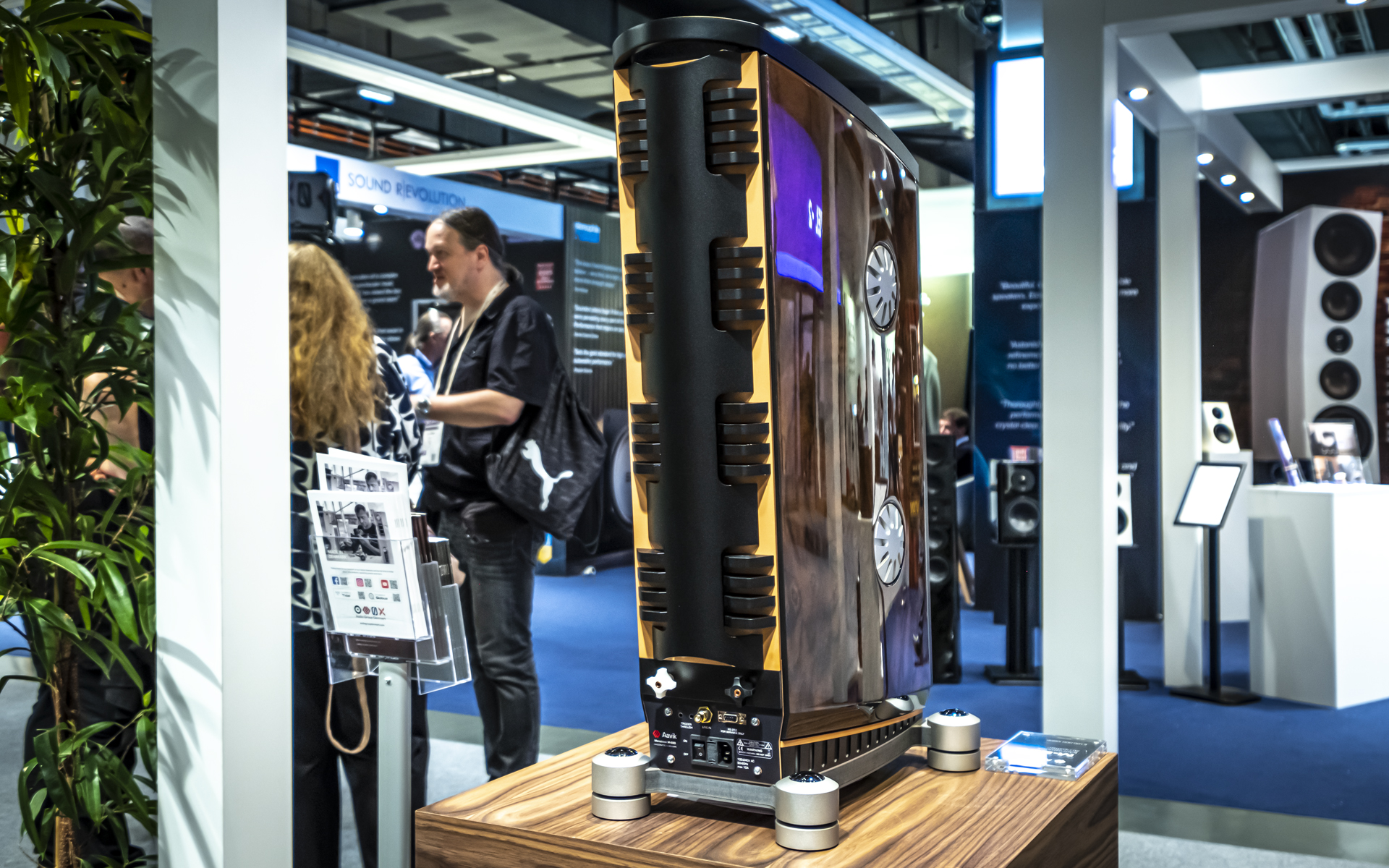
Lastly, there was the new Børresen BM2 bass module positioned next to each A1 monitor. This product is essentially a scaled-down version of the prohibitively expensive BM3. The newcomer likewise relies on the company’s folded dipole principle, albeit with two outsourced 10-inch woofers, no remote control and all user adjustments relocated to the rear panel. Priced at €7’500, it is significantly more affordable and, to my great joy, far more compact. As a self-powered design equipped with its own fully analog low-pass filter network, it can be integrated into the vast majority of stereo systems without much fuss. Most importantly, the BM2 represents Børresen’s first serious attempt at making its folded-dipole bass technology accessible to a far wider audience.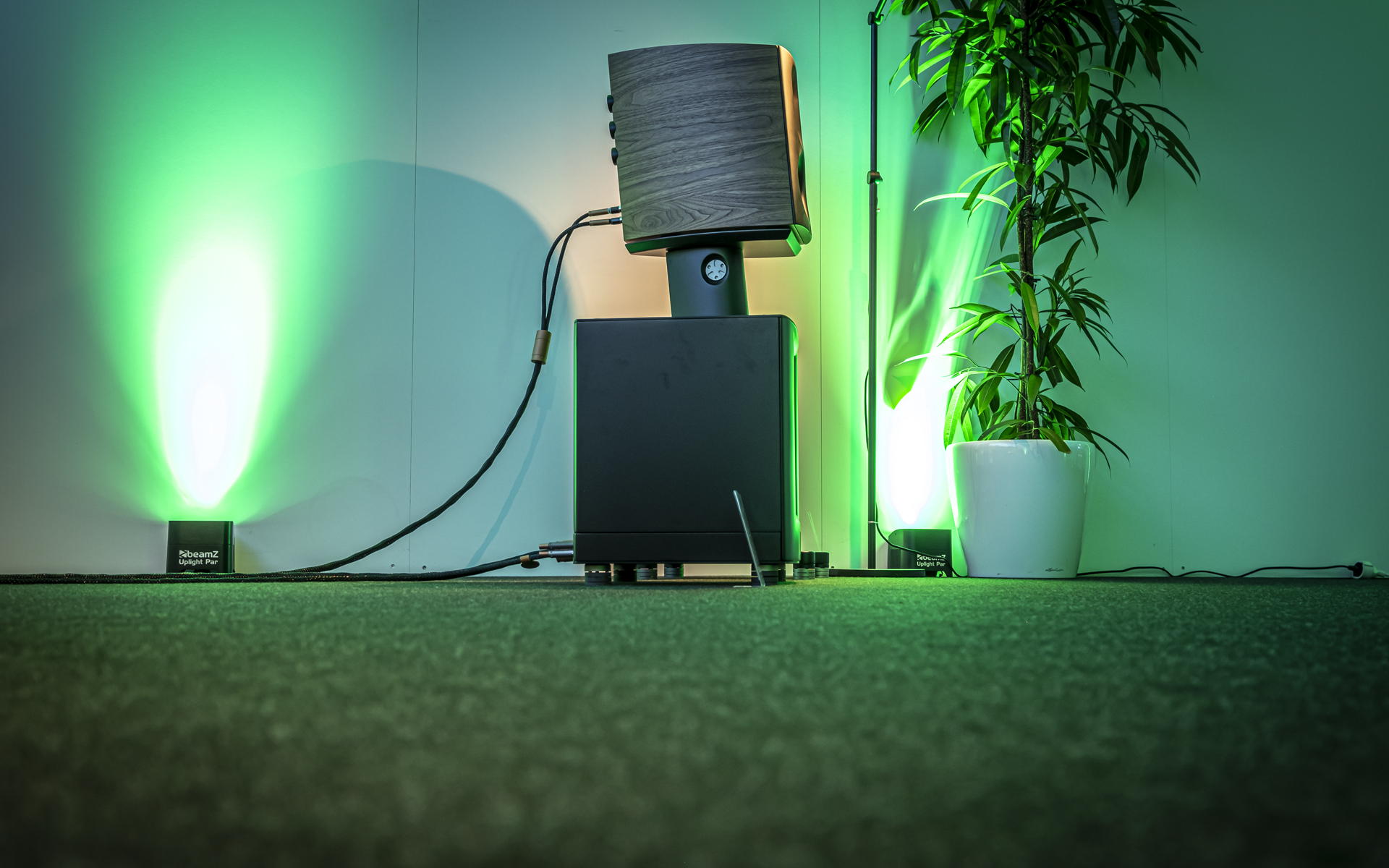 Prior to explaining how Audio Group Denmark’s rooms sounded, I should mention that I’m more than familiar with the company’s philosophy, products and overall sonic trajectory. Over the years I’ve reviewed quite a few of its offerings and experienced many others during my visits to Aalborg, so I have a fairly solid reference point. This is why I feel entirely comfortable sharing what the Danes accomplished in Vienna. And they accomplished quite a lot. On top of that, they allowed me to play the very tracks I routinely use in my reviews, which removed one of the biggest variables typically associated with audio shows.
The Børresen A1 monitors partnered with the Aavik U-301 and supported by a pair of BM2 bass modules in the company’s “affordable” room made a rather convincing dent in the common belief that a high-performance stereo system shouldn’t extend beyond just one speaker per channel. Srajan at 6moons.com has been vocal for many years that it very much should, just with an intelligently incorporated dipole sub. Now we know that Audio Group Denmark agrees and for the same reasons. Experience less room talk, get better sound in the process. Simple as.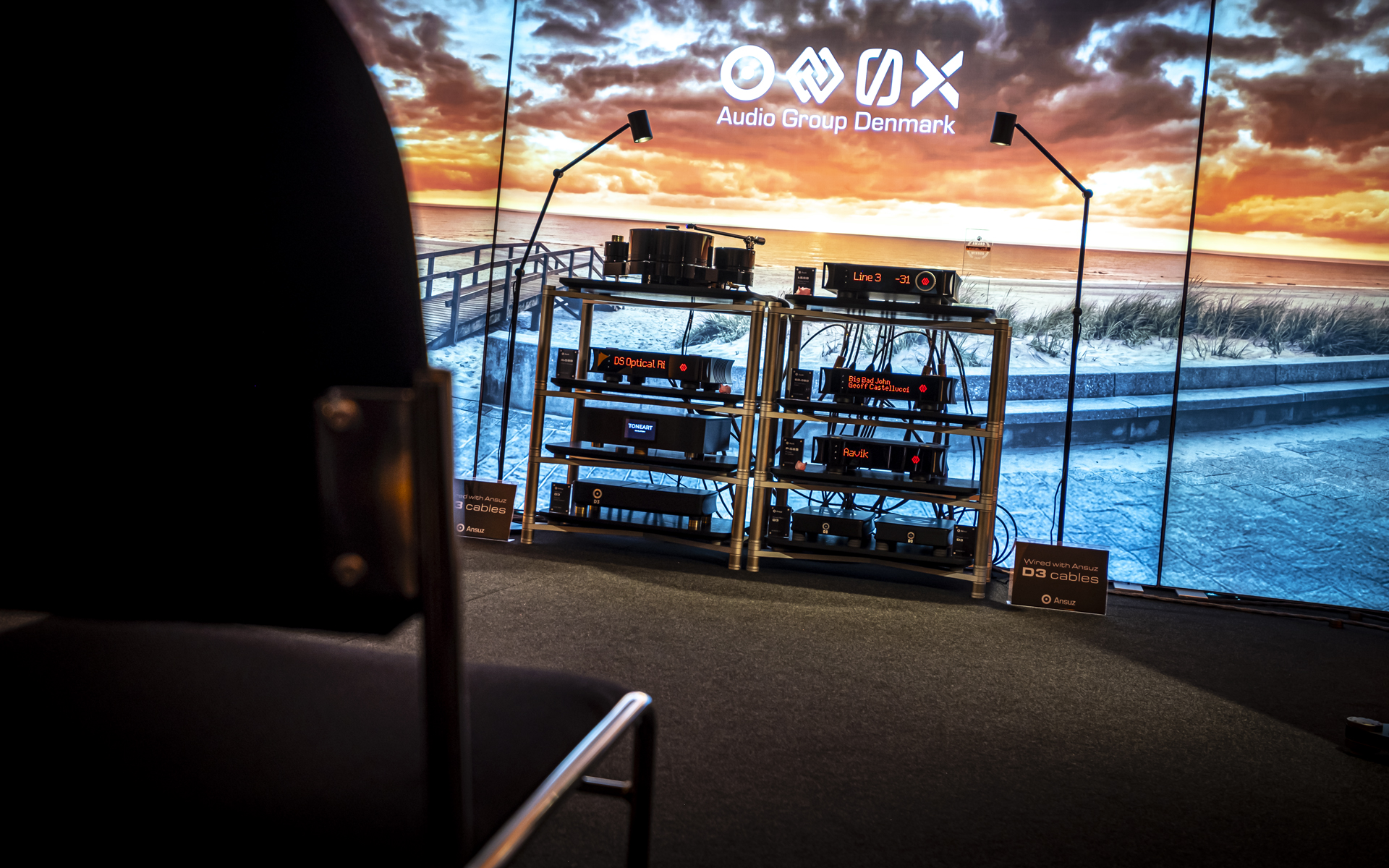 To a large extent, the Danish entry-level setup did exactly that. It was quick, resolved, controlled, feisty and effortlessly capable. It was also spatially grand, nuanced and packed with color. The particular sensation of speed, scale and directness was constantly present, accompanied by the impression of a system that wasn’t even remotely confused about what it was and what it had been designed to do. Everything felt purposeful, coherent and very much on message.
Over three days I’ve listened to that setup for a total of roughly three hours, give or take. During that time quite a few people came and went, and I had ample opportunity to observe their reactions. Some left the room in silence, others openly expressed their interest, but many seemed genuinely caught off guard by the system’s unusual and exceptionally accomplished bass performance. No wonder. To my knowledge, Voxativ was the only other manufacturer at the venue that showcased a topologically similar bass solution. My point is that most visitors have no idea what a RiPol arrangement is, so its core strengths remain a mystery to them. At first glance they may mistake it for yet another conventional bass bin and expect conventional results. Then the music starts. The realization that this isn’t a typical subwoofer at all, yet remains extraordinarily gifted in all things low-frequency, is precisely what triggers the familiar “wow, but how?” reaction. One moment listeners think they know what they’re looking at. The next they hear bass that behaves very differently from what experience has taught them to expect. Wow indeed. I’ve been down that rabbit hole myself, so now it’s my duty to spread the word.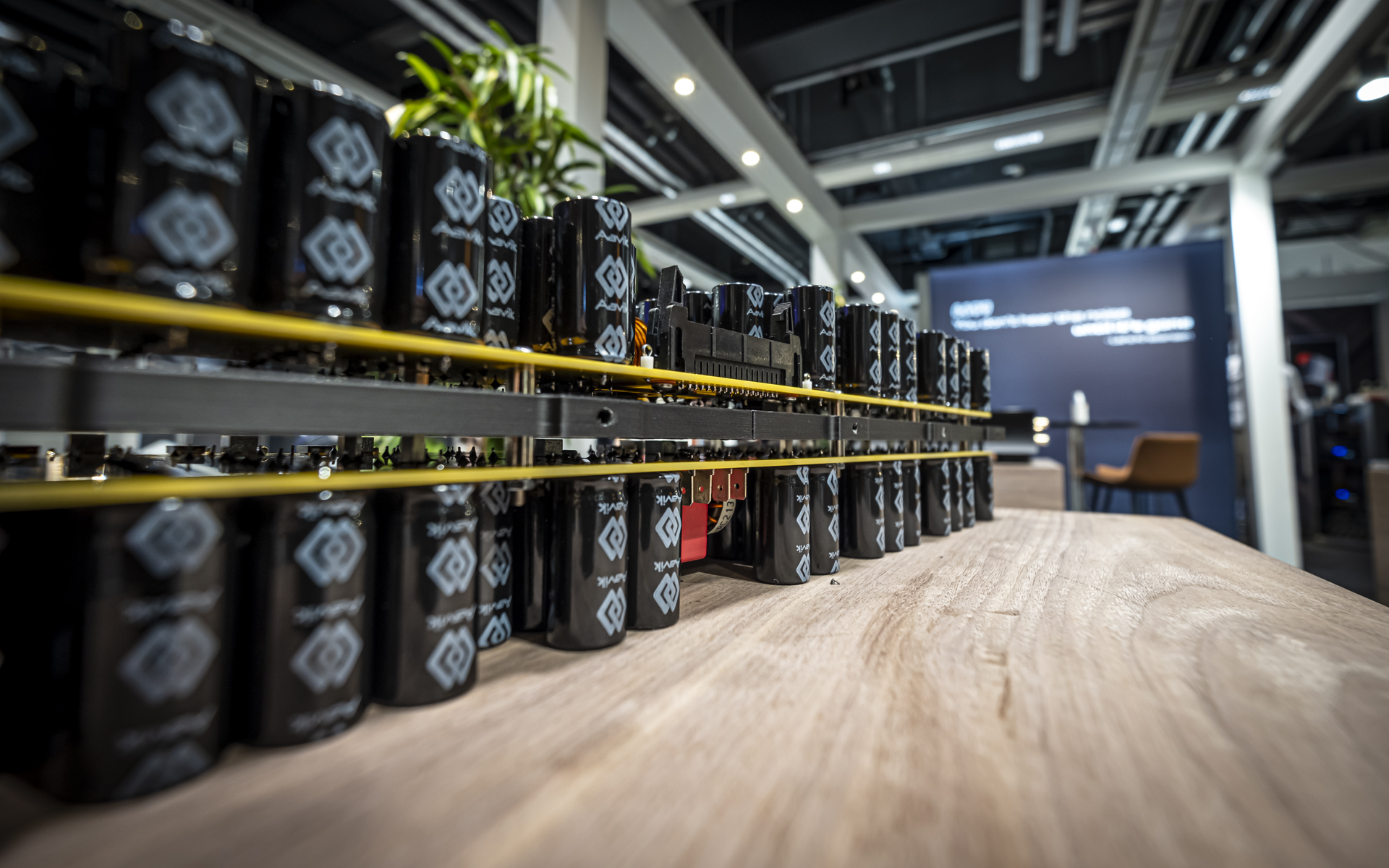 While the performance in the A1/U-301/BM2 room was already ace and properly sporty as is, the key utility responsible for unlocking the final bit of system intelligence and performance wasn’t there by design. The subject in question is an active high-pass crossover that limits the low-frequency workload assigned to the main speakers. If you’re wondering why anyone would want to do that, the answer is rather simple. A dedicated subwoofer is purpose-built for bass reproduction and, in most cases, will do a better job of it. There’s little reason for the speakers to overlap with it, particularly in the case of passive monitors, where low-frequency output is often the first area to encounter meaningful limitations. High-passing the main speakers addresses exactly that.
The Aavik U-301 doesn’t feature Audio Group Denmark’s analog active crossover network. As a result, the system was deliberately assembled to demonstrate what happens when a BM2 bass module is added to what is, for all practical purposes, still a conventional monitor-based stereo setup, with the monitors operating full range. In other words, visitors were shown the benefits of folded-dipole bass support, but not yet the full extent of what Audio Group Denmark’s active integration strategy can bring to the table. For that, they had to move to the next room. Should financial considerations be of no importance, that’s where you’d want to be, and for hours to come.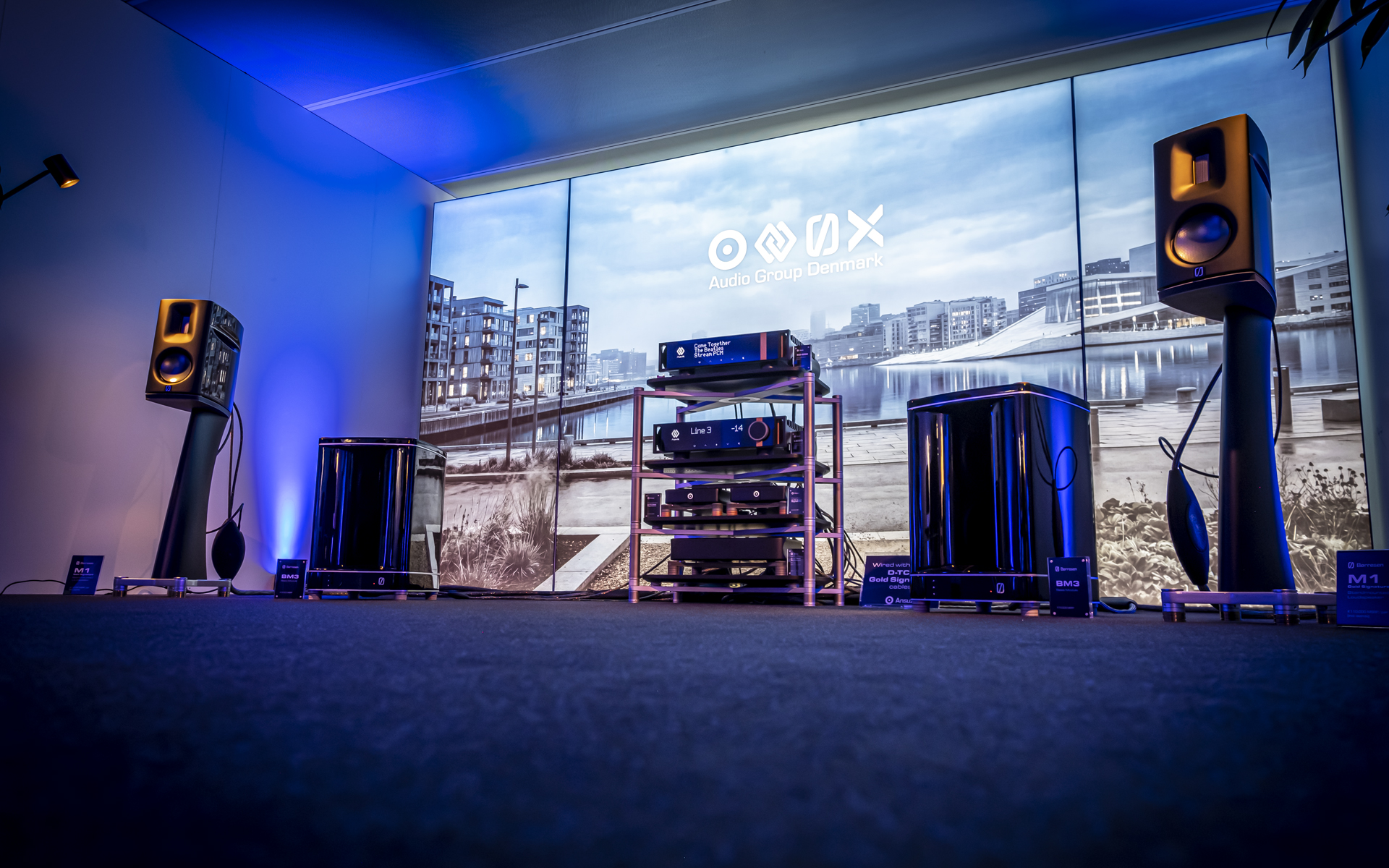 Just like the room before it, the second booth also featured a system built around Aavik electronics, Børresen monitors and twin dipole bass modules. The difference lay in the pedigree of these components. M1s replaced A1s, twin BM2s made way for an equal number of BM3s, while the Aavik U-301 yielded its place to the considerably more ambitious combination of the I-880 integrated amplifier and SD-880 streaming DAC. Sprinkle in top-tier Ansuz cabling, a matching power distributor and various accessories, and presto. I could write an essay on how that system sounded, and it’s tempting to do exactly that, particularly when I consider my previous encounters with the M1 and I-880. For what it’s worth, the sensations of spatial scale and blackness, nuance, imaging specificity, cleanliness, color intensity, radiance, effortlessness, lucidity, speed, horsepower, overall heft and finesse all seemed multiplied by at least a factor of two.
The room housing that fancy system also talked even less than the previous one. Credit for that goes partly to the higher-tier and quite wicked M1 monitors, but also to the crossover circuitry inside the Aavik I-880, which allowed them to be actively high-passed. Once relieved of the lowest octaves, the monitors could focus entirely on the frequency range they handle best, while the BM3 modules took care of everything below. The result was a presentation that felt even more composed, more authoritative and, perhaps most importantly, more liberated. To my ears, this system played at a level that placed it comfortably above most of what I heard in Vienna, including a fair number of eye-wateringly expensive setups showcased in substantially larger rooms.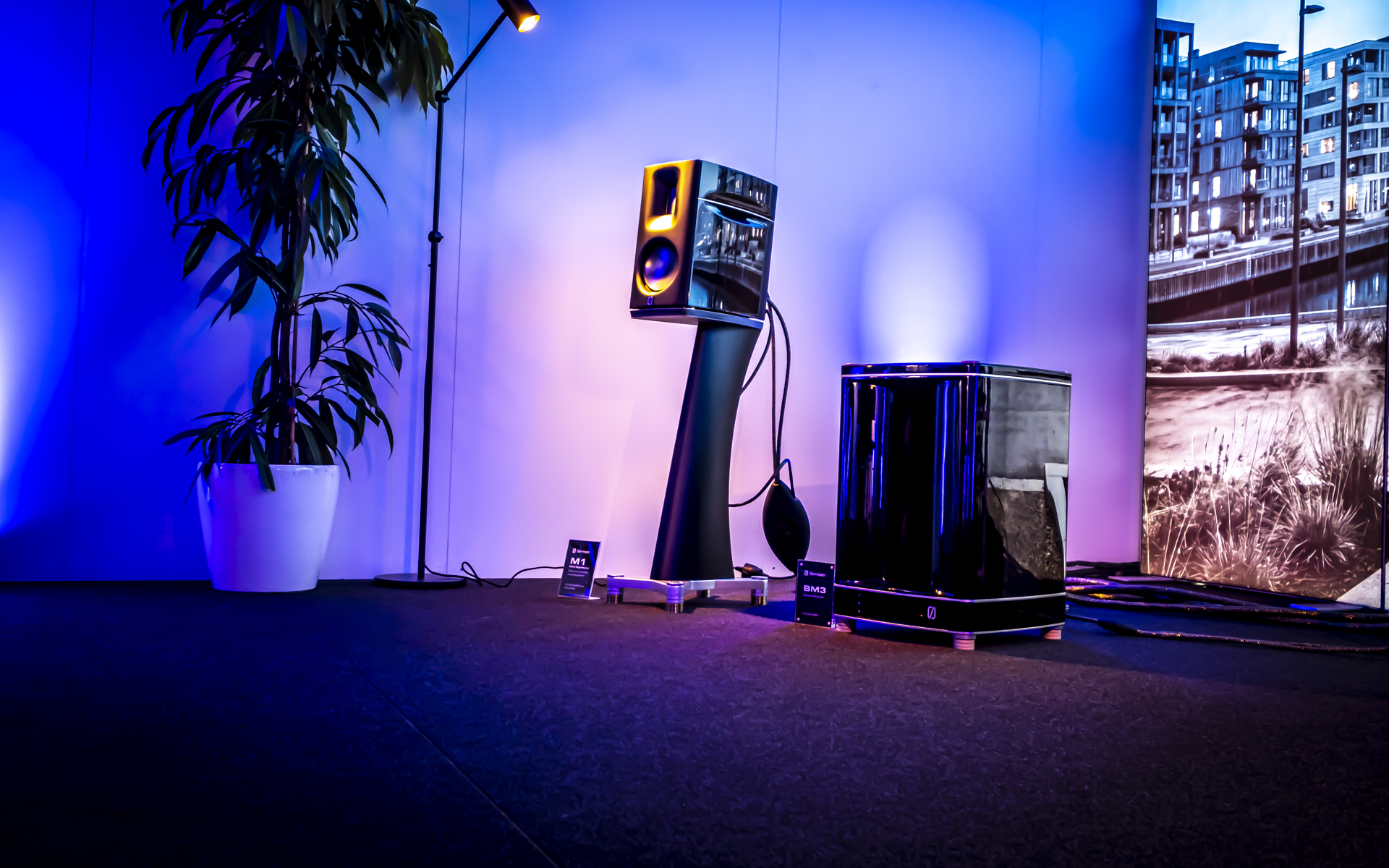 In hindsight, I think that having two similarly assembled yet differently tiered systems positioned right next to one another was a very smart move on the Danes’ part. That way visitors could easily experience the performance delta for themselves and, perhaps more importantly, understand that there really are levels to this game.
To me, however, the Børresen bass modules stole the show. To such an extent, in fact, that I spent relatively little time in the third room. It featured C3 floorstanders partnered with x88-series electronics, so plenty posh hardware already and a very capable setup in its own right. That said, in one of my earlier reviews I remarked that dipole propagation is not something I can personally unhear, and that observation remains true today. As far as bass reproduction is concerned, that’s my reference point. In that sense it’s ultimately a matter of taste. Reviewers gravitate towards specific technologies just like every other enthusiast, and they’re biased too. I certainly am. Once you’ve grown accustomed to a particular solution and repeatedly experienced its advantages, it’s difficult not to view alternatives through that lens. Folded and regular dipoles happen to be mine. They also make conventional loudspeakers considerably less appealing to me than they used to be.
Show Highlights
I hope the above paints a reasonably accurate picture of what Audio Group Denmark aimed to achieve in Vienna and why I found the result so refreshing. In an industry that increasingly seems obsessed with escalating size and room requirements few people can realistically accommodate, the Danes presented something different. Their message wasn’t about making things smaller or cheaper. Rather, it was about making them smarter. Judging by the steady flow of visitors and many conversations I overheard throughout the event, I suspect quite a few attendees would agree that they succeeded.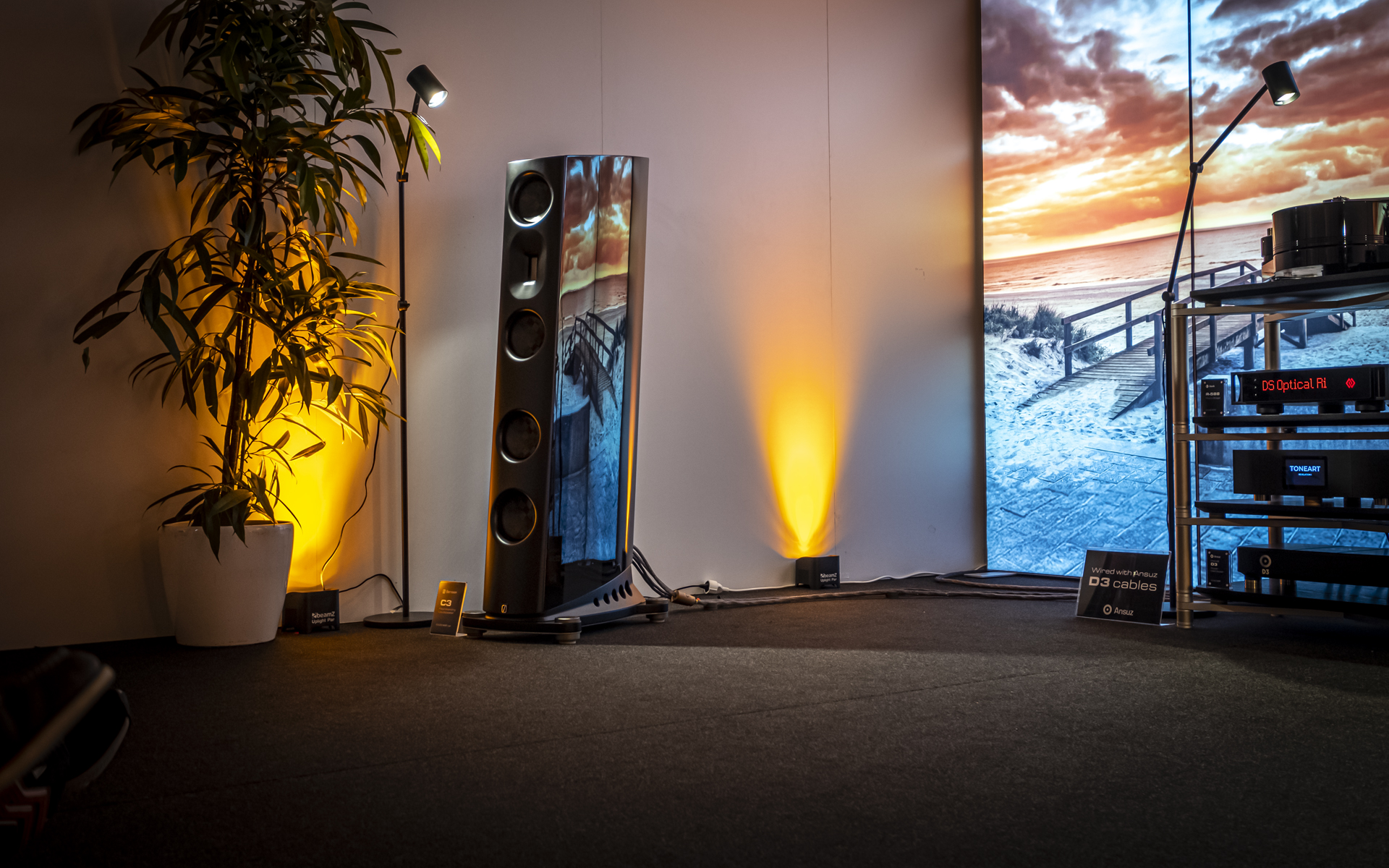 It’s only fair, however, to acknowledge several other manufacturers who caught my attention for all the right reasons. The Polish Lirogon loudspeakers fronted by the Everest streamer/server and Vitus electronics somewhat defied expectations associated with electrostatic designs by producing sound that was pleasantly anchored, substantial and grounded. Sven Boenicke once again made a compelling case for his W5 monitors, proving that these compact speakers are capable of far more than most people would ever require in smaller spaces. Having used them exclusively in a nearfield setup for years, I found it a useful reminder that they’re equally comfortable operating well beyond that role.
 Albeit costly, the German Auer loudspeakers built around Panzerholz enclosures and Scan-Speak Revelator drivers performed admirably as well. The same can be said of Alberto Guerra’s latest GaNFet-infused electronics showcased on Bayz Audio loudspeakers. Team Innuos had their flagship Nazaré machine spread across quite a few rooms, but the real eye-opener for me was the effect of adding the NazaréFLOW reclocker to the main unit during one of the company’s presentations. The difference wasn’t subtle. LampizatOr’s Horizon360X DAC and GulfStream2 server/streamer paired with Fezz monoblocks and AudioNec loudspeakers also left a very positive impression. Vienna certainly wasn’t short on noteworthy systems. It just so happened that Audio Group Denmark’s particular approach aligned exceptionally well with my own priorities and preferences.
Flemming
When I said that audio events are primarily social experiences to me, I meant it. Sven Boenicke, Łukasz Fikus, Amelia Santos, Nuno Vitorino and several other familiar faces have become my constants over the years. Whenever an audio show comes around, seeing them again is about as certain as death and taxes. At camp AGD there’s Lars Kristensen, who always seems to enjoy himself while manning the booth, Frits Dalmose, who does much the same but isn’t nearly as expressive about it, Michael Børresen, perpetually ready to discuss the finer points of audio engineering, and quite a few other Danes whose company I thoroughly enjoy. Then there’s Flemming Erik Rasmussen.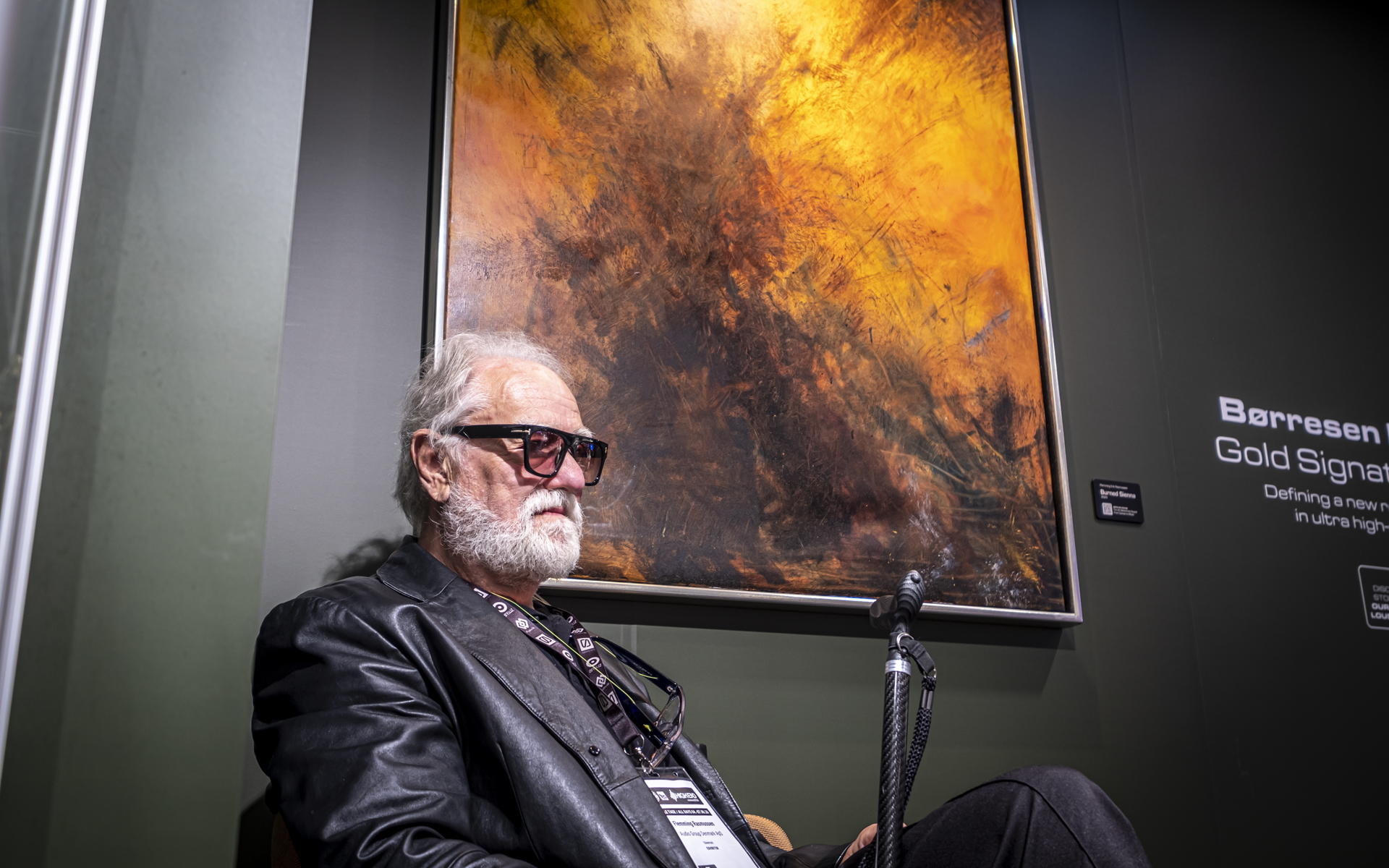 Always calm. Always approachable. Always curious about other people and genuinely keen to listen. Always armed with an interesting story or two, often accompanied by the kind of wisdom only someone with decades of experience in this industry can casually weave into a conversation. Whether the topic is loudspeaker design, industrial design, business, travel or something entirely unrelated to audio, talking to him is inspiring, comforting and almost surreal given all the noise and venue haze surrounding it.
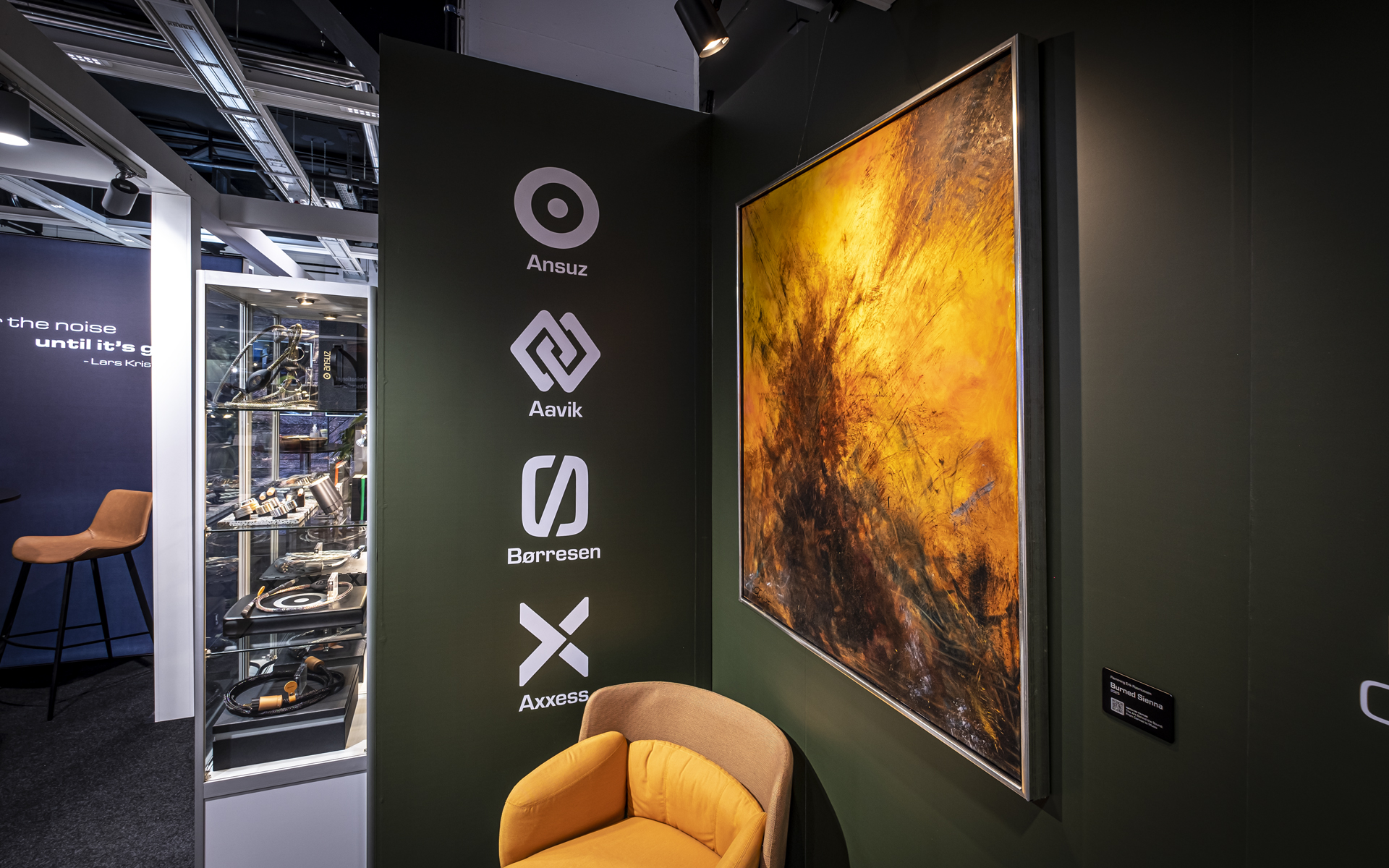 I was aware of Flemming’s artistic education and knew that he had once been a painter. Then, for many years, the audio industry became his canvas. Through the visual design of countless audio products he found another way to express himself as an artist, which resulted in a break from painting that lasted… nearly fifty years. Flemming returned to it only four years ago. By then his style had shifted from surrealism to abstract painting, a transition that perhaps shouldn’t come as a surprise given how much his professional work has always gravitated towards form, proportion and visual expression.
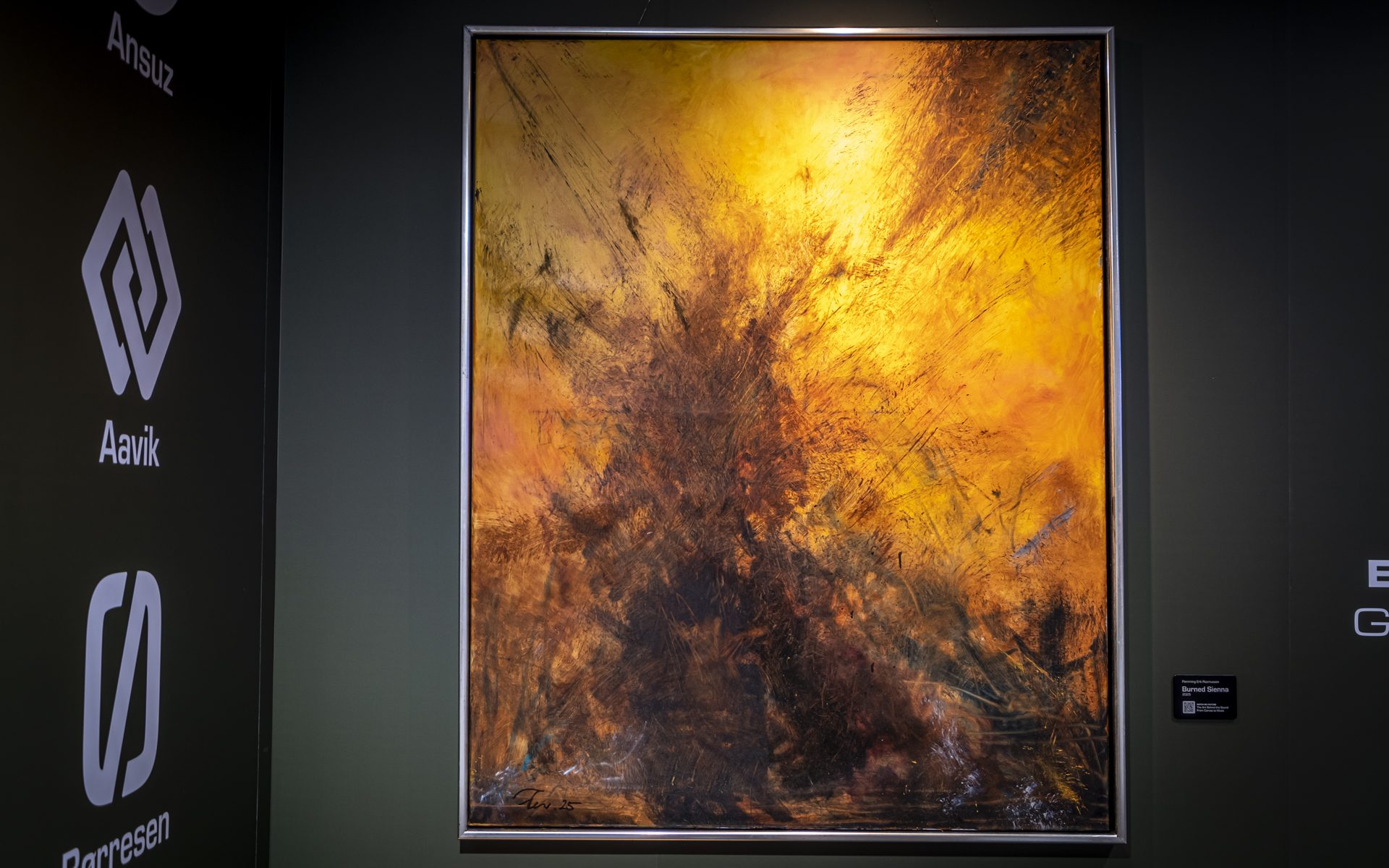 At the AGD spot in Vienna, one of his latest works titled Burned Sienna was showcased. Although abstract in nature, its atmosphere and earthy palette immediately reminded me of Zdzisław Beksiński, a Polish artist who happens to be Flemming’s favorite and mine as well. Perhaps that’s one of the reasons why the two of us get along so well. Perhaps that’s also why, amidst all the noise, rush and sensory overload that inevitably accompany large audio shows, he feels like a lighthouse at sea to me. Not because of what he does, but because of who he is. Without people like him, this entire wonderfully eccentric audio thing wouldn’t be nearly as interesting. I feel very lucky to have crossed paths with him. On that note, it’s time to wrap.
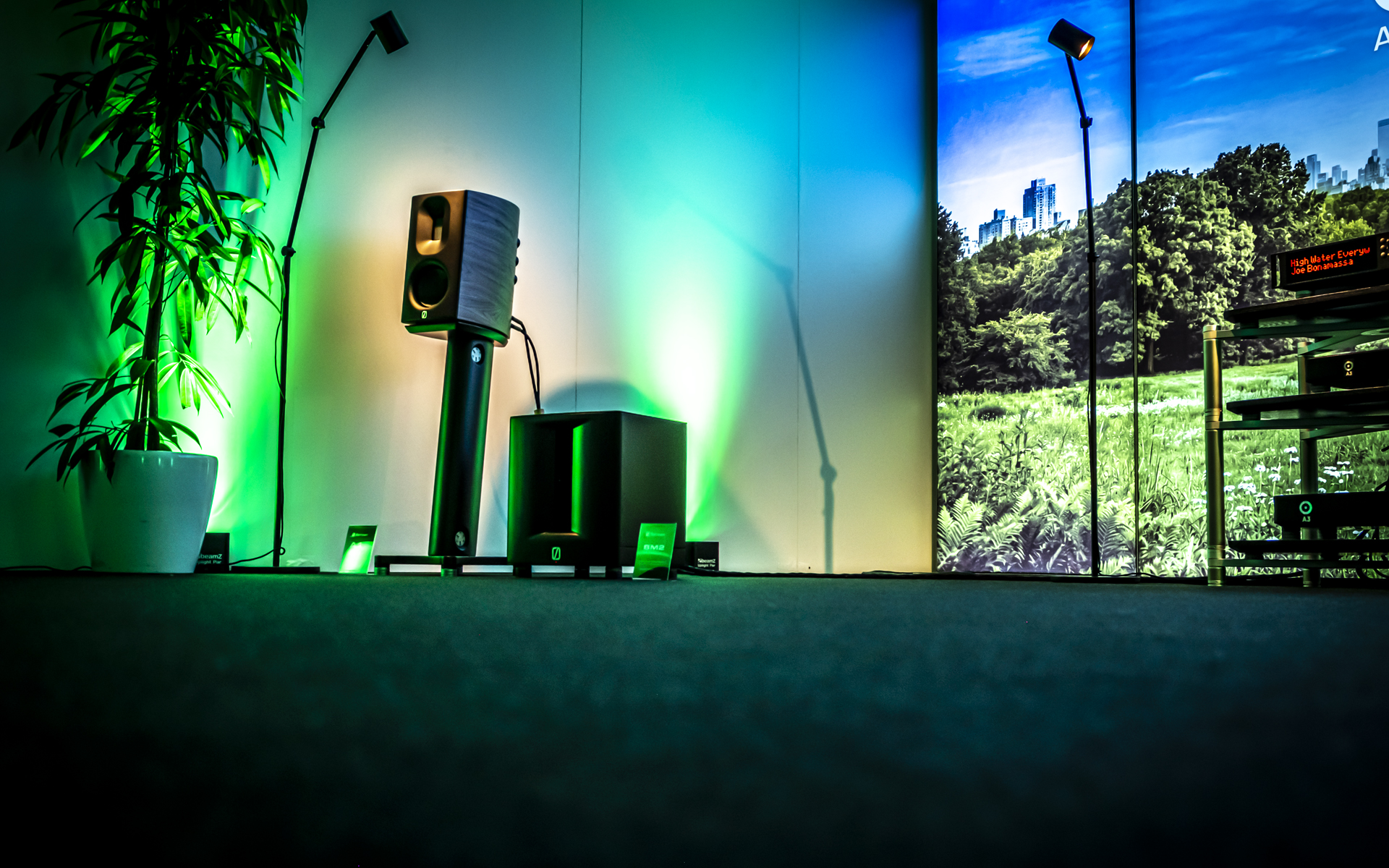
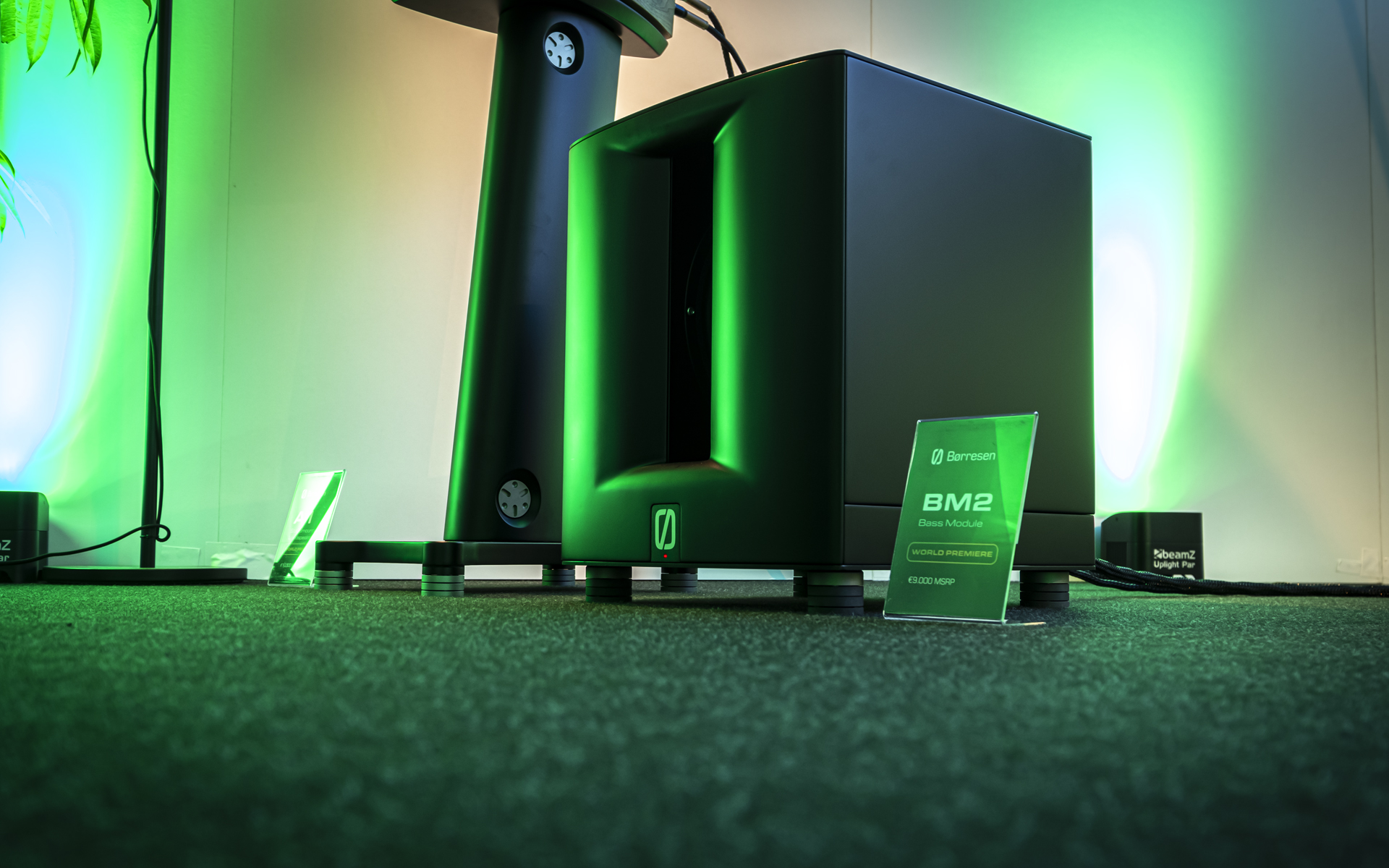
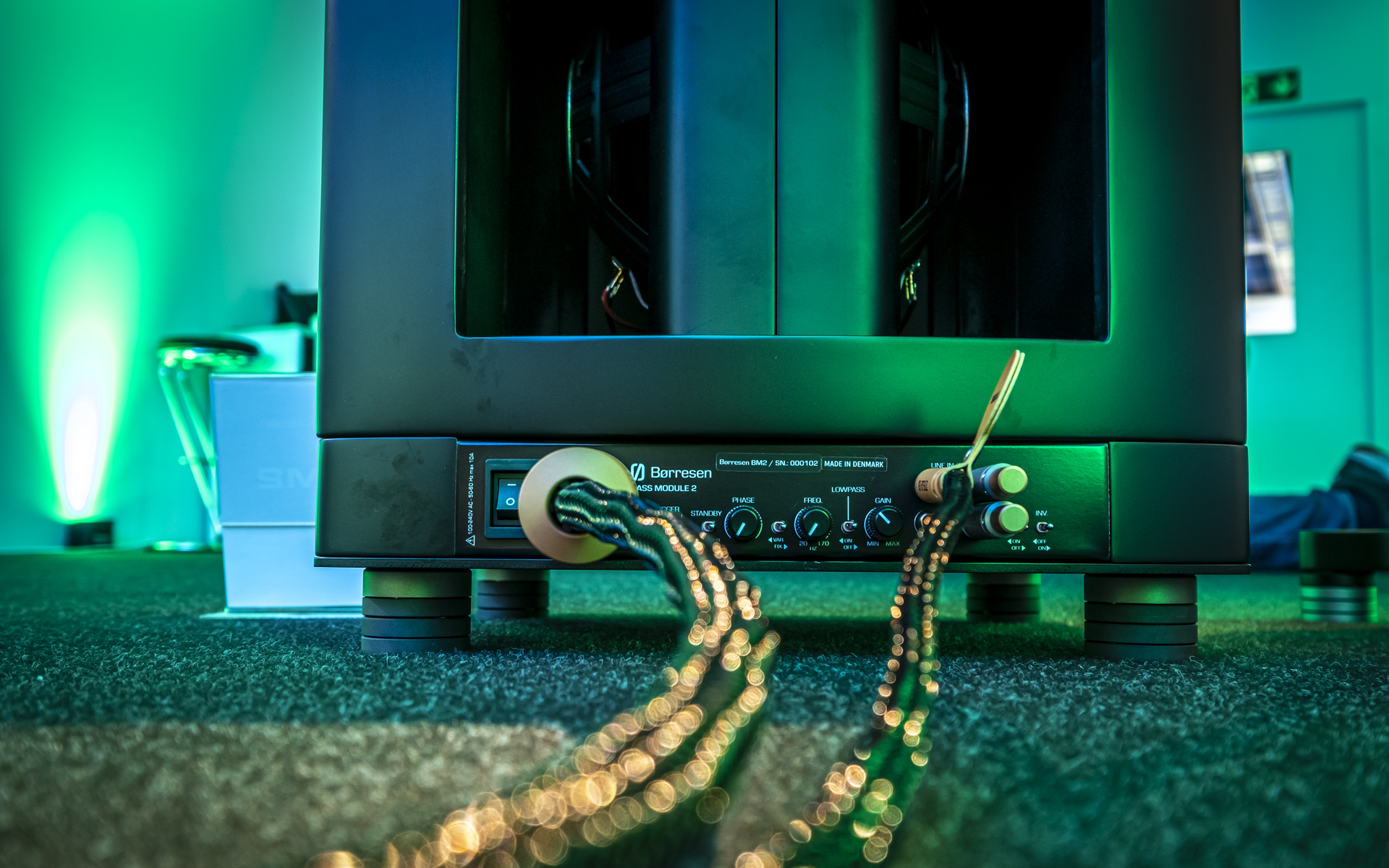
Many thanks to Audio Group Denmark for having me, and for providing a fitting excuse to dust off my long-retired show-reporting hat.
Axxess
Aavik
Ansuz
Børresen