

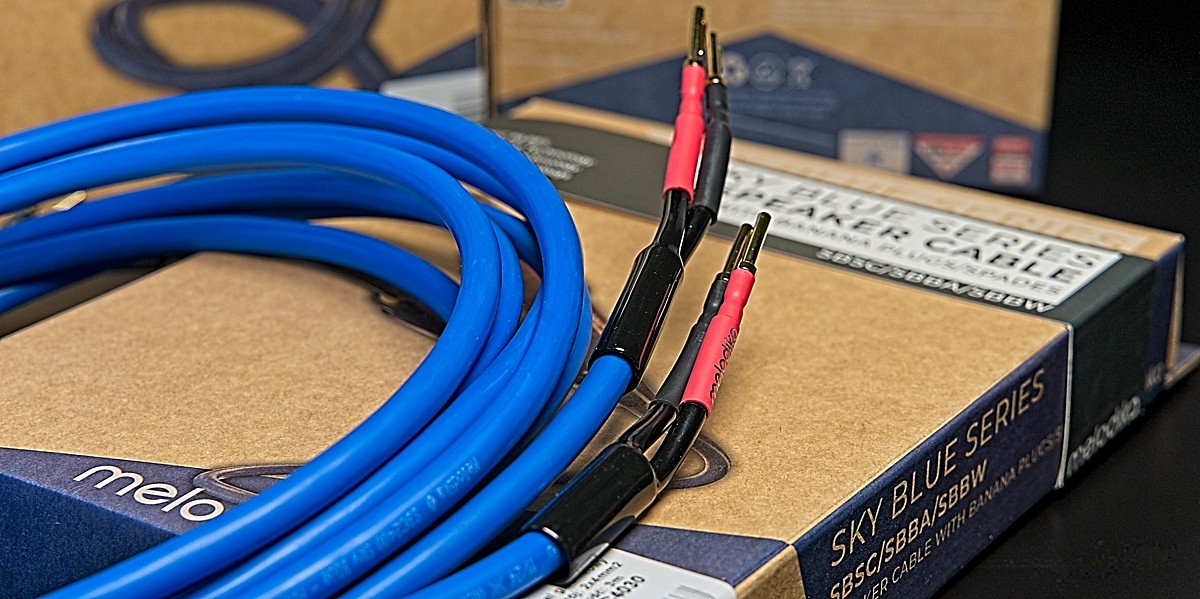
I have reviewed quite a lot of cables for you over the years, and most of them, while not super-expensive, could still be considered an extravagance by many, if not most, music lovers. The latter often, instead of buying ‘audiophile’ cables, chose some generic ones available at a nearby electronics store. What if I told you that you could probably afford to buy audiophile products for just a little bit more? Let me introduce the Melodika Sky Blue Series interconnect and speaker cables.
Introduction
A while back (I mean at least 15-20 years ago), when composing an audio system, a rule of thumb was to spend no more than 10% of your budget on cables. Back then, cables were considered (necessary, but still only) accessories and treated as such. You couldn’t do without them, but no one saw any reason to spend a considerable amount of money on them. The times have changed, whether you like it or not. Today, many, if not most, audiophiles consider cables to be as important components of a setup as any others. Therefore, they are ready to spend significantly more on them than, say, 20 years ago (and I don’t even factor in inflation).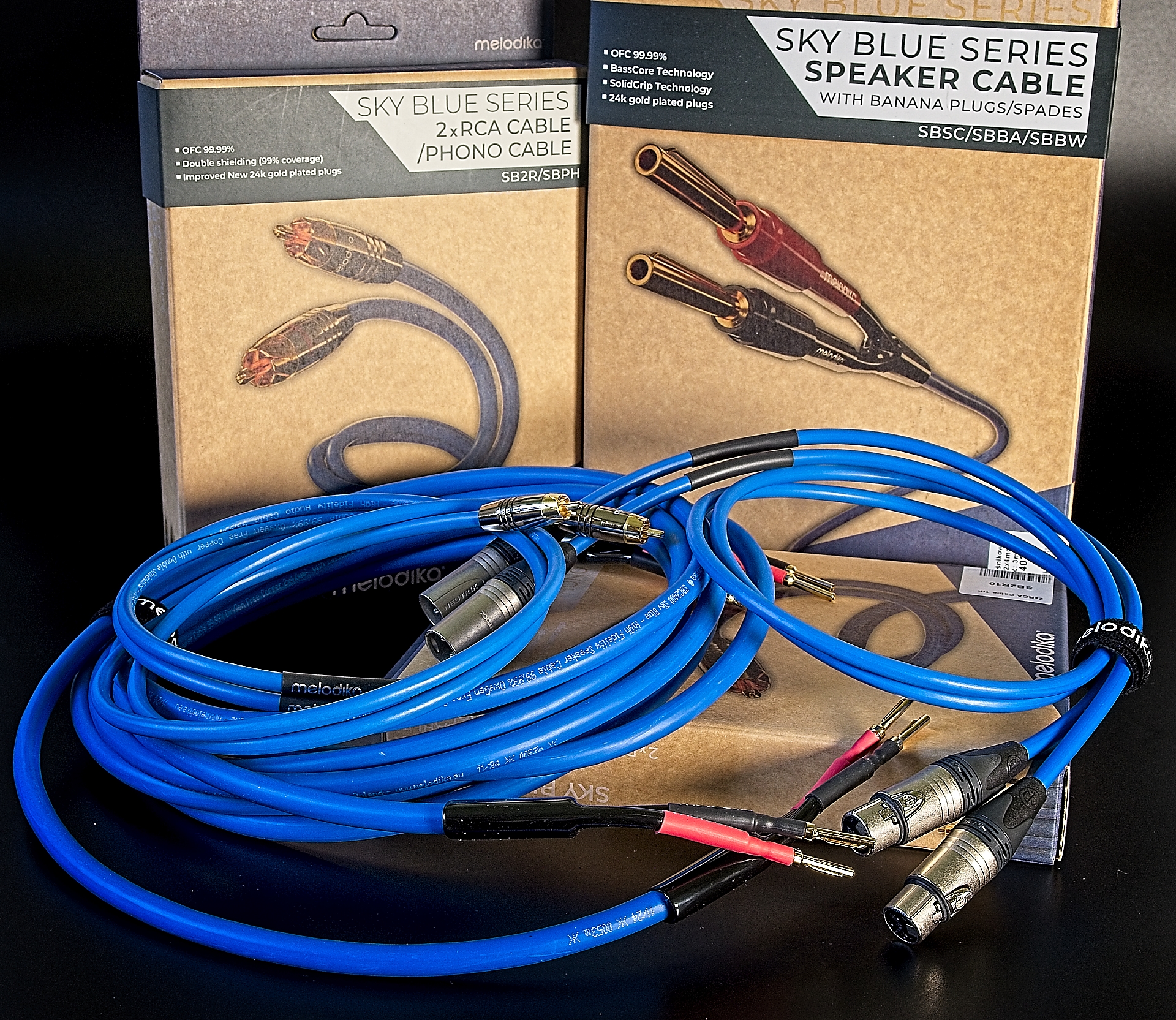 The problem is that while the audio industry transitioned from, say, the home appliance market segment, affordable for many, to luxury goods, affordable for few, so did the cables. While you can still buy decently priced electronics/headphones/speakers, cable prices, even for entry-level lines from renowned brands, often start at a high (at least in comparison) level. To be clear, many of the currently offered cables are more technologically advanced; they feature solutions and materials that had to be developed, which cost money; hence the steeper price.
To put it simply, cables offered today are better at doing what any audio cable is supposed to do, namely, as little as possible (in terms of influencing the signal that passes through them). Their job is to protect the signal from external interference, introduce as few of their own distortions as possible, and transmit the signal without adding anything to it or losing anything in the process. As simple as that. Which is really hard, or rather impossible, to achieve.
Still, the manufacturers keep trying, and some come closer to that unachievable goal than others. That’s why audiophile cables cost a lot (some, too much, I’d agree). That is also why those who can’t or don’t want to spend a lot of money on an audio setup usually decide to invest most of the budget in electronics and speakers (or headphones) and the rest in some very inexpensive no-name cables bought ‘by chance’ in a local hardware store. I admit that such generic cables don’t have to be (very) bad, as I have heard some that did a decent job. Still, this test is to show that if you’re willing to spend just a little more, you may do much better, and I mean you could hear that your electronics have more to offer than you thought. All you have to do is buy products developed by experienced audio specialists and enthusiasts, but priced quite reasonably. Interested? Keep on reading.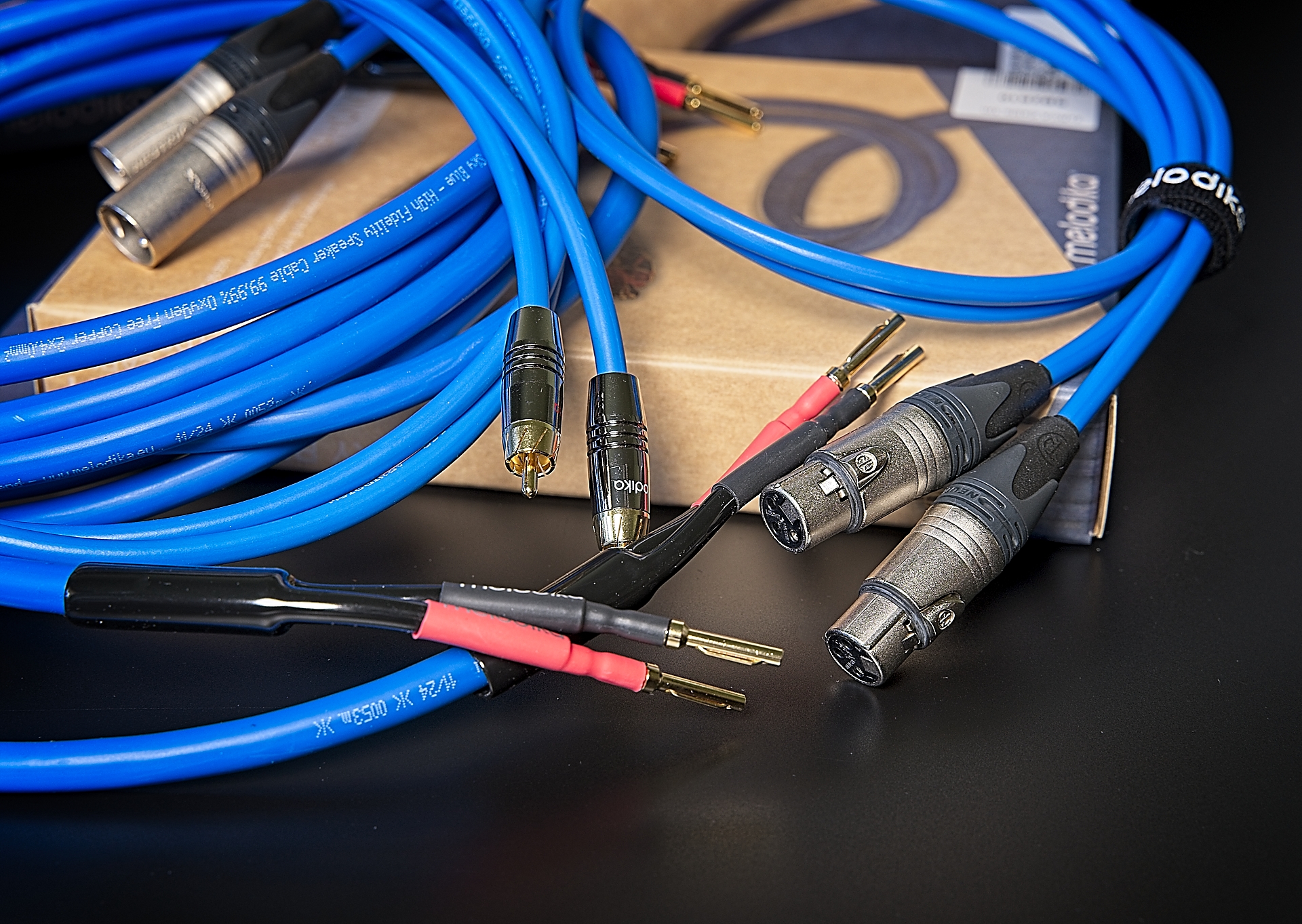 That’s where Melodika steps in. This Polish brand debuted 16 years ago. It was established by an audio distributor, RAFKO, led by Mr. Rafał Koc, who, while working with their customers, saw the demand for inexpensive yet good-quality audio cables. As it reads on their website:
„The history of the Melodika company is a story about how passion, knowledge, and experience can be transformed into real actions. The roots of the brand date back to 2010, when the brand’s founder, together with a team of professionals passionate about music and dealing with hi-fi equipment, came to the conclusion that he and other audiophiles were lacking solutions that not only ensured very good audio-video signal transmission quality but also durability and functionality while keeping a reasonable price. Was it biting off more than one could chew? A kind of mission impossible? If we thought so, Melodika would never have been created.”
Mr. Koc told me:
„As a Polish brand manufacturing in Poland since 2010, we have consistently built Melodika around engineering reliability and transparency. We focus on proven technical solutions and avoid any unnecessary elements, ‘embellishments’, if you will, allowing the product to speak for itself.”
The first line introduced in 2011 was named Purple […] „in a characteristic purple color. The assumption was simple: to manufacture in Poland and give the customers as much as possible for the given price.” The line is still available today, and even 15 years later, after an unavoidable price increase, the 53 EUR price tag for a pair of 0,5m RCA interconnects seems ridiculous because they are not just a rebranded generic product from the Far East, but a design developed and manufactured in Poland! On the other hand, that’s the kind of pricing that could convince someone on a budget to buy this product rather than a no-name brand from a hardware or electronics store.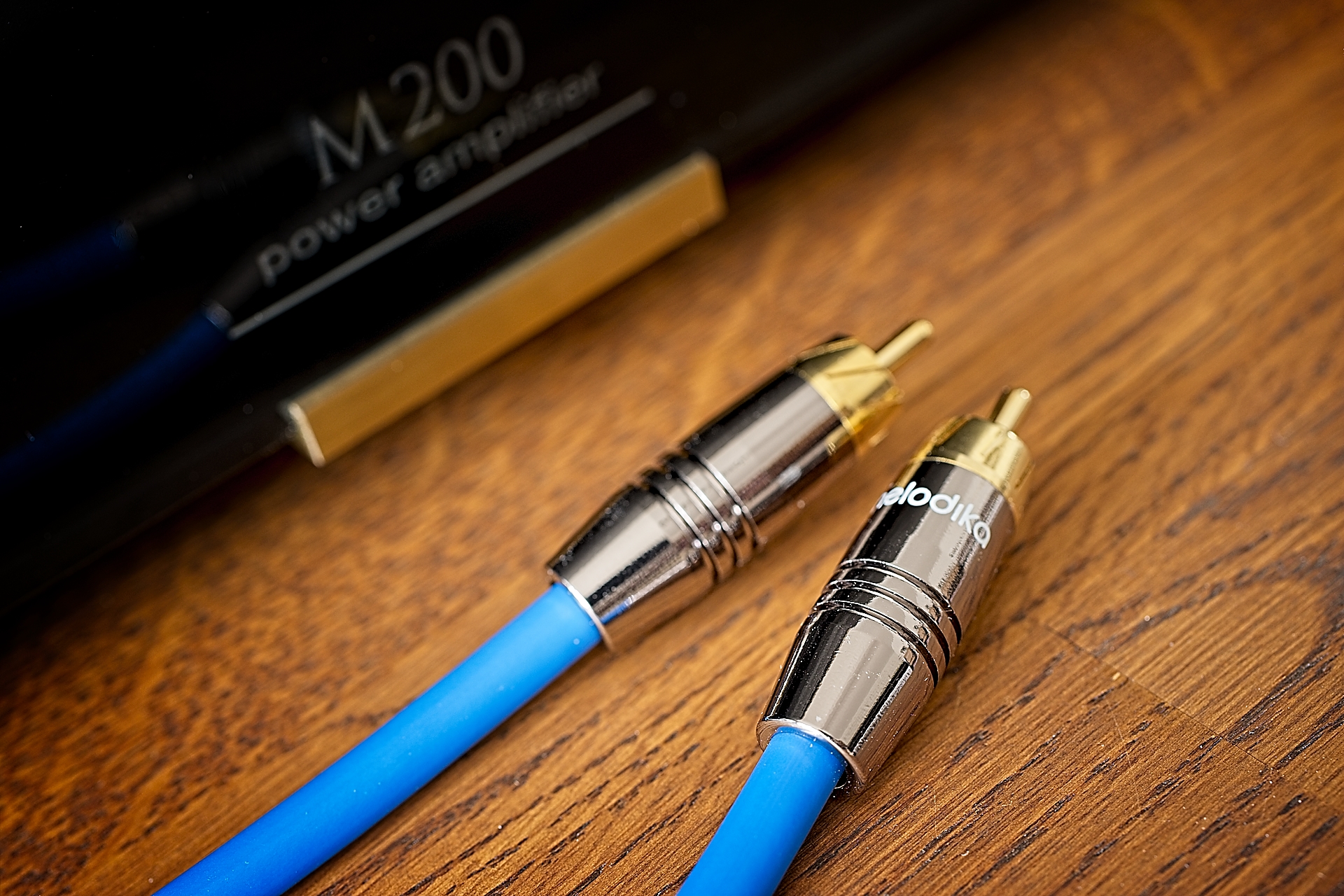 While the development of the audio cable range continued, in 2013, Melodika introduced their first loudspeakers, including the Melodika BL40 floor-standing model, which I had a chance to review and appreciated for the performance it offered, especially considering the fact that they were as attractively priced as the cables. 2017 witnessed the first in-wall speakers, yet another range that has been expanded ever since.
Today, the six lines include not only analog signal cables (interconnects, phono, speaker, and in-wall cables) but also digital cables (including USB) and power cables. Basically, one can choose all the cables needed for almost any home audio setup from one of Melodika’s lines, and only the most expensive one today, Brown Sugar, reaches the level where some other manufacturers only start. One of the lines, called PRO, is intended for use in professional studios.
The manufacturer emphasizes, rightfully so, that:
„Melodika cables are manufactured in Poland, with a strong focus on quality, consistency, and attention to detail at every stage of production.
The company combines high-quality materials, advanced production methods, modern machinery, and carefully selected technologies to deliver reliable performance and a high standard of workmanship. As a Polish company, it remains firmly rooted in the Polish and European economy.”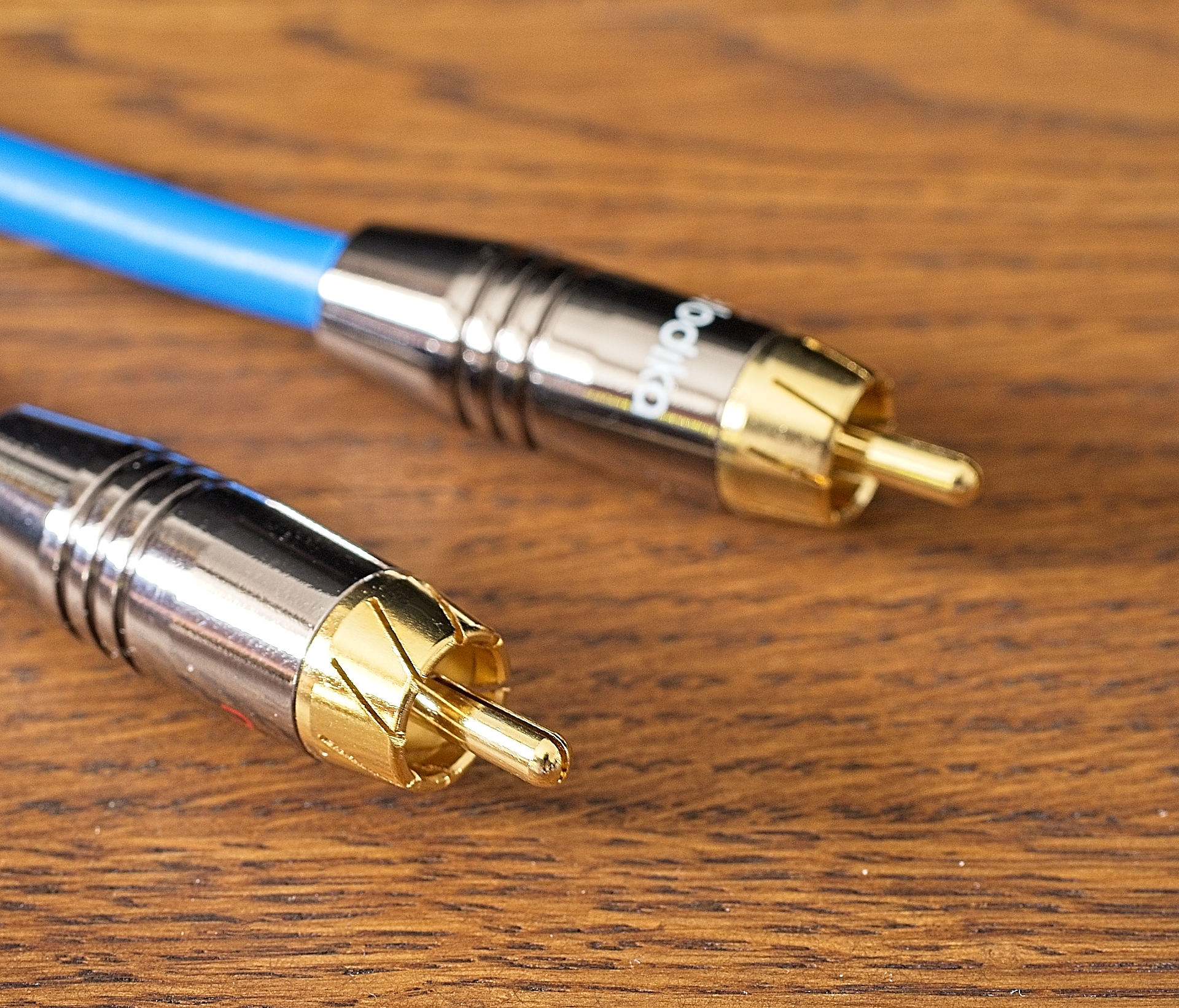 As I believe that in these challenging times we should support our own European industry, and Melodika makes it easy by offering its products at very competitive prices, we should at least consider giving them a chance. After a discussion with Mr. Rafał Koc, we decided to test the second from the top, yet still very reasonably priced, Sky Blue Series, or to be more specific, analog interconnects (both RCA and XLR varieties) and speaker cables. Below, I’ll share my findings with you.
Design & Features
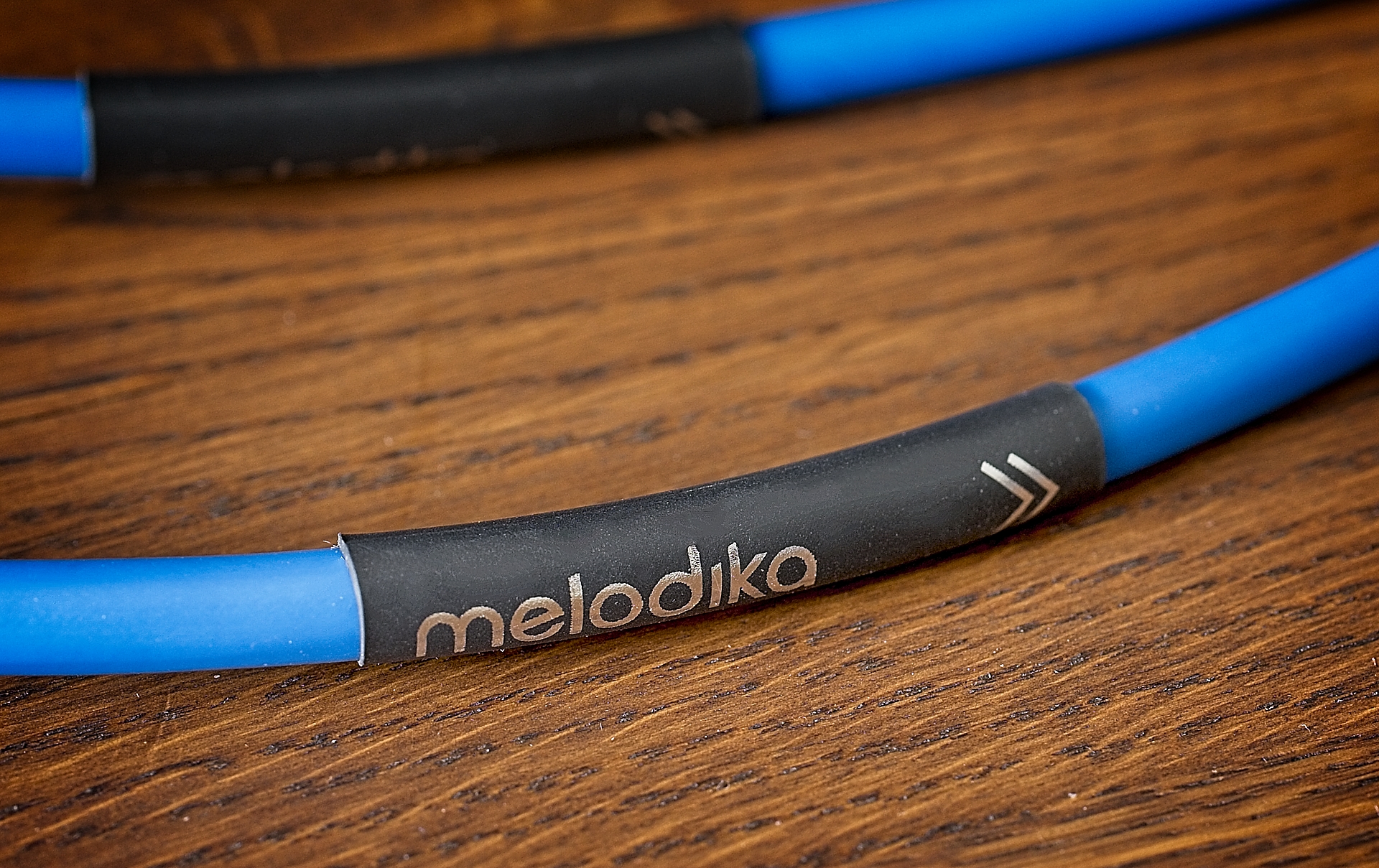
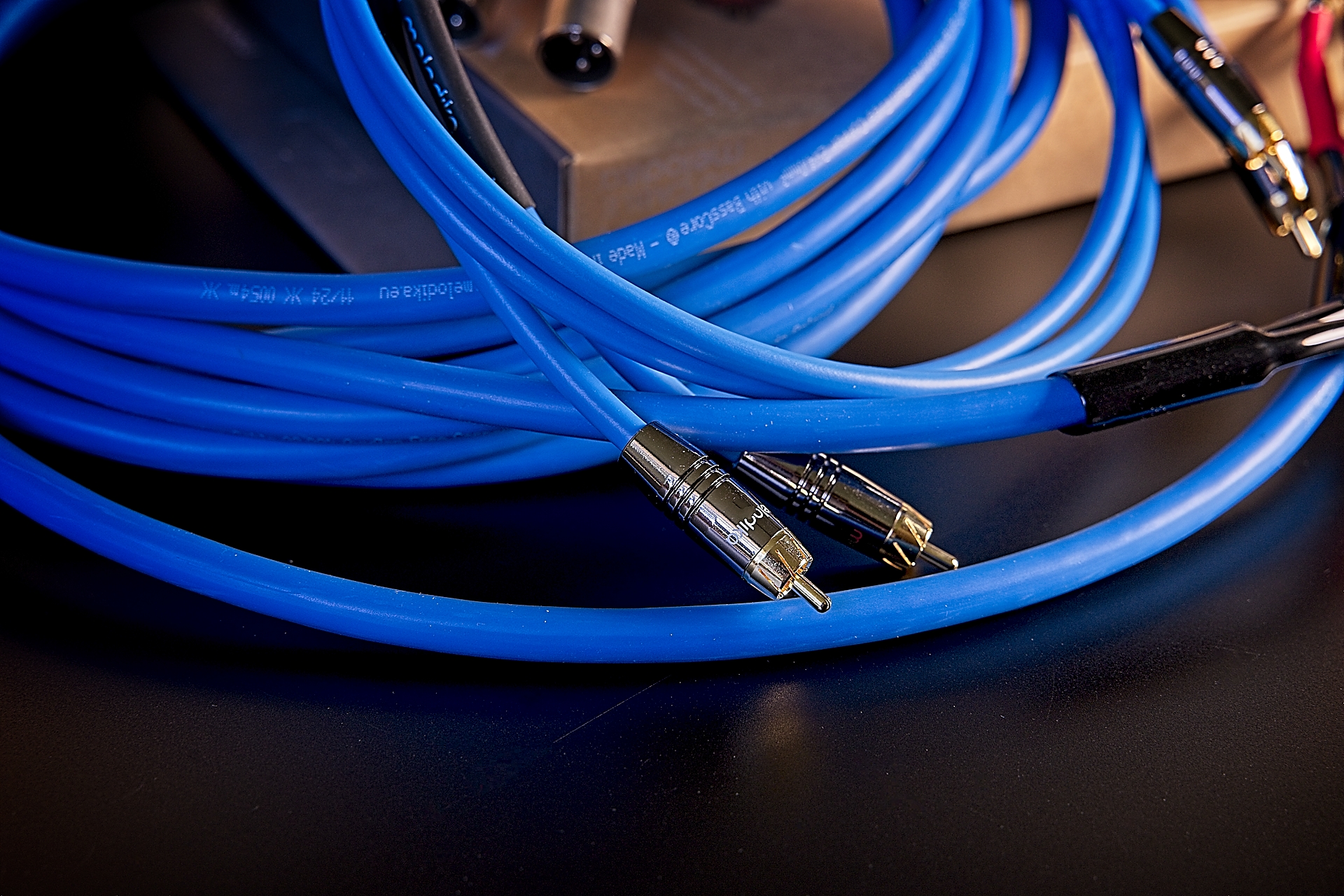
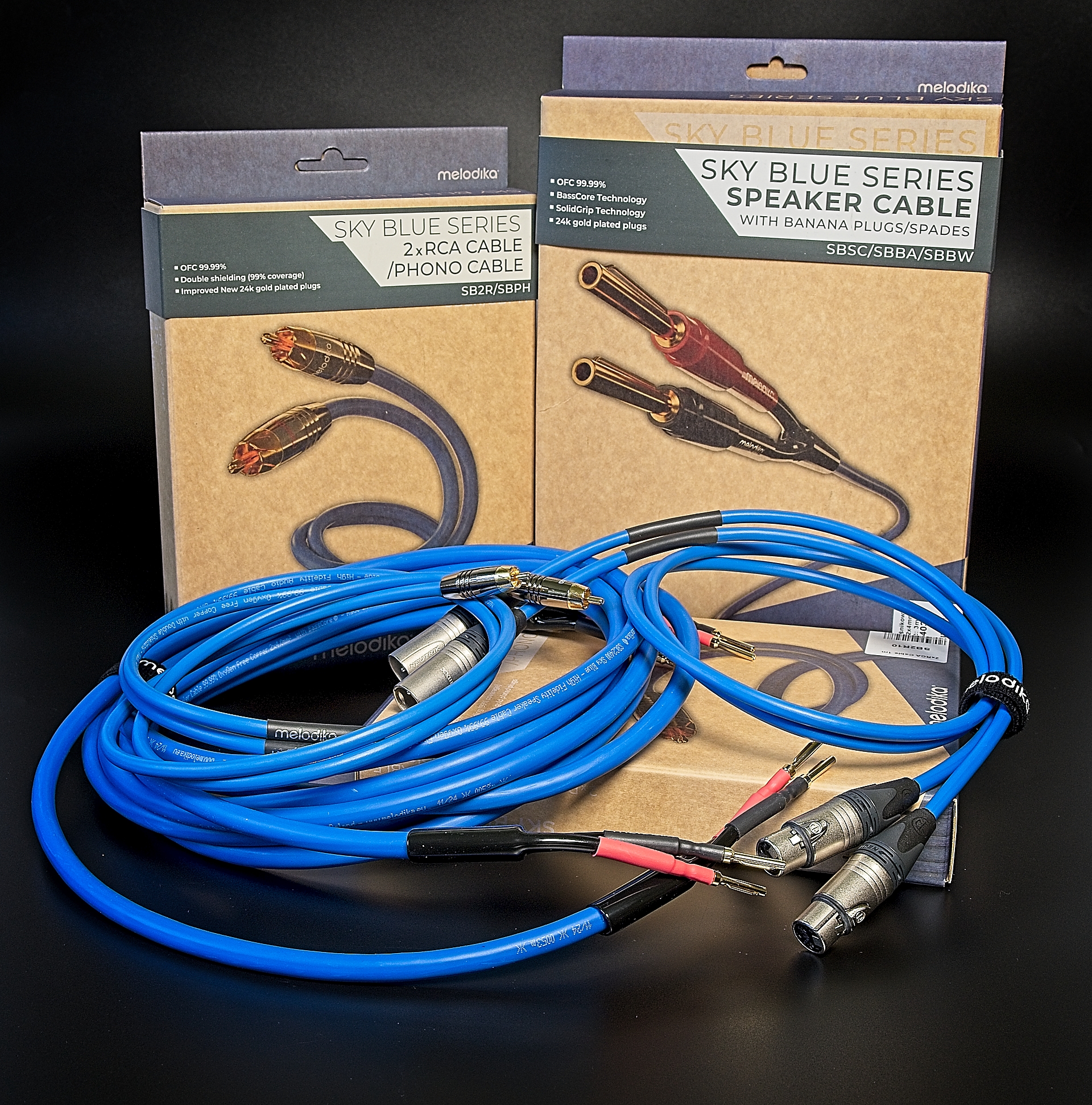
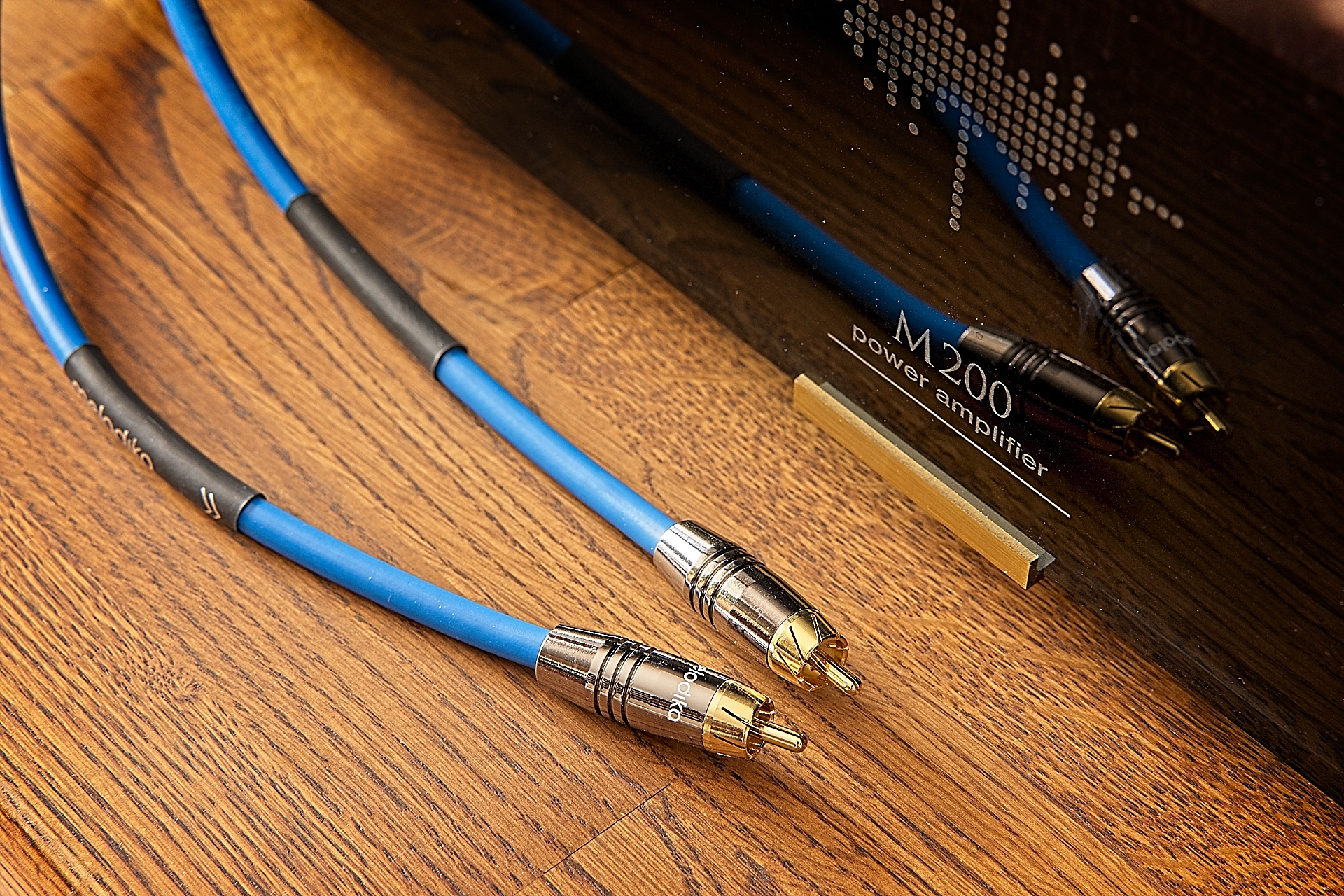
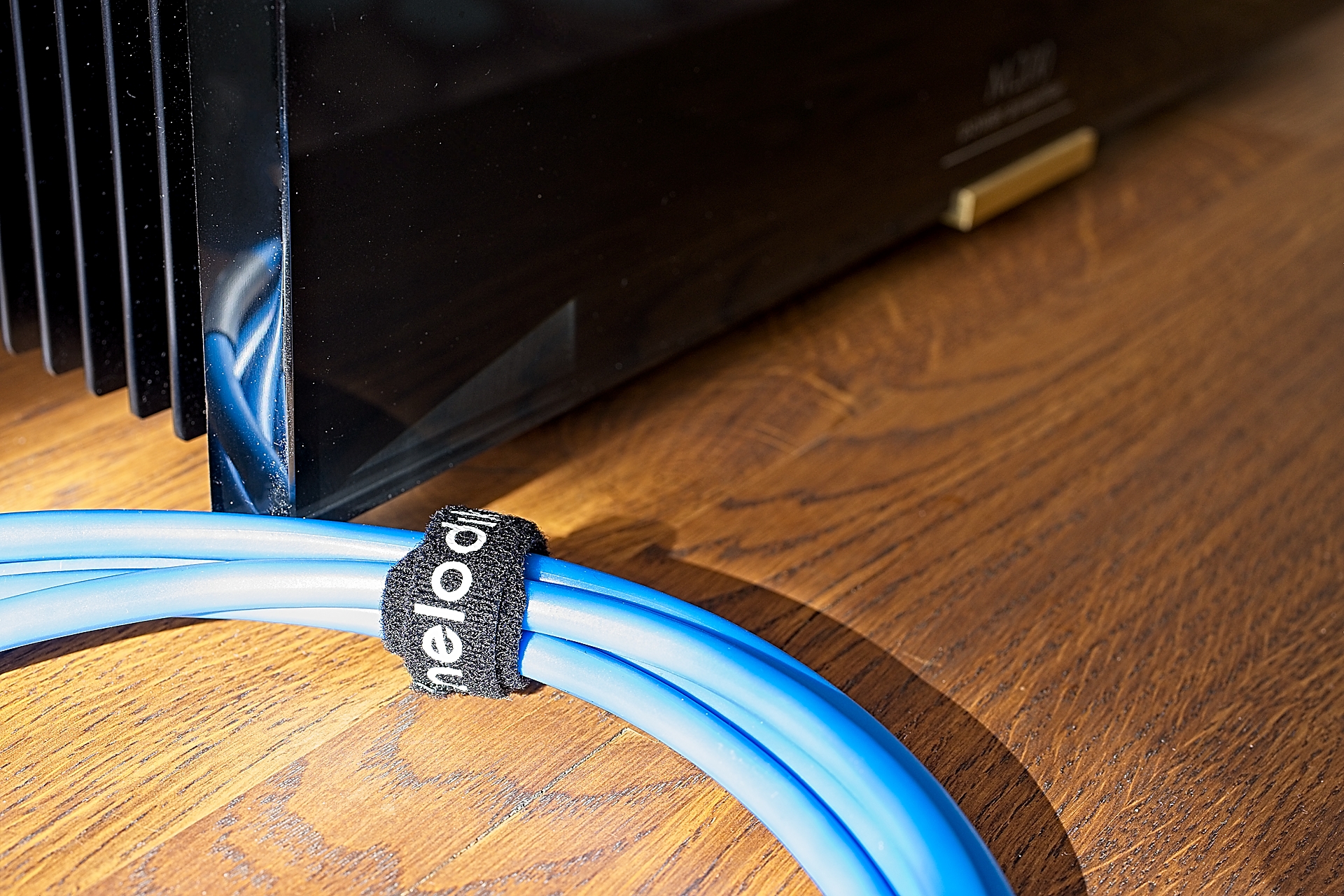
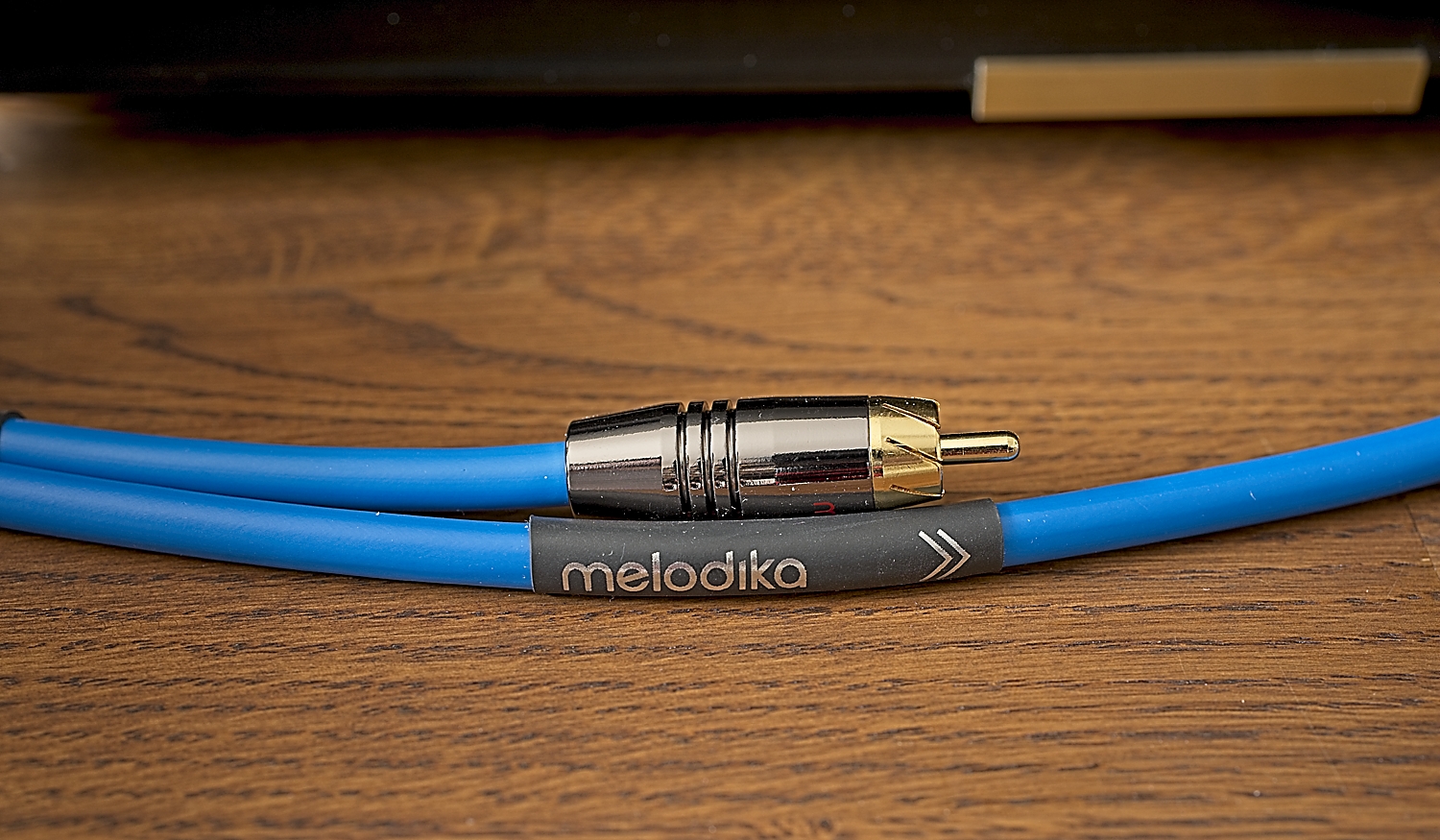
The names of Melodika lines come from (or maybe it was the other way around) the colors of their PVC sleeving – in this case, it is blue like the clear sky; hence, the Sky Blue Series. The cables are not particularly thick, nor do they weigh much – just nicely made, eye-pleasing cables. There aren’t many details shared by the manufacturer about its cables, but let’s go over what we know.
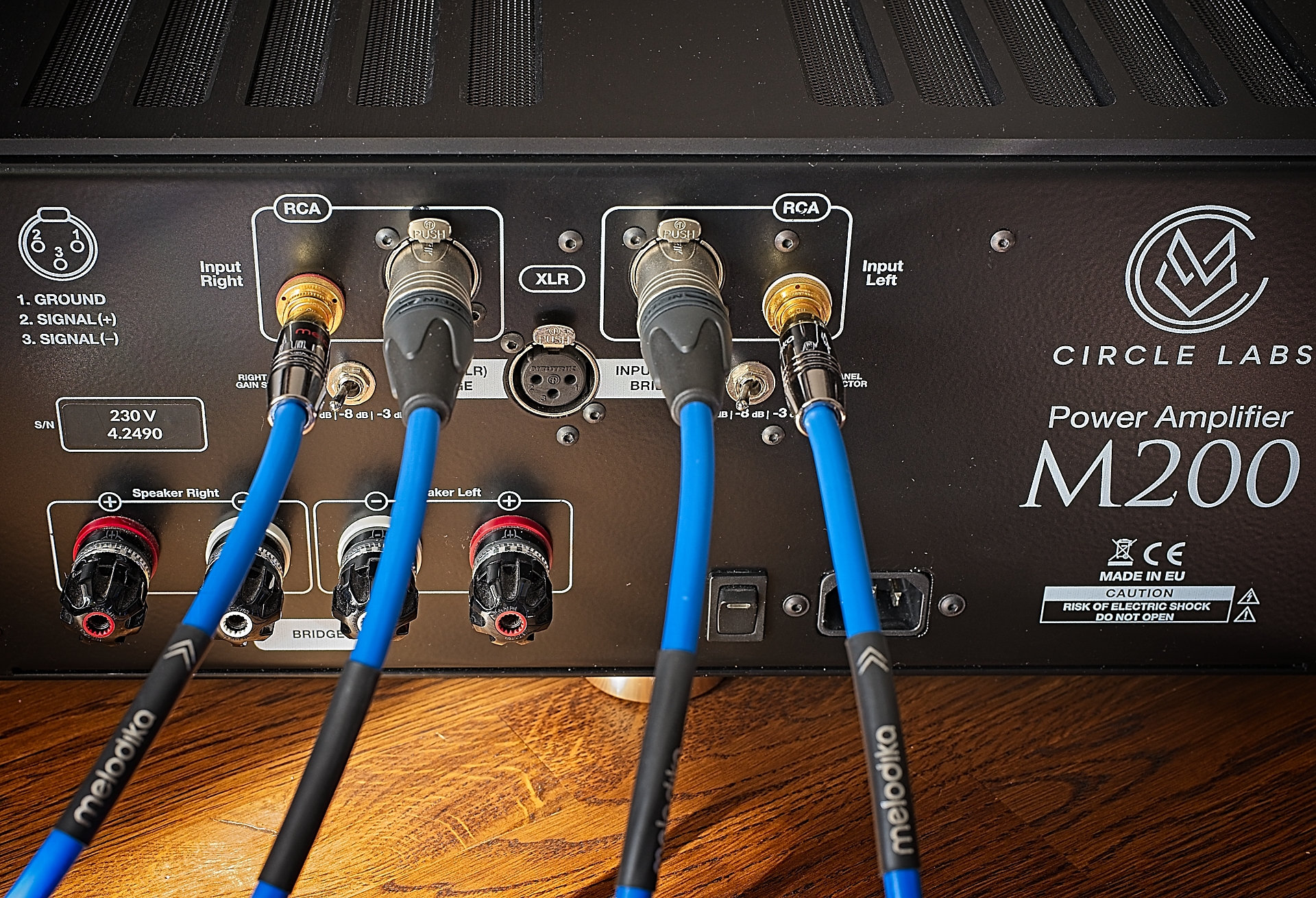
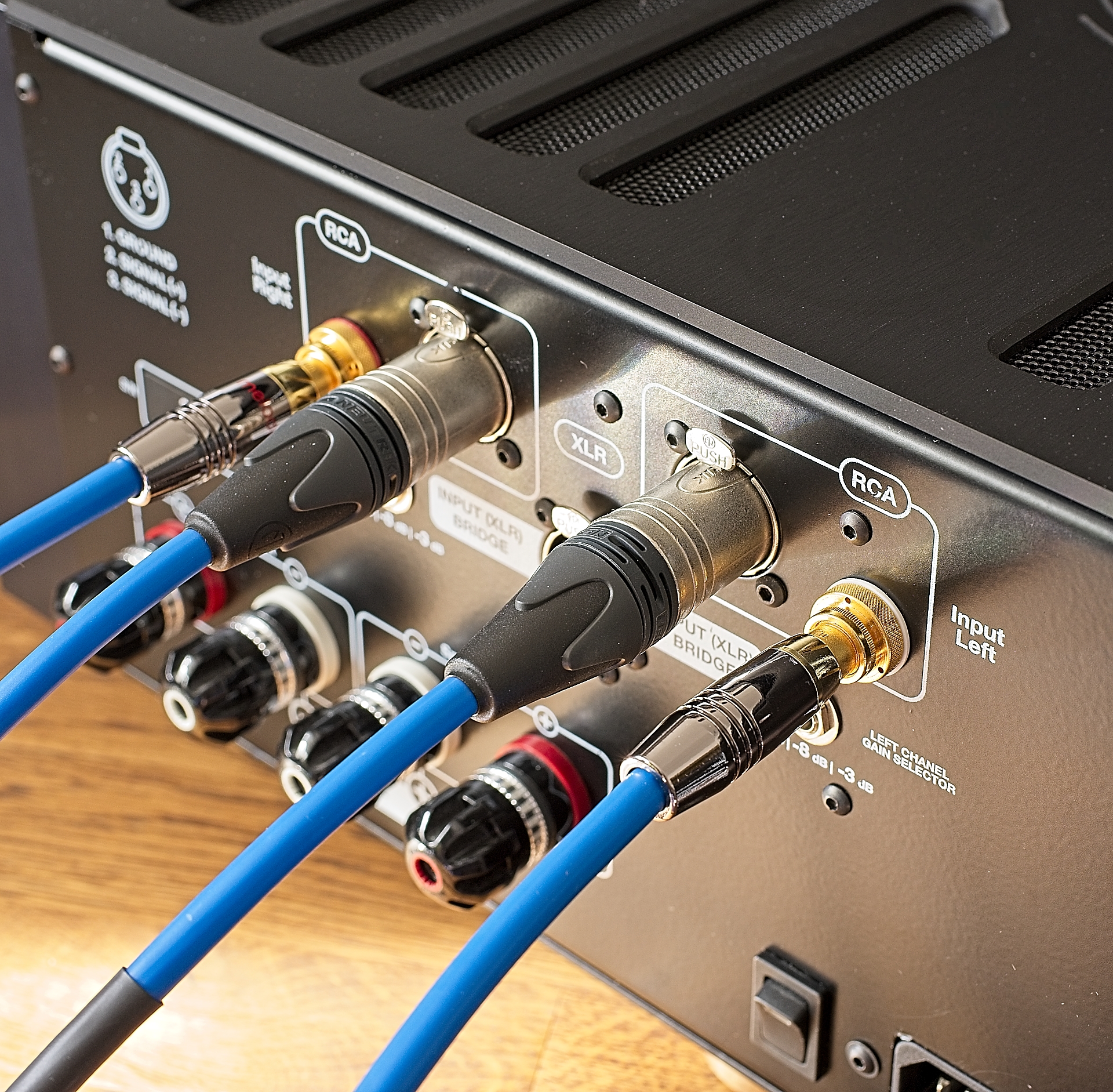
The Sky Blue Series analog interconnects.
All the Sky Blue Series cables utilize OFC oxygen-free copper conductors with 99.99% purity. The interconnect features Twisted Cores technology, using two 0.35 mm² conductors made from 4N oxygen-free copper (99.99%). Each conductor is insulated with a natural cotton dielectric and internal PE insulation, while the outer PVC jacket ensures high mechanical durability and resistance to environmental factors. A dense dual shielding is used to protect the signal from electromagnetic (EMI) and radio frequency (RFI) interference.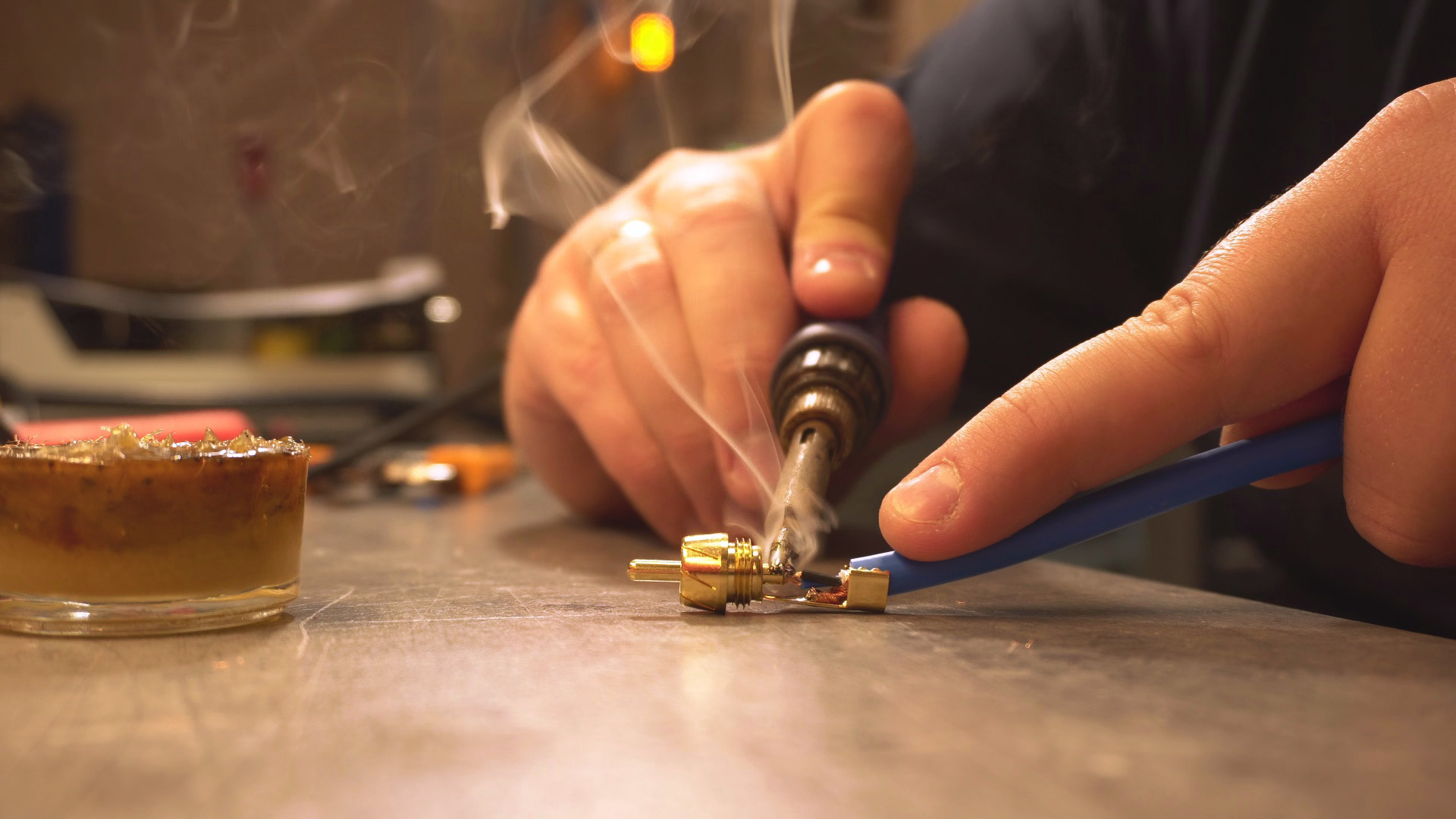
Soldering by hand
The first layer is made of Mylar foil, while the other one is a copper braid with a minimum of 95 percent coverage. As the manufacturer explains, the copper braid is a low-resistance layer. Therefore, it effectively suppresses lower frequency interference and provides a stable path to ground for induced noise. The Mylar foil, due to its full coverage, complements the copper braid layer by limiting higher-frequency interference. Combined, they are supposed to effectively protect the audio signal from unwanted noise.
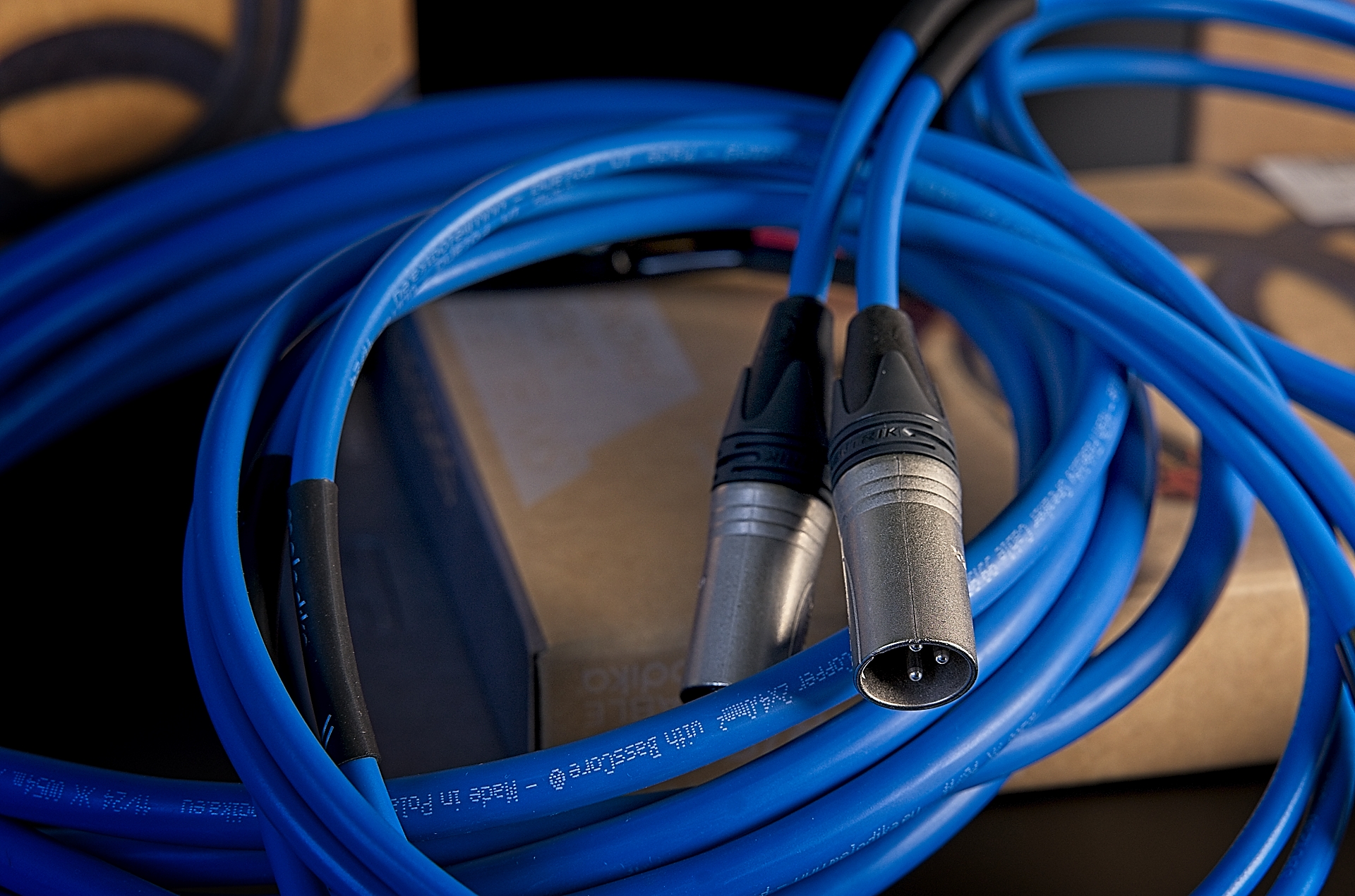
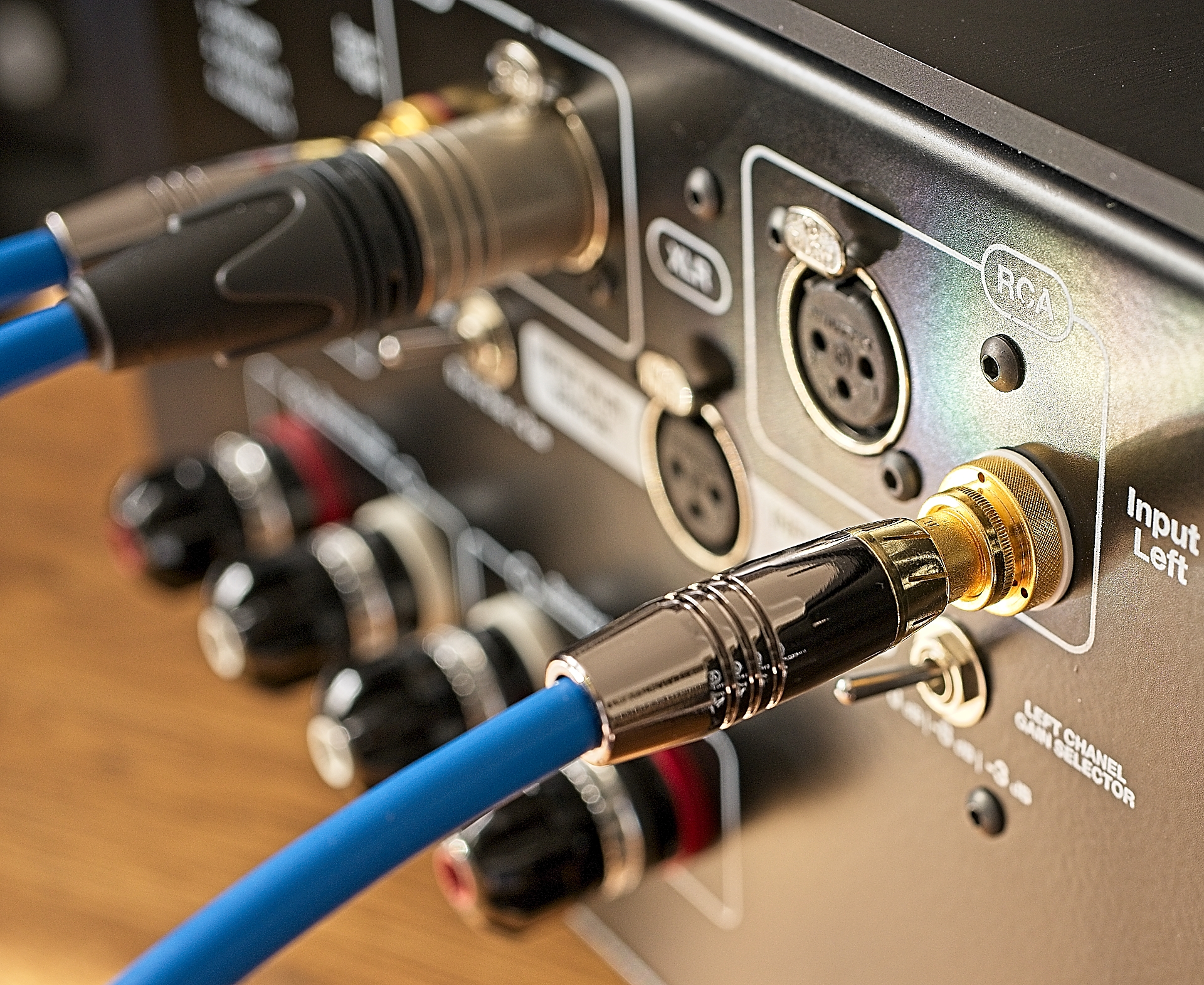
The RCA interconnect is terminated with new 24k gold-plated RCA plugs with PTFE inserts. Their signature notches improve fit in sockets, enhancing the contact area and connection stability. The plugs are soldered using high-quality silver solder, and the specific assembly method ensures proper cable directionality in accordance with the markings. The XLR version uses Neutrik XLR plugs, featuring silver-plated contacts and an additional ground contact.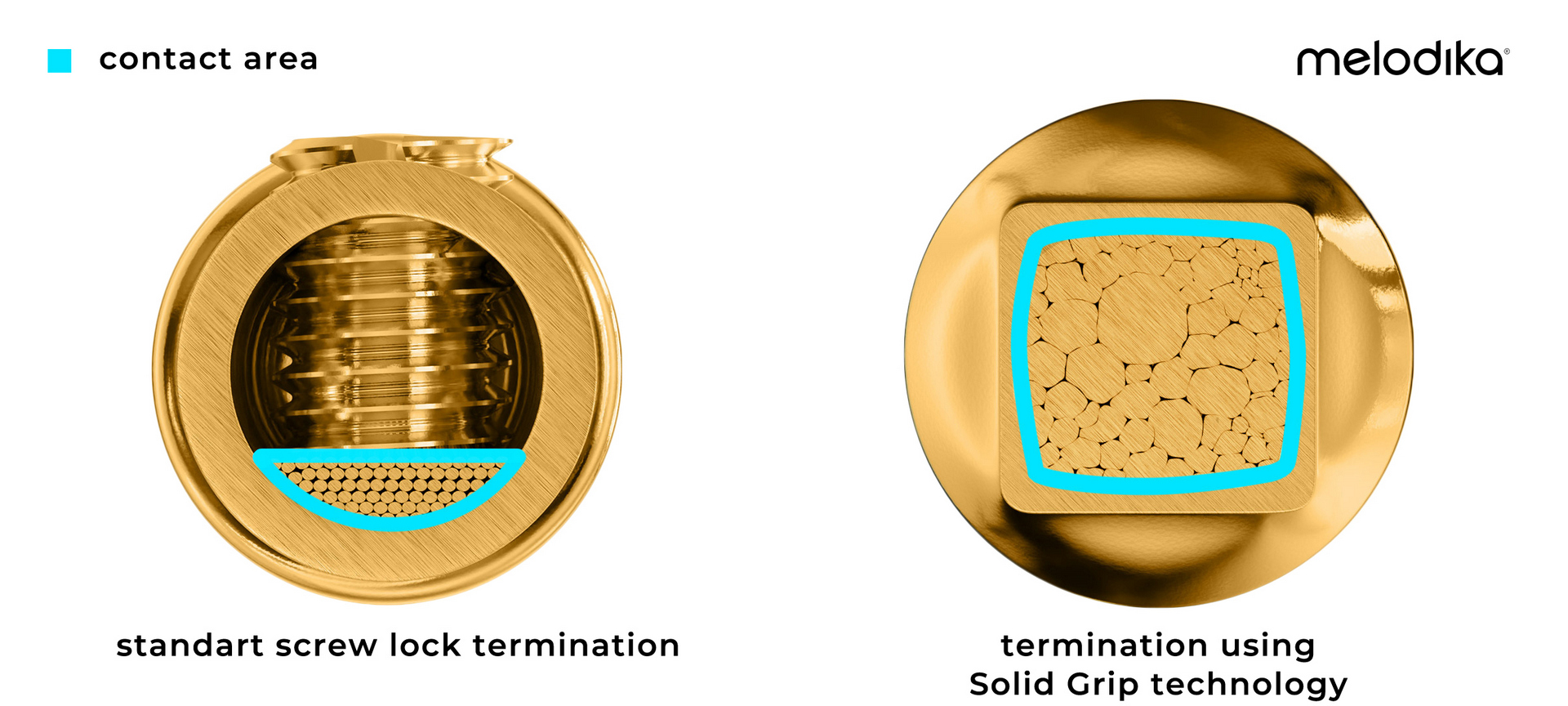 Solid Grip technology explained
The Sky Blue Series speaker cables.
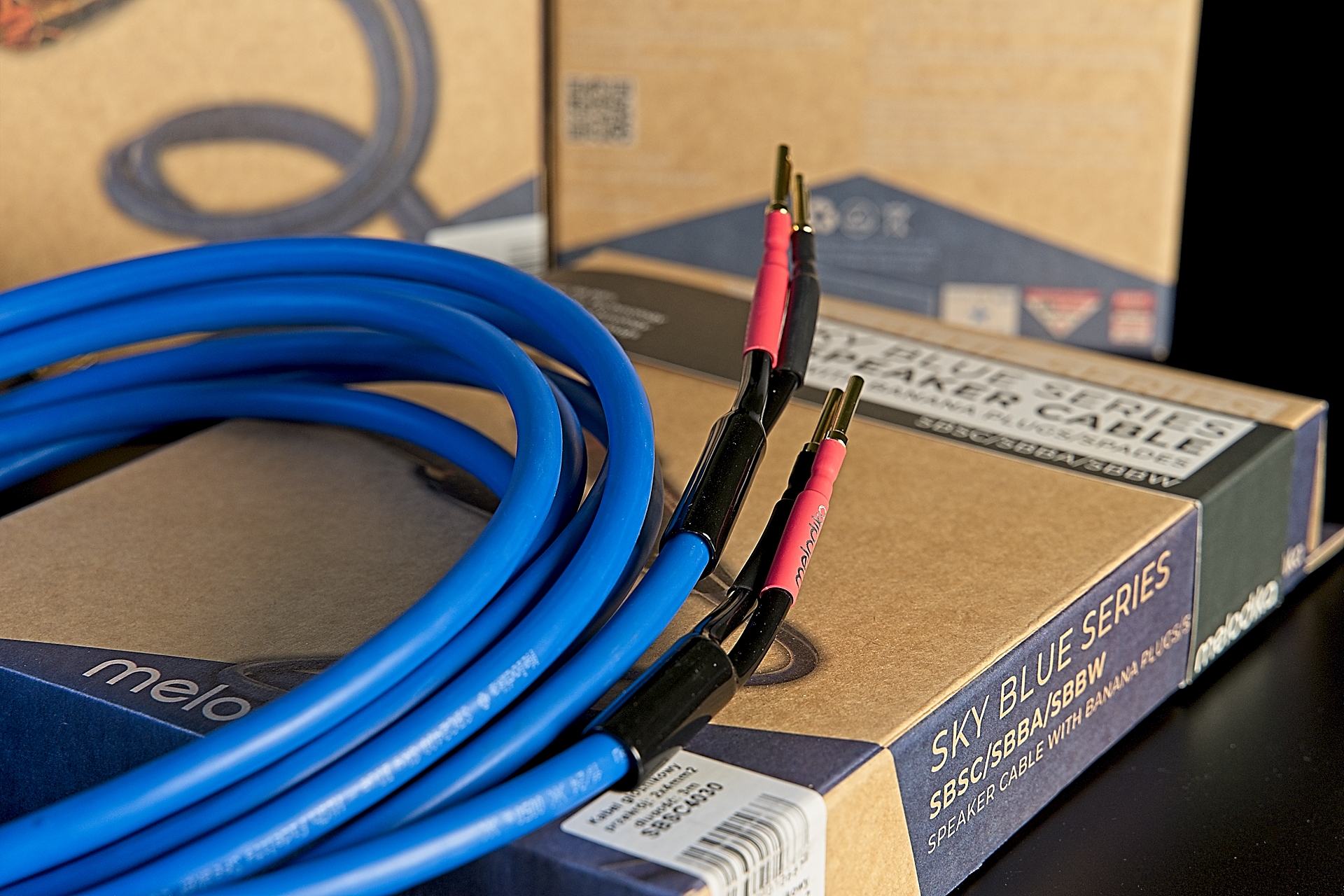
The speaker cable uses two twisted conductors made of high-purity 4N copper, each combining multiple strands with a single solid core. When selecting this model, you need to pay attention as there are three versions. The tested version is marked SBSC40 (2 x 4 mm2) with 170 x 0.15 mm and 1 x 1.10 mm, but there are also two more, marked SBSC15 (2 x 1.5 mm2) with 70x 0.15mm strands and 1 x 0.55mm, and SBSC25 (2 x 2.5 mm2) with 110 x 0.15 mm and 1 x 0.85mm. I tested the first one, SBSC40.
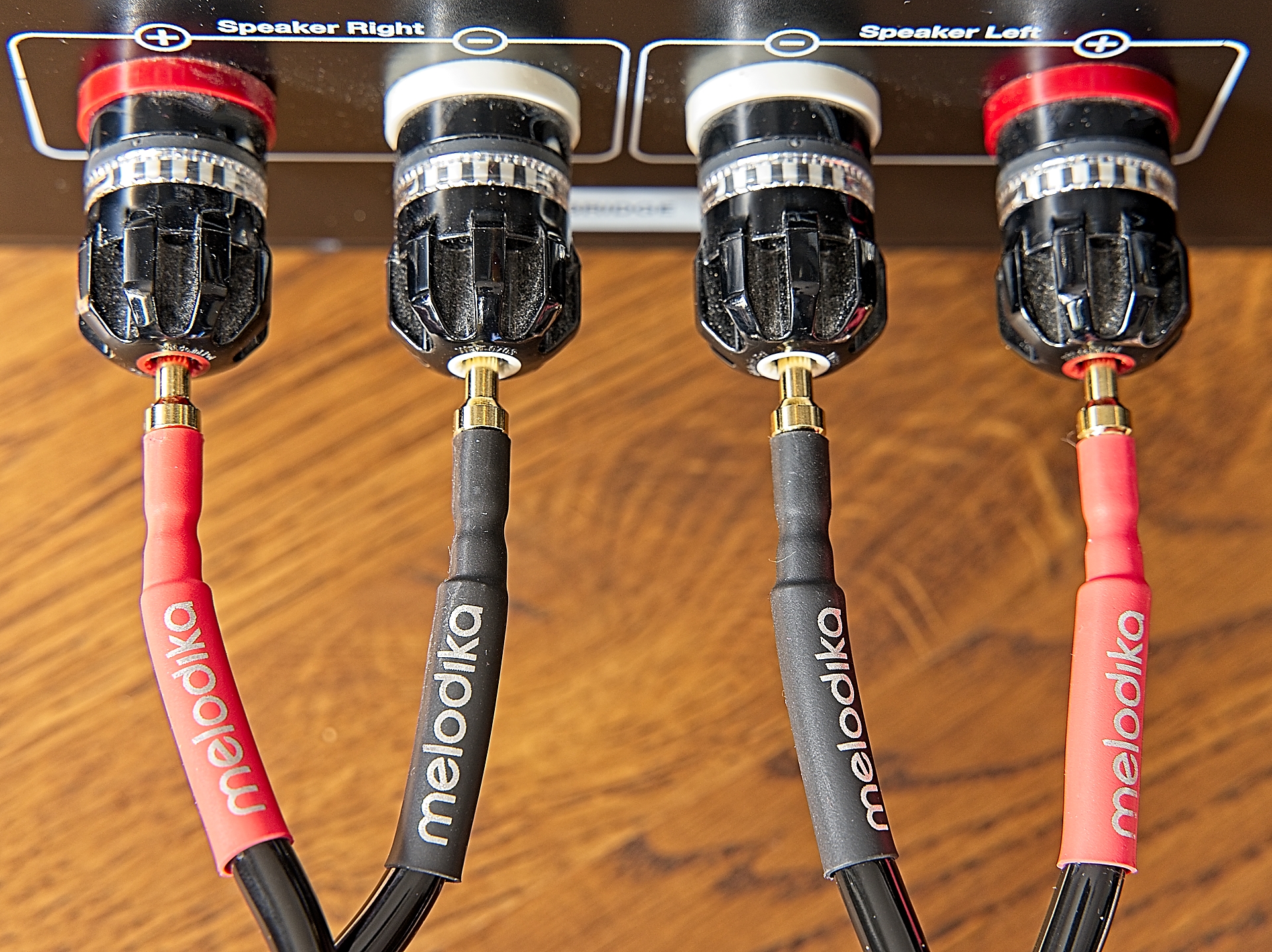
In its speaker cables, Melodika implemented several in-house solutions to improve performance. Many cheap cables are sold with bare ends (no plugs). While this makes installation in the system easier, it does not provide protection for the conductor material that, sooner or later, starts to oxidize, and as a result, the cable’s performance degrades over time. In order to protect its speaker cables from this issue, Melodika developed its Solid Grip Technology. The other solution is called BassCore. Here’s how Mr. Rafał Koc explained these to me:
„In the Sky Blue series speaker cables, we have used a solution called BassCore, which promotes better bass control. Since a thicker conductor improves low-frequency reproduction, we employed a solid conductor (the so-called ‘BassCore’) for low frequencies and surrounded it with flexible strands for mid and high frequencies. This allows us to take advantage of the best sound characteristics of both gauges.
The conductors in our cables are made of Polish copper, and the point of the entire design is that the copper is not exposed to oxidation in critical areas. A key distinguishing feature is the use of Solid Grip technology, which involves mechanically compressing the plug onto the cable using a press with a pressure of 2 tons per cm², without the use of soldering.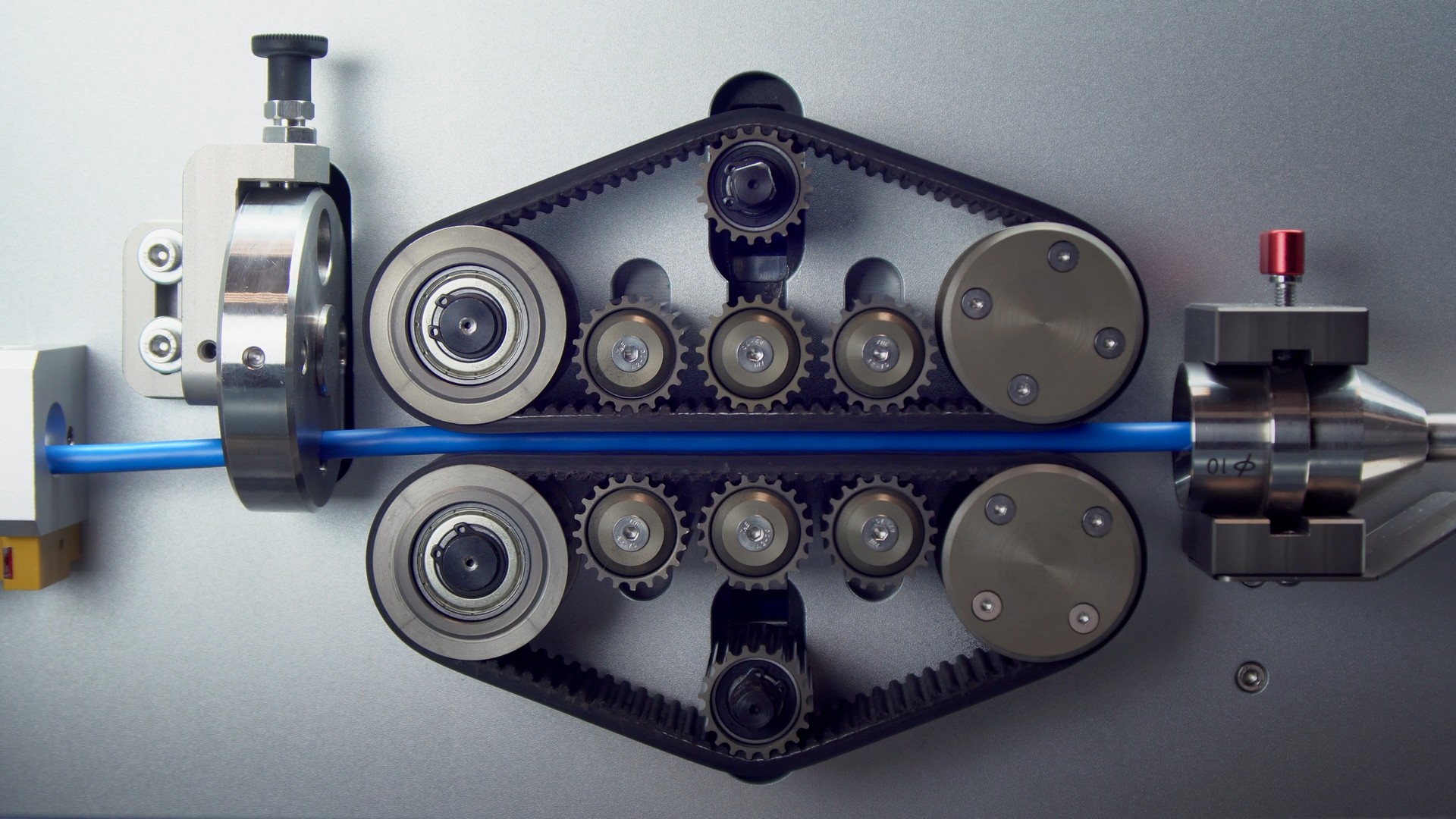
A machine automating the precision cutting and processing of cables
This method of plug assembly guarantees a durable contact with low resistance and a large contact surface. An additional dielectric in the form of polypropylene fibers with low electrical permeability increases the proportion of air in the insulation structure, which reduces the capacitance of the cable and limits dielectric losses. The whole is complemented by the geometry of twisted cores, which reduces susceptibility to interference and promotes a clean signal. Thanks to these solutions, our cables maintain stable parameters for years of use.”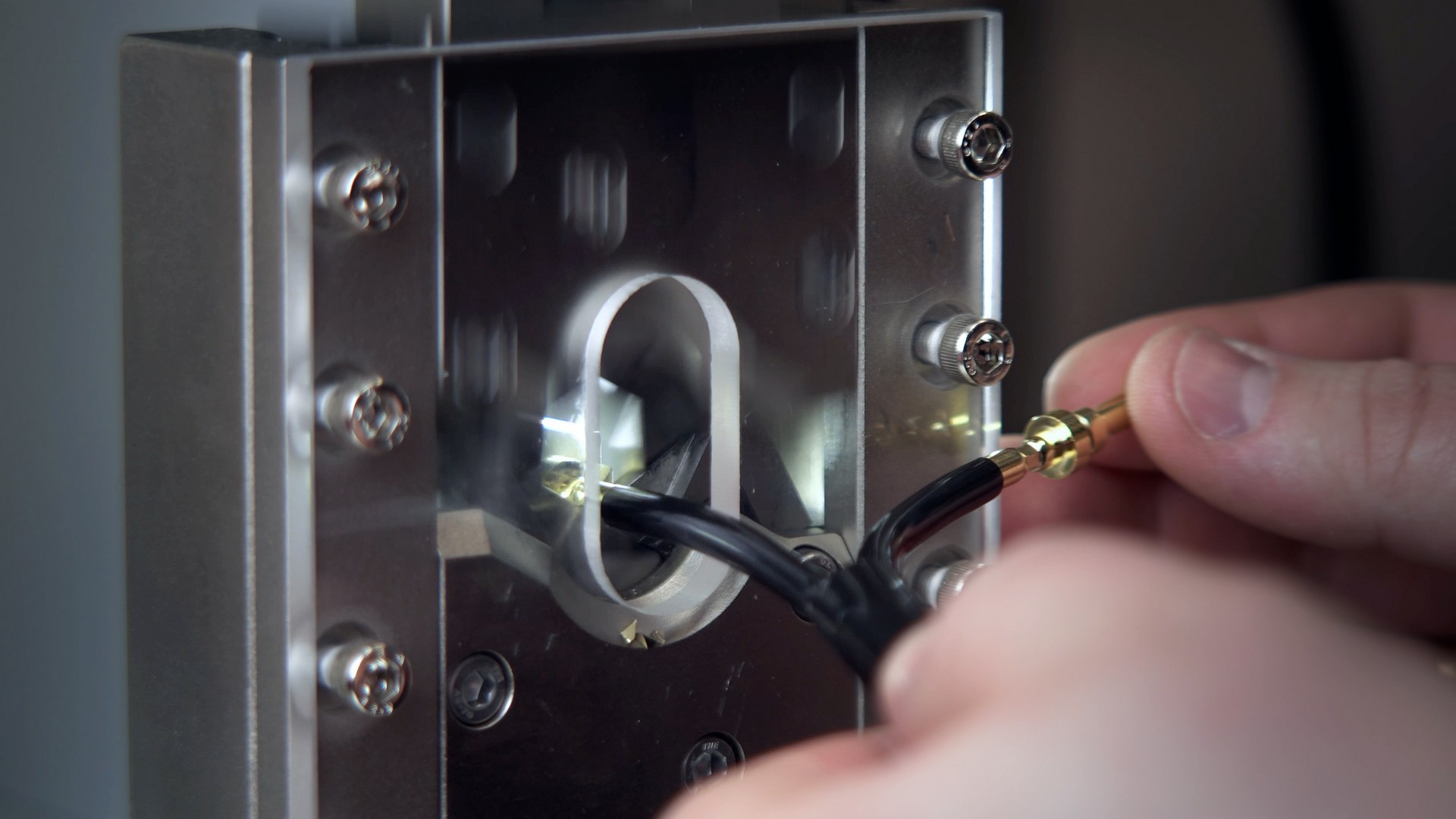
The Solid Grip plug crimping press
Let me add that the Melodika Sky Blue Series speaker cables are available in several lengths – basically, you can ask for any length, whether it is 2 m or 10m, and the manufacturer will provide. They are terminated with banana plugs (standard) or with spades (designated by an “s”). OK, now let’s get to what these cables have to offer in real-life conditions when transferring signals between much, much more expensive components of my reference system.
Sound
Melodika Sky Blue Series RCA & XLR Interconnects
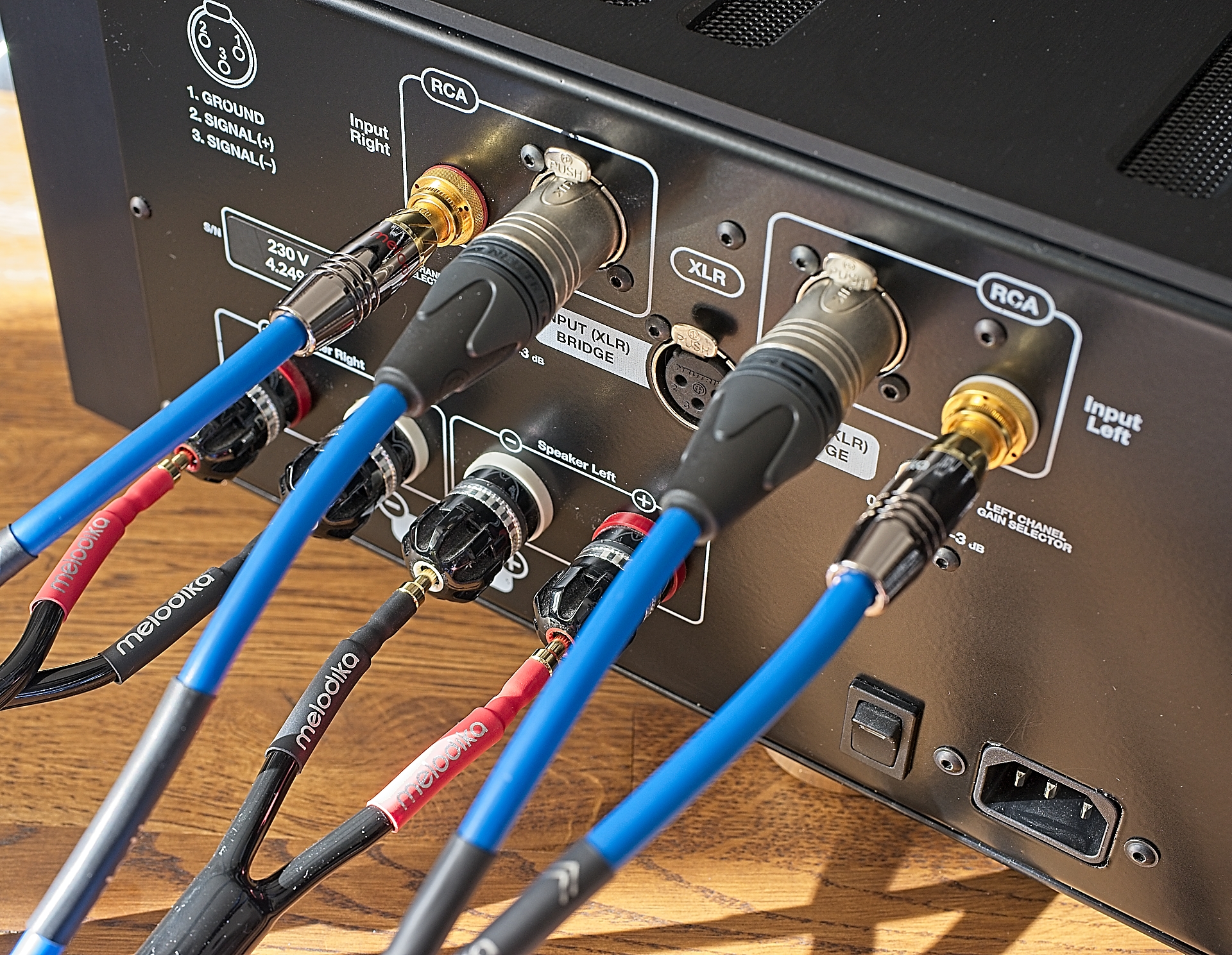
As always, when testing a set of cables, I introduced them one by one rather than all at the same time. The first one was Melodika Sky Blue Series RCA interconnect, which directly replaced my trusted Soyaton Benchmark between LampizatOr Pacific D/A Converter and GrandiNote Shinai Class A solid-state integrated amplifier. Later, I replaced it with the balanced version, also connecting these two components (as both of them are truly balanced designs).
At the time, I was listening to the excellent Manu Katche’s „Live in Concert” album, and the „Drum Solo” track in particular. And? And it took me a long while to get over the fact that the Sky Blue Series RCA IC cost less than 5% of the Soyaton Benchmark counterpart it directly replaced. No, it did not sound the same or quite as good, but, frankly speaking, to my surprise, really good. With Manu’s drum solo and the sound focused in the lower midrange, supported by mid and upper bass, so many things were conveyed correctly that I (almost) didn’t care about some missing tiny details, a bit lesser differentiation, and not as clearly shown texture.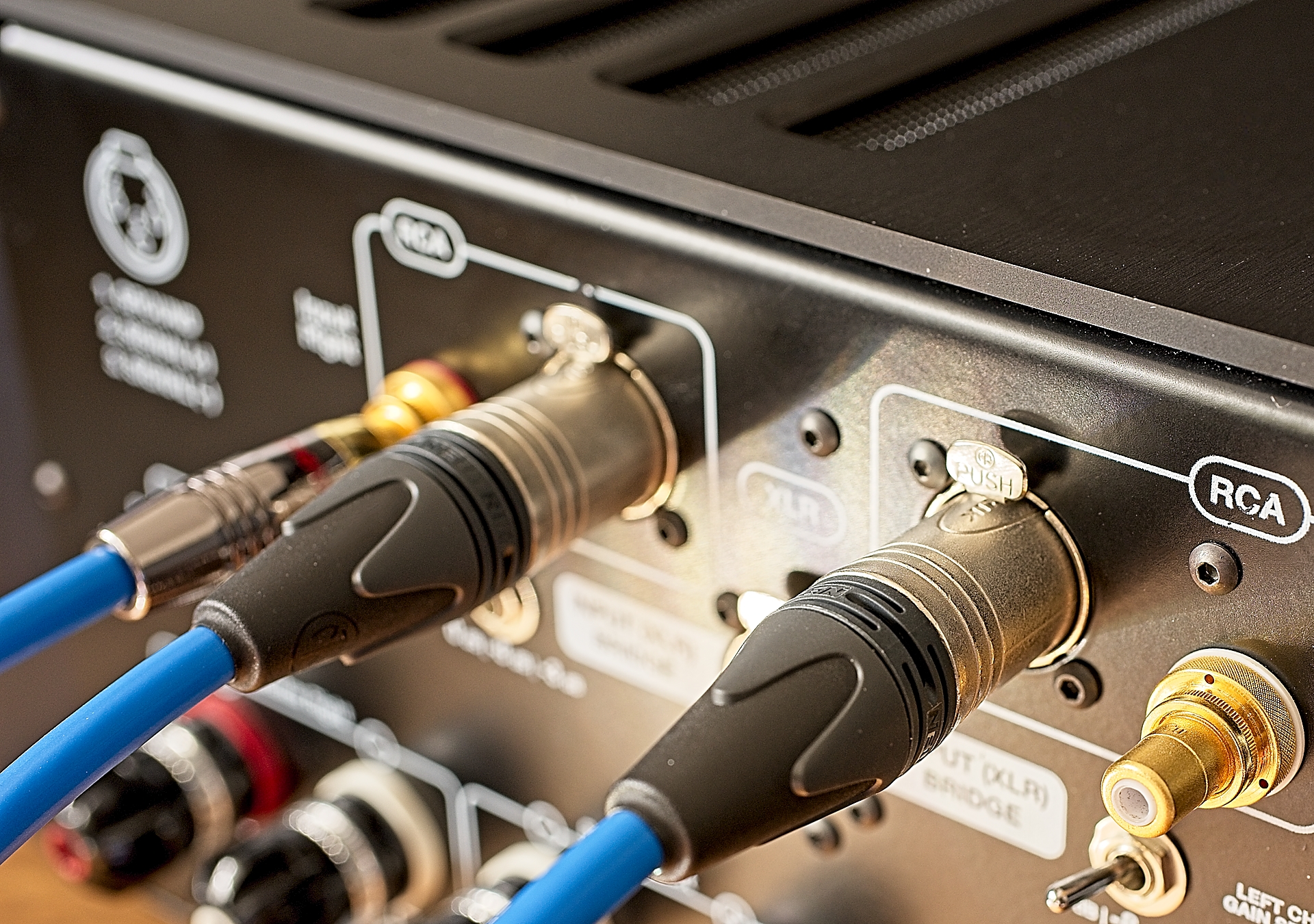 The pace and rhythm, quite important when it comes to drumming, were delivered very accurately; the drums were properly tight and quite springy. In the other band’s extreme, the leading edge was a touch rounded and slowed down slightly, hindering the speed of every cymbal’s beat. Not enough to spoil the fun, but enough to notice when looking for differences. The fun, though, was enhanced by the energy of the performance, which was significant. In other words, despite some minor shortcomings compared to the way more expensive competitors, listening to this album with the Sky Blue RCA IC (and later also XLR) plugged between the source and amp was still a lot of fun.
It is a good moment to explain why I put both RCA and XLR interconnects in one basket, so to speak. While in some cases these two versions of the same model sound a bit different, Melodika Sky Blue Series ICs connecting the same components, simply put, sounded basically the same. I found that there was no significant difference in whether I used a balanced or unbalanced connection. So, from now on, I won’t even specify whether I describe an experience with one version or the other of the interconnect, as in my ears, they are fully equivalent. Therefore, the choice should be based solely on which kind of connection you need/prefer.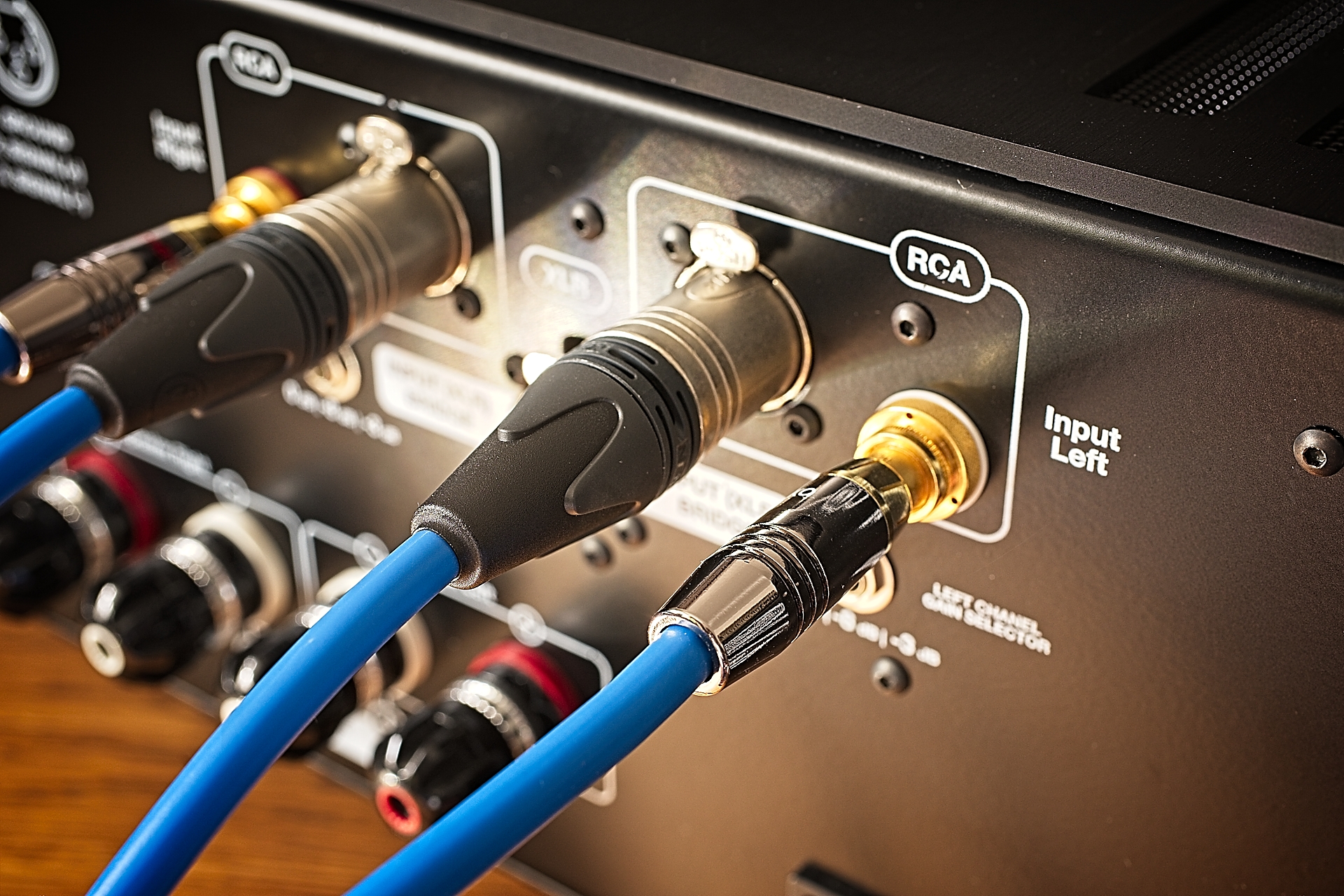 Moving on. The next album cued in was Slash’s „Orgy of the Damned.” It’s not what you would call an audiophile recording, but its quality is good enough that I truly enjoy it every time I listen to it with my setup or even more expensive ones. The rich, dense midrange, a nice bite on the guitar, good pace&rhythm, lots of energy, and good dynamics (particularly on the macro scale) – listening to it with Sky Blue in my setup wasn’t an audiophile experience, but, again, it was fun! Which is what this music, this album, is all about. In other words, Melodika Sky Blue Series interconnects did a good job conveying what is most important in and about such music.
The quality of midrange presentation was also behind the smile on my face when I listened to acoustic recordings of one of my favorite bands, U2. One of the reasons was the fact that these (acoustic, I mean) are recordings of higher (still not audiophile, but better) quality, but since almost everything happened here in the mid part of the band, including Bono’s (and Edge’s) vocals and guitars, the Sky Blue Series IC was able to shine. And so it did. Rich, soft, and delicate when needed, or sharp and powerful when necessary, Bono’s voice sounded quite natural, rich, and clean, and so did Edge’s guitar.
As I have already suggested, it was in the treble area where the difference was a bit more pronounced compared to my interconnects. The cymbals were not as shiny, not as fast, nor quite as sonorous; there wasn’t as much air surrounding the instruments, and the spatial effects were somewhat limited, yet still present. I would even say that for the price range, both imaging and spatial effects were excellent. With non-audiophile recordings, which means most rock and blues albums, including the aforementioned Slash’s, such a ‘cautious’ approach to treble reproduction was actually a good thing. If there was any harshness, brightness, or graininess in the recording, Sky Blue softened such unwanted features a bit, but only slightly. So, when compared to its much more expensive counterpart, the treble with the tested cables seemed limited; and yet objectively, it was good enough to enjoy almost any music.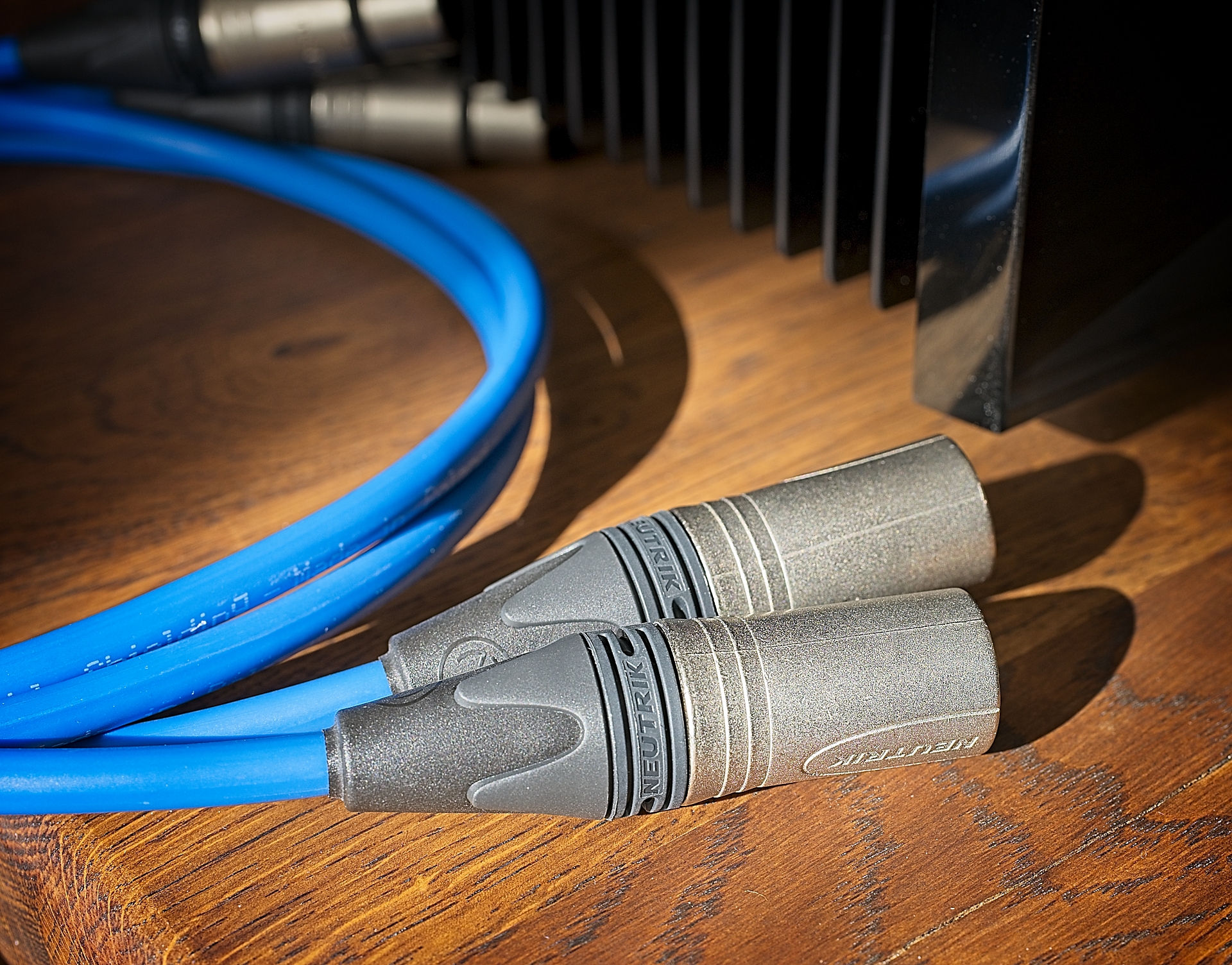 That’s important because it means that the presentation does not become dull or closed-in, stays rather vivid but (mostly) devoid of irritating features. It will come in handy with many relatively inexpensive amplifiers and sources, as those often sound a bit too bright or a little harsh, and they need ‘tempering’ or softening, particularly in the upper midrange and treble areas, to allow for long, fatigue-free listening sessions. The generic cables either emphasize both range extremes or overdo the „softening,” and the sound becomes either even brighter and harsher or too dull and, as a result, tiring or boring in the long run. It seems to me that considering how many things Melodika Sky Blue Series interconnects do right, choosing one (or more) of them, especially for an inexpensive setup, is a no-brainer.
Melodika Sky Blue Series Speaker Cables
Adding speaker cables to the mix meant that both the source and amplifier, but also the amplifier and speakers, were now connected using Melodika Sky Blue Series signal cables. The speaker cables directly replaced my Soyaton Benchmark MK2. As I soon learned, the speaker cables matched the performance of the interconnects and, in some respects, enhanced it even further.
One of the surprising qualities of the tested set was a nice bass extension that allowed, for example, a bass guitar to set the tone and rhythm on Meshell Ndegeocello’s album. Its sound was pretty gutsy, powerful, and yet it did not dominate the wonderful (very Sade-like) vocals. The next album, Slow The Band’s „Under Everchanging Sky,” starts with quite powerful drumming, and the tested cable set surprised me again with how tight and springy the drums were.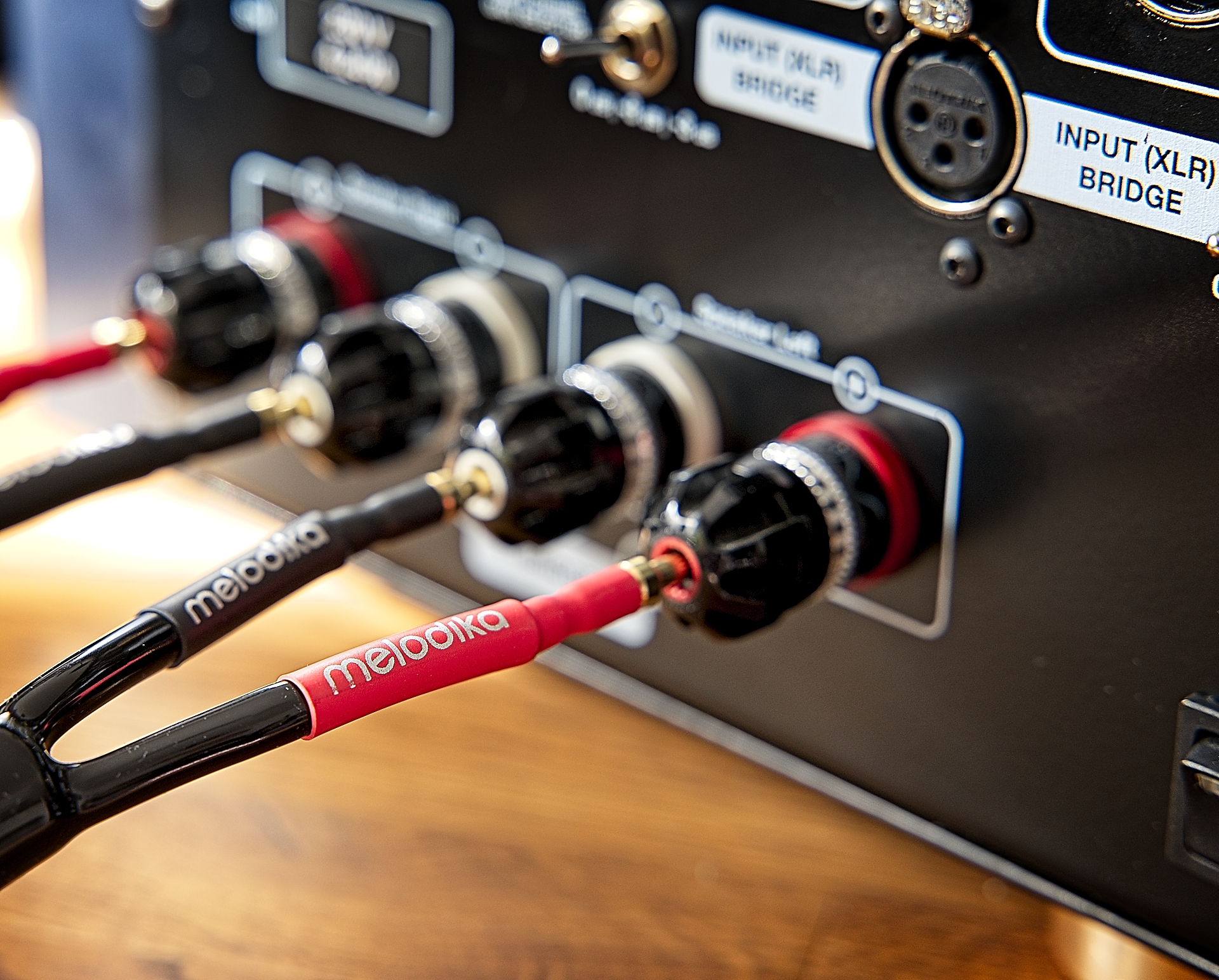 Sure, drumming was not as well differentiated either in the drums or cymbals area as with my reference cables, but that’s again nitpicking, not an actual complaint. While the band reminded me of Spyro Gyra or Acoustic Alchemy, they sounded even more energetic, and the Melodika cables conveyed this aspect really well. It seemed to me that the Sky Blue speaker cable (and that is an experience that repeats itself often, regardless of the price level of the tested cables) added more energy and extension, particularly to the bottom of the range. More extension meant also more support for the midrange, which sounded even richer and a touch warmer, and yet, the clarity of the presentation was still good.
Another quality worth mentioning is how good the flow of music was with Melodika Sky Blue Series set. For music to sound natural, and it did with these cables, flow, coherence, and timing are quite important factors. The reviewed set may not be the champion of either, but it does a solid job, and the result was surprisingly (at least for me) natural presentation. It was quite relaxed; no strain, no nervousness, quite on point with the beat, even when it came to AC/DC or Led Zeppelin, with really good-sounding vocals, meaty guitars, hefty bass, and drums – it all came together to offer a truly enjoyable musical experience. Maybe not an audiophile one, but for those who value music over the technical aspects of the recordings, the „musical” presentation these Polish cables offer should be good enough to engage you in whatever music you like to listen to.
Summary
While I like to call myself a music lover rather than an audiophile, I am „audiophile proud” of what I achieved building my system over the years and fine-tuning it by selecting every component with a certain sound characteristic in mind (within a certain budget!). That is why, on the one hand, when I review other components, I try to remain as objective as possible, but on the other hand, I always compare them to the ones I have selected for my own use. I often recognize ‘objective’ superiority (in terms of performance) of the item as such, but it doesn’t mean it fits perfectly into my vision of sound. In other words, I appreciate it, yet I don’t feel a need to have it.
It’s a bit of a different story when it comes to assessing lesser components, as they sometimes ‘damage’ the overall performance of my system in a way that sucks the joy out of listening to the music. It makes offering you an objective assessment much more difficult. So reviewing such super-inexpensive cables as Melodika Sky Blue Series should have been particularly difficult, shouldn’t it? Yet, somehow, it wasn’t.
My conclusion was that if I had to live with these cables, I wouldn’t mind. Sure, objectively, the performance level wasn’t even close to that which my trusted cables ensured, and yet I had so much fun listening to the music, which is the most important aspect of this hobby for me, that while I realized the downsides and what I was losing in comparison, I was able to accept it and enjoy the music. It does not happen that often with really cheap audio products, and therefore I believe that Melodika Sky Blue Series interconnects and speaker cables are worth your attention if you care about good sound and enjoying music, but don’t plan to spend too much on cables.Funny enough, many times before when I replaced my reference components, including cables, with tested, significantly less expensive ones, I often needed at least some time to ‘adjust’ to the somewhat hindered sound quality. With Melodika cables, for whatever reason, I didn’t need the adjustment period. To be very clear, my system with the tested cables did not reach the performance level I was used to. It was less refined, less resolving, a bit less engaging, and less differentiating.
And yet… And yet, I still enjoyed listening to the music, any music, popular or „audiophile.” Unlike in some other cases, the lower sound quality wasn’t off-putting or irritating. Why? The key quality this set offers is a natural, coherent, and easygoing sound. It doesn’t try to be an „audiophile-class” product. It is not detail-oriented. It doesn’t offer great insight. It is, though, quite forgiving. The presentation is relaxed because Melodika Sky Blue Series cables do not try to be something they are not. They focus on music itself, connecting listeners to it and engaging them. That’s what the Melodika set does surprisingly well.
Prices (when reviewed):
- Sky Blue SB2R10 (2x 1m) Cable RCA: 120 EUR; Sky Blue SB2R20 (2x 2m): 135.00 EUR
- Sky Blue SB2X10 (2x 1m) Cable XLR: 199 EUR; Sky Blue SB2X20 (2x 2m): 215 EUR
- Sky Blue SBSC4020 (2x 2m) Speaker cable OFC 4N 2x4mm2: 209 EUR; Sky Blue SBSC4030 (2x 3m) 249 EUR
Manufacturer: MELODIKA
Technical specifications (according to the manufacturer)
Sky Blue SB2R Cable RCA:
- 4N OFC copper conductors (99.99% purity)
- 24k gold-plated RCA plugs with PTFE insulation
- Twisted Cores geometry
- Dual shielding (Mylar foil + minimum 95% coverage braid)
- High durability double PE, PVC insulation
- Warranty: 5 years
Sky Blue SB2X Cable XLR:
- 4N OFC copper conductors (99.99% purity)
- Neutrik metal-bodied XLR plugs with silver-plated contacts
- Twisted Cores geometry, Bass Core technology
- Dual shielding (Mylar foil + 95% coverage braid)
- High durability double PE, PVC insulation
- Warranty: 5 years
Sky Blue SBSC40 Speaker cable:
- Construction: 170×0,15mm and 1×1,10mm
- Gauge: 2x 4mm2
- Conductor configuration: 170x 0,15mm and 1× 1,10mm twisted together
- Technology: BassCore and Solid Grip
- Dielectric: Low-permittivity polypropylene fiber
- Connectors: 24k Gold-plated
- Warranty: 5 years
Associated equipment:
- Digital source: a custom passive server with WIN10, Roon, Fidelizer Pro 7.10, JCAT NET XE, and JCAT USB XE cards with FERRUM HYPSOS Signature power supply, KECES P8 (mono) linear power supply for the server, JCAT USB Isolator
- D/A Converter: LampizatOr Poseidon + Ideon Audio 3R Master Time (USB signal regenerator)
- Analog front end: J.Sikora Standard MAX turntable, J.Sikora KV12 & J.Sikora KV12 MAX tonearms, AirTight PC-3, Audio Technica PTG33 Prestige & LE SON LS10 MKII cartridges, Grandinote Celio MK IV & ESE Lab Nibiru V 5 phono stages.
- Power amplifiers: GrandiNote Shinai, Circle Labs M200, Art Audio Symphony II (modified)
- Preamplifier: Circle Labs P300
- Loudspeakers: GrandiNote MACH4, Ubiq Audio Model ONE Duelund Edition.
- Interconnects: Bastanis Imperial RCA x2, Soyaton Benchmark RCA, Hijiri Million Kiwami RCA, Hijiri HCI-20 RCA, TelluriumQ Ultra Black RCA, KBL Sound Himalaya 2 XLR, NxLT Ether XLR, David Laboga Custom Audio AKOYA USB, David Laboga Custom Audio Digital Sound Wave Sapphire Ethernet
- Speaker cables: Soyaton Benchmark Mk2, WK Audio TheRAY Exclusive
- Power cables: DL Custom Audio 3D-S-AC Connect, LessLoss DFPC Signature, Gigawatt LC-3
- Power: Gigawatt PF-2 MK2 and Gigawatt PC-3 SE Evo+; a custom power line with Gigawatt LC-Y in-wall cable; Gigawatt G-044 Schuko and Furutech FT-SWS-D (R)
- Network: Silent Angel Bonn N8 + Silent Angel Forester F1 + optical LAN isolator
- Racks: Base VI, Rogoz Audio 3RP3/BBS
- Anti-vibration accessories: ROGOZ-AUDIO SMO40 and CPPB16 platforms and ROGOZ AUDIO BW40MKII feet, OMEX Symphony 3S, Franc Accessories Ceramic Disc Slim Feet and Wood Block Platform