

Today we take a look at the Virtual Hifi Vibron isolation footers designed by Grzegorz Rulka. These unusual resonance-control devices are 3D-printed and, at least for now, remain unique in the audio accessories space. Enjoy!
FDM
If I were hard pressed to name the Polish audio brand that I’m most fond of, the local outfit LampizatOr would take the crown. Right behind it however sit two speaker houses that have long enjoyed a special place in my reviewer universe: Cube Audio and Qualio Audio. Both companies are cut from a similar cloth. They share the same origin story, founders, and—perhaps most importantly—a willingness to pursue ideas that don’t necessarily follow the mainstream script. For a reviewer like myself, this combination is always interesting because it typically leads to products that are anything but generic. And non-generic audio is usually good fun.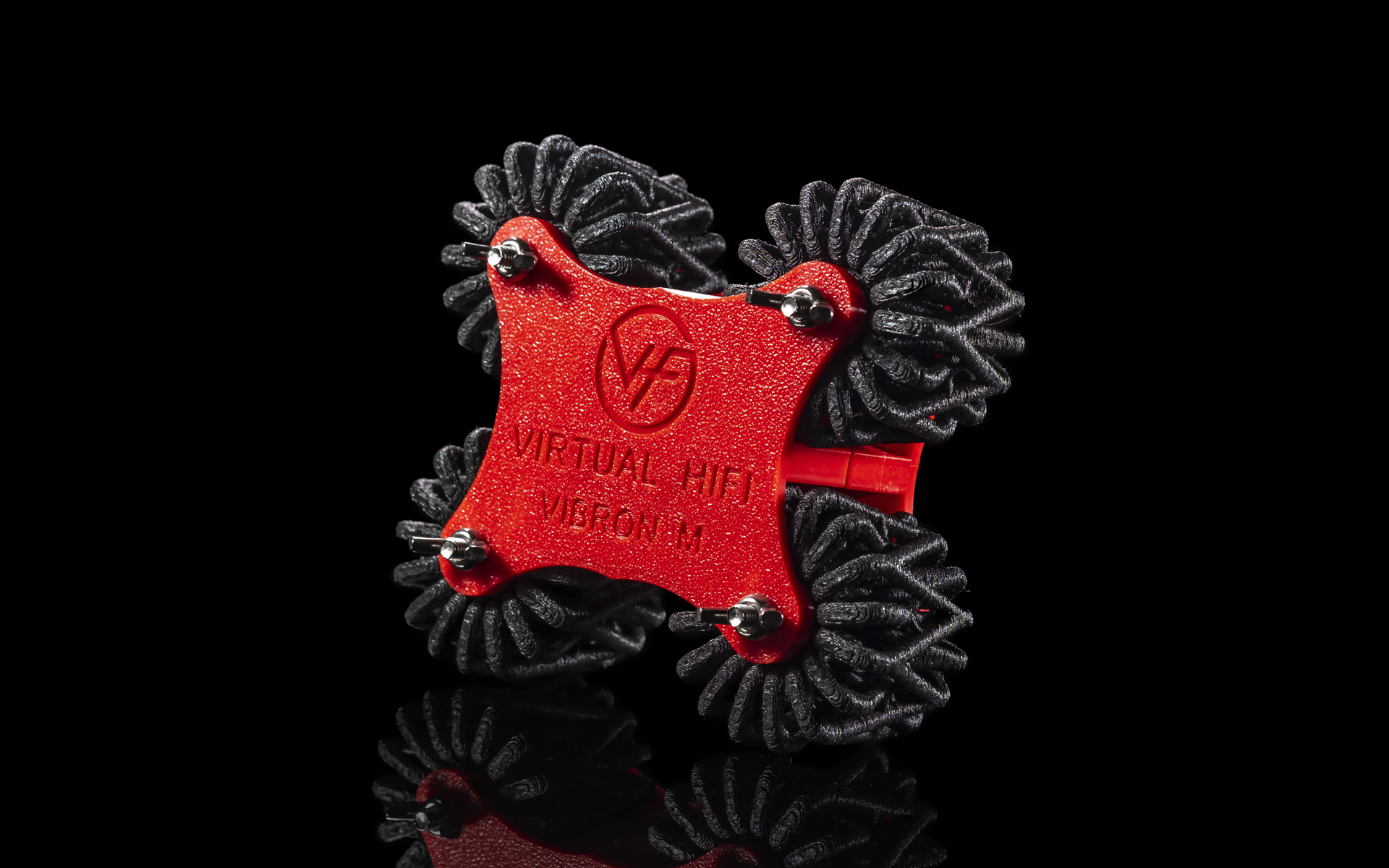 Cube Audio in particular is the very reason why I’ve grown so fond of purist crossoverless full-range loudspeakers. In one of my recent stories, I wrote that such designs often appear defined by dogma and stubborn purism. Cube Audio managed to humanize that breed for me. Their speakers demonstrated very clearly what happens when their in-house full-range driver partners with an amplifier of suitably low output impedance. Long story short, the outcome is lively, musically persuasive and packed with all the virtues this concept has in store. Instead of sounding like a purist manifesto and turning the listening experience into a test of ideological loyalty, Cube designs feel welcoming and easygoing.
 Their makers didn’t stop there. Their second outfit – Qualio Audio – offers models which, at first glance, appear more traditional. The basic architecture built upon a regularly vented box resembles countless other loudspeakers on the market. Upon closer inspection however, it becomes clear that these designs are far from ordinary. Qualio speakers incorporate a clever dipole arrangement mounted on a transparent acrylic baffle that sits atop a ported enclosure. This unorthodox hybrid topology that blends conventional box loading with open-baffle radiation delivers results that are as unusual as they’re entertaining. Very.
 That extra dipole twist transforms what could otherwise be interpreted as fairly standard loudspeakers into something far more distinctive. Dipole radiation introduces a different spatial behavior, often yielding a presentation that feels more open and less confined than typical forward-firing box speakers. Combine that with carefully chosen drivers and thoughtful tuning and the result is a speaker line that offers something genuinely unusual for its asking price. It also helps that Qualio products are sold factory direct, which keeps the cost structure refreshingly sane in a market where distribution layers can easily inflate prices beyond reason. Today however we narrow our scope to one of the men behind both companies. Grzegorz Rulka is a co-founder of Cube Audio and Qualio Audio, but not long ago he also decided to establish a separate brand of his own named Virtual Hifi. Before unpacking what that venture is about, it’s worth briefly explaining how it came to be.
 Although Cube and Qualio designs are already rather special given their topology and pedigree, Grzegorz has always struck me as a restless soul and a genuine out-of-the-box thinker. Those who know him personally will likely agree that some of his ideas drift comfortably into territories where few conventional audio engineers would feel entirely safe. That willingness to experiment is both a blessing and a challenge. While it generates fascinating concepts, it also requires a platform that allows those ideas to exist outside the boundaries of established product lines.
 Virtual Hifi became precisely that platform. I remember well the first time Grzegorz mentioned that he was working on something beyond the Cube and Qualio umbrellas. Back then he revealed that discrete operational amplifiers—components far outside the loudspeaker zone—would be his first offering. I liked the idea and applauded the initiative, yet I also wondered whether such a niche product could realistically find a stable foothold in the marketplace. Long story short, it could. As it turned out, that op-amp project was merely the opening move. Grzegorz had far more in his slightly wacky store than just that.
 One thing worth noting about Grzegorz is that he has never been particularly fascinated with extravagant price tags. Quite the opposite. Over the years he compared enough very expensive components with more modestly priced albeit cherry-picked alternatives to realize that the law of diminishing returns is not merely a theoretical concept. Spending more money does not automatically translate into better sound. How we connect the hardware dots does. This awareness, atop very much non-mainstream one-man R&D, shaped the Virtual Hifi portfolio. Products in that lineup aim squarely at delivering meaningful performance without drifting into the financial stratosphere. In other words, Grzegorz has a genuine appreciation for gear that punches above its price bracket and his designs accurately reflect that. For enthusiasts who enjoy clever engineering but prefer to keep at least one foot on the ground financially, that mindset is refreshing.
 Of course loudspeakers remain the man’s natural habitat. He’s a speaker designer first and foremost, but one who appears comfortable exploring unconventional manufacturing methods along the way. His Viper and Cobra monitors illustrate that attitude quite well. Both models employ sealed, fully 3D-printed and textured enclosures, carefully selected woofers tasked also with midrange duties, and AMT tweeters operating as dipoles perched above the cabinet structure. These are not your everyday compact monitors. They combine unusual construction techniques with equally unconventional acoustic thinking. Another aspect of Grzegorz’s philosophy is that he does not shy away from practical tweaks when they make sense. Upper-tier Qualio speakers for instance are offered with optional IsoAcoustics Gaia 2 footers, a detail that quietly reveals how seriously he takes mechanical grounding and vibration management. That interest in isolation solutions eventually led to another idea.
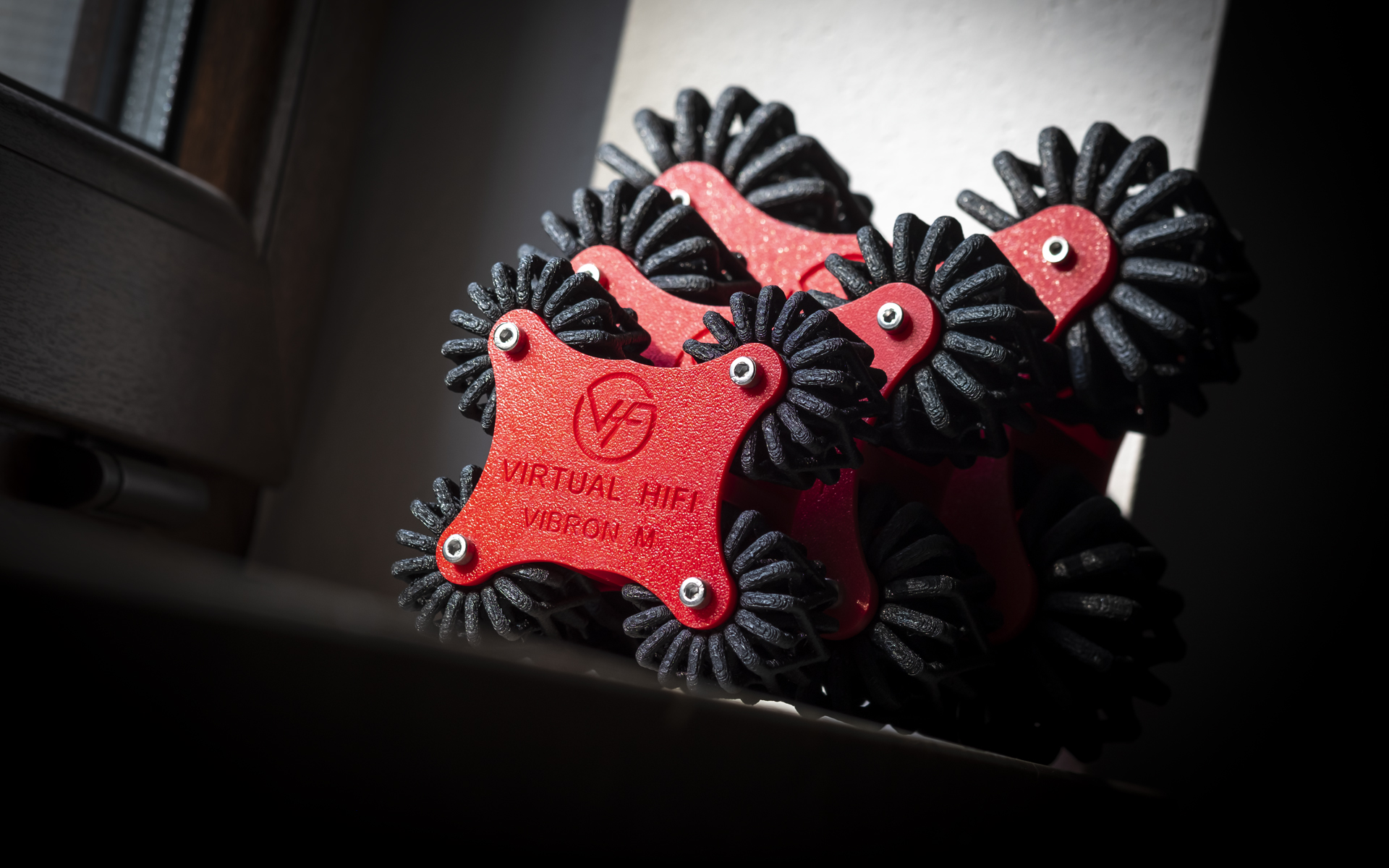 Not long after the debut of his discrete op-amps and shortly before the release of his first Virtual Hifi monitor, Grzegorz introduced a set of isolation footers called Vibron. At first glance they looked quite unlike the typical pucks, spikes or elastomer pads that populate the accessories market. Their form, materials and internal structure hinted at a rather different way of dealing with mechanical energy in audio systems. I hadn’t seen anything quite like them before and chances are you haven’t either. Vibron footers quickly became one of the more intriguing items in the Virtual Hifi catalog, not least because they seemed to combine engineering smarts with the company’s usual price-to-performance pragmatism. As someone who has long appreciated the audible benefits of isolation devices, I was naturally curious to see what Grzegorz’s interpretation of the concept could bring to the table. That’s how this unusual little puck became the subject of today’s review. I should also mention that Srajan’s own Vibron story provided a strong incentive to try them out myself.
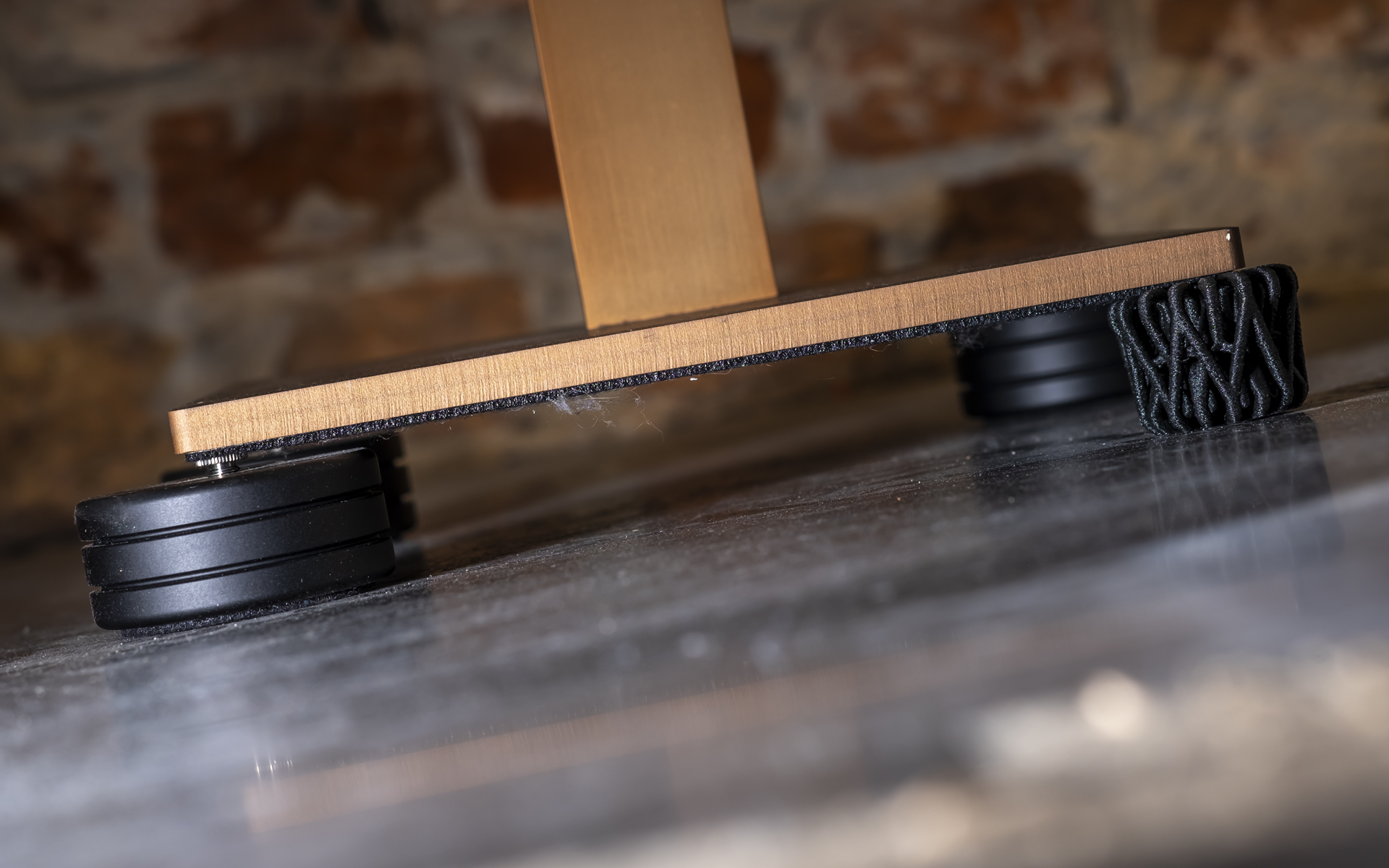
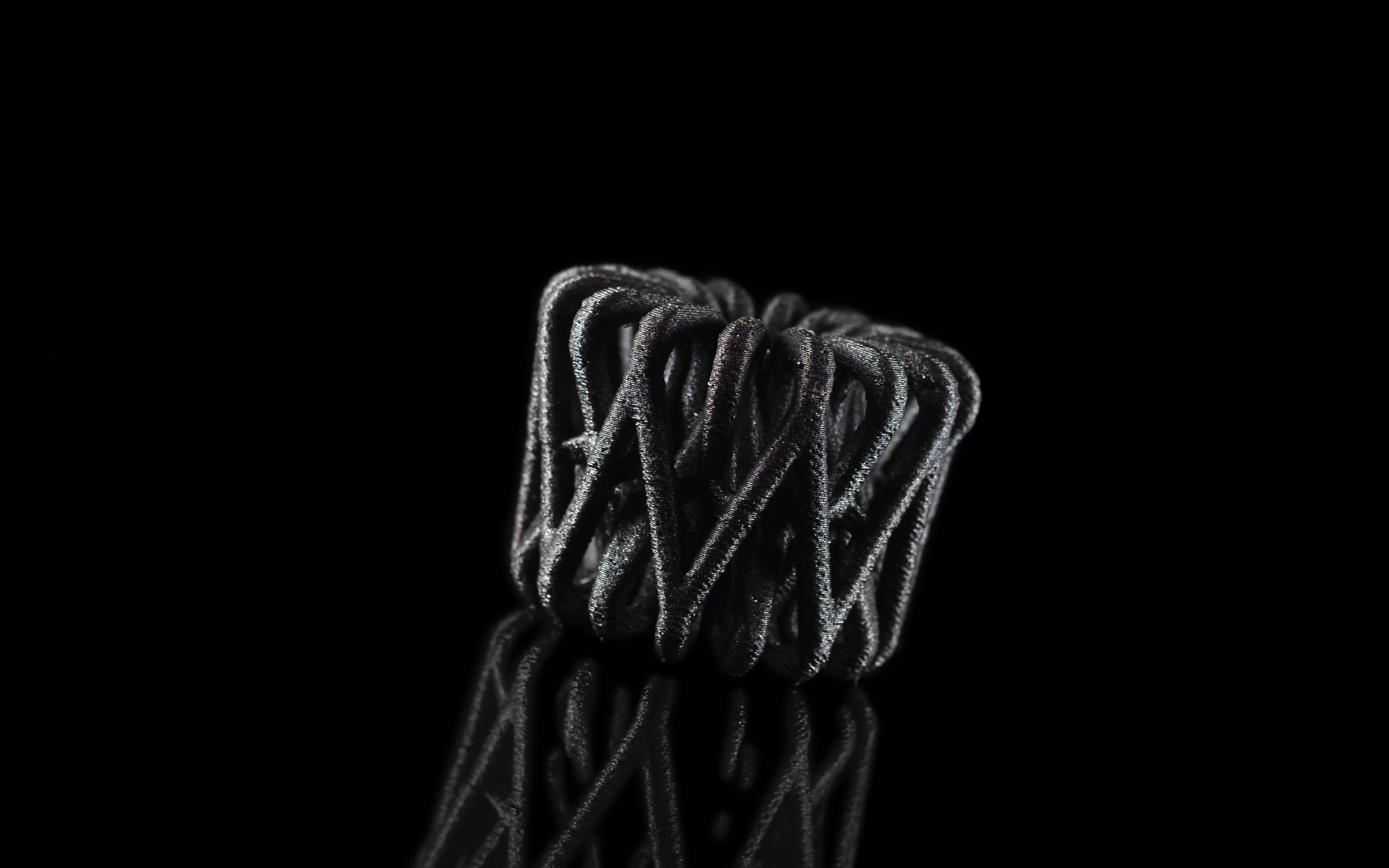 At its core Vibron is an anti-vibration footer, so a device designed to intake oscillations generated by the product placed above it. That product can be an amplifier, DAC, loudspeaker or pretty much anything else in an audio system that tends to inject mechanical energy into the furniture below. Instead of allowing those resonances to travel further down the chain and excite racks, stands or floors, Vibron’s job is to intercept them and deal with the matter internally. The idea is simple enough: vibrations enter the footer, travel through its elaborate structure and are gradually converted into heat. Once that energy dissipates inside the material itself, it effectively disappears from the mechanical equation. That’s the theory behind most isolation devices. Vibron simply approaches the task in its own rather distinctive way.
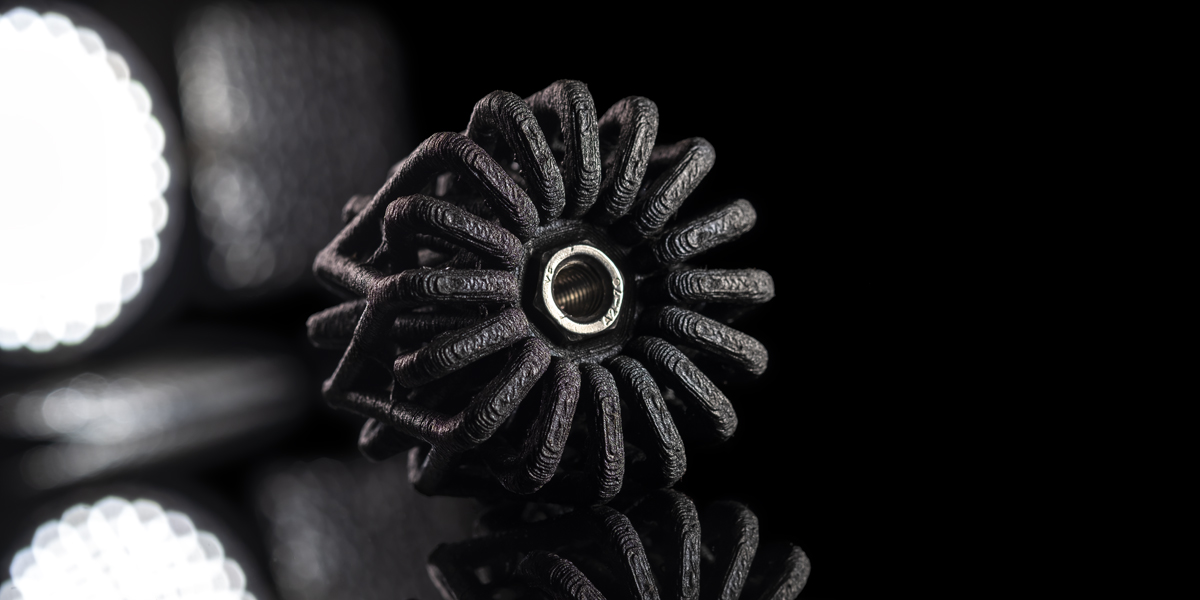
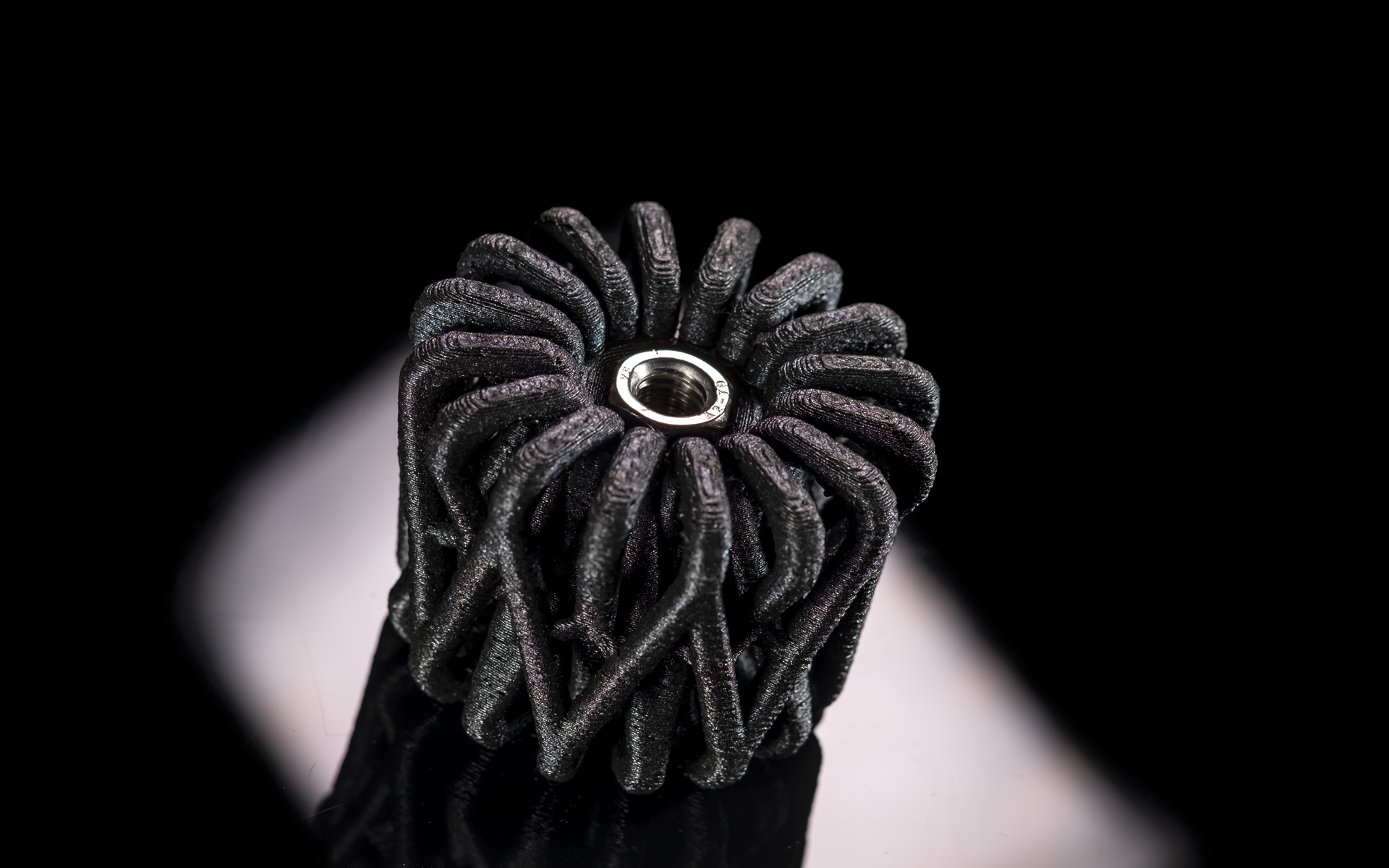
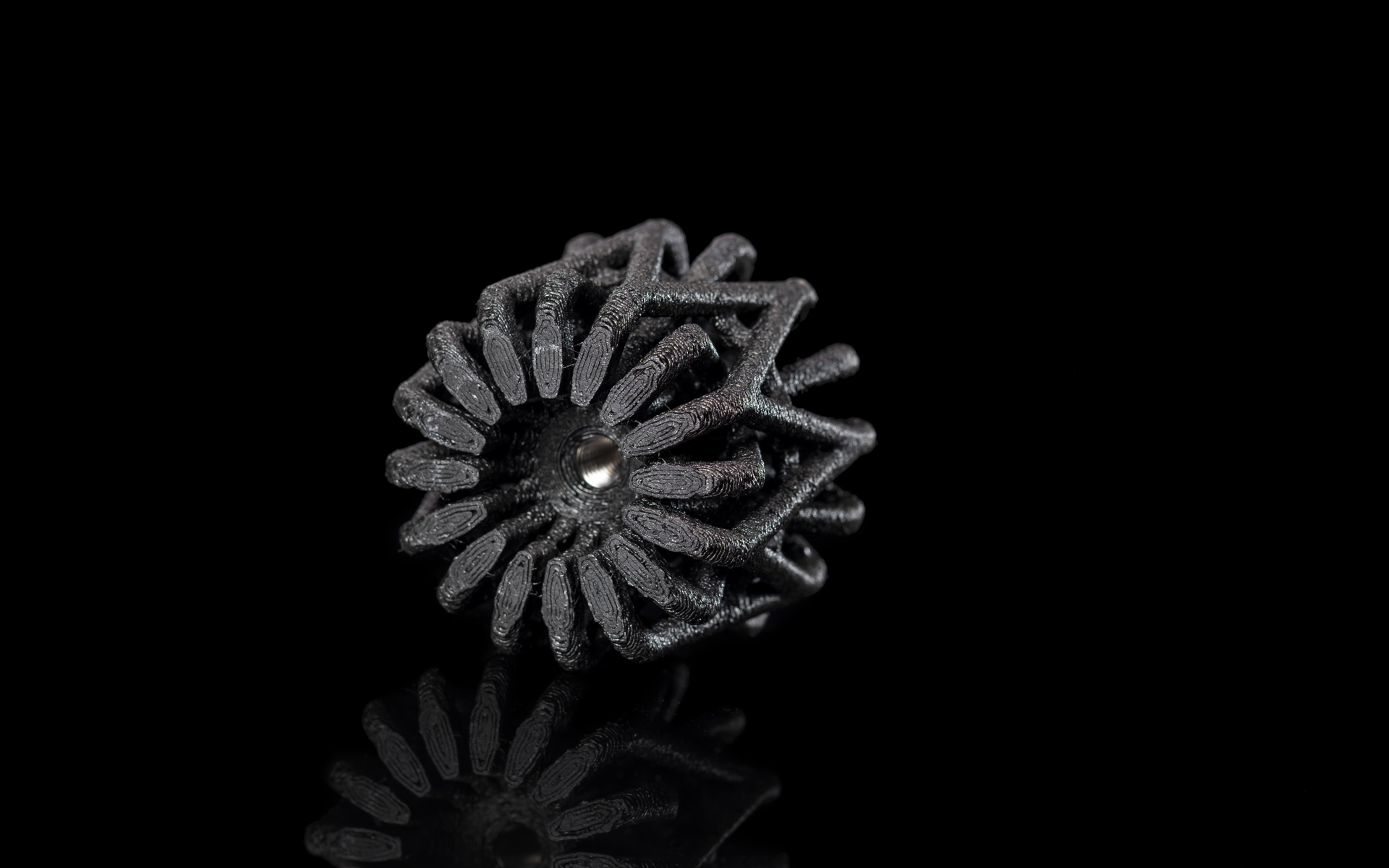
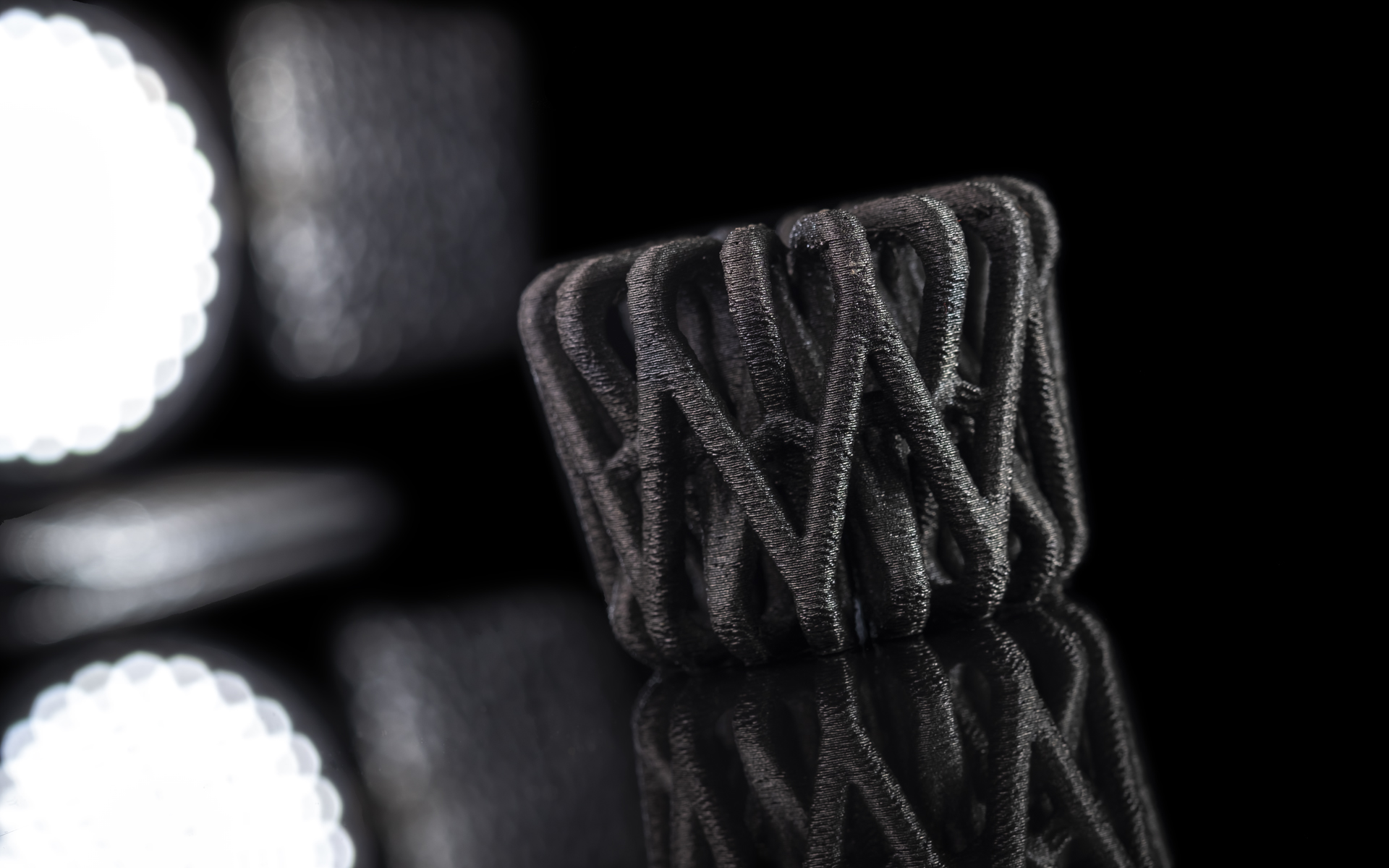
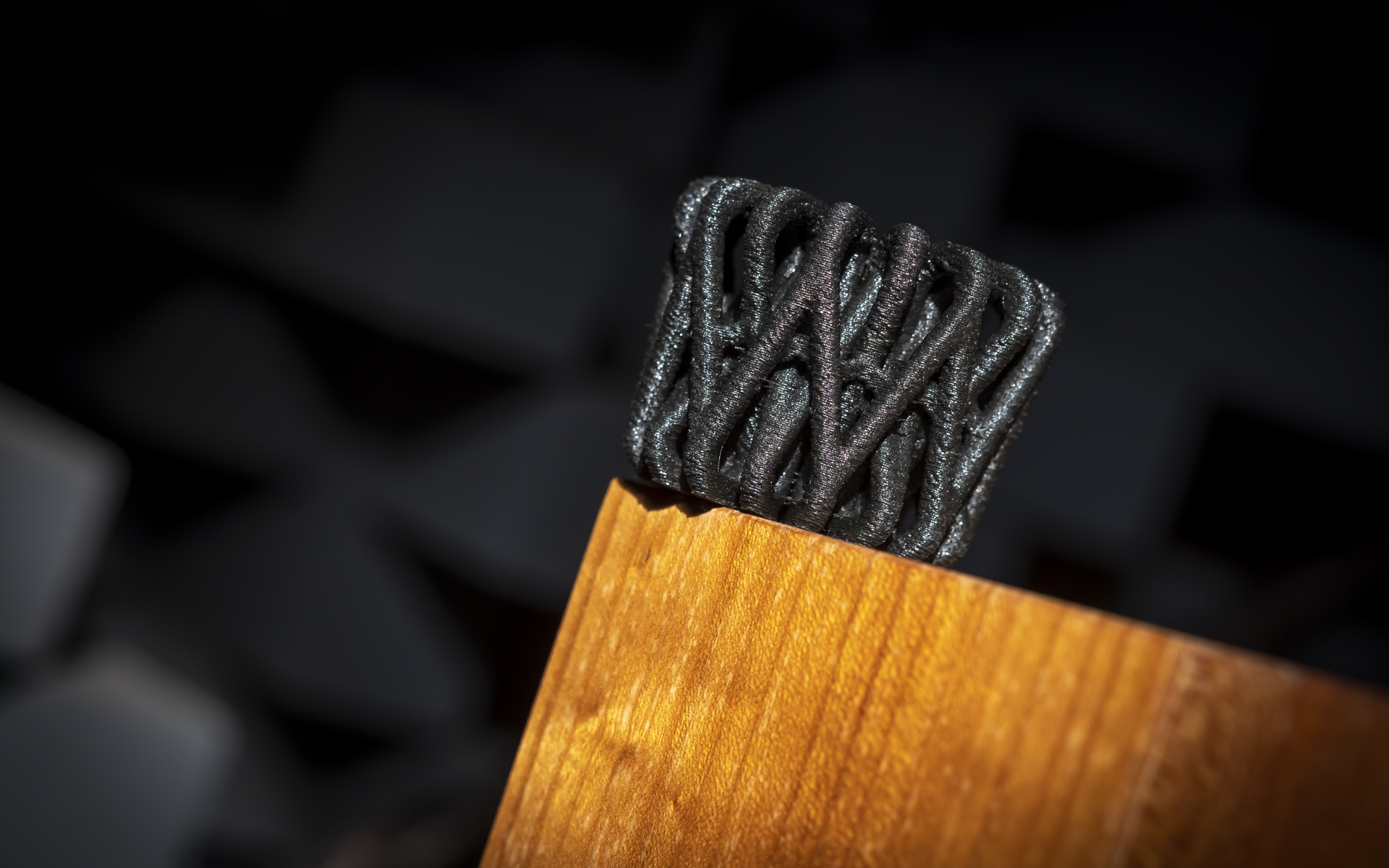
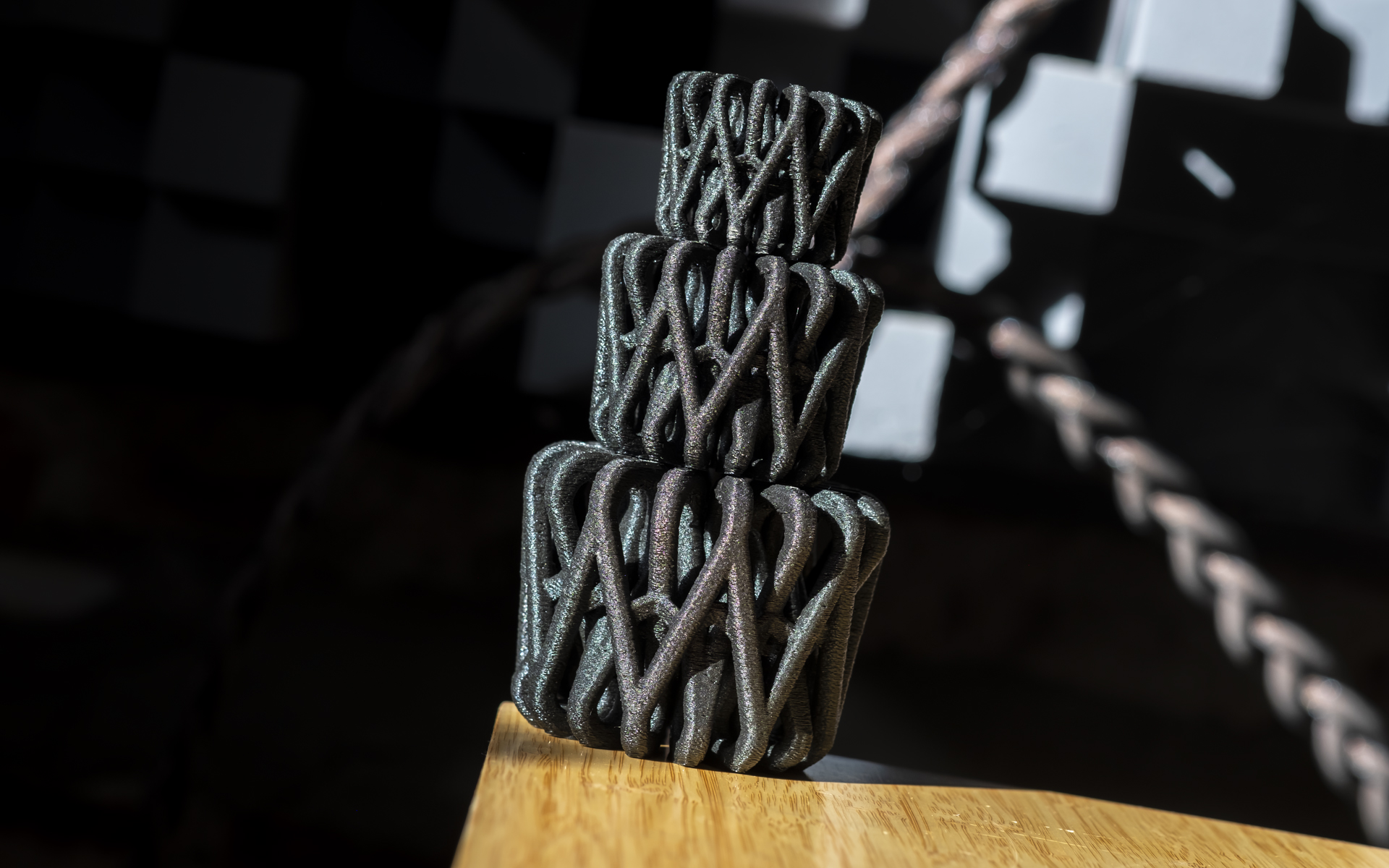
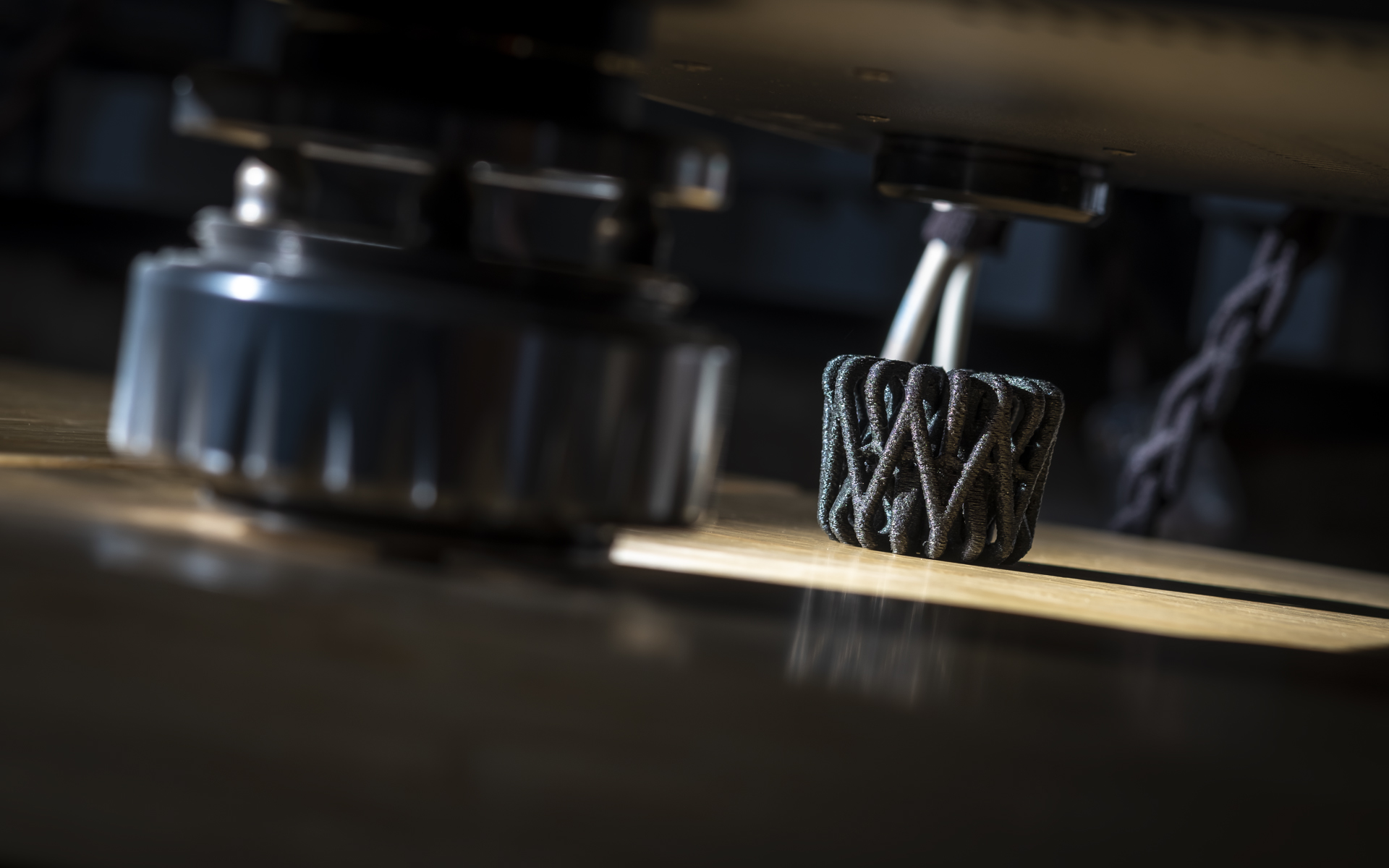
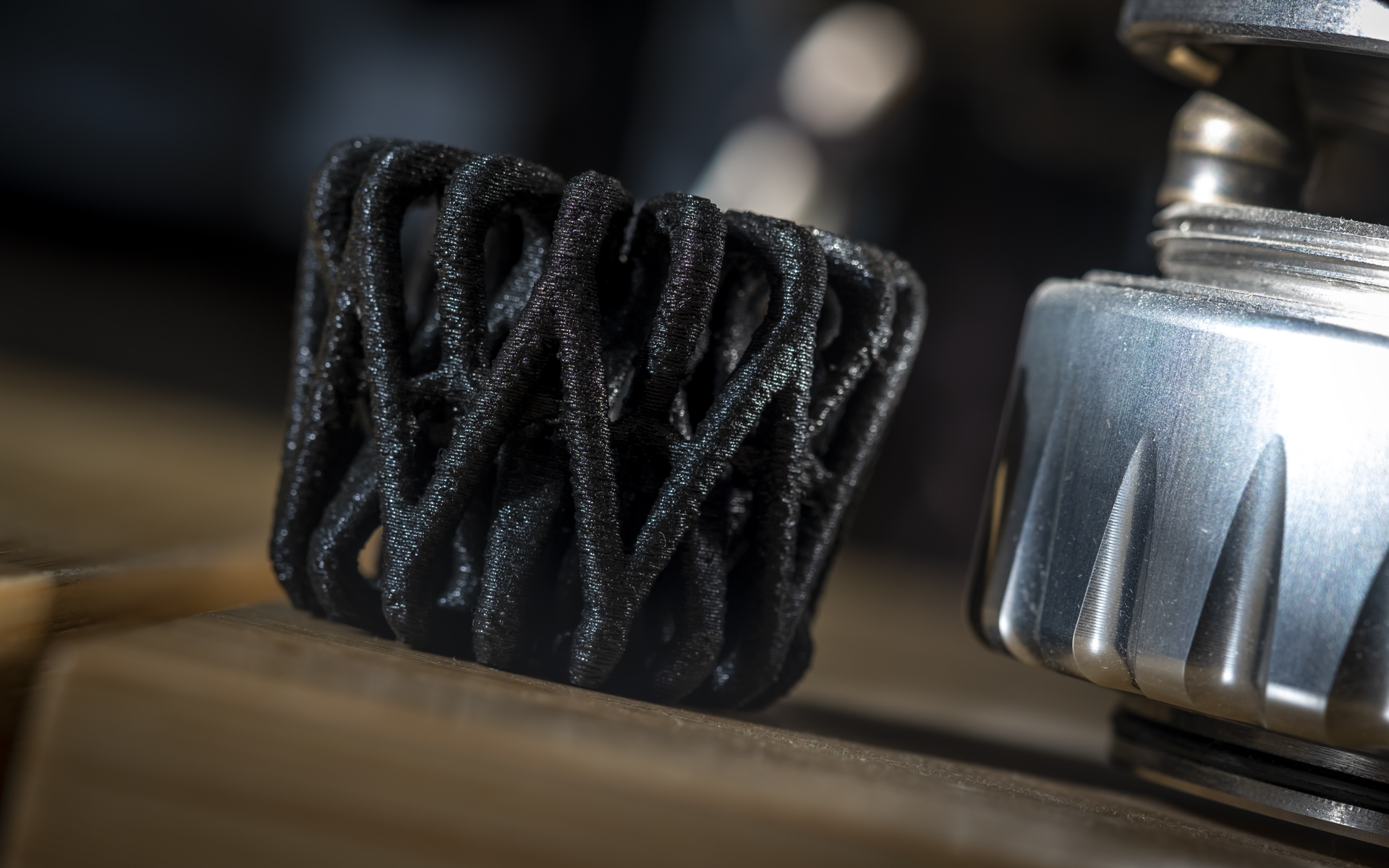
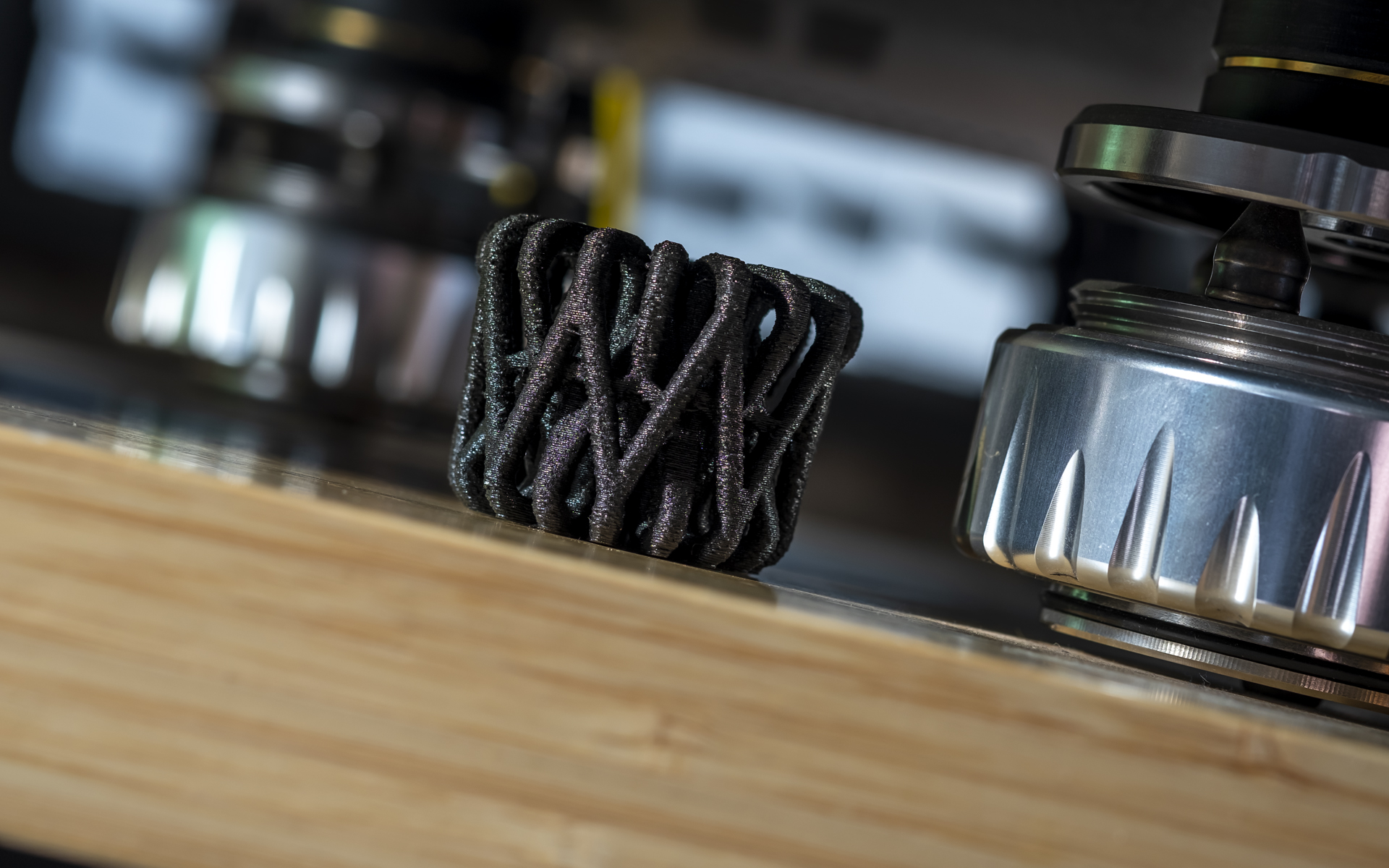
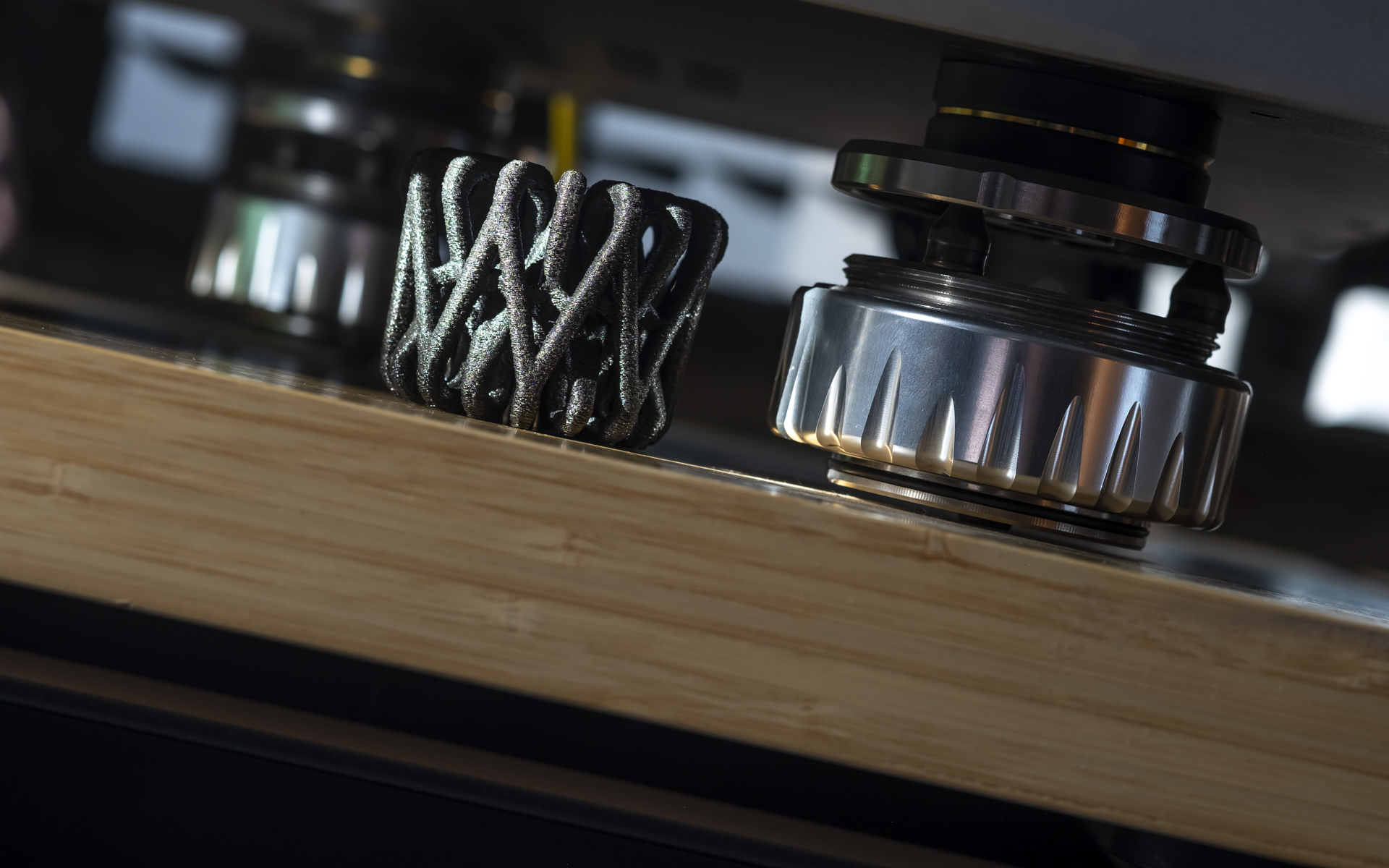 Structure is key here. Vibron footers look unlike most counterparts available on the market because they are the result of fused filament deposition (FDM) of thermoplastic polyurethane (TPU), in other words 3D printing. These days the technology has matured to a point where it allows rather quick manufacturing of remarkably complex shapes that would be extremely difficult—if not outright impossible—to produce with conventional machining methods. Instead of carving a footer out of aluminum or molding a rubber puck, one can simply grow the desired geometry layer by layer. Grzegorz Rulka turned that capability into his daily bread. With an army of printers running pretty much around the clock, he manufactures these parts on a scale that makes perfect sense for the audio industry. The process is efficient, flexible and cost-effective, and particularly well suited to designs that rely on elaborate internal structures.
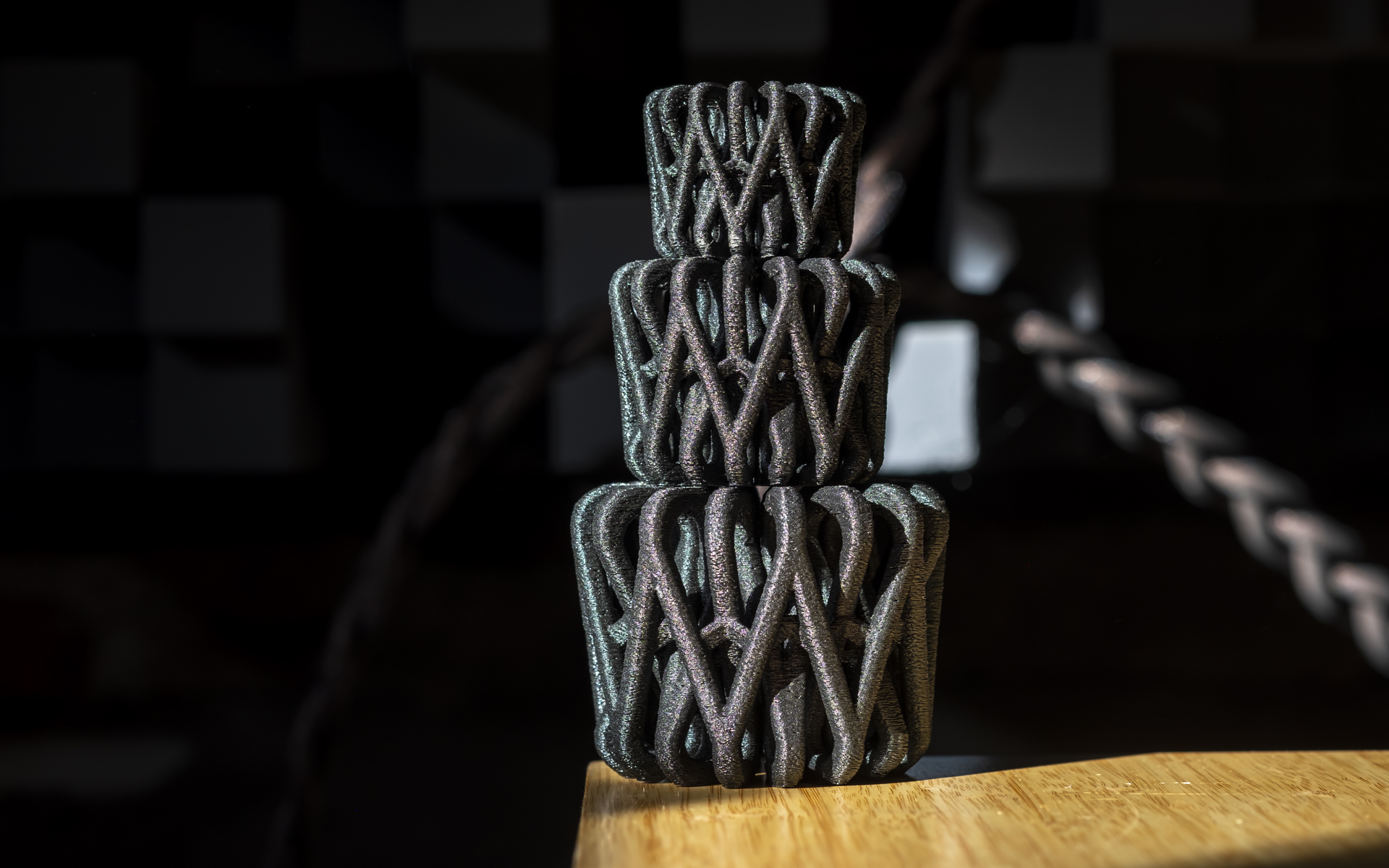
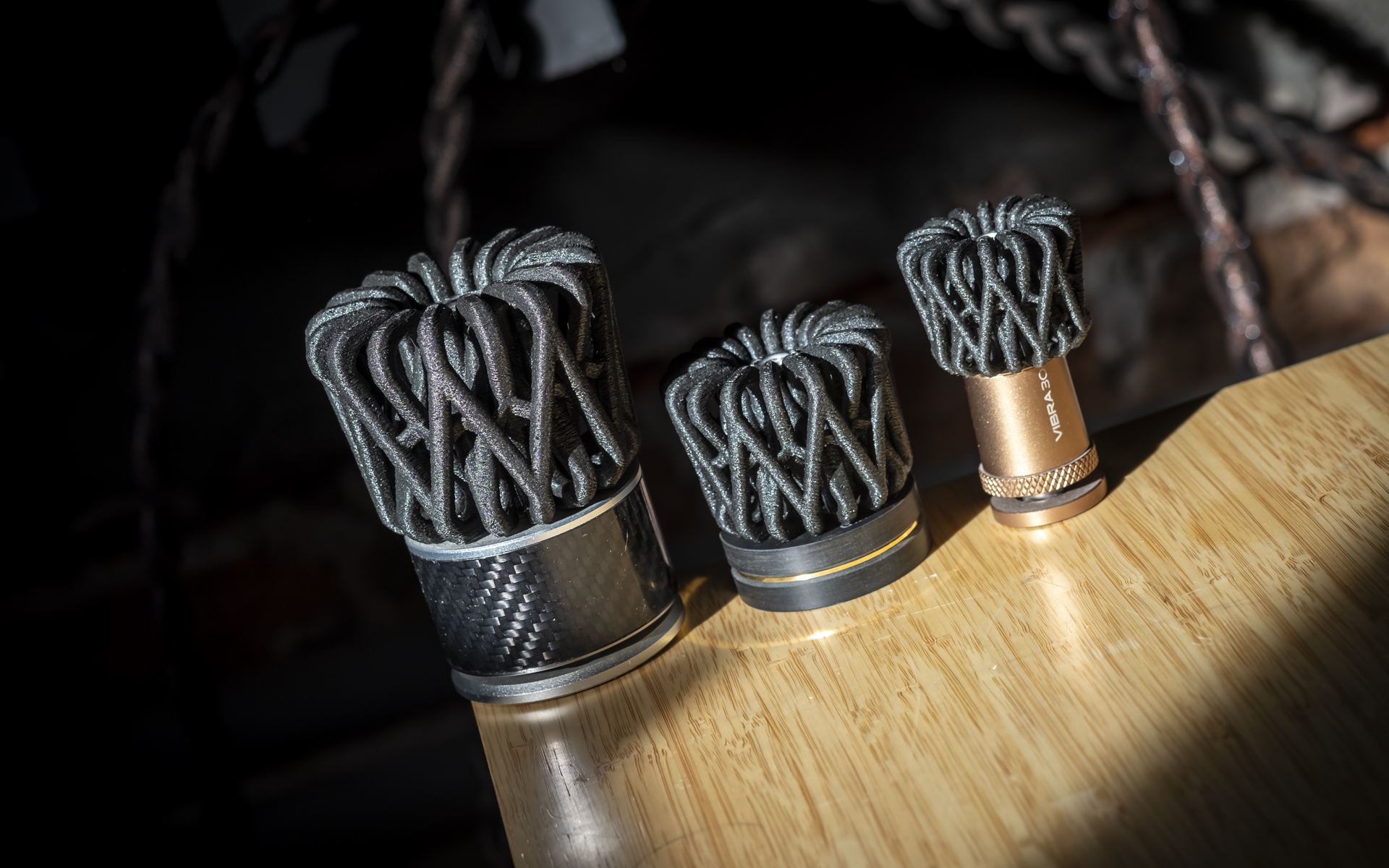
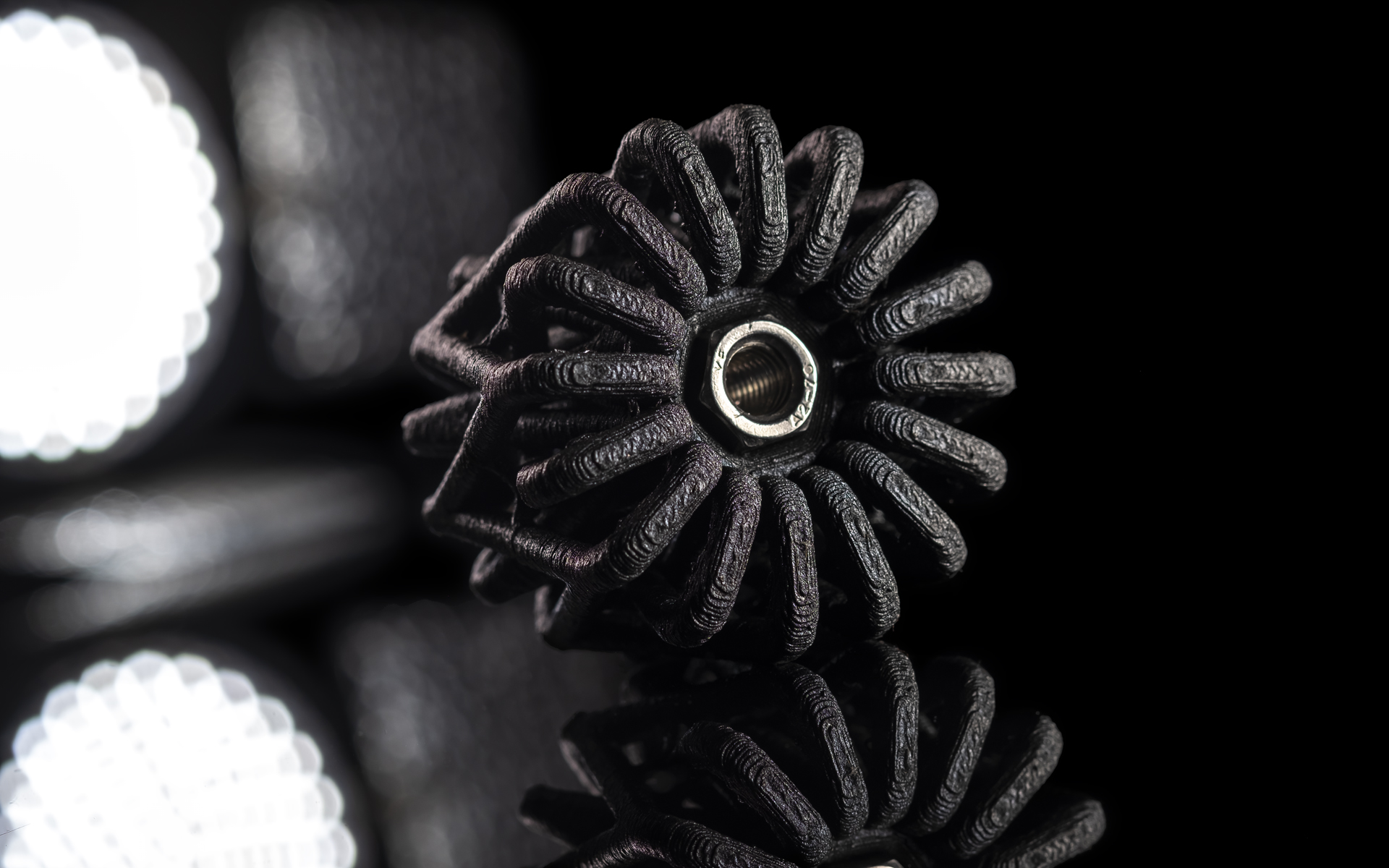
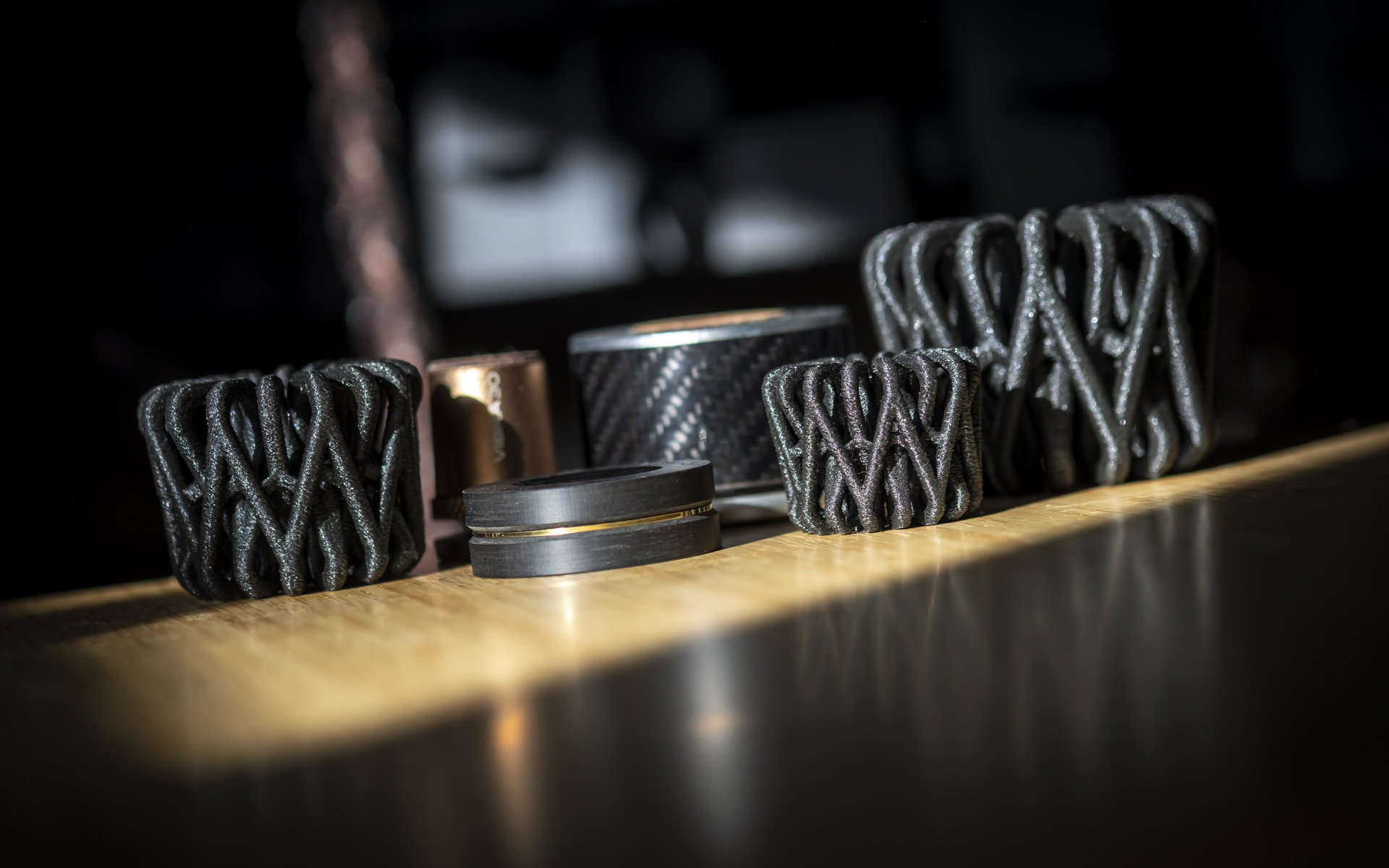
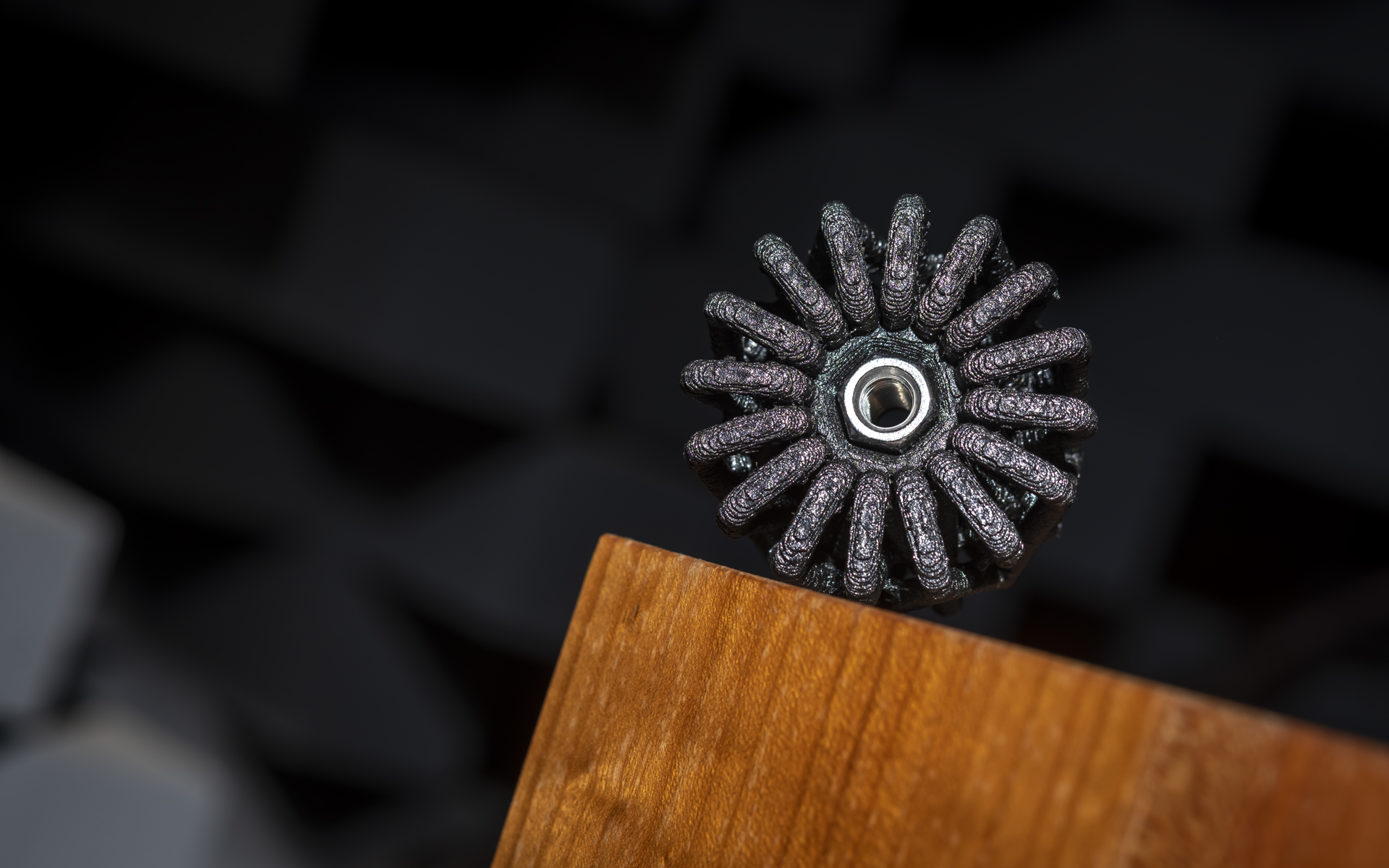
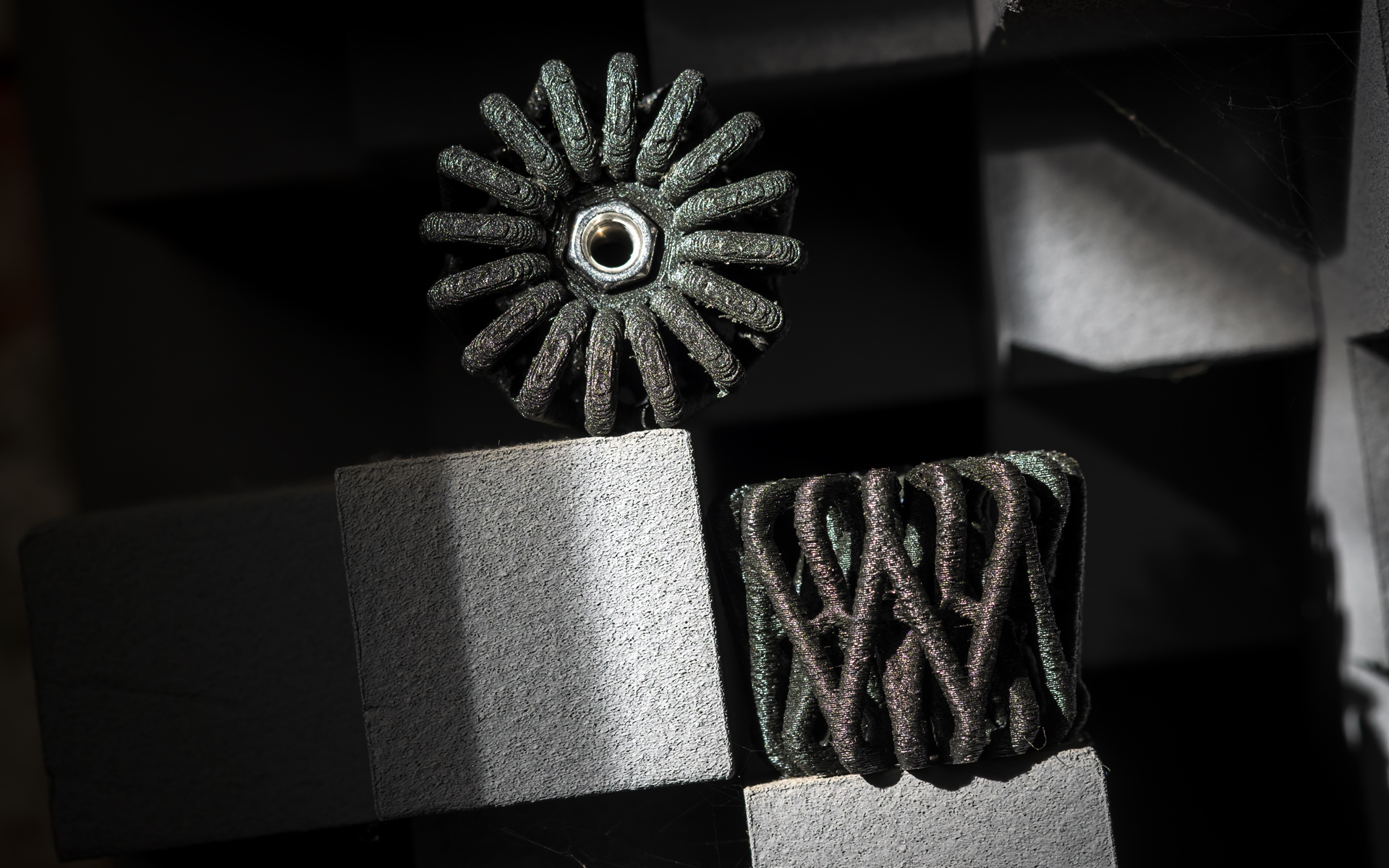
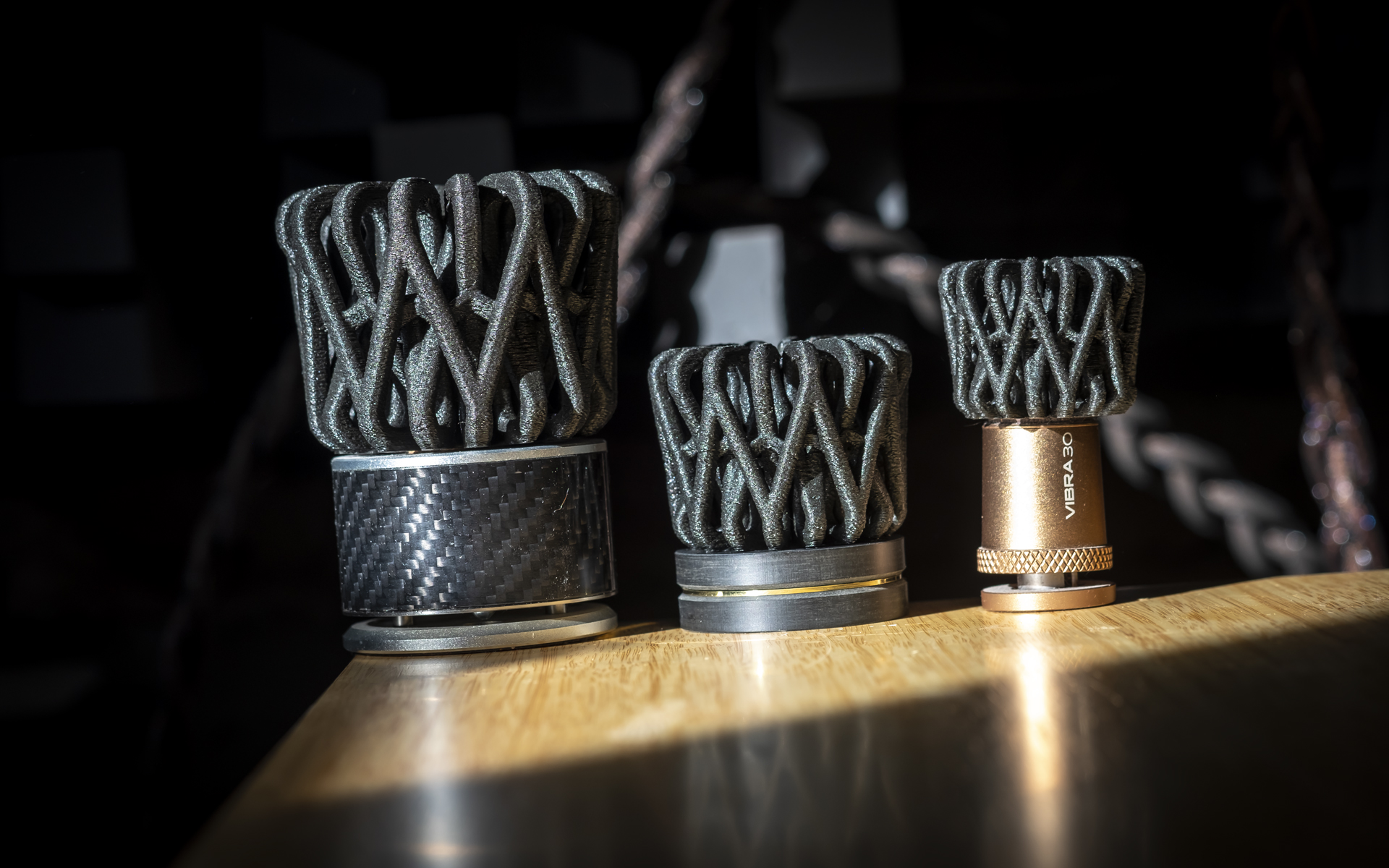
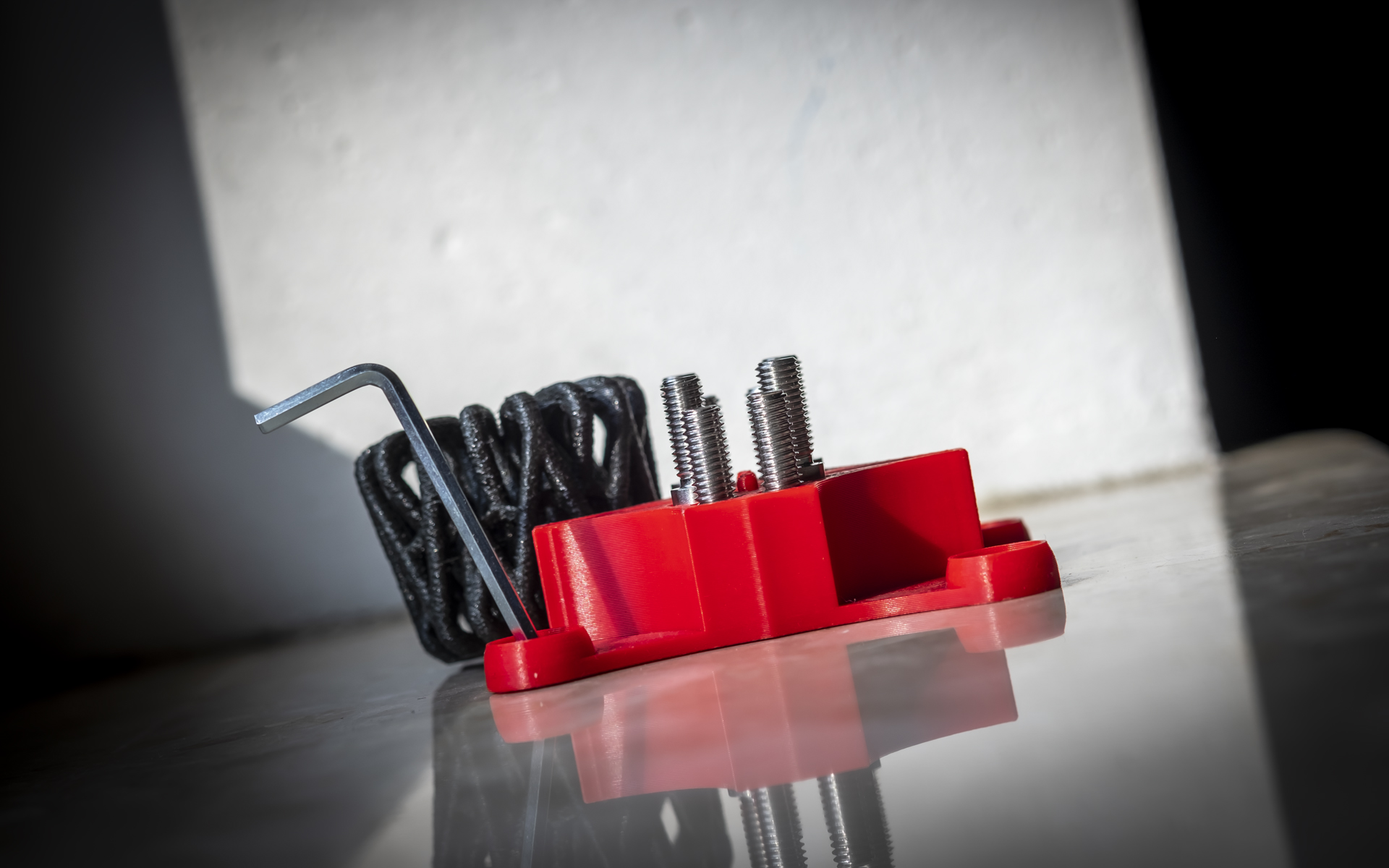
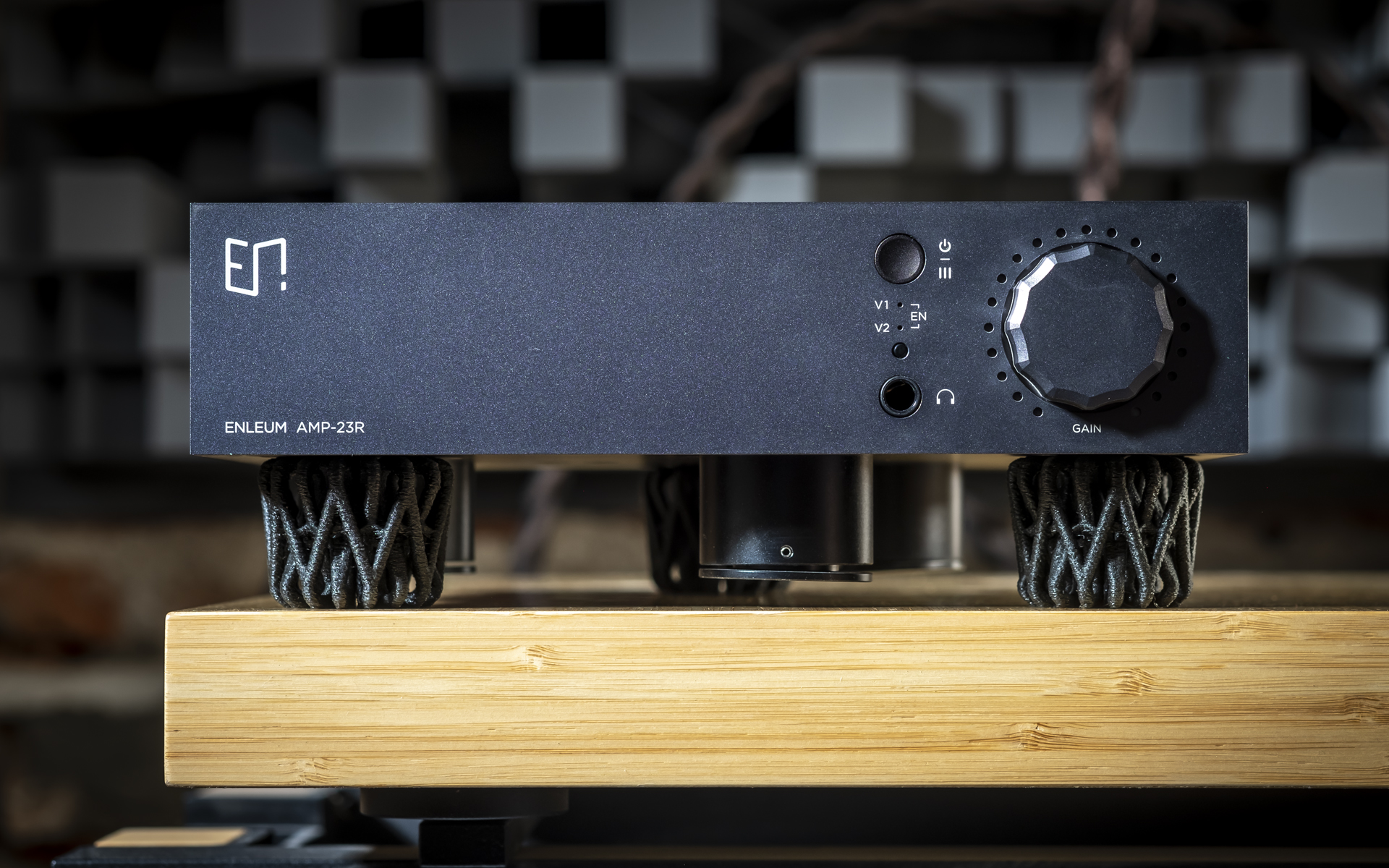
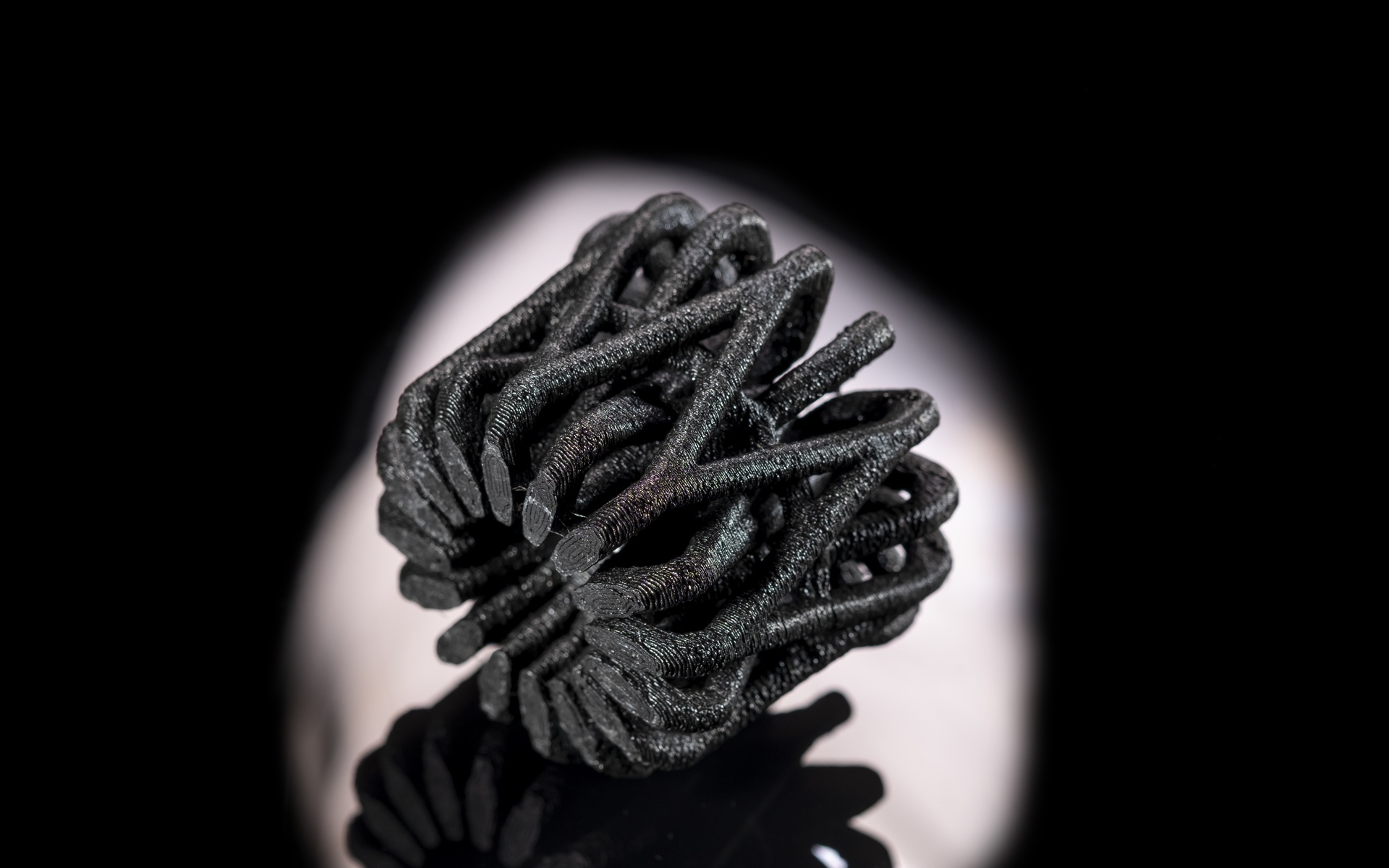
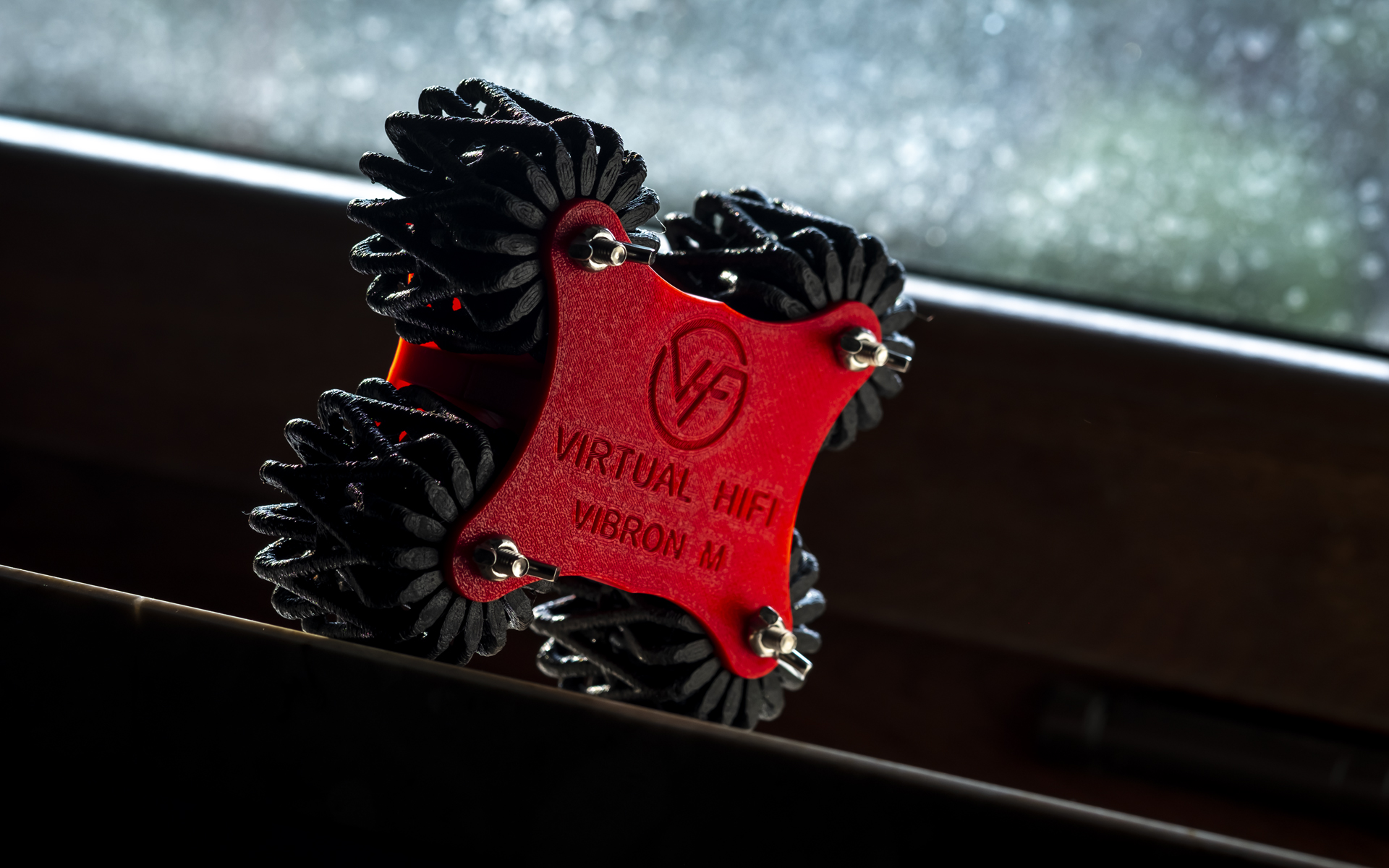 Vibron footers come in three sizes: M, L and XL. Their dimensions are 44×34mm, 58×45mm and 76×58mm (width × height), while load capacities per set of four are 15kg, 40kg and 80kg respectively. As far as audio equipment is concerned, that spread covers just about everything one might realistically want to park on top of them. Smaller electronics and compact monitors fall comfortably within the M version’s limits, while heavier loudspeakers or more substantial gear can move up the ladder. In short, no stone is left unturned. Each footer incorporates an internal hexagonal shaft that serves as a retainer for threaded inserts. The supplied hardware varies depending on the size. Vibron M ships with M6 and ¼-inch bolts, Vibron L adds M8 to that list, while Vibron XL includes M8, M10 and ¼-inch bolts, which effectively covers compatibility with the vast majority of speakers and components currently in circulation. An Allen key included in the box takes care of installation duties and makes the process quick and painless.
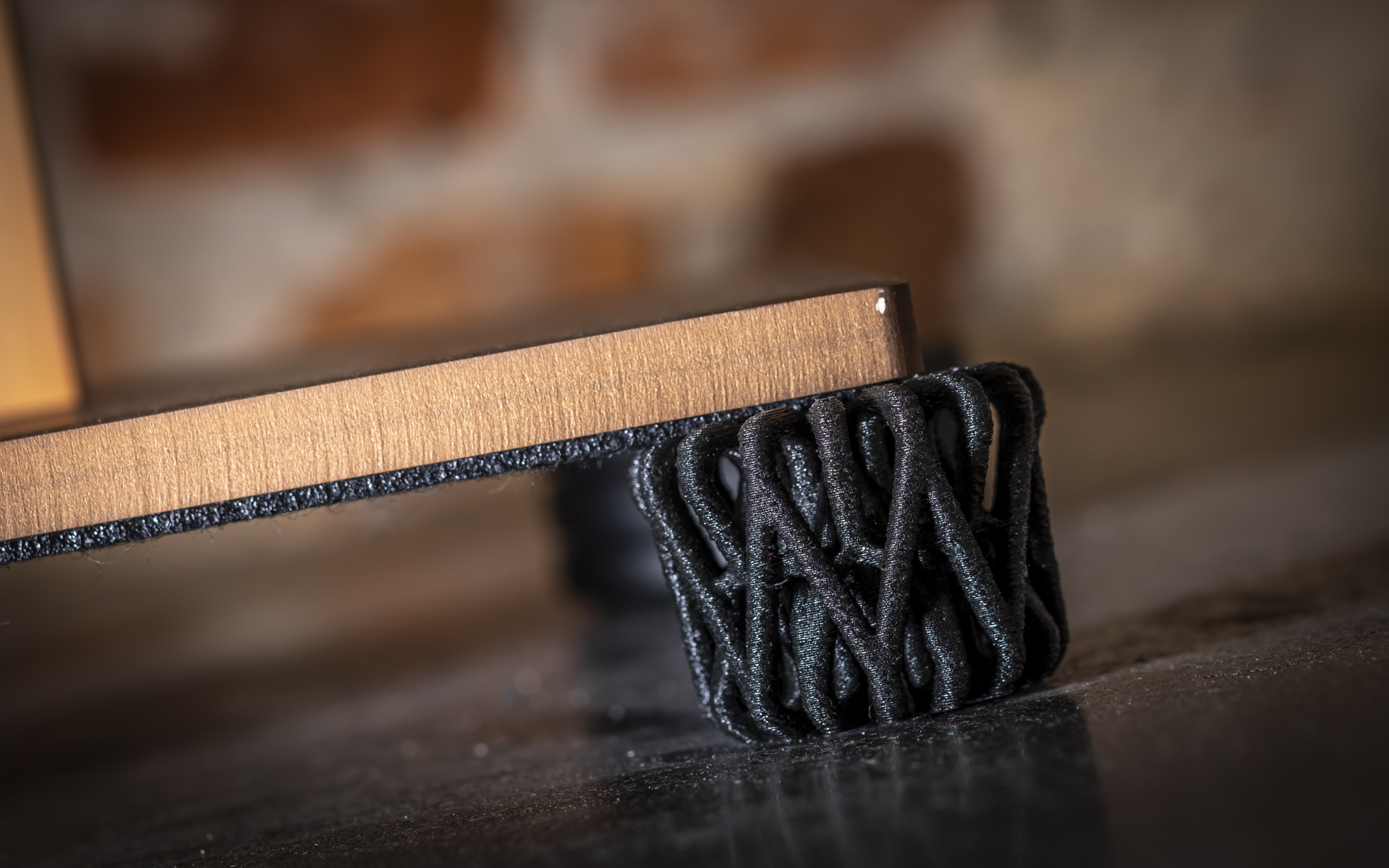
 While Vibron footers certainly look unusual, they also behave in a way that’s somewhat different from the typical isolator crowd. Pick one up and it doesn’t take much strength to gently squeeze and feel the individual ribs give slightly under pressure. The entire geometry exhibits a bit of horizontal compliance due to the inherent plasticity of the TPU it’s printed from. Yet in the vertical axis—the one that actually matters once the footer is in service—the structure remains surprisingly robust. So much so in fact that you can stand on one without crushing it. That peculiar combination of flexibility and strength is not accidental. The lattice-like arrangement of ribs distributes the load efficiently while still allowing the material to respond to incoming vibrations.
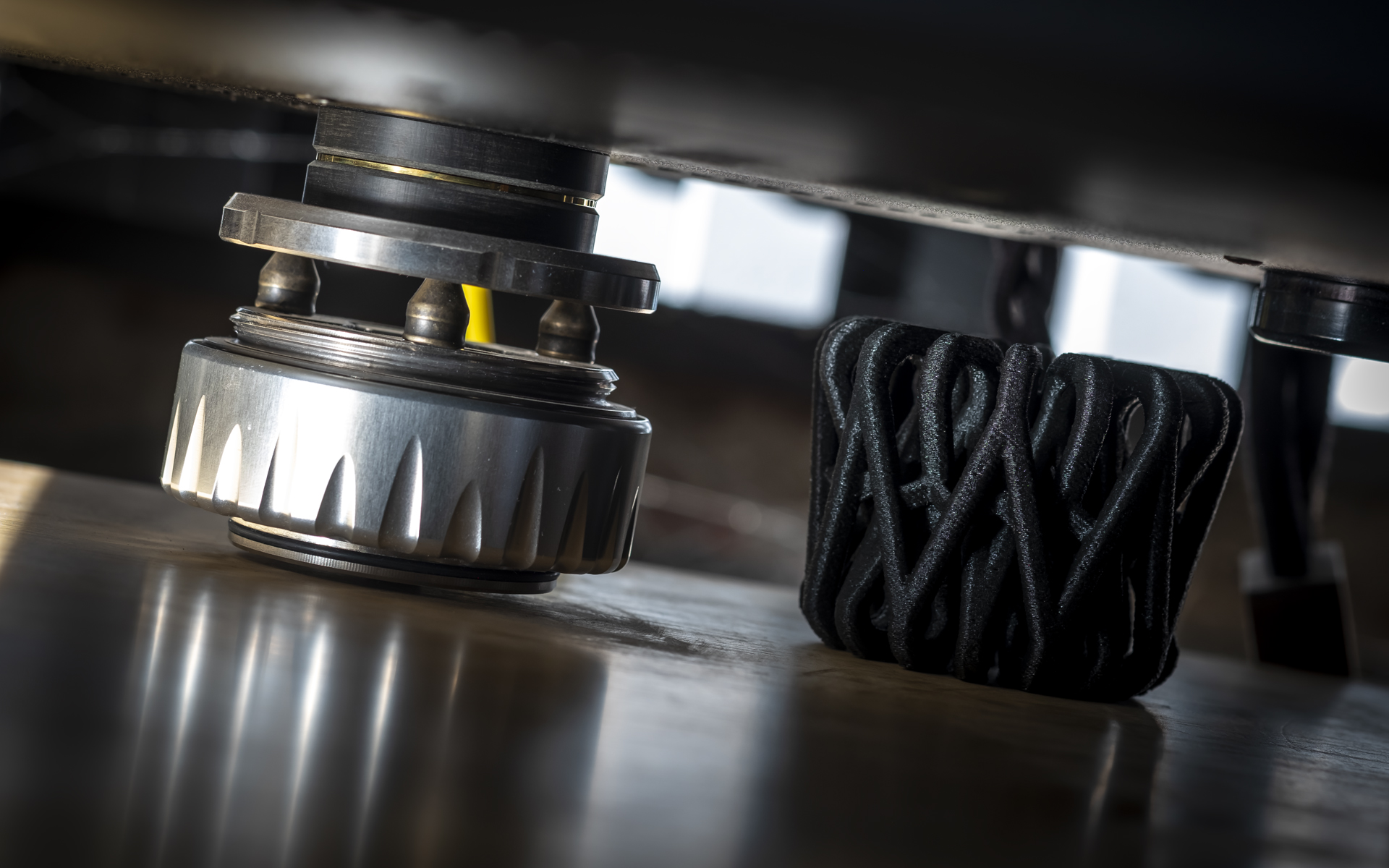
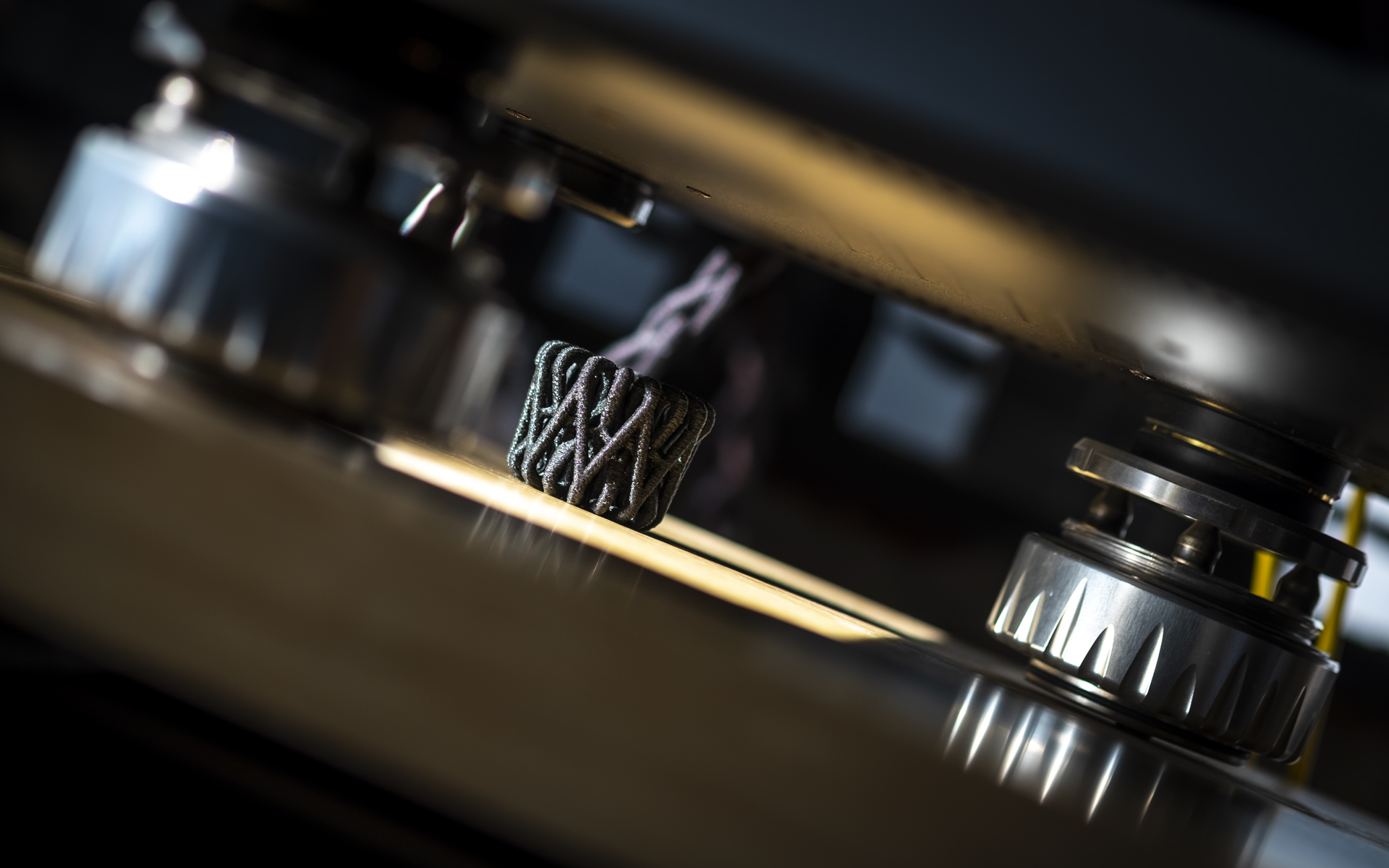 Like all vibration control devices, Vibrons act as directional sinks for mechanical energy. Resonances transferred into them travel through the structure and are dissipated instead of bouncing straight back upward into the component above. Accessories of this type generally fall into two broad camps. Soft designs rely on springs, rubber elements or elastomers that allow visible movement. Hard solutions on the other hand use rigid materials and avoid any obvious springy actions and reactions. Vibron initially appears to belong to the latter category for two reasons. First, its unibody structure is entirely 3D printed and therefore contains no moving elements whatsoever, apart from the steel insert that accommodates the mounting bolt. Second, in the key vertical orientation Vibrons remain firm and show no meaningful compression under load. Yet the fact that their elaborate geometry yields slightly when squeezed in hand suggests something more nuanced. The structure itself provides the compliance rather than a separate elastic element. For that reason Vibron behaves neither fully soft nor as hard as say Ausuz, AUVA, or LessLoss footers. Hybrid seems like the most accurate description for it.
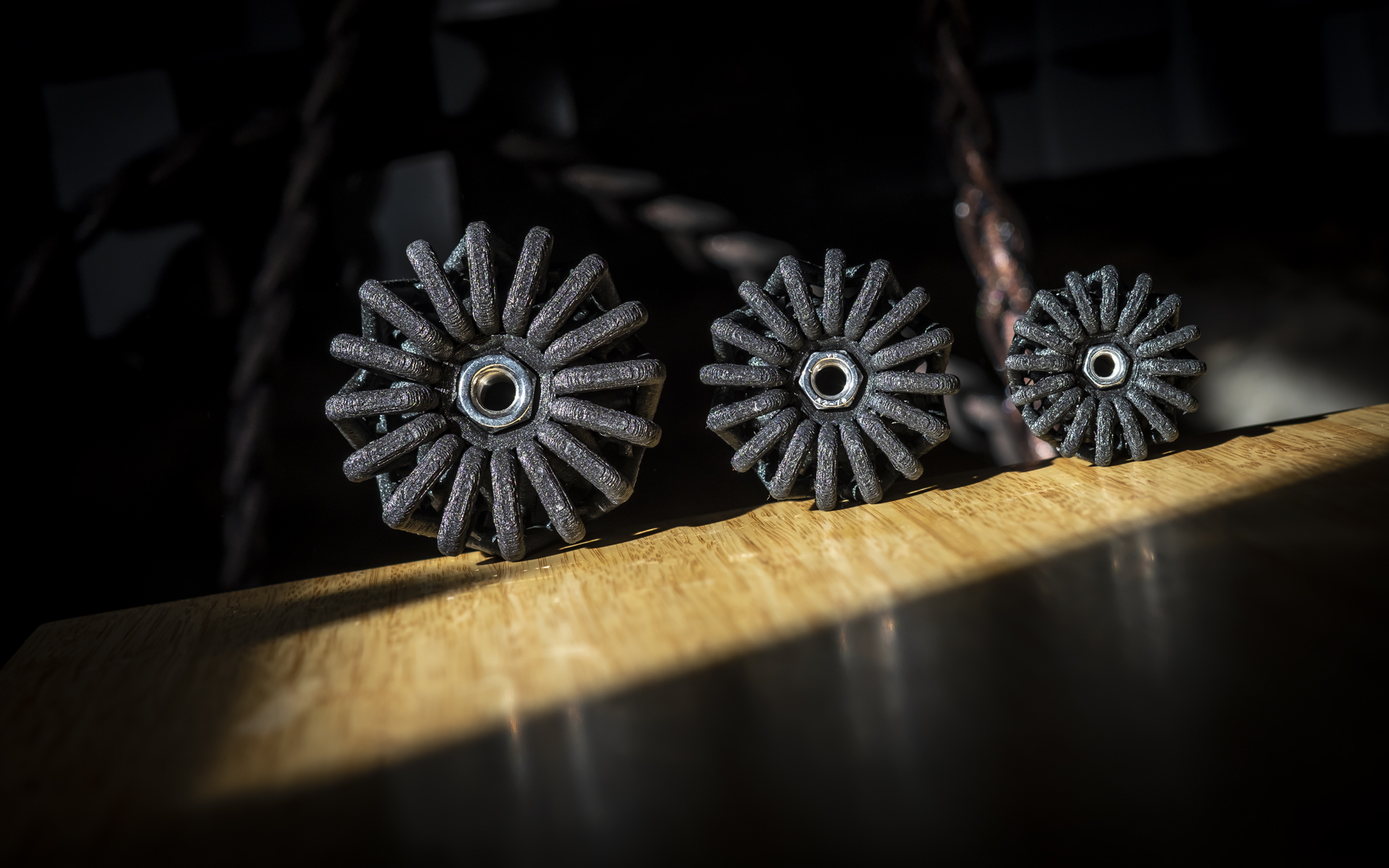
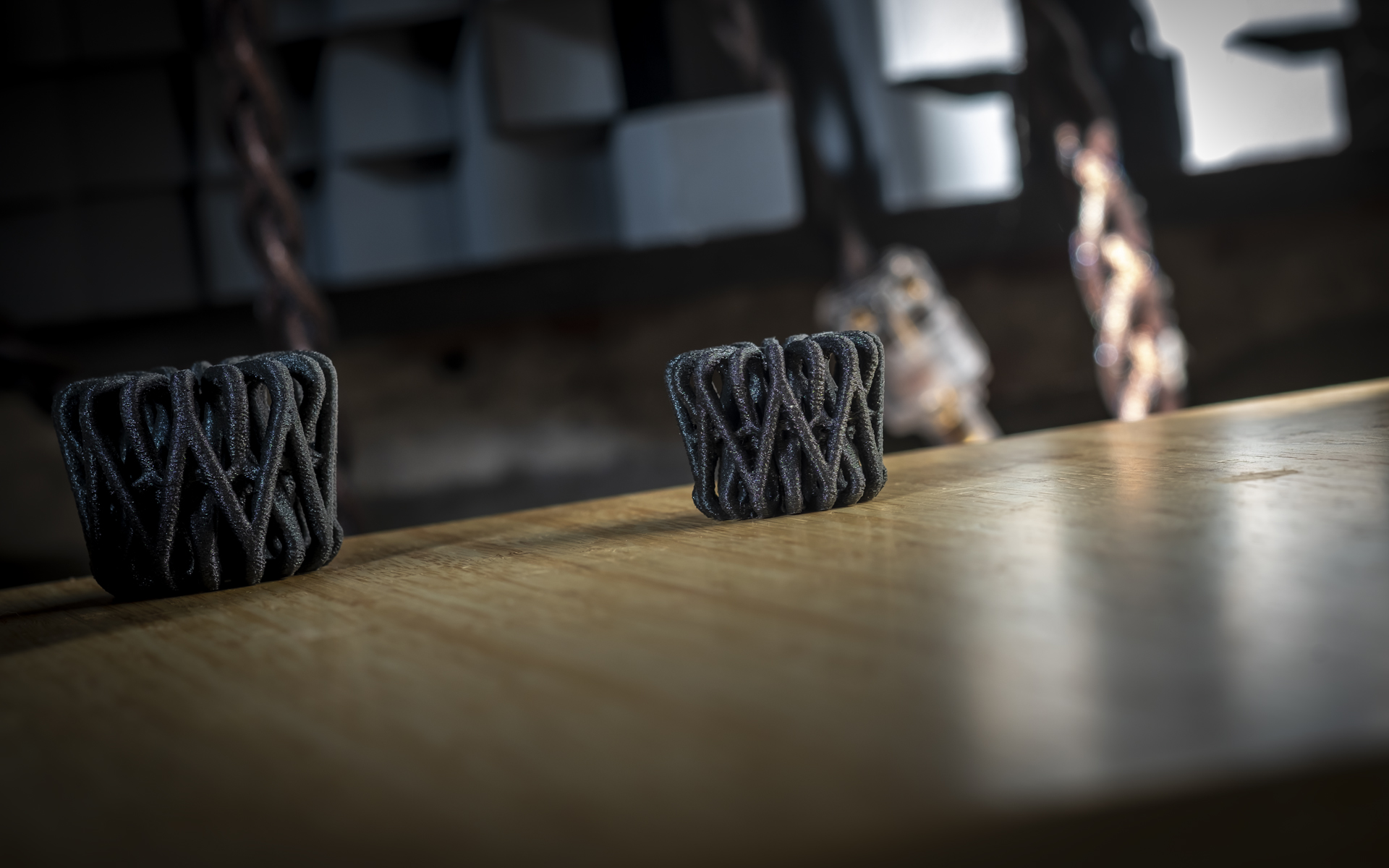
 As far as fit and finish go, Vibron proudly reveals its manufacturing method. Up close the printing lines are clearly visible and there is no attempt to disguise them. From a distance however that becomes irrelevant. While the product in any of its three sizes holds no audiophile jewelry status, it looks interesting to say the least. Much of that visual appeal comes from the way Grzegorz arranged its 32 independent mini beams into a coherent load-bearing object. The result looks purposeful and rather clever, as though someone carefully engineered a small architectural framework rather than a typical audio accessory.
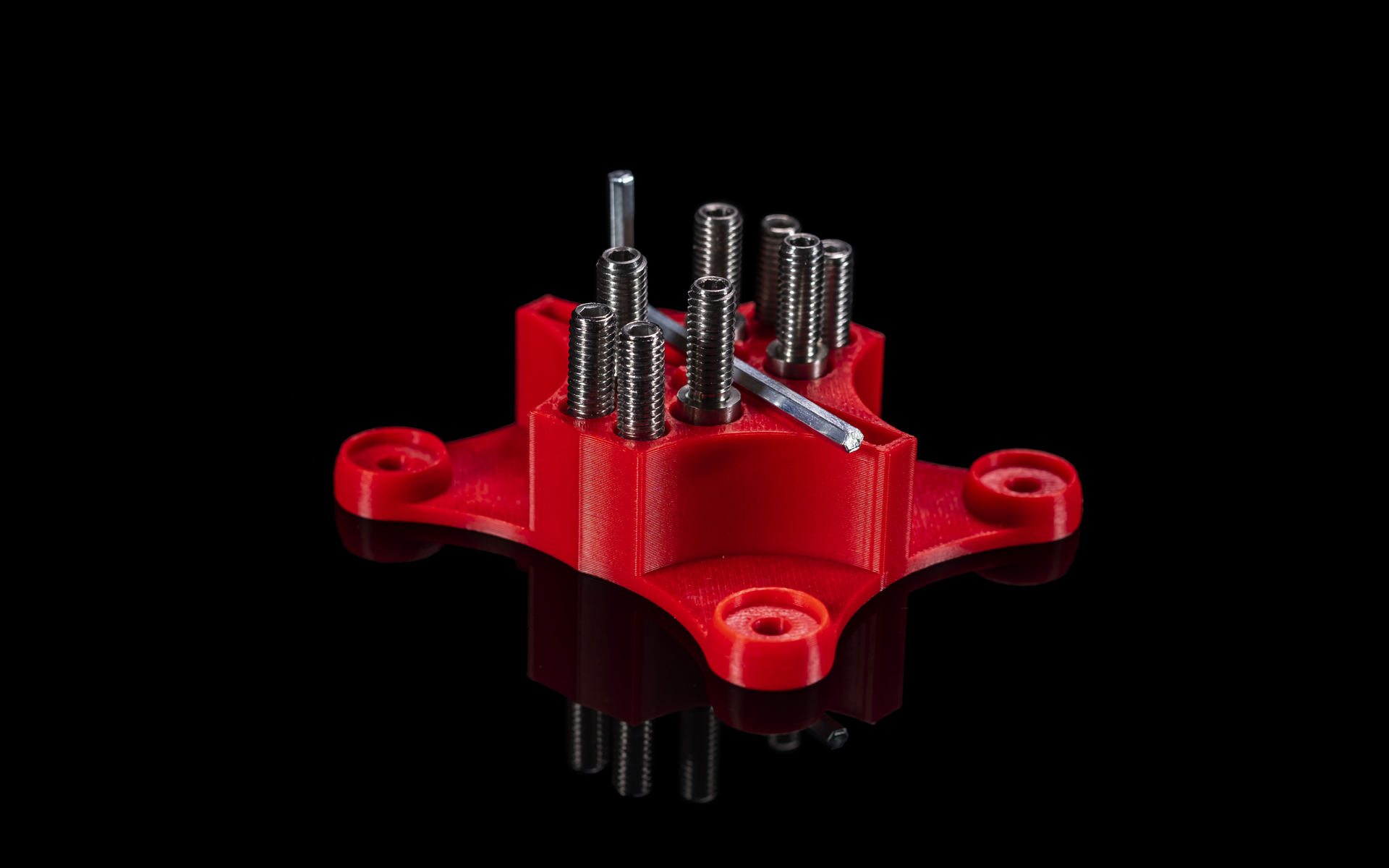
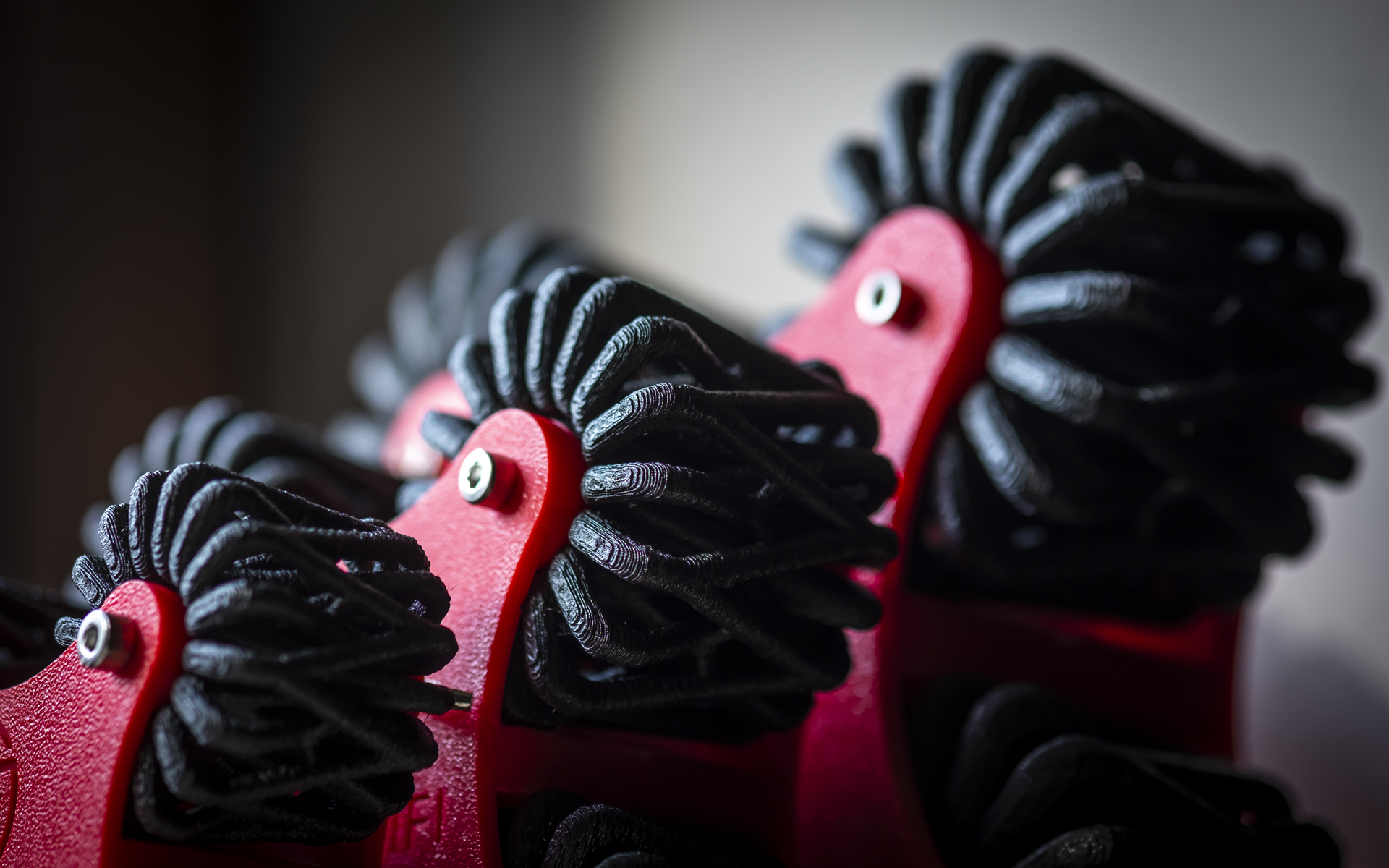
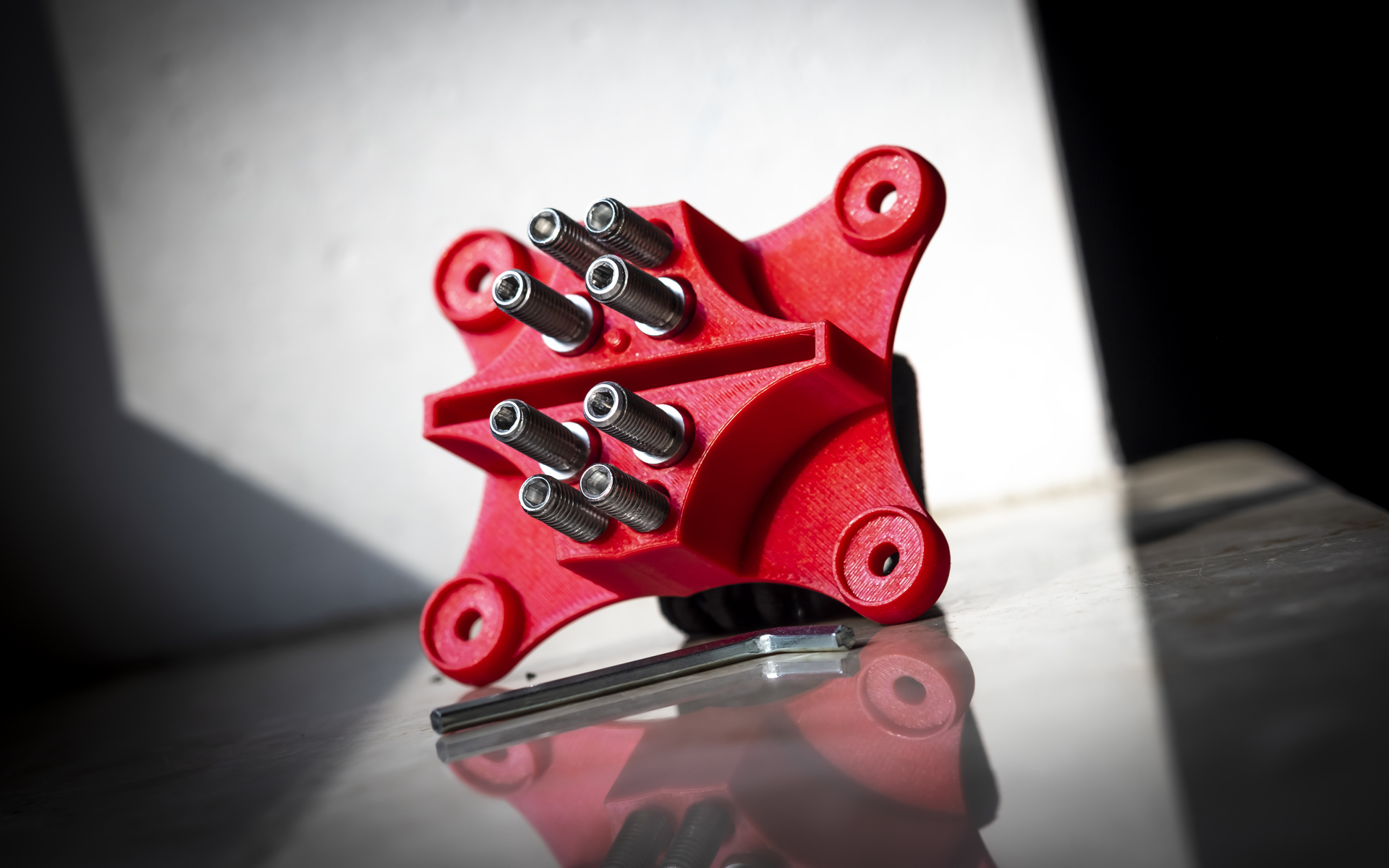
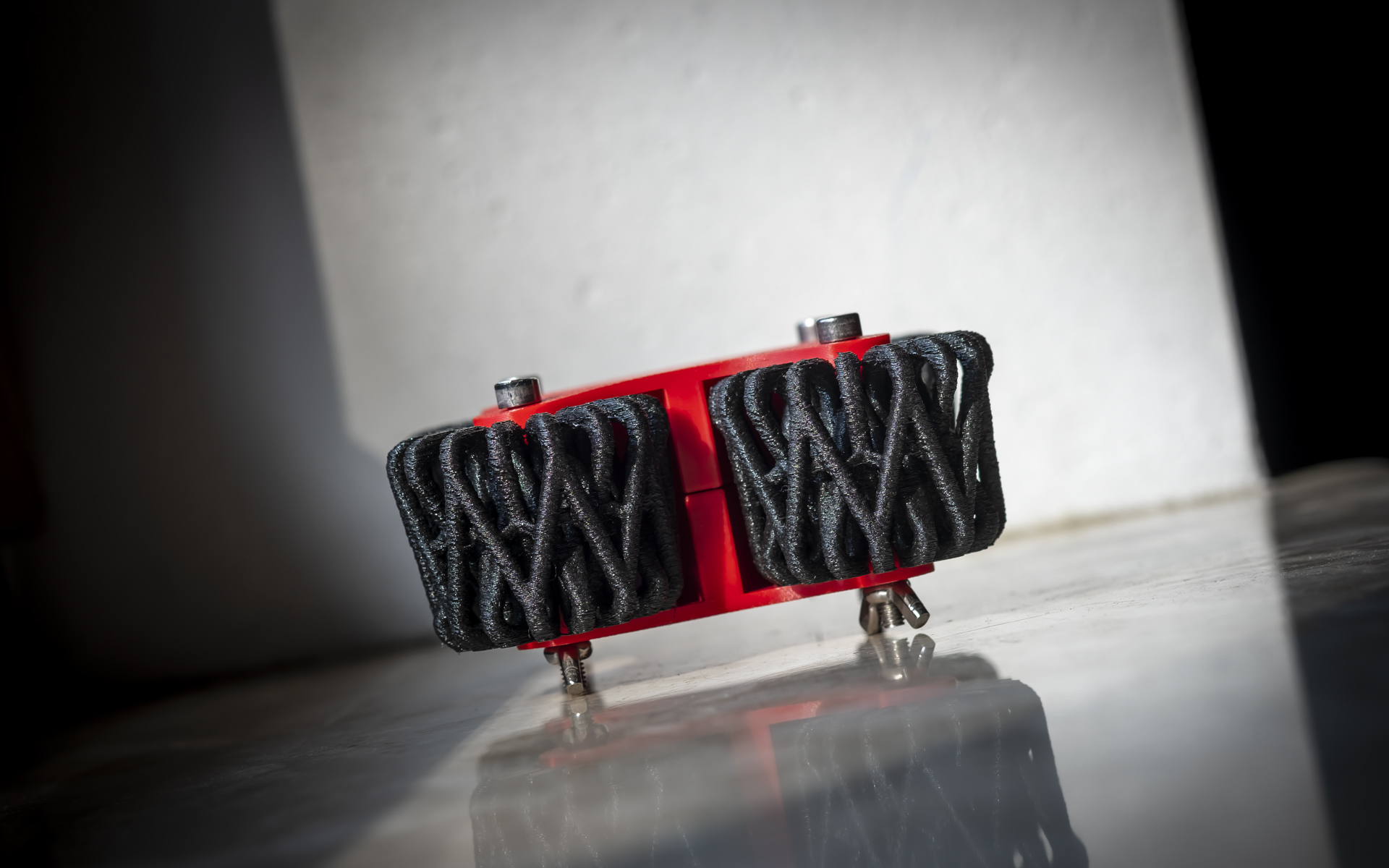
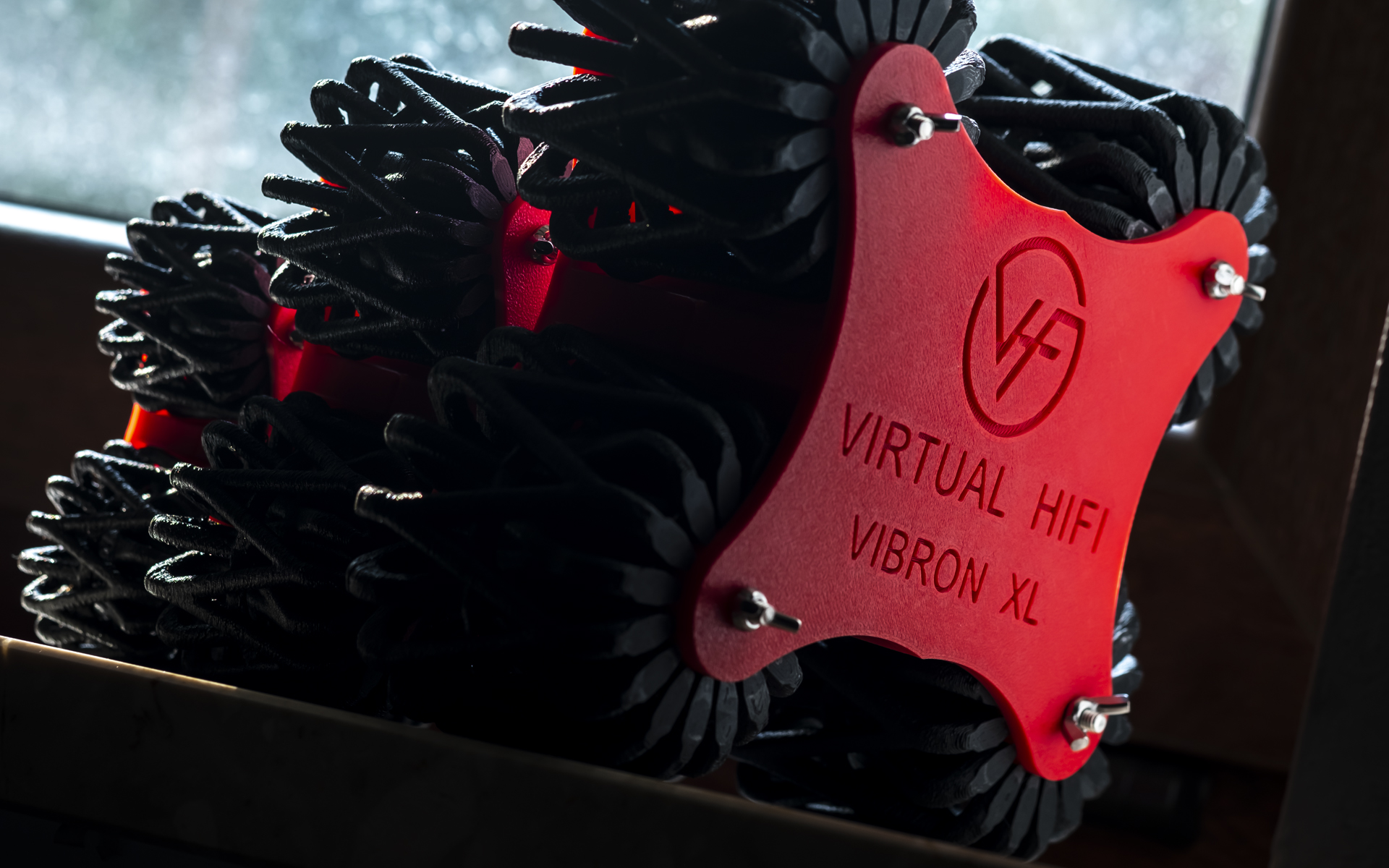
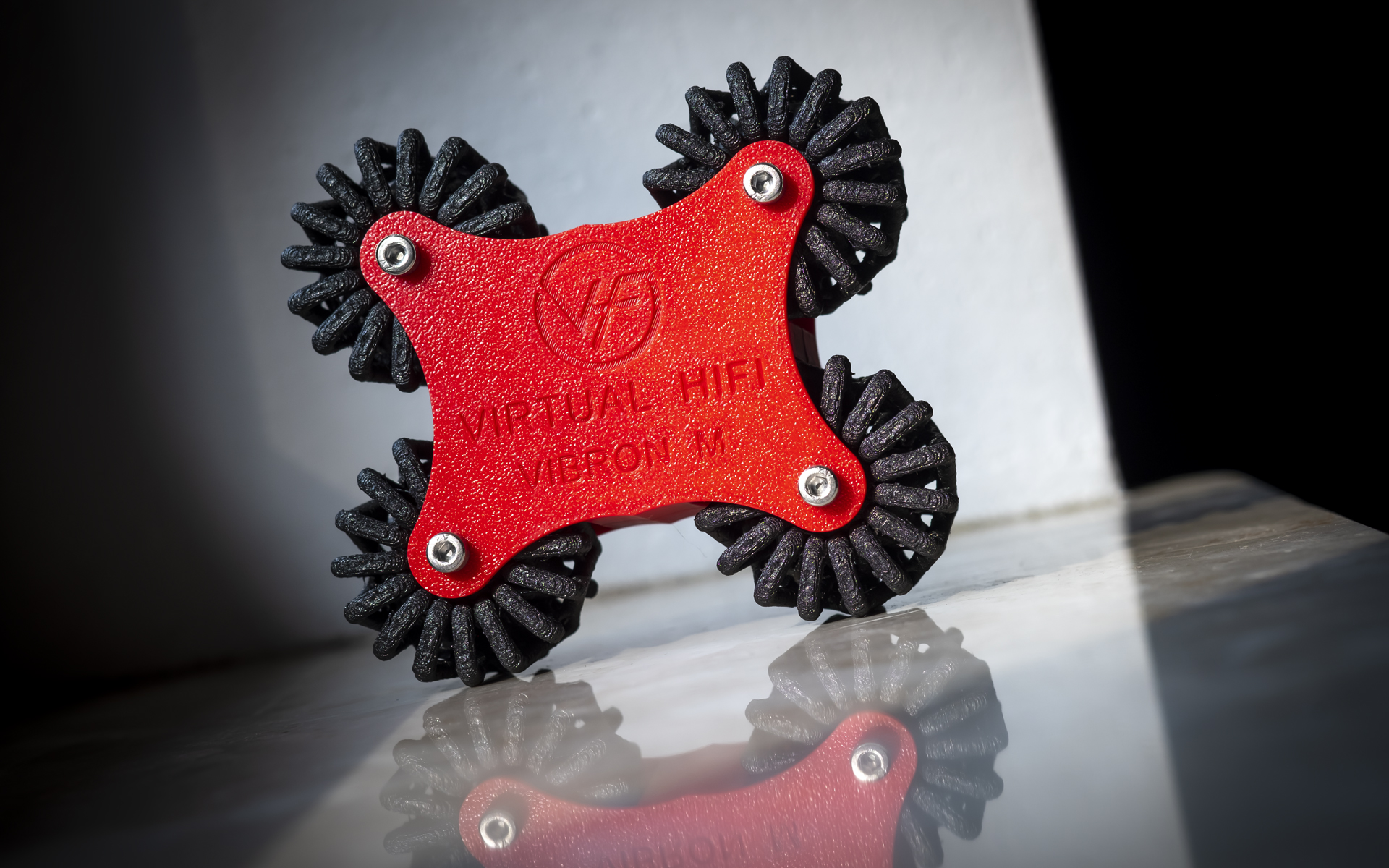
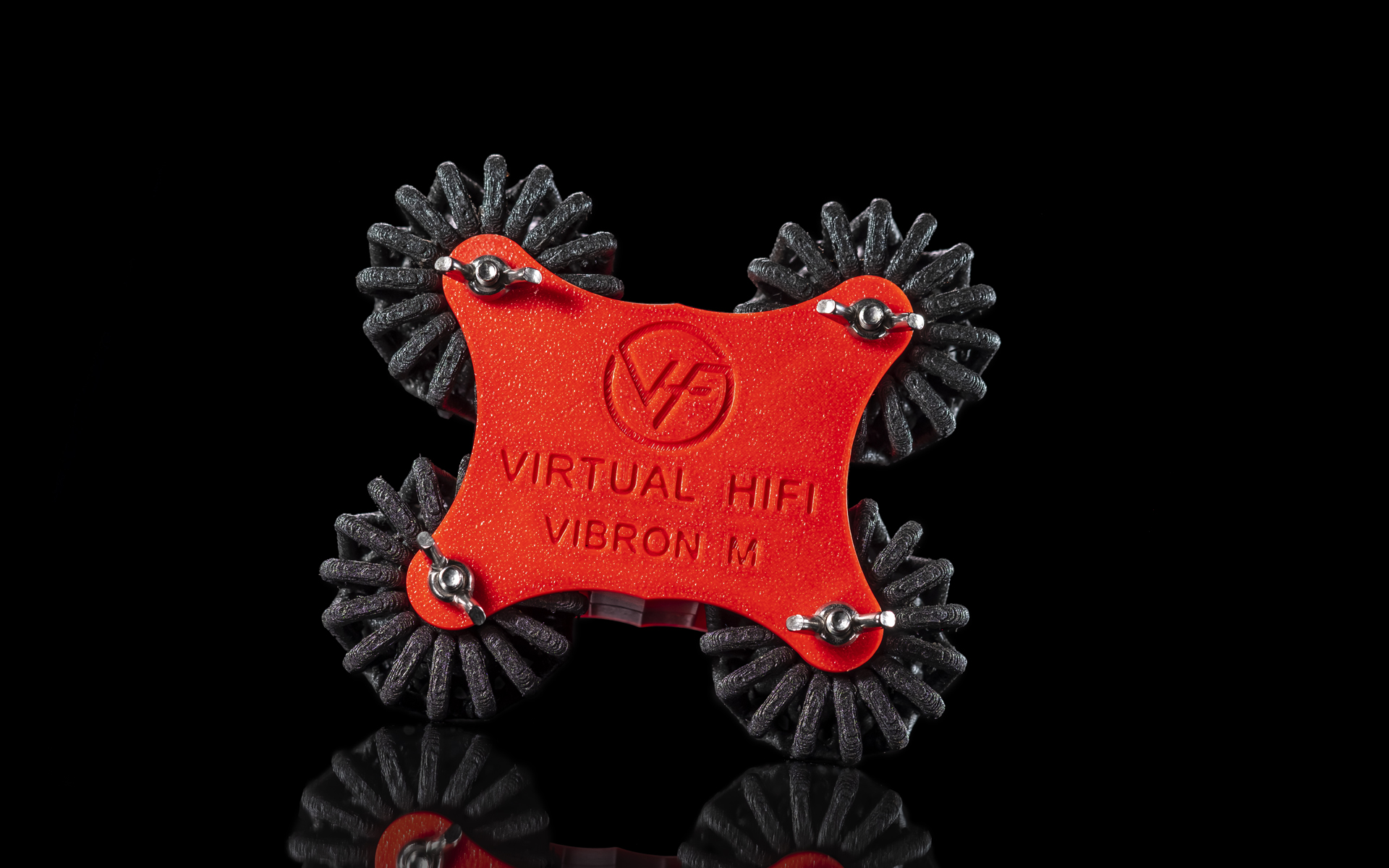
 The same thoughtful approach extends to packaging. When Grzegorz sent me the tracking number I expected a simple cardboard box with the footers tossed inside. Instead the delivery arrived in a sturdy bubble envelope containing six neat pouches bearing the brand’s name. Each bag housed a quad of footers mounted to a two-piece 3D-printed red container which also held the bolts and Allen key in dedicated recesses. That level of organization caught me by surprise. I didn’t expect our man to go that extra mile. Yet there was a very pragmatic reason behind it. As he explained, designing his own robust frame optimized for storing Vibrons and spare parts turned out to be far easier and more cost effective than ordering custom-cut cardboard inserts. When you already run a fleet of printers, producing a purpose-built plastic holder simply makes sense. Clever and practical at the same time. Finally there’s the matter of price. A set of four M-sized Vibrons costs €59 before VAT, which in today’s hi-fi landscape is roughly equivalent to a modest lunch for two. The larger versions climb to €99 for the L model and €159 for the XL. Considering what many vibration-control accessories ask for these days, these figures feel almost disarmingly sensible. In fact, they feel like peanuts. Now let’s see how they taste to the ears.
 As a reviewer who has accumulated a fair number of anti-vibration devices over the years, I already had a clear plan for Vibron long before the courier rang the bell. My system is anything but short on resonance-control hardware. Under my sound|kaos Vox 3afw monitors currently sit AUVA footers, while the Lampizator Horizon360 DAC and Trilogy 915R preamplifier rest atop LessLoss GiantSteps placed on diamond-tiered Carbide Base Micros equipped with hard TwinDamp inserts and spikes. In other words, Vibron had some rather serious company waiting for it.
 This meant that the 3D-printed newcomers would have to make the rounds against all of the above. But not only that. From the very beginning it was clear that these locally made footers were conceived as wallet-friendly devices aimed at listeners entering the resonance-control arena, and perhaps those still somewhat skeptical about the entire exercise. With that in mind it made sense to first confront Vibron with the kind of isolators most users actually start with. Accordingly the first comparison was not against the elaborate isolation solutions already present in my system, but against the standard-issue feet supplied with the gear itself. Under the Vox monitors these were the factory spikes. The Trilogy preamplifier stood on its Krion washers, while the Lampizator DAC relied on its machined aluminum legs. In short, the sort of baseline many audio systems begin their lives with. Only after establishing that reference point did Vibron move on to more demanding sparring partners.
 Let me first briefly explain what we can expect from a purpose-designed decoupling accessory. Early on their kind often manifests its presence as if the system’s volume was dialed back just a touch. Then follow the easily traceable changes in the bass, which digs sensibly deeper and feels more agile, substantial, anchored, defined, controlled, elastic, composed, powerful and dynamically keen. Room talk disguised as hollowness and boominess becomes audibly lower. The entire perspective grows cleaner and more specific, while vocals and instruments liberated from excess grain and edginess develop additional density, color, smoothness and articulation. The backdrop turns inkier and cleaner, yet also richer in fine detail that becomes easier to track and focus on. The landscape in front of us expands in size and gains complexity, while the sound sources rendered within it appear more focused, expressive and contrasting. Many top-shelf anti-vibration accessories deliver these foundational qualities without introducing any major downsides or trade-offs. The essential difference between designs of that caliber usually narrows down to their effectiveness. The higher it is, the easier our ears register and appreciate the changes they bring about.
 All of the above describes accurately how Vibrons went about their business under the Vox monitors on stock spikes. If one phrase had to sum up their contribution in that position, “profoundly effective” would be it. The delta of changes with and without these local footers on duty was enormous. Nothing short of it. To be clear, that outcome was hardly unexpected. As nuanced and investigative as they inherently are, the Swiss speakers on their skinny legs atop brass bases respond remarkably well to all sorts of accessories. Decoupling footers in particular benefit them the most, largely because such additives dramatically improve their bass response in terms of downstairs reach, control and overall firmness. With Vibrons engaged the sensation was as if the Vox had suddenly developed larger woofers inside a more voluminous enclosure. Considering that this happened upon using just three M-sized footers per speaker, the return on investment was no less than terrific. The soundscape growing in all directions and more saturated, explicit images within it were additional highly desirable upshots. At that point the smallest Vibrons had already made their victory laps, especially given that these results came from using the most affordable version in the range.
 My preamp and DAC also enjoy proper resonance control for two rather straightforward reasons. First, both devices sit early in the signal chain, so whatever they generate downstream hardware cannot undo. Second, they are tubed machines, which by nature tend to appreciate a mechanically calmer working environment. That aside, every digital LampizatOr DAC I’ve had the pleasure of owning responded clearly and consistently to decent power delivery and non-standard footers. As accomplished as it already is on its own, the Horizon360 without external support still has a lot left on the table. One quick back and forth between its stock squared legs and three L-sized Vibrons made that point very obvious. The latter effectively reinforced the machine’s muscles, spatial reach and sense of momentum so that it sounded even more energetic, lively and open than it already does. I suspected as much beforehand. What I didn’t expect was how little it took to get there. Just to clarify, the gains as described followed a mere €99 expense. For the sake of argument let’s round that up to €130 once VAT and shipping enter the picture. That is roughly 0.18% of my LampizatOr’s value. The math behind that is as simple as it is merciless. I struggle to think of any other accessory capable of delivering a comparable uplift anywhere near Vibron’s asking price. Not even close. Their price-to-performance ratio might in fact be the most outrageous thing about them.
 Just not to make the story overly sweet, past the results already explained Vibrons had to compete against AUVA 70 footers under the Vox speakers. The latter primarily distinguished themselves through tonal density, bass authority and a particularly tactile presentation. Compared to the stock spikes, they made instruments feel more physically present and fleshed out, while also sharpening the system’s insight into fine musical details. Bass dug deeper and carried noticeably greater weight, yet remained controlled, energetic and dynamically capable rather than slow or overly warm. At the same time the soundstage expanded and grew more immersive, with images appearing more three-dimensional, texturally rich and lifelike. In short, AUVA 70 footers gave the Vox monitors a denser, more grounded and more tactile sonic perspective while preserving excellent resolution and clarity.
 Over the years I’ve learned that most footer designs follow a broadly similar sonic protocol. The differences between them rarely lie in what they do, but rather how much they do it. There are levels to this hobby, after all. When we pay premium money for resonance-control devices, it’s only natural to expect premium results. On that note, my Vox monitors resting on Vibrons and AUVA 70s sounded broadly alike, yet the magnitude of the changes introduced by each decoupler model was not identical. In short, the AUVA 70 did more for the Swiss speakers. It really was that simple. The gap wasn’t night and day, but it was sufficient to identify the footer that allowed the Vox boxes to dig deeper, gain extra heft and open the soundscape further while letting in more light and fine detail. The Vox monitors atop AUVA 70s sounded still larger, beefier, more dynamically keen, investigative and radiant. I’m sure anyone ready to part with nearly €1’000 for two quads of these British sand-filled wonders will be very pleased with what they deliver. That said, none of this takes anything away from Vibrons. What they already accomplish—and how convincingly they do it—is more than enough to fully justify their asking price. That’s the key takeaway.
 Lastly, to raise the ante even further, three L-sized Vibrons under my DAC had to exchange blows with an altogether different league of resonance control. In this corner sat three LessLoss GiantSteps resting atop fully kitted Carbide Base Micros—a kosher stack that today demands a cool €2’505 all in. Needless to say, to my ears this remains the most potent anti-vibration arsenal for electronic kit currently at my disposal. It covers all the sonic bases and does so extremely effectively. One particularly special trait of that setup is how much speedier, more quicksilvery and plainly raw my DAC sounds when parked atop it. There are mechanical reasons behind that behavior, but that’s beside the point here. What matters is that, while Vibrons couldn’t replicate the same ripped, spatially liberated, fully charged and overall bombastic aesthetic, they gave me a convincing taste of it. In a way, against my daily drivers their behavior was softer, bloomier and more picturesque. Truth be told, I didn’t expect the 3D-printed team to match my reference decoupler warfare where it matters, nor did I anticipate securing anywhere near the same magic for a fraction of the cost. Yet from their service under the Horizon360 I gathered that whatever these Polish footers are doing, they’re doing it remarkably well. For tubed digital hardware in particular, Vibrons honestly are the bee’s knees. Besides, let’s not forget that their comparison to far pricier counterparts was a purely academic exercise to begin with. I don’t imagine anyone who already runs top-shelf anti-vibration sorters would willingly downscale. That scenario really is highly unrealistic. The most important thing is precisely what Vibrons do against the standard-issue culprits in the form of washers, spikes and what have you. When put up against these, the local footers shine the brightest and reveal their true strength. Let’s wrap.

At first glance it might seem almost suspicious that Vibrons manage to do so much for so little. Reporting anything less than that, however, would be a crime. These small, cleverly executed and very nicely packaged black buggers genuinely deliver an awful lot for their sticker. Truth be told, I didn’t expect this level of performance from an audio product priced roughly like a meal for two. As far as budget audio goes, Vibrons set the bar unreasonably high, which is quite the feat given that they’re the most affordable audio product I’ve ever sampled. High effectiveness, ease of use and sheer attainability make them ideal candidates for newcomers to audio tweaks as well as naysayers still sitting on the fence about anything that isn’t a core component. It really doesn’t get any cheaper than this to meaningfully improve your system and possibly become a convert in the process, so please do and thank me later. What we also learn from all this is that 3D printing is now very much a thing in our industry. Grzegorz Rulka simply happens to pursue that path earlier than most and his Vibrons are a spot-on reminder that he’s a sharply minded chap with his priorities firmly in place. Well played, sir. I couldn’t ask for more.
Associated Equipment:
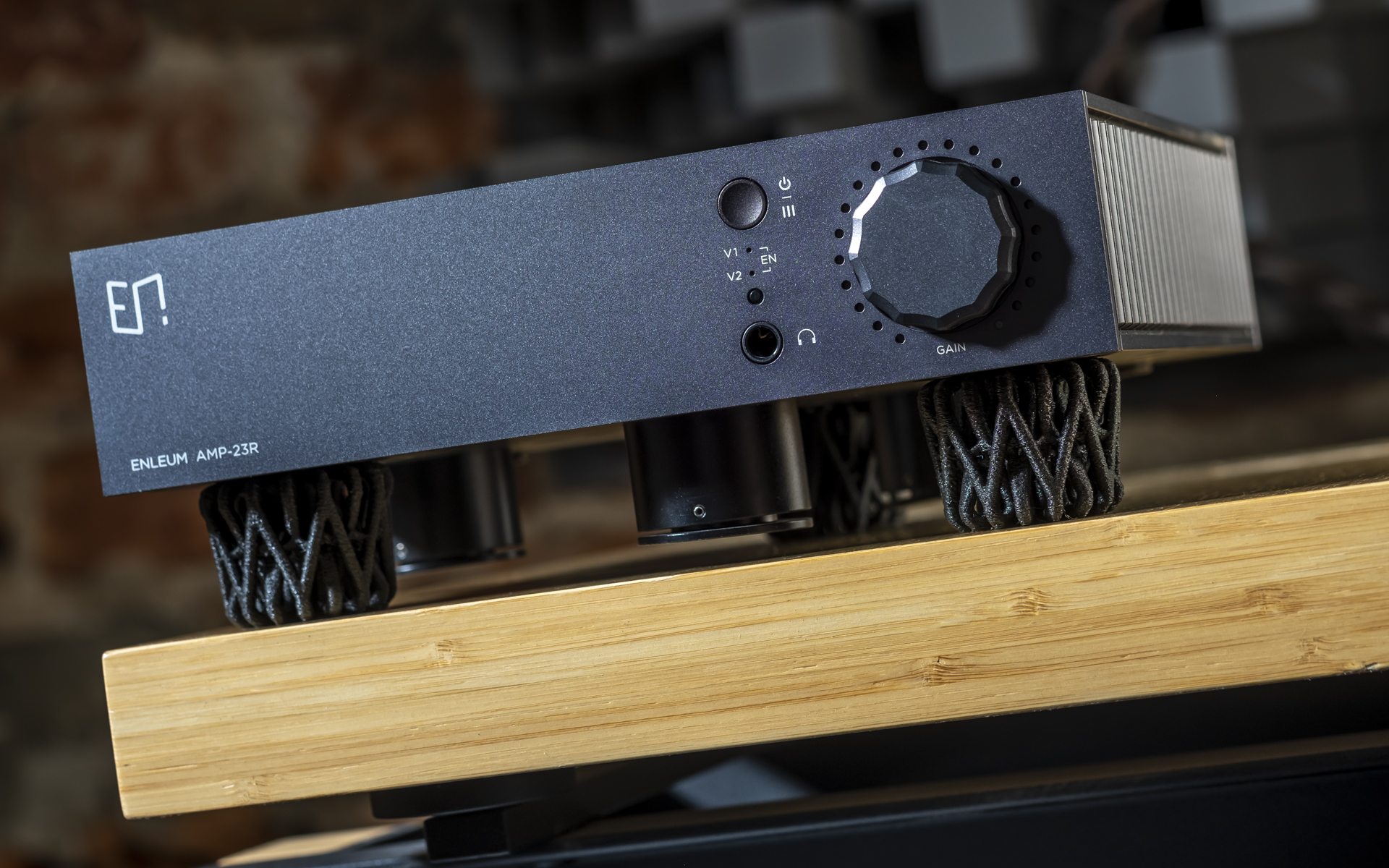
- Amplifier: Trilogy 995R, FirstWatt F7, Enleum AMP-23R
- DAC: LampizatOr Horizon360 (Stradi 5U4G + Psvane Summit 4x KT88 / 2x 6SN7)
- Speakers: Boenicke Audio W11 SE+, sound|kaos Vox 3afw
- Transport: Innuos Statement, fidata HFAS1-S10U
- Preamplifier: Trilogy 915R, Thöress DFP
- Speaker cables: Boenicke Audio S3, LessLoss C-MARC
- Headphones: HifiMan Susvara Unveiled, Campfire Audio Cascade, Vision Ears VE5
- Speaker signal conditioning: LessLoss Firewall for Loudspeakers, Boenicke ComDev
- Anti-vibration conditioning: 6x Carbide Base Diamond (under streamer), 6x Carbide Base Micro Diamond with TwinDamp inserts and spikes (under DAC and pre), Stack Audio Auva 70 (under speakers), 12x LessLoss Giant Steps (under streamer, DAC and pre)
- Interconnects: LessLoss Entropic Process C-MARC, Boenicke Audio IC3 CG
- Power components: Gigawatt PC-3 SE EVO+/LC-3 EVO, LessLoss C-MARC, LessLoss Entropic C-MARC, LessLoss Stellar C-MARC, LessLoss Power Distributor into Boenicke Audio Power Gate, ISOL-8 Prometheus
- USB components: AudioPhonique Desire USB
- Rack: Franc Audio Accesories Wood Block Rack 1+3
- Network: Fidelizer EtherStream, Linksys WRT160N
- Music: NativeDSD
Retail prices of reviewed components in EU (excl. VAT):
- Virtual Hifi Vibron M: €59/4
- Virtual Hifi Vibron L: €99/4
- Virtual Hifi Vibron XL: €159/4
Manufacturer: Virtual Hifi