

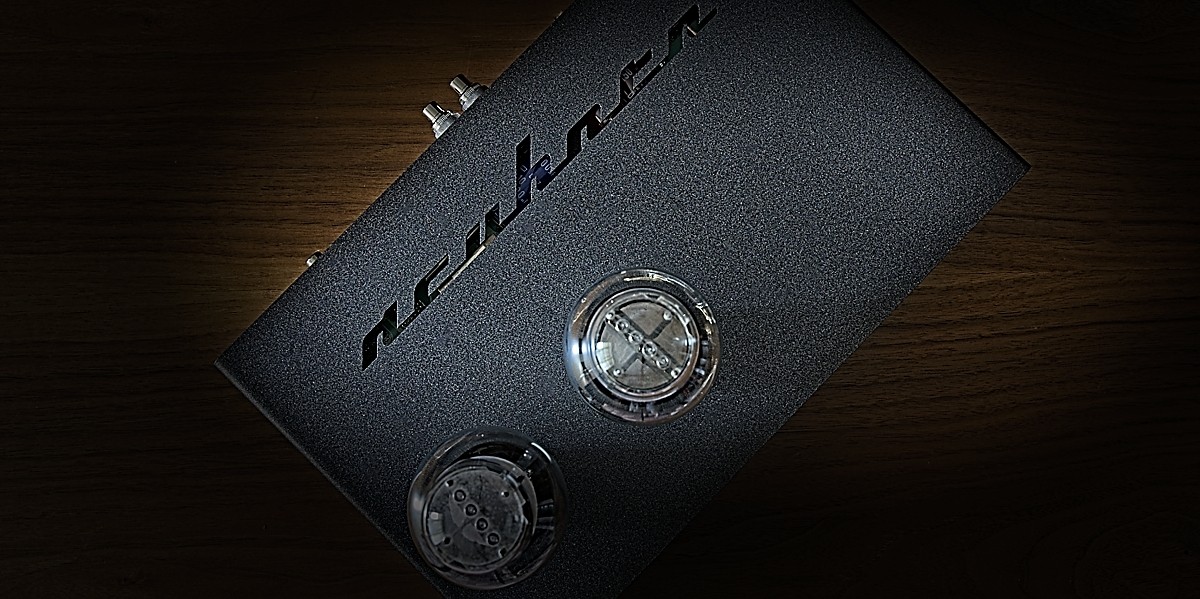
This seemingly simple, and relatively inexpensive, discrete D/A converter has much more to offer than its looks may suggest. There is 1-bit audio signal processing; there are USB and coaxial inputs; and, last but not least, there is a DHT output that allows you to choose among several triodes, including 300B, 2A3, and 45. And, spoiler alert, Acuhorn Lusso is an amazingly musical source component too.
Introduction
ACUHORN has always stayed clear of the „mainstream” audio. Every one of their products was addressed to a certain niche group of music lovers with quite special expectations. In the lineup, you will find tube amplifiers (including an OTL design), but also Class D amp; tube D/A converters, and high-sensitivity speakers (you can find a Polish review of the Acuhorn 15 HERE), including a horn design. On the other hand, the Tube Stage DAC combines tubes with R2R technology, and almost 10 years ago, Acuhorn already offered a streamer and an R2R DAC, which proves they are not indifferent to what’s happening in the market. Still, none of these components truly fit the expectations of the mainstream audio industry and its customers. Since the company was founded in 2003 and is still here with us, it must be doing something right, and there must be people who appreciate it. As a fan of such niche designs, I don’t blame them.
The latest addition to the lineup, the ACUHORN LUSSO DAC, fits the profile. It arrived for the test several weeks ago after an exchange of emails with Mr. Wojciech Unterschuetz, the man behind those fringe ideas and designs. The box it arrived in surprised me with its size and weight. I got used to tube D/A converters by Łukasz Fikus and his crew that need to be carried and set up by two (strong)men. With the introduction of the latest addition to the LampizatOr lineup, the Afrodite, it’s no longer an exaggeration. The tiny, weighing 4kg box handed to me by a courier definitely did not scream: „I am a tube DAC!”.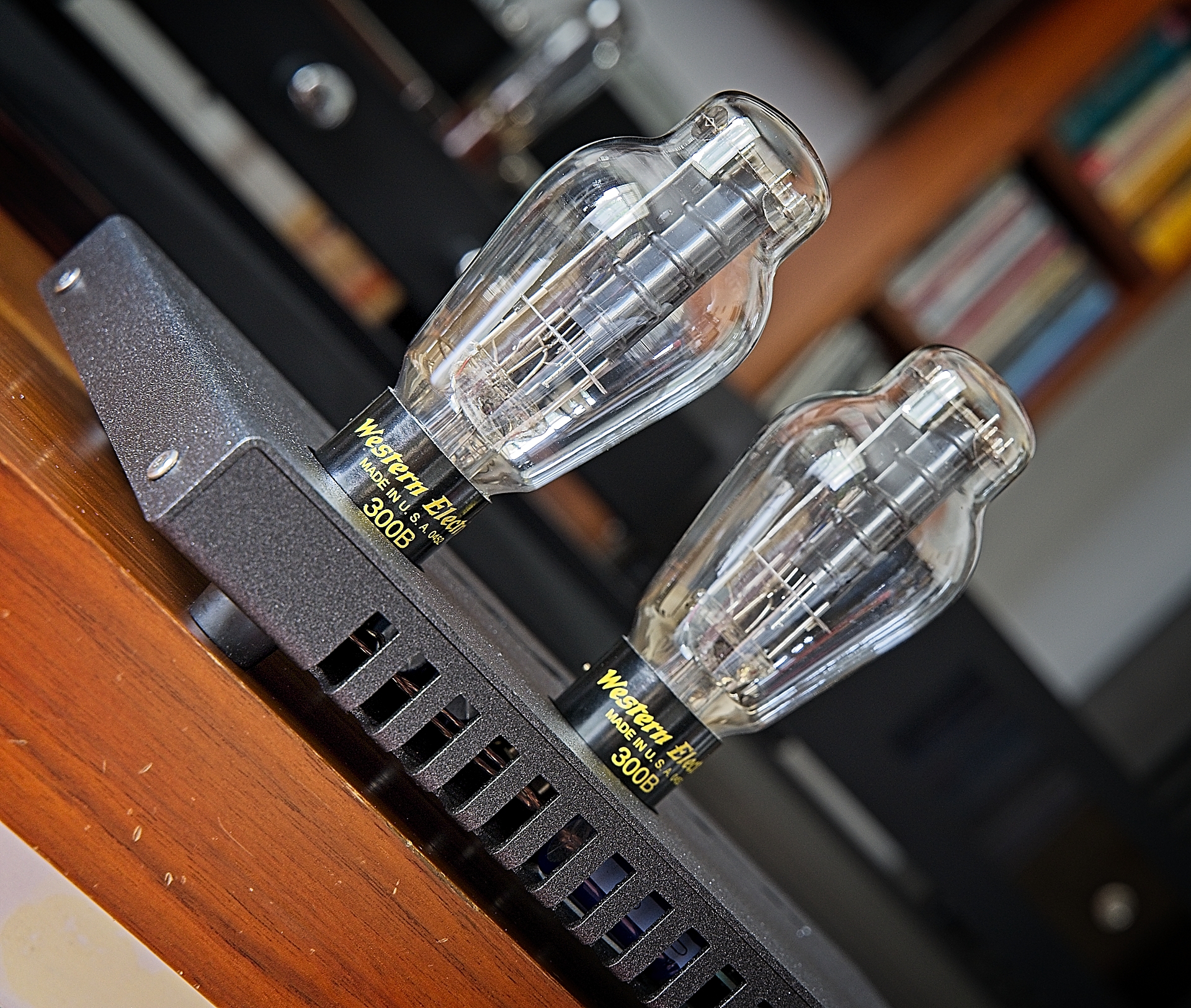 Why is that? Because it would be more accurate to describe Acuhorn Lusso the way the manufacturer does, meaning as a DSD differential discrete DAC with a pure Class-A single-ended tube stage. Full tube DACs include tube rectifiers, transformers, and so on, and that’s what adds a lot of weight and footprint, as it requires a lot of space (also to properly manage/dissipate the heat). This little, unassuming device from Acuhorn will surprise a lot of people, not just with its appearance, but also with its performance (late spoiler alert!). Will get to that in a minute or two.
Design & Features
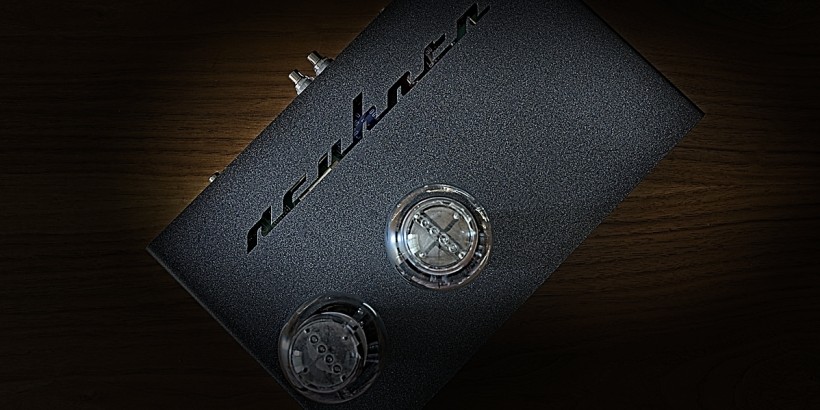
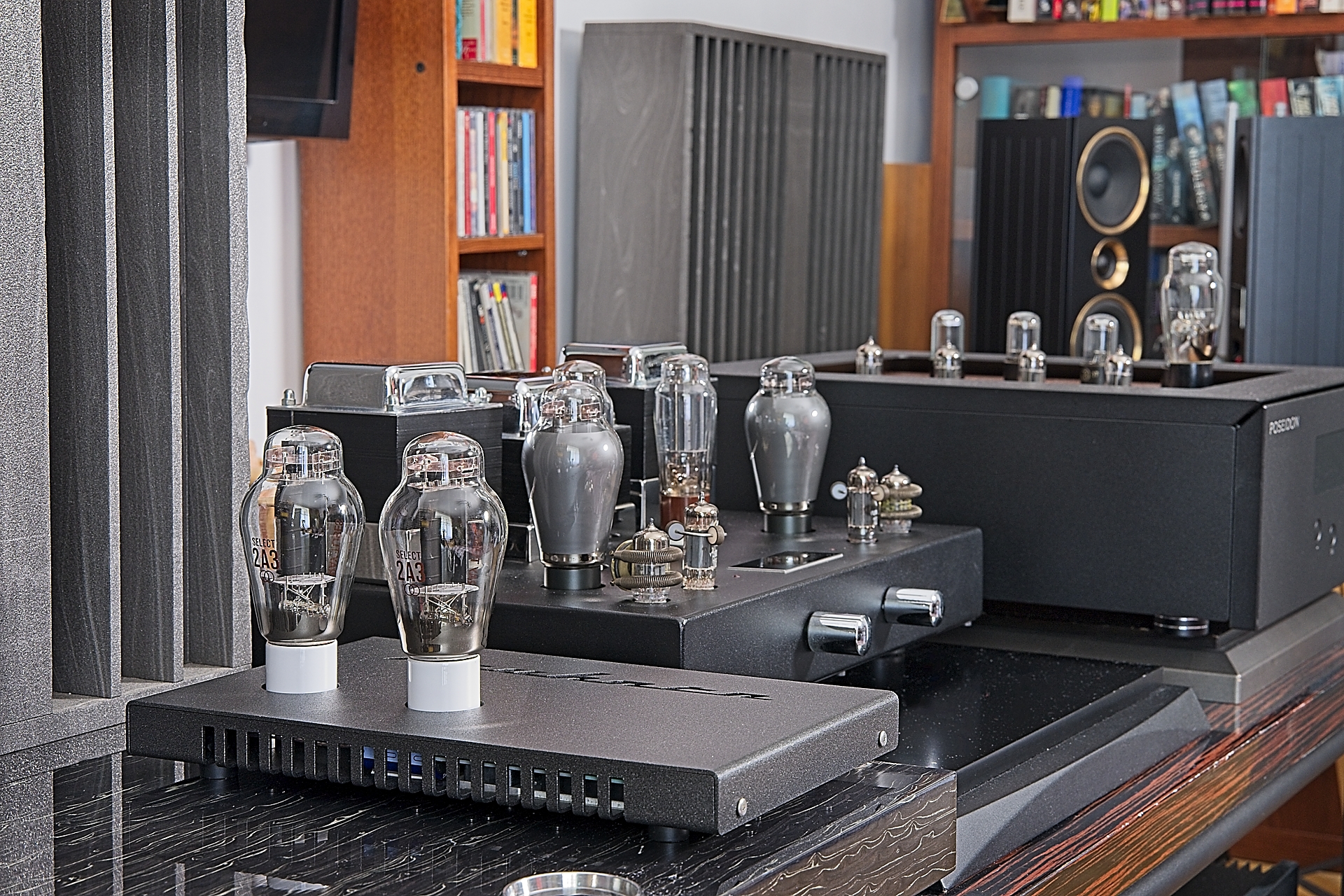
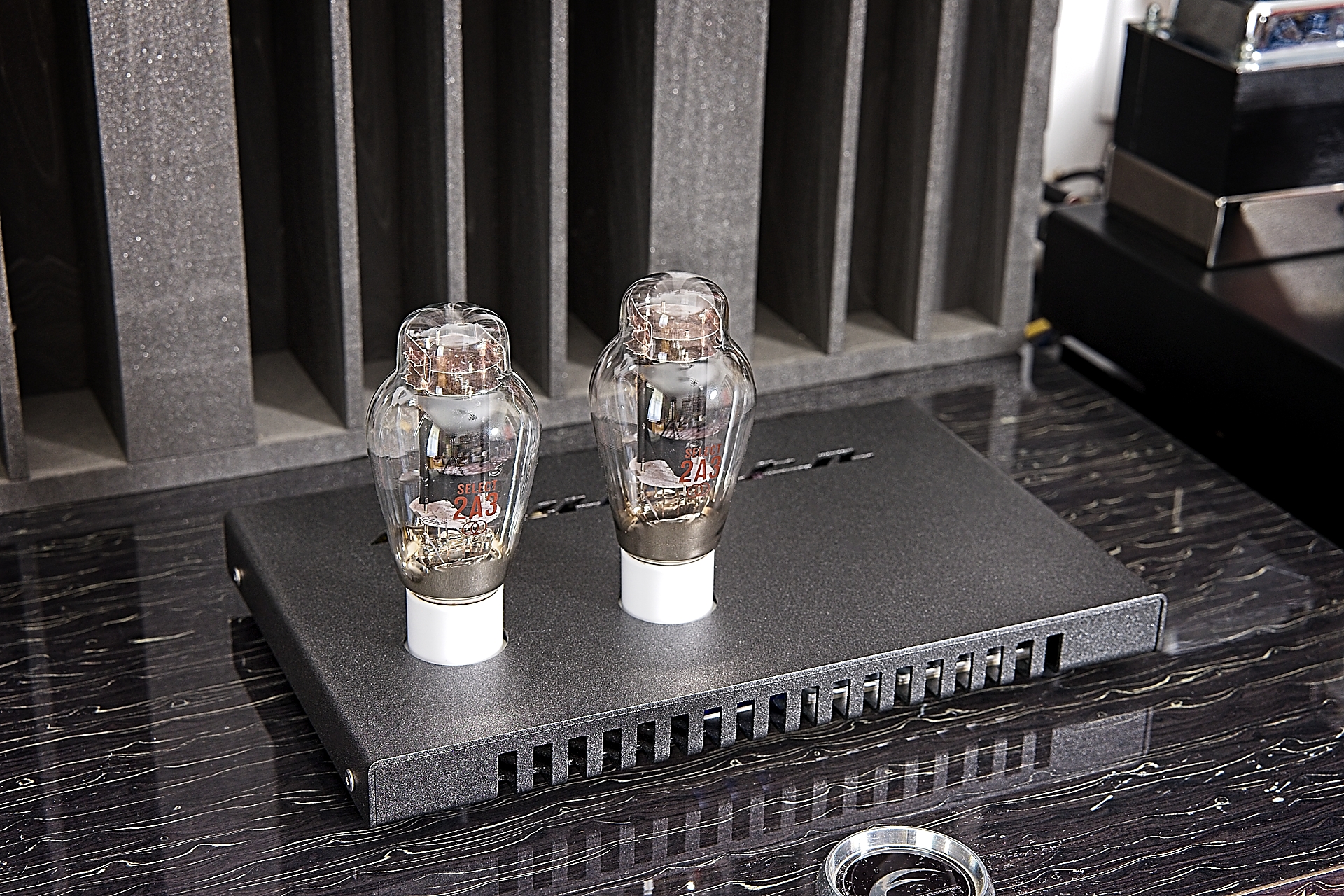
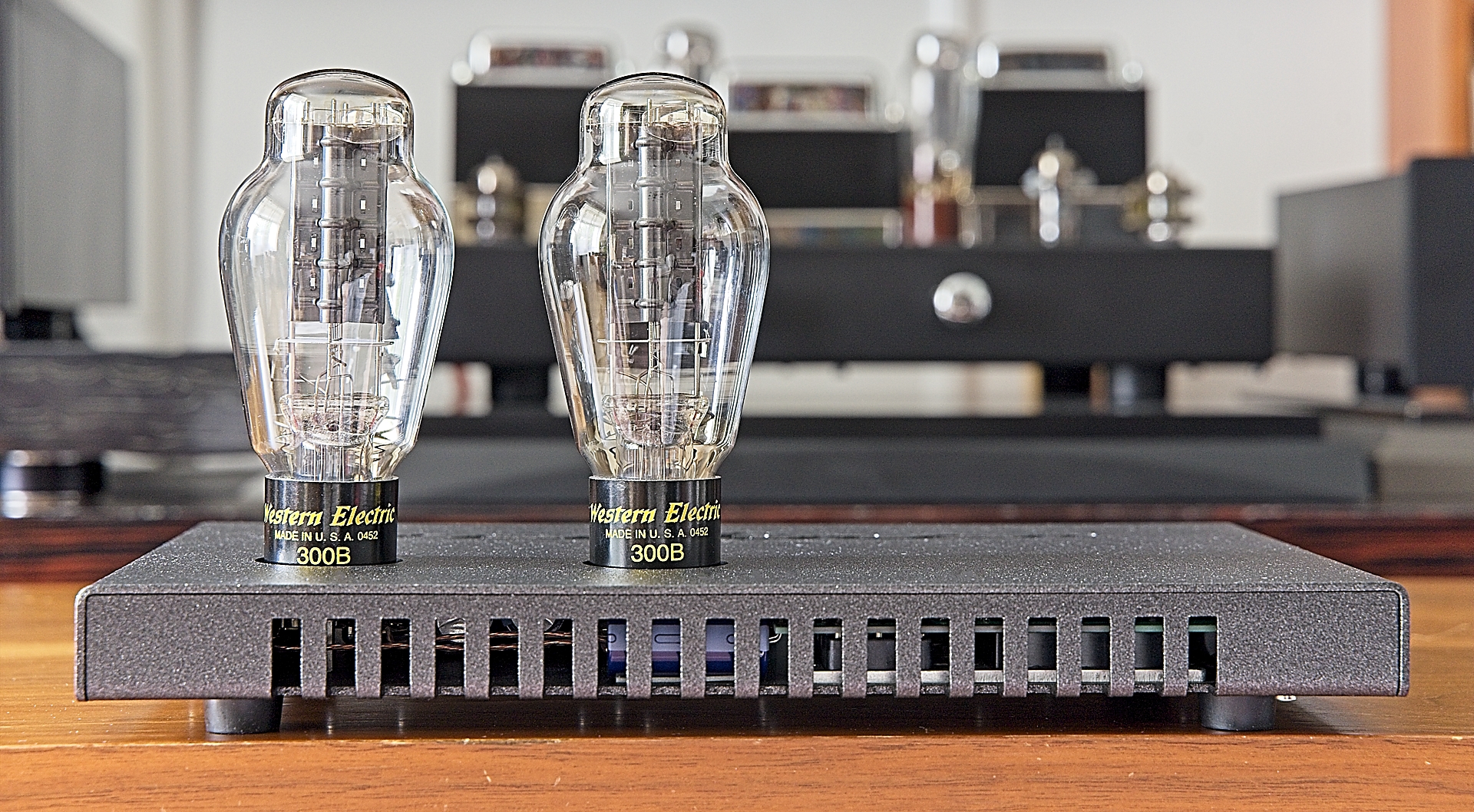
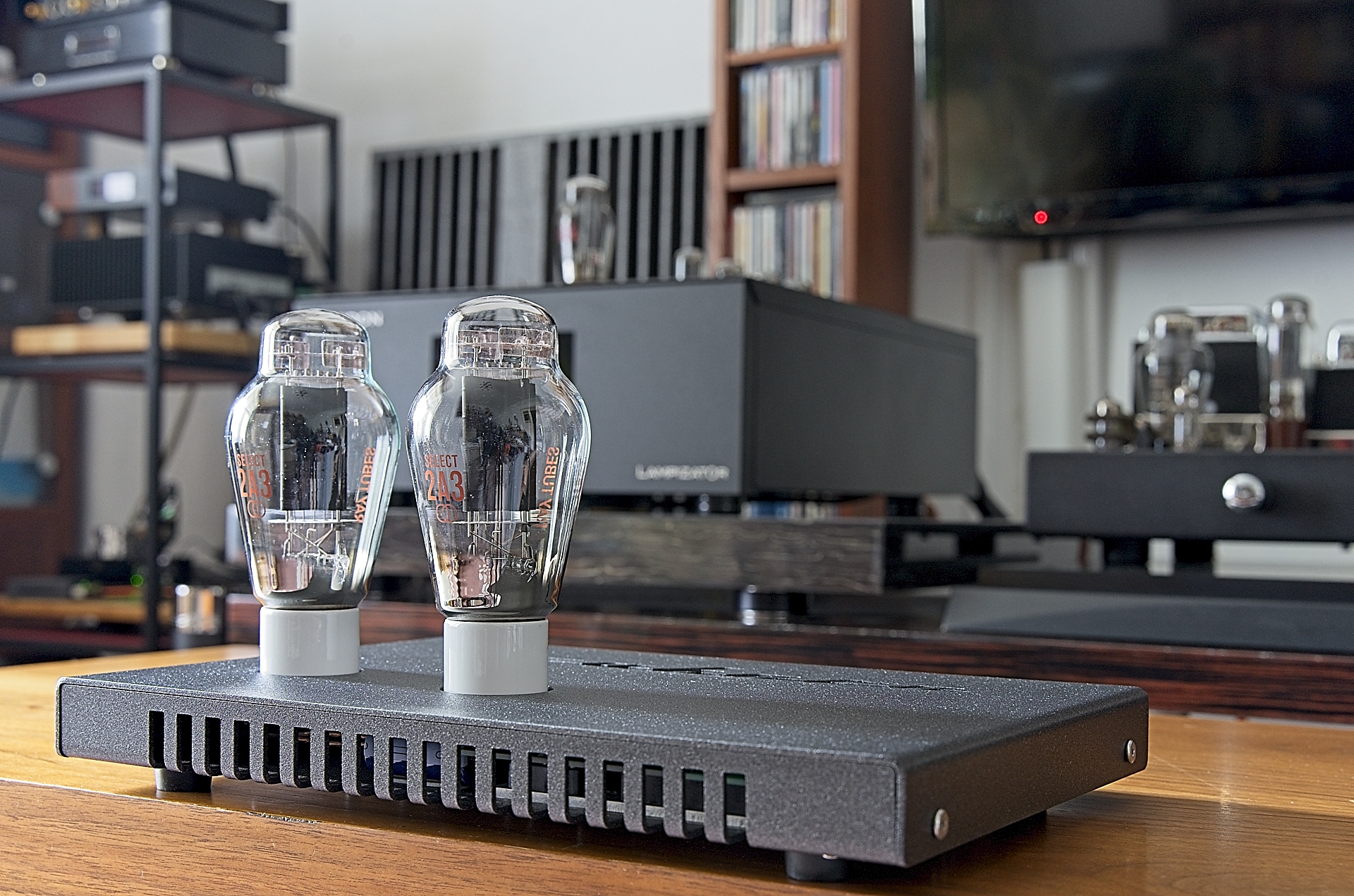
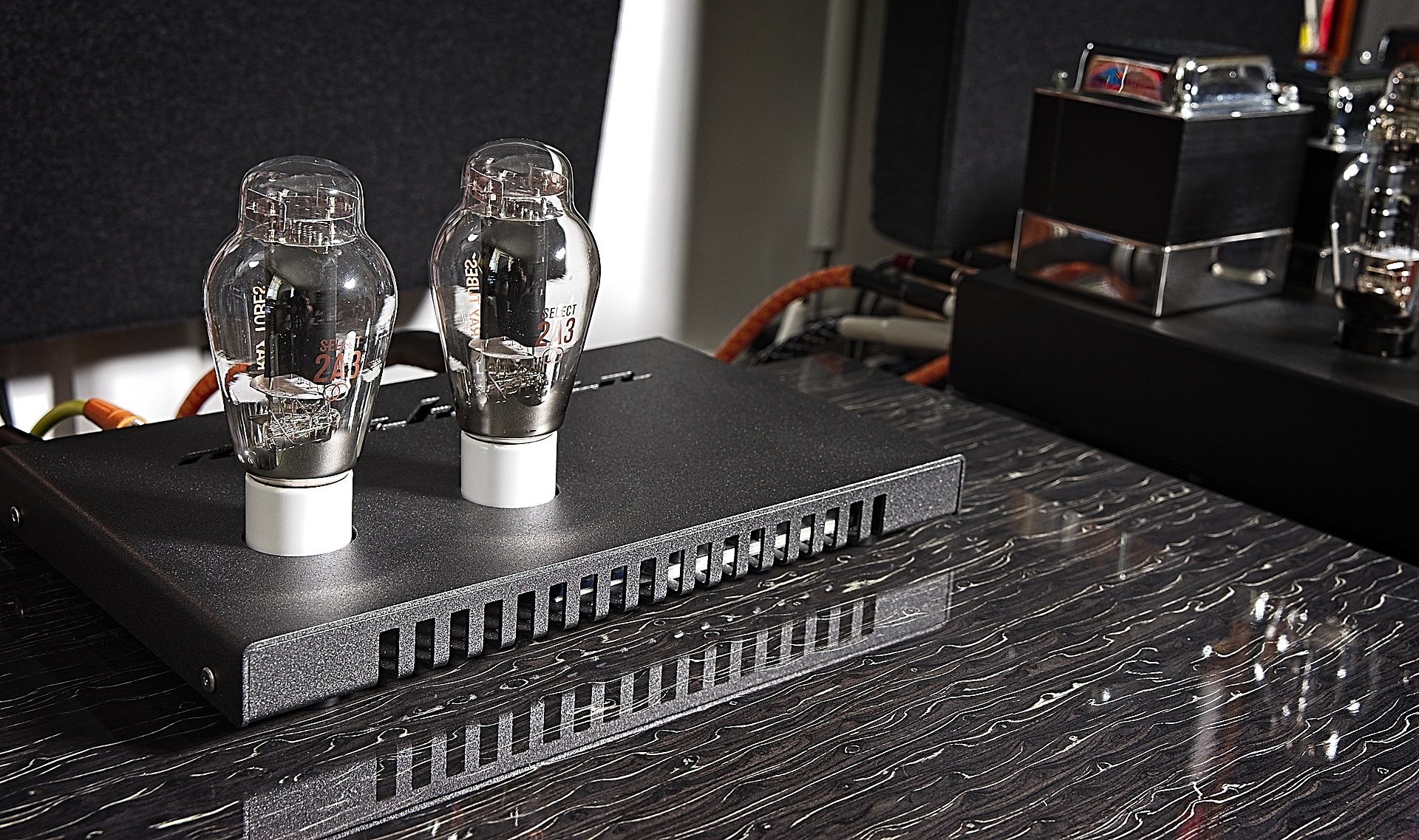
As I haven’t made it clear yet, let me get this out of the way – Acuhorn Lusso is offered without tubes and a power cable, which is yet another reason behind the small box it is delivered in. The whole DAC is encapsulated in a very low-profile metal chassis that sits on four small rubber feet. The latter begs for replacement, but be aware that since the device is so low-profile and so light, placing it on some higher feet/cones/spikes may cause problems with balance. With „regular” weight components, we don’t pay much attention to the weight of an audiophile power cable or interconnects, but in this case, as I found out the hard way myself, that’s something to consider. So be careful; provide some additional support for the cables, if needed, and use some nice antivibration feet for Lusso, as all tubes hate vibrations.
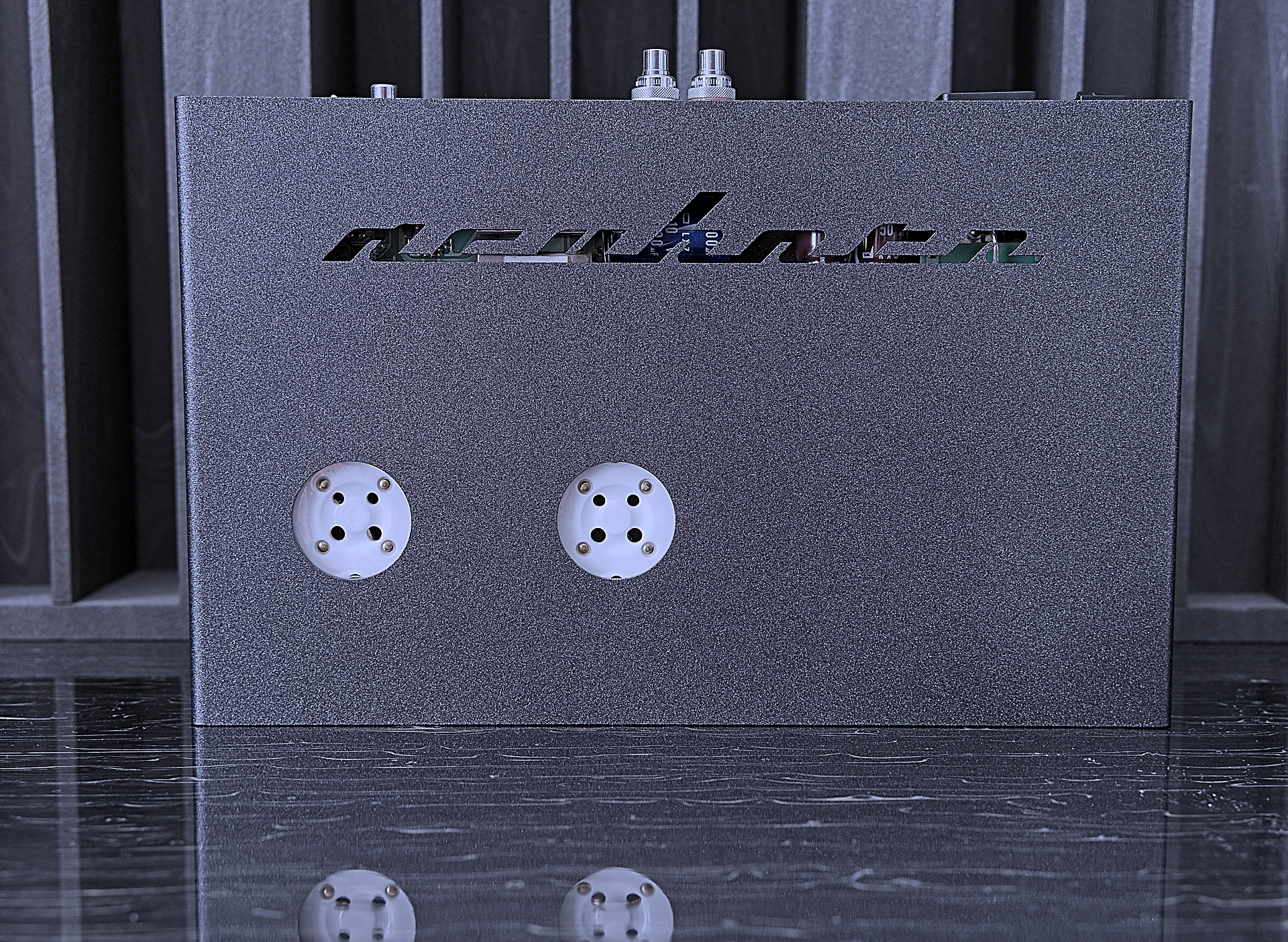
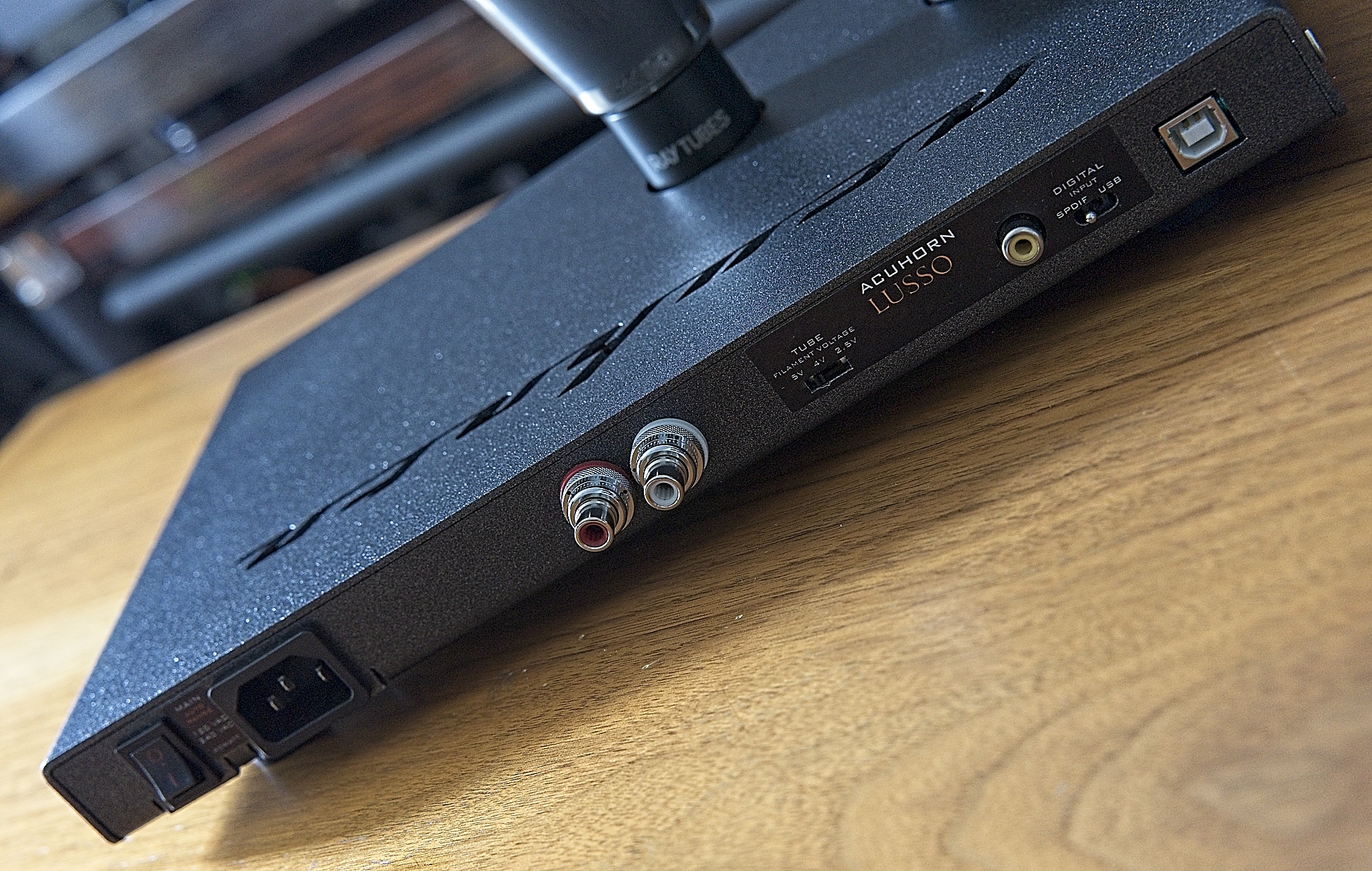
The simple, but nicely made and finished chassis features several cutouts for heat dissipation, including the one on the top of the device, which spells ACUHORN (the front is so tiny that it would be a problem to put a logo there, so the cutout is a clever solution). Interestingly, in this cutout, you will find the only indicators of DAC’s activity: LEDs in blue and orange colors will indicate DSD signal processing (blue), power on, and DAC on (both orange, respectively on the right or left side).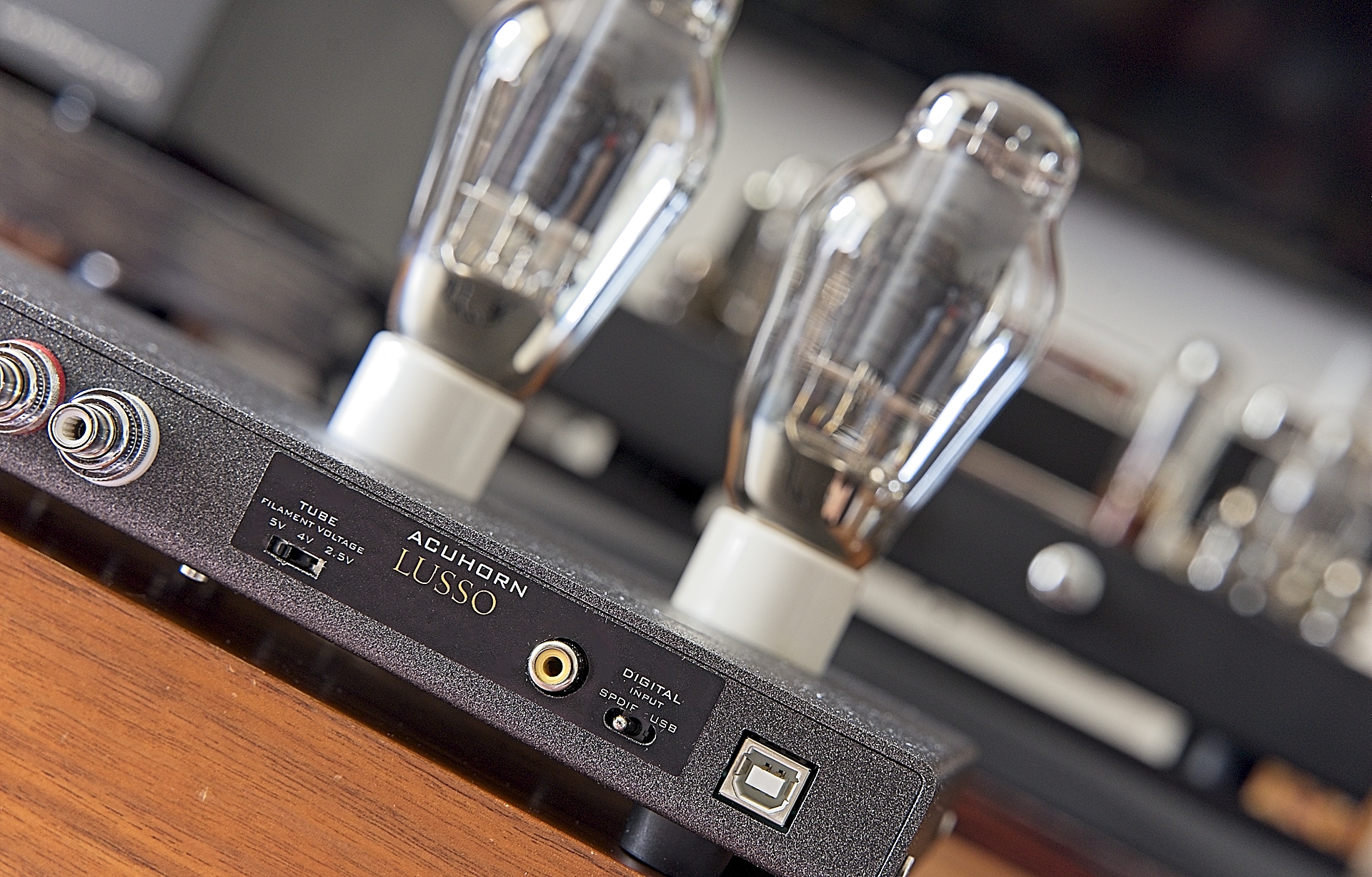 The shortest possible description of its features would go like this: it is a digital-to-analog converter offering two inputs, USB and coaxial, selectable using a simple rocker switch located on the rear panel, and a pair of high-quality single-ended (RCA) analog outputs. The more in-depth description explains that it is a 1-bit discrete DAC. 1-bit suggests that this is how the input signal is processed, which means that the device accepts and processes DSD format (up to DSD256) natively (via USB). When receiving a PCM signal, it first converts it to 1-bit DSD and then processes it. Every user can either trust their server/streamer/software to convert PCM to DSD and send the latter to the DAC, or allow Lusso to perform the PCM to DSD conversion.
As it reads in the manual, Lusso is a DSD differential discrete DAC featuring an analog filter utilizing high-quality (0.1% precision) thin film Nichrome resistors. Differential to single-ended signal conversion is performed using a Lundahl line input transformer, and the AK4137 Asahi Kasei works as a 32-bit digital sample rate converter SRC. USB Type-B input features an Amanero combo384 circuit, which is compatible with Android, macOS, Linux, and Windows (it requires a bespoke driver). The SPDIF coax input features the WM8804 receiver. Lusso supports 16/24/32-bit PCM files with resolutions up to 384KHz (via USB) and 192KHz (via SPDIF). As it has already been explained, when it comes to the DSD format (DSD64, DSD128, DSD256), the SRC is bypassed.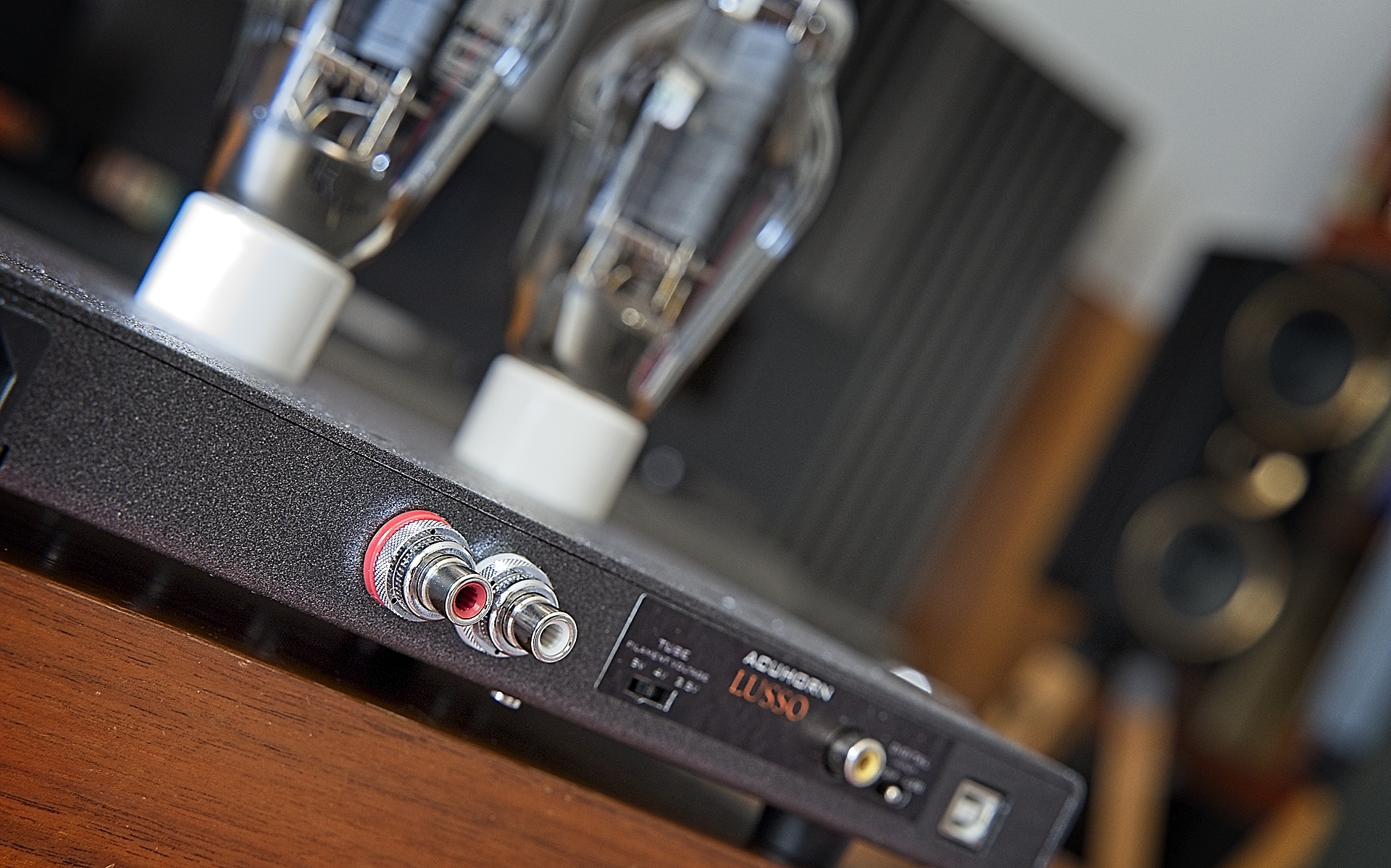 The next piece of crucial information is a feature that makes Acuhorn Lusso so special: it allows users to choose their preferred triodes for the output. Again, there is a switch on the rear panel that allows you to choose one of three voltage settings: 2,5, 4, or 5V. That means that whether you’re a 300B (5V), or 2A3, or 45 (both 2,5V), or PX5, or PX25 (both 4V) aficionado, as long as you choose the right filament voltage, you can use any of those triodes. With a proper adapter, one could use some other triodes as well, but even the „basic” selection will keep tube aficionados happy.
Sound Quality
As you already know, Acuhorn Lusso is sold without output tubes and a power cable, so you need to take care of those components yourselves. Why? The answer is easy. It is not very likely that this D/A converter will be purchased by a first-timer or by someone who has never owned and used a tube device before. Even if it happens, they will buy a pair of basic 300Bs or 2A3s and, only after an extended period of time and learning the sound of their new toy, they will go and look for other tubes.
As for the cable, very often even quite expensive audio components are sold with generic cords, and people just toss them into a drawer (building a collection – I know, I have one) even before the first listening session. You know as well as I do that every „self-respecting” audiophile prefers to use some audiophile model of their choice instead. So, the short answer to why no tubes and power cables are included in the set is: to save customers money and give them a chance to choose whatever they want to complement Lusso with. I think it is quite a reasonable approach.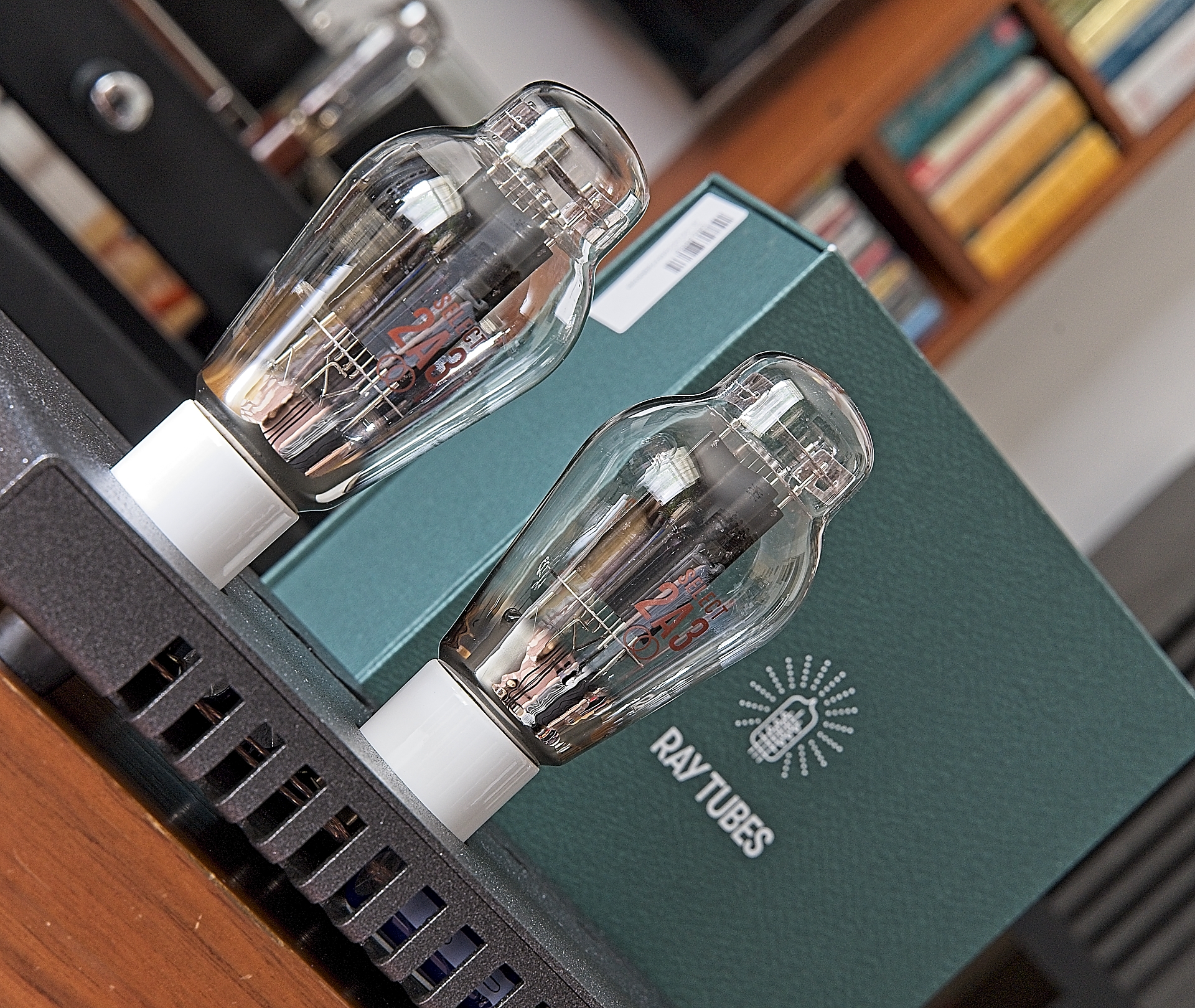 Most, if not all, Lusso buyers will surely be tube aficionados. Those (I should say: we) have their own preferences (triode types and brands) and love tube-rolling, so they would part with generic cable and some cheap tubes immediately anyway. Acuhorn allows them to do just that from the start. In my case, since Lusso, for the time of this test, replaced Poseidon, I used the very same cable to power it, namely DL Custom Audio 3DR-S-AC (you can check out the review HERE). As for the tubes, for starters, I chose a cheap but reliable pair of Electro-Harmonix 300Bs that had been sitting in their boxes for probably at least 10 years.
I fed the tested DAC with a signal from my passive Roon server via DL Custom Audio Akoya USB cable, but also, to my own surprise, from an old Modwright modified Oppo 83 SE used as a CD transport. The outputs of Lusso sent the signal via Soyaton Benchmark RCA analog interconnects to GrandiNote Shinai integrated amplifier, which drove MACH4 speakers via a pair of Benchmark 2 cables. Later, when I tried some tube rolling, I also paired Lusso with my modified Art Audio Symphony II 300B SET integrated amplifier.
Acuhorn Lusso with 300B (EH)/coax (CDs)
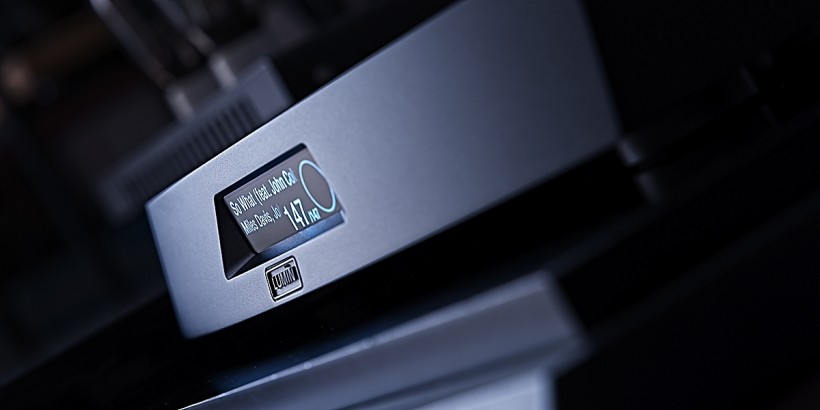
For the first three or four days, I used Lusso to play music, but only to accompany me in other activities. I wasn’t sure whether the device had been broken in or was brand new, so I gave it time to achieve optimal performance. I used Lumin U2X as a USB source, installed my old Electro-Harmonix 300Bs in Acuhorn’s sockets, prepared a nice playlist to set the trend, and then let Roon run its „radio”. The volume level was set quite low, and I didn’t really pay much attention to the sound. At this time, it did not bother me or disturb me, as some poorly sounding devices tend to.
On the second day of the warm-up/adjustment period, I did something I never really do anymore. I decided to switch to my Modwright-modified Oppo 83SE as a source to play some CDs through its coaxial output and feed the signal to Lusso’s respective input. Obviously, using the tested DAC this way required more attention from me, because I had to replace a disc every 40 minutes or so. Also, I pushed the volume up a little more than a day earlier to satisfy my curiosity about the CD sound that some still make so much fuss about.
To my surprise, all it took was one album for me to start paying attention to the music coming out of the speakers. After that, I prepared a whole stack of CDs that I hadn’t listened to for probably seven or eight years (at least) and kept paying attention to the sound, or rather, to the music played with the help of the Acuhorn D/A converter. There was something about this presentation I couldn’t quite pinpoint yet, but it was intriguing and engaging.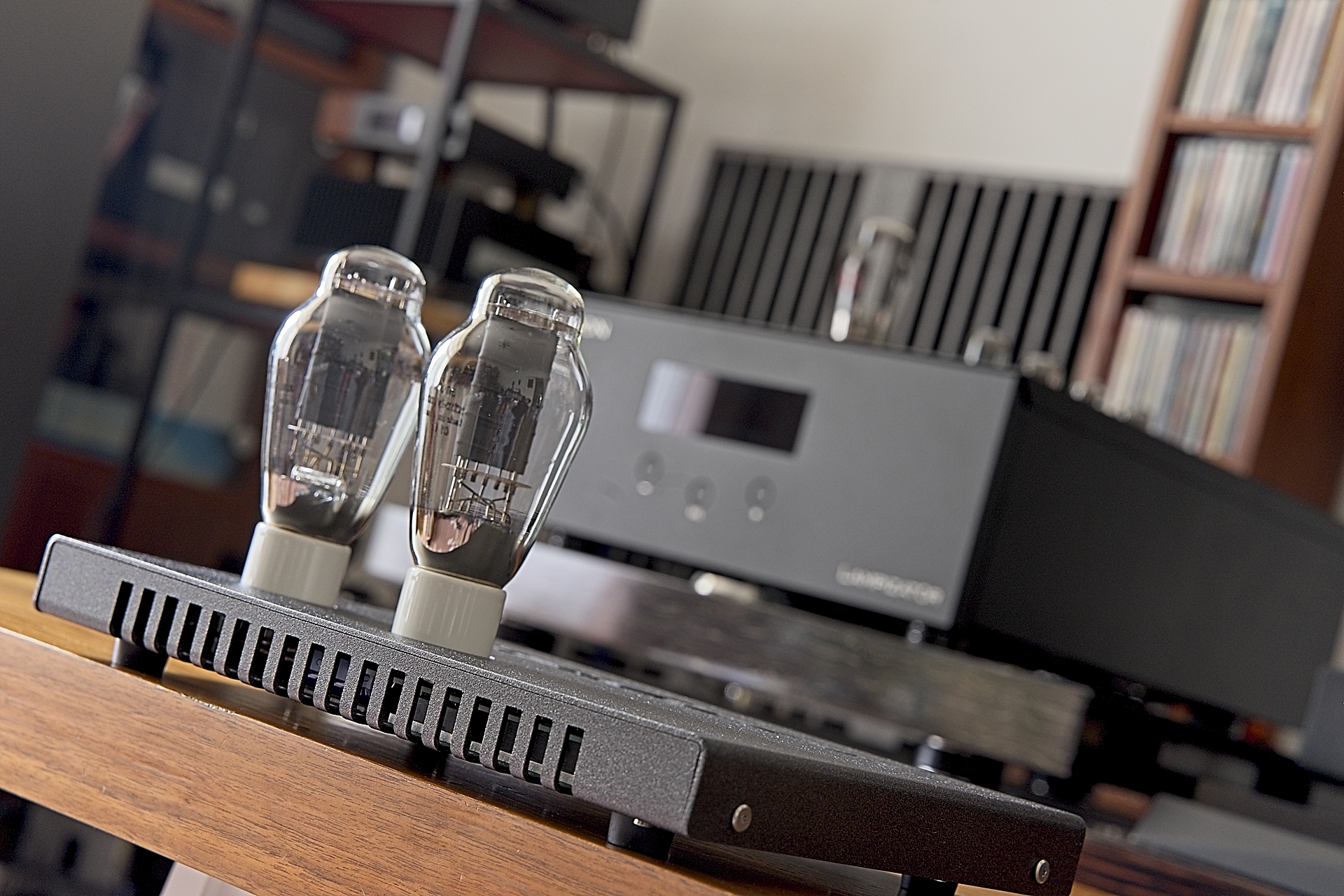 It didn’t scream for my attention; the presentation wasn’t flashy or showy. It was just… easy to follow, or, at some point, even dive in. It was very natural to my ear, and, as I’ve already said, involving, exactly the way I like it. Therefore, I couldn’t use it as a background for other activities anymore. I sat there in my chair and listened to David Grusin, Adam Czerwinski, Paco de Lucia, and so on, and regardless of genre, I was both engaged and relaxed at the same time. That’s what music, presented the right way, does for a man.
It was clear to the analytical part of my brain that the resolution wasn’t quite on a par with my Lampizator Poseidon, that the sound wasn’t quite as detailed, transparent, or as refined as with my reference DAC. I realized all of that, but… at that time, I didn’t care at all, because I enjoyed the music as well as the process of rediscovering my CD collection too much. I was impressed, as the Acuhorn Lusso is relatively inexpensive, at least compared with the counterparts I usually deal with. I didn’t even use my Western Electrics, but rather just Electro-Harmonix 300B tubes, surely not the most musical or refined ones. And yet, the magic of DHTs worked even when using CDs as a source of signal played through not-so-refined transport, a medium that I had given up years ago.
While the sound was particularly smooth and had great flow, when I played some rock albums by Pink Floyd or Aerosmith, it did them justice as well. The presentation was quite dynamic and energetic; the strong, rich-sounding electric guitars had a nice bite to them. The drums and bass perpetuated the pace and rhythm nicely, and the vocals, which were least surprising, considering 300Bs in the DAC’s output, sounded exceptionally well with their charisma and power, as well as an impressive scale (in both Gilmour’s and Tyler’s cases). While Lusso conveyed all the important components of rock music really well, it did not delve into the weaknesses of such non-audiophile recordings. And that was a good thing because it increased the fun of the experience and extended this part of the assessment way beyond my expectations!
Acuhorn Lusso with 300B (EH)/USB
While the adventure with my dusty CDs was interesting, for the main part of the test, I moved on to USB input fed initially from Lumin U2X, and later from my own custom server with my trusted David Laboga Custom Audio Akoya top USB cable (see the review HERE) as intermediary between either source and the reviewed DAC. The rest of the setup remained unchanged.
The first general impression was similar to that of CDs and the coaxial input. Lusso offered a somewhat warm, smooth, natural, relaxed sound. Relaxed did not mean boring, not at all! Comfortable is another description that comes to mind. I mean, nothing bothered or irritated me when listening to albums I knew almost by heart, even if their quality wasn’t the best. With a DAC eight or nine times less expensive than my reference, I usually hear something, at least initially, that bothers me and causes me to miss my Poseidon. Not this time, though. Again, it does not mean that it was a performance of the same level of refinement, but it was really good and friendly, for lack of a better word. Just as with CDs via coaxial input, I now enjoyed the files via USB.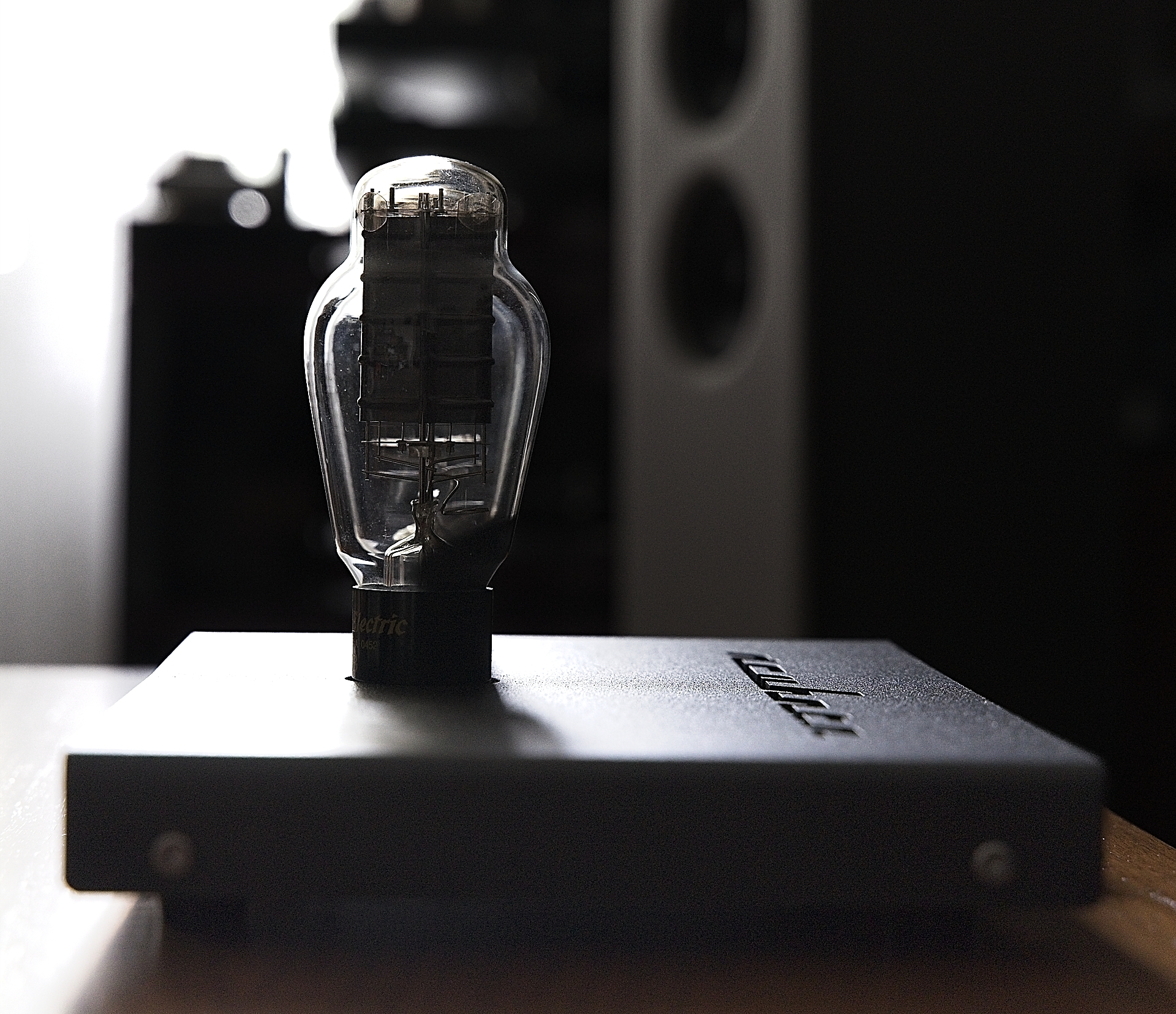 With time, I came to appreciate a good resolution of this presentation, resulting in a wealth of information, including many more than previously from my average CD transport, tiny details, and subtleties. While the general impression of quite smooth music delivery was still there, there was also plenty of small tonal and dynamic contrasts that, combined, wove a coherent, rich whole. Now, more than with CDs, I noticed both the range’s extremes or, rather, everything happening within them. The metal percussion instruments and cymbals were crisp, vibrant, and energetic, and even the very deep bass notes carried enough weight and power to convey the music more accurately and convincingly.
The lower end was slightly rounded, not as tight as I was used to, but the difference was almost negligible. The differentiation, though not only in the bass but throughout the whole range, was still very, very good, though not quite as good as with the LampizatOr. That allowed me to truly sink into the performances of Steve Gadd on the drums, or Ray Brown on the bass, admiring their skills and talents through tiny, characteristic details of their artistry. Crisp, shiny cymbals beautifully blended with the fast, tight, and springy drums, and the large wooden body of the bass gave power and depth to every pluck of a string. It was still the rich, full midrange at the center of every album I played, but not even once were either of the range extremes insufficient, if you know what I mean. It was a coherent, effortless, and complete performance, one that I, a huge fan of vinyl records, would boldly call analog.
Acuhorn Lusso with 2A3s (Ray Tubes Select)/USB
One of the great things about many LampizatOr D/A Converters and now also Acuhorn Lusso, is that they allow users not only to use various brands of one type of tubes but also to try out different „flavors”, in this case, various triodes. All you need to do is choose the proper voltage setting (using a small switch on the rear panel). There are three options: 5V, 4V, and 2,5V. 300Bs require 5V, PX4s and PX25s need 4V, and 2A3s and 45s demand 2,5V. Set the right voltage, place the selected tubes in the sockets, plug in the DAC, turn it on, and voila! You can play a different flavor of music. I call it flavor because various triodes won’t dramatically change the performance, but just as seasoning, they can make small adjustments to the outcome and make it even more „tasty” for you.
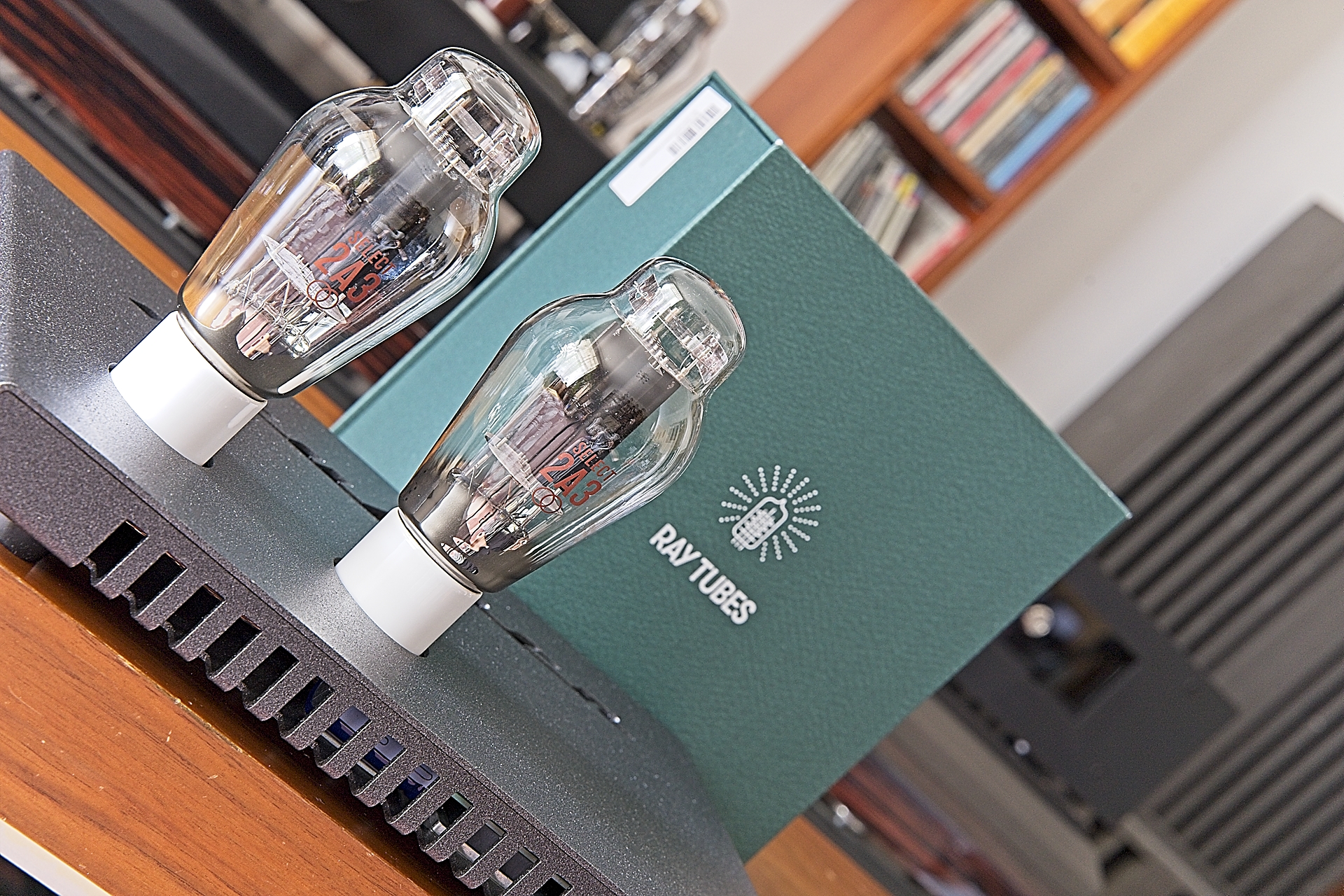
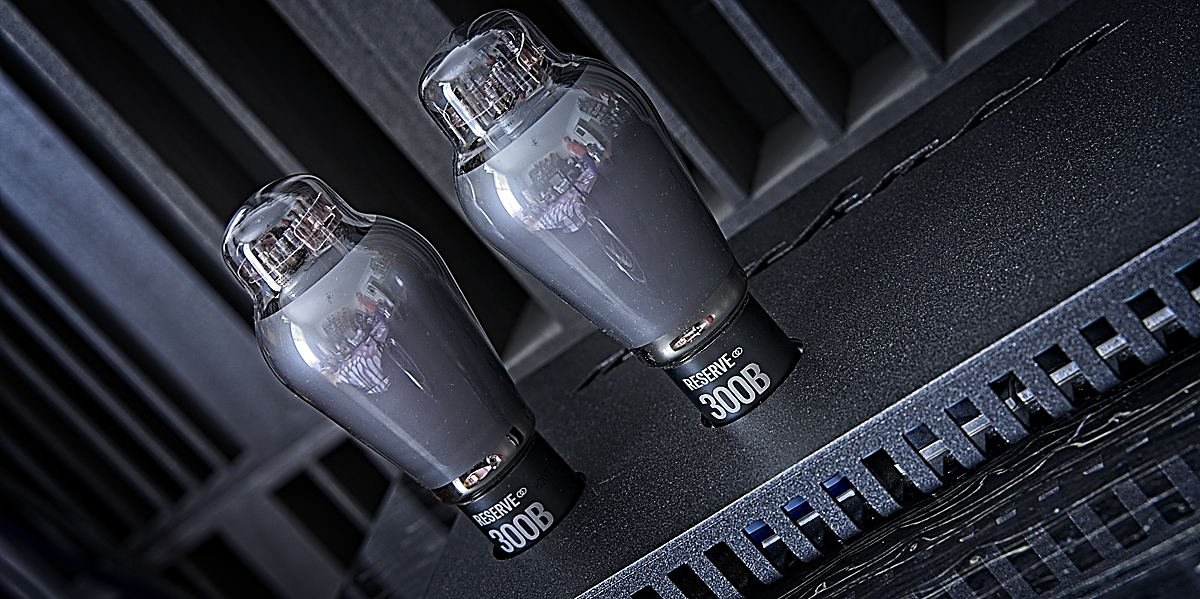
It so happened that I got some Ray Tubes at my disposal to find out what they are worth. From the start of this test, I waited to hear my Western Electric 300Bs and Lusso’s combined performance, and we’ll circle back to that, but there was also a pair of 2A3s from the Ray Tubes Select level (mid-level in a three-level lineup) waiting for me to discover its potential. I don’t own any 2A3s, so I could compare them only with 6A3s (not an equivalent, but close enough), but for those who don’t know, my absolute number one amplifier, the one I would be happy with for the rest of my life, is Kondo Souga featuring two 2A3s per channel.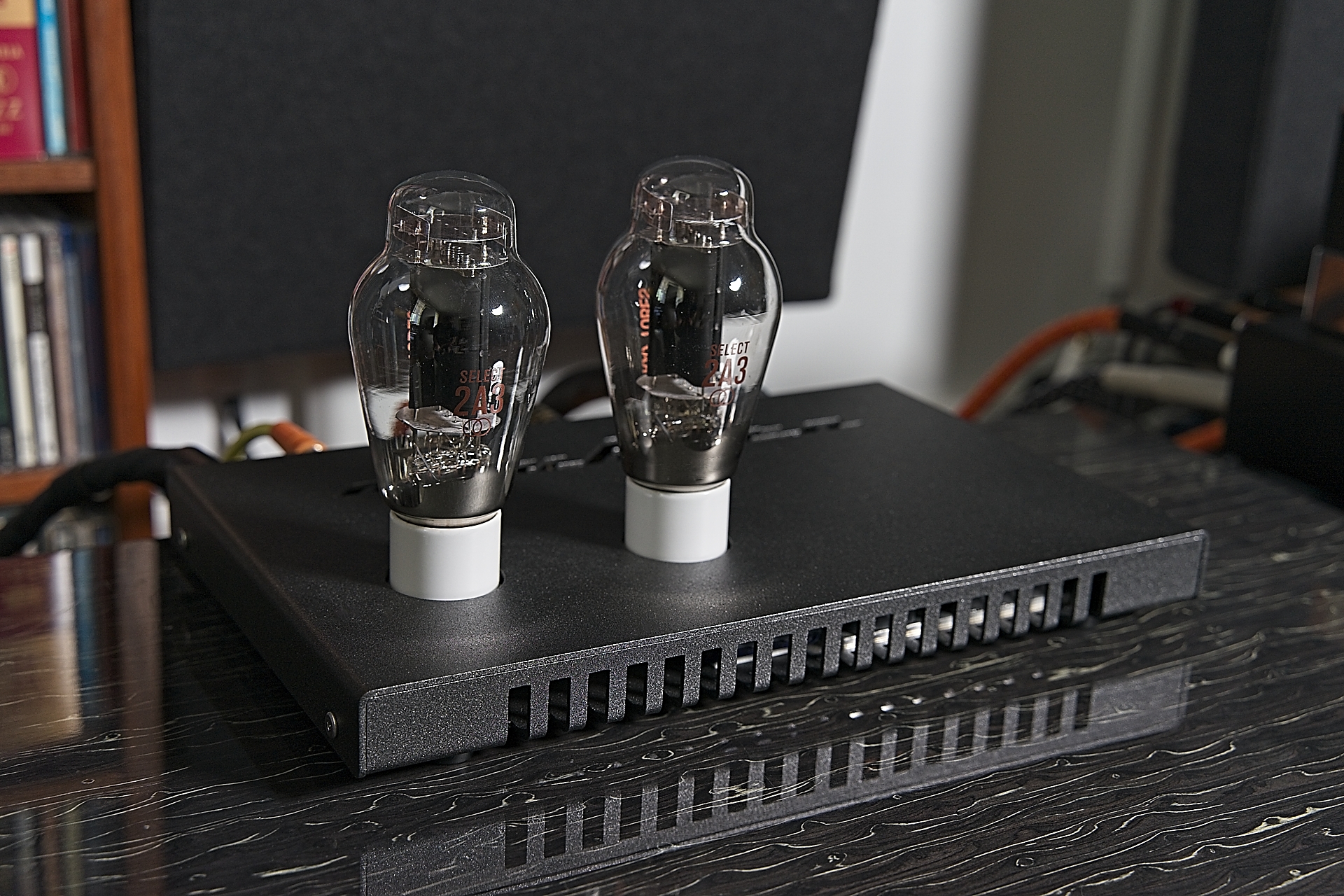 It offered the best sound I ever heard in my room, even with stock tubes, but when the distributor replaced those with his precious NOS valves, it got even better and left unforgettable impressions etched into my brain that haven’t been topped by any other amplifier since. In a perfect world, I would own Souga and use it to assess the RayTubes. In the real world, I used the tubes to assess Lusso. Long story short, I do have a soft spot for 2A3s, which is why they replaced the EH 300Bs first.
I started this part of the review trying to make clear that while EH300Bs are solid, reliable contenders, they do lack the refinement of higher quality tubes. Ray Tubes 2A3s made it quite clear right from the start. With them, things such as the texture and timbre of each instrument and voice (in any good-quality recording) came forward, if I may say so. The clarity and transparency of the presentation improved; yet at the same time, the sound became richer and more saturated as a direct result of enhanced resolution.
The sound seemed very smooth and had a great flow already with EH 300Bs, but with the 2A3s, Lusso’s performance became even more velvety. It seemed to me that the overall tonal balance shifted slightly downward, and while the lower end of the range gained in terms of authority, both the precision and the contour also clearly improved. As a result, the acoustic and electric bass, as well as the drums, sounded even tauter and more springy, but the slam was also more powerful.
With more support from the bass range, the midrange seemed richer and more colorful (don’t mistake this term for „coloured”!), and more palpable or present, if you will. Especially the latter feature(s) seemed a bit surprising, as in my experience, this is usually one of the advantages of 300Bs over 2A3s. It seemed that it could generally be attributed to the more advanced refinement offered by the Ray Tubes compared with the Electro-Harmonix rather than to the triode type. At this point, at the back of my mind, a question started popping up: what would happen if my favorite Western Electric 300B (not the current production, but from the first decade of the 21st century) replaced the 2A3s?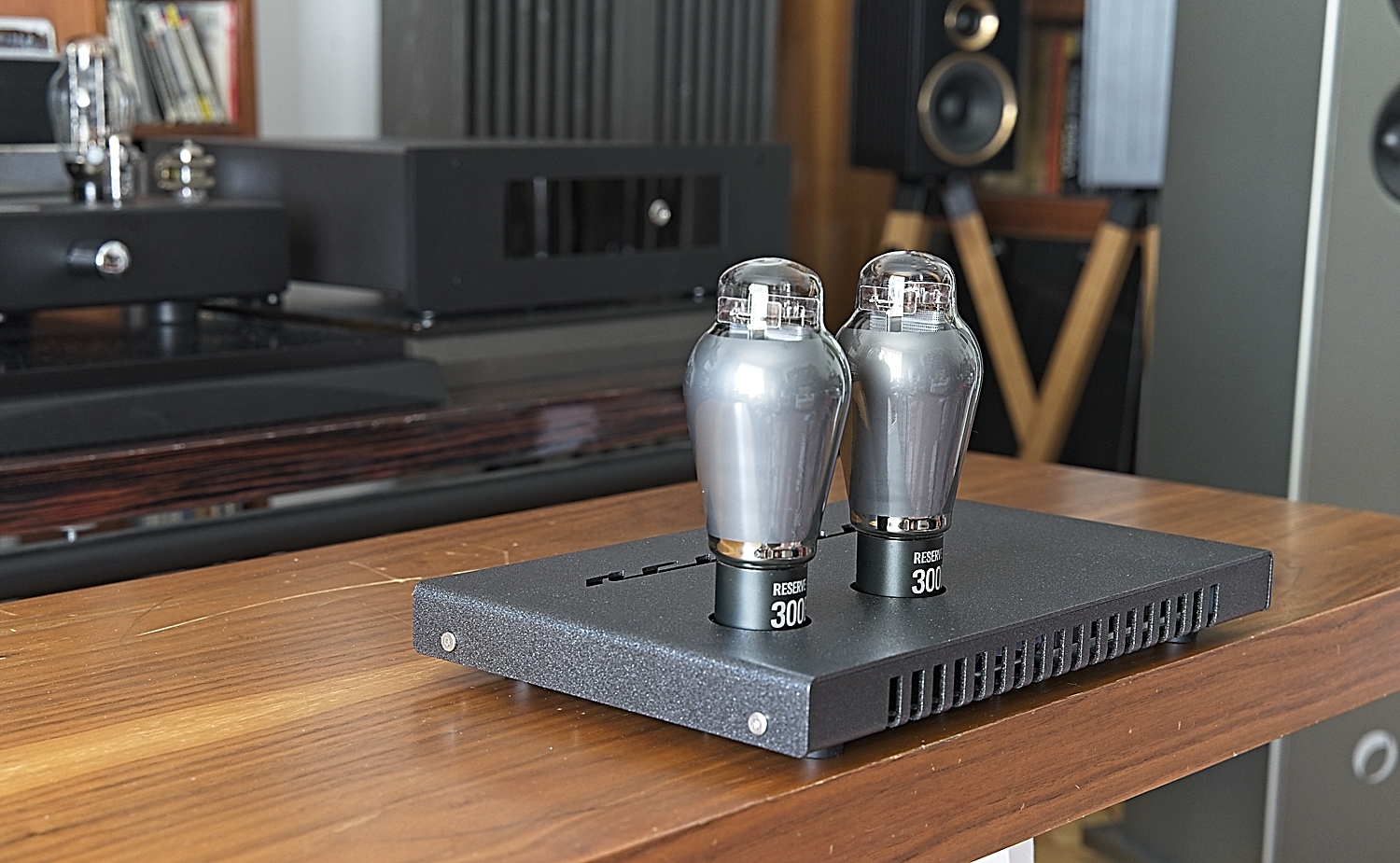 Answering that had to wait for now, though, as I didn’t plan to move on from 2A3s so quickly. I truly liked and highly appreciated how refined and powerful Lusso’s performance became with them. It was a clear step up from EH tubes. Another element of the sound that changed for the better with the 2A3s was also the treble. The upper part of the range seemed a little smoothed out, or less „edgy,” compared with the EH 300Bs. Yet, it was richer, more vibrant, crisper, and more open. It may seem contradictory – smoothed out versus more vibrant and more open, but that’s exactly how the music sounded after the tube replacement. Also, it felt as if way more air filled the whole soundstage, letting all the instruments breathe more freely.
Acuhorn Lusso with 300Bs (Western Electric&Ray Tubes)/USB
My Western Electric tubes have been with me for several years. The truth is that I don’t use them too often, as the 300B SET amplifier is not the best tool in the reviewer’s arsenal. They definitely have seen their better days, but in a DAC, they didn’t have to work too hard, so I gave them a try. They turned out to be a clear step up from EH tubes, particularly in terms of refinement and resolution, although they didn’t quite match the performance of the 2A3s in terms of energy level and dynamics.
What I got from Lusso with them was a beautifully smooth, rich, resolving, colorful, and refined sound. It was perfect for a relaxing evening with jazz, vocals, string quartets, and so on. I loved the 3D, palpable imaging; the particularly wide and deep soundstage; the excellent rendering of all the spatial aspects of the recordings, both live and studio ones; how open and airy the sound was; how sweet the treble was; and how saturated the midrange and bass were. The Acuhorn DAC with WE 300Bs presented the timbre of each acoustic instrument and voice in a particularly beautiful and convincing way. That encouraged me to spend a lot of time with certain music genres that sounded particularly well in this setup.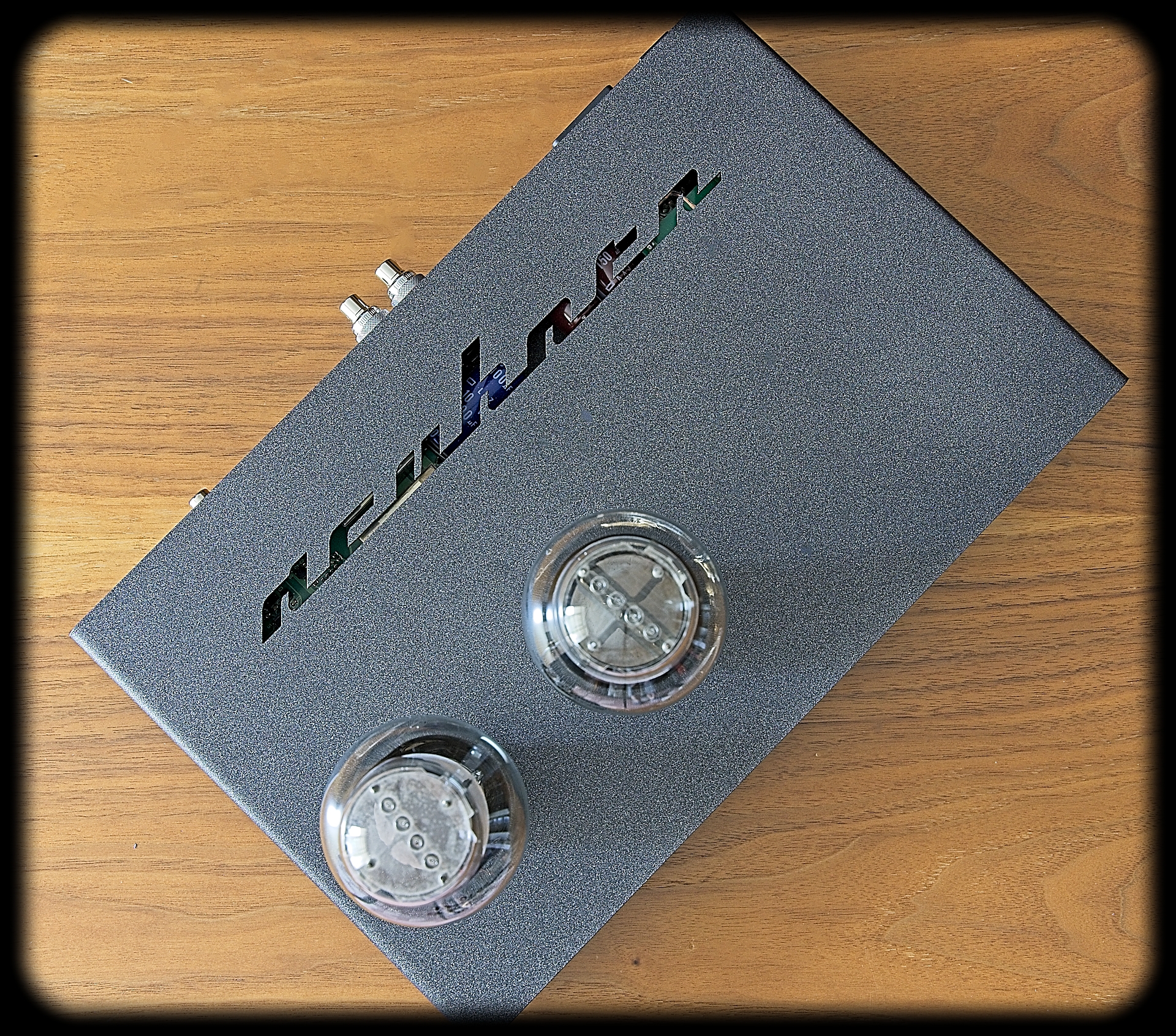 The setup wasn’t perfect, though, as I already suggested. First of all, the extension of both range extremes wasn’t as good as with 2A3s, and neither was the clarity and transparency of the presentation. It seemed that Lusso paired with (my pair!) Western Electric 300Bs could not produce sound carrying as much energy and as much power as with 2A3s. Which is why, when it came to rock, blues, or symphonic music, the presentation lacked a little bit of momentum, authority, and that pure, raw energy and power (in rock, I mean) I heard from this DAC before. The whole point is that once you have this DAC, you can alter the sound (to a point, obviously) just by switching tubes. There aren’t that many converters that allow you to do that, which is another huge advantage of the Acuhorn Lusso.
There is a whole review of Ray Tubes coming at HighFidelity magazine, and I got to use Acuhorn Lusso for it as well. You will find more on my impressions with both, Ray Tubes 2A3 Select and 300B Reserve, in it, but let me offer you a small spoiler here. My Western Electric 300Bs have been with me for years. They have not played that much, but when they did, it was in a SET amplifier, which means they worked harder than in a DAC. That in turn means that they are somewhat worn off. That is in part why, even in Lusso DAC, Ray Tube 300B offered an even better, more open, more dynamic, more detailed performance than with my tubes. They elevated its performance to an even higher lever comparable to that this Polish converter delivered with 2A3s. To be honest, I sort of envy those you will become Acuhorn Lusso owners and will get to learn how much fun tube rolling is, particularly in such an interesting device as the tested DAC.
Summary
We, reviewers, like to use the „a hidden treasure” term when we come across some particularly good, not very expensive components, usually made by some exotic brand. On the one hand, it does fit here, as Acuhorn Lusso’s price/performance ratio is, in my opinion, incredible, especially if we consider the fact that, on top of that, it will make tube rollers super happy. On the other hand, it is a recently released product, so calling it „hidden” doesn’t seem quite right; it just hasn’t had time to make the splash it deserves among fellow audiophiles. It does come from an exotic or boutique brand, though.
The DSD (or 1-bit) processing of the signal and the DHTs in the output are what make this DAC sound so special, so analog, and so beautifully musical. It is a really good performer, and its sound is warm, but not too warm; smooth, but not too smooth. It delivers a coherent, resolving, open performance, with particularly impressive, rich midrange, regardless of the output tubes. The range extremes, though, are more dependent on the tube choice. On top of that, choosing among several types of supported triodes offers something that regular solid-state D/A converters can’t give you – a chance to find your preferred „flavor” or to mix it up if you can afford more than one pair of tubes.
Based on the tubes I had at my disposal, I would say that the general super-musical, natural, smooth, slightly warm, but open and vibrant character of the DAC remains the same regardless of the user’s tube choice. With some types, though, in my case, these were Ray Tubes 2A3s, you’ll get a more lively, energetically charged, very dynamic, even snappy sound with great range extremes, while with others (300Bs), a more relaxed, laid-back version (still wonderful treble, and slightly less energetic, not so well-defined bass). I expect that 45s will give you the best possible vocals (that’s their specialty, in my experience), and triodes such as PX4 or PX25 will offer something between 2A3s and 300B.
The whole point of this DAC is that, no matter the tubes, since even the cheap Electro-Harmonix 300Bs did a really good job, Acuhorn Lusso will offer you a performance level superior to most 3-4-5 kEUR D/A Converters you can find on the market today. Even if you’re not one yet, after a while, you will most likely become a tube roller and benefit from the sound „seasoning” Lusso offers. Various tubes will allow you to match your taste, music genre, or even momentary cravings for a more energetic, more relaxing, or more spatial/palpable, richer, or more open, or whatever sound. I can all but guarantee that you will enjoy the sound coming from your speakers, even if it won’t be the very best you have ever heard. Go ahead, give it a try!
Price (when reviewed):
- ACUHORN LUSSO (no output tubes, no power cable): 3.300 EUR
Manufacturer: ACUHORN
Technical specifications (according to the manufacturer):
- Mains voltage: full range 120-240VAC
- Maximum power consumption: 40W
- DAC type: discrete 1-bit
- Tube sockets: 4-pin U4A
- Supported tubes: directly heated triode type 5 Volt, 4 Volt, or 2.5Volt
- Digital inputs: USB type B and S/PDIF coaxial
- Analog output: RCA
- Internal cabling: OCC copper
- Connectors: rhodium-plated
- Weight: 1,6kg
- Dimensions: W 320 x D 200 x H 28mm
Associated equipment:
- Digital source: a custom passive server with WIN10, Roon, Fidelizer Pro 7.10, JCAT NET XE, and JCAT USB XE cards with FERRUM HYPSOS Signature power supply, KECES P8 (mono) linear power supply for the server, JCAT USB Isolator
- D/A Converter: LampizatOr Poseidon + Ideon Audio 3R Master Time (USB signal regenerator)
- Analog front end: J.Sikora Standard MAX turntable, J.Sikora KV12 & J.Sikora KV12 MAX tonearms, AirTight PC-3, Audio Technica PTG33 Prestige & LE SON LS10 MKII cartridges, Grandinote Celio MK IV & ESE Lab Nibiru V 5 phono stages.
- Power amplifiers: GrandiNote Shinai, Circle Labs M200, Art Audio Symphony II (modified)
- Preamplifier: Circle Labs P300
- Loudspeakers: GrandiNote MACH4, Ubiq Audio Model ONE Duelund Edition.
- Interconnects: Bastanis Imperial RCA x2, Soyaton Benchmark RCA, Hijiri Million Kiwami RCA, Hijiri HCI-20 RCA, TelluriumQ Ultra Black RCA, KBL Sound Himalaya 2 XLR, NxLT Ether XLR, David Laboga Custom Audio AKOYA USB, David Laboga Custom Audio Digital Sound Wave Sapphire Ethernet
- Speaker cables: Soyaton Benchmark Mk2, WK Audio TheRAY Exclusive
- Power cables: DL Custom Audio 3D-S-AC Connect, LessLoss DFPC Signature, Gigawatt LC-3
- Power: Gigawatt PF-2 MK2 and Gigawatt PC-3 SE Evo+; a custom power line with Gigawatt LC-Y in-wall cable; Gigawatt G-044 Schuko and Furutech FT-SWS-D (R)
- Network: Silent Angel Bonn N8 + Silent Angel Forester F1 + optical LAN isolator
- Racks: Base VI, Rogoz Audio 3RP3/BBS
- Anti-vibration accessories: ROGOZ-AUDIO SMO40 and CPPB16 platforms and ROGOZ AUDIO BW40MKII feet, OMEX Symphony 3S, Franc Accessories Ceramic Disc Slim Feet and Wood Block Platform