


LessLoss Firewall 640x Stellar is the Lithuanian company’s most refined take yet on passive power conditioning, distilling years of noise-rejection development into a compact, inline form—and our subject this time around. Enjoy!
The Strong, Silent Type
LessLoss have long approached audio design through the broader problem of noise. Rather than treating this as an unavoidable consequence of modern systems, the company has consistently framed it as a variable that can be addressed deliberately. This position is clearly communicated by the current LessLoss roster, where solutions aimed at reducing excess noise span multiple domains and applications. Power delivery is one of these areas, but it exists alongside signal-related designs as part of a wider, system-level perspective. The Firewall line emerged directly from this way of thinking. Conceived as a passive, inline module, it is intended to remove excess noise at points in the system where current flows. Over time, the Firewall range expanded in scope while adhering to the same underlying framework, evolving into a broad family of accessories applied across different system contexts. Its presence today in the form of products meant for internal and external use reflects LessLoss’s view of noise as a pervasive and cumulative problem rather than something confined to a single use case. That LessLoss approach noise through a single, highly universal component is a conclusion reinforced by my repeated, hands-on exposure to the Firewall range.
My own point of reference with LessLoss’s Firewall approach goes back six years, to a review of the Firewall 64x, a product that has since been long discontinued. That earlier encounter established familiarity with the underlying idea as a whole rather than with a single application of it. Six years, however, is a long time in audio terms, during which systems, environments, expectations, and reviewer perspective inevitably shift. Approaching the Firewall 640x Stellar now is therefore less about revisiting a specific device and more about returning to an approach to noise rejection that has continued to evolve alongside contemporary audio systems. LessLoss Firewall 640x Stellar sits prominently within the catalog as the most advanced expression of the company’s long-running Firewall initiative. Filed under power conditioners, it follows a naming convention that is by now well entrenched in the industry and anything but cryptic. While the broader market tends to associate power conditioning with sizeable, multi-outlet enclosures, the Firewall 640x Stellar once again pursues the same core objective through far more compact means: reducing unwanted electrical contamination before it has a chance to propagate across connected audio hardware. The goal itself is hardly controversial; the manner in which LessLoss choose to pursue it very much is.
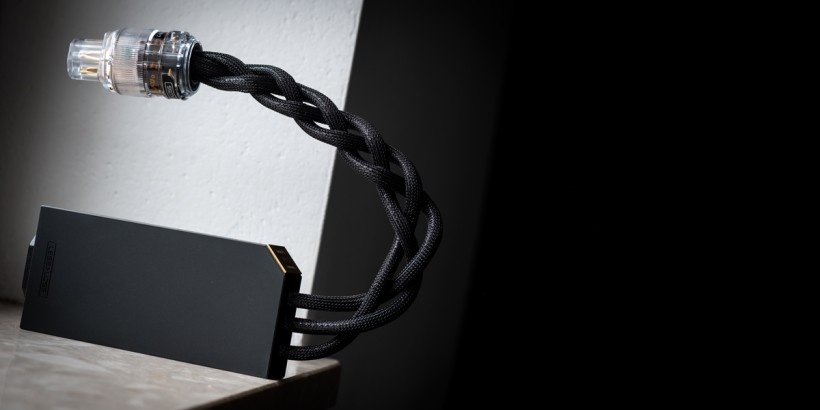
Despite its elevated position in the lineup, the Firewall 640x Stellar remains visually understated and functionally direct. It arrives as a compact yet highly specialised, plug-and-play inline cleanser that simply wants the power plug inserted into its IEC inlet, its umbilical cord connected to a component of choice, and nothing more. This straightforward use protocol leaves little room for interpretation, reinforcing the impression of a purpose-built tool rather than an accessory designed to impress by appearance alone. The emphasis here is clearly on internal execution and correct placement within the system, not on ornamental excess. Previous Firewall 64x and 640x models employed solid oaken housings, but today’s subject does not. LessLoss have long advocated Panzerholz for its excellent self-damping properties; the Firewall 640x Stellar, however, is built from multiple extremely hard and dense layers of resin-infused Kraft paper, which I am told surpass Panzerholz in mechanical noise suppression. In hand, the device—finished in a satin sheen—unmistakably feels like a costly, premium object. In practice, it remains reasonably lightweight and poses no risk to a component’s IEC inlet. As with earlier Firewall products, the 640x Stellar was designed to operate quietly and out of sight, most likely behind a rack or near the point of power entry to a given component. LessLoss continue to advocate a distributed approach to noise management, one where multiple conditioning points are employed instead of relying on a single, centralized device. In this sense, the 640x Stellar is less an isolated product than part of a broader strategy, allowing users to scale their noise-reduction efforts in line with system complexity and ambition. If the financial aspect is not a limiting factor, numerous Firewalls can be used—not only placed in front of every powered component in a system, but also connected one into another, effectively without limit.
The Firewall technology itself has been under continuous development for years, and the 640x Stellar represents its most mature and elaborate incarnation to date. At the heart of this approach remains the company’s proprietary skin-filtering concept, devised to address high-frequency noise travelling along conductors rather than through conventional reactive elements. True to form, the Stellar operates passively, with no active circuitry involved, and adheres to the long-standing “no coils, no capacitors” philosophy that has become something of a company hallmark. While the underlying idea can be traced back to earlier products such as the DFPC power cables and first-generation Firewall implementations, the execution found here reflects a substantially revised technological base. In the 640x Stellar, this takes the form of a compact module built around precisely arranged conductive structures embedded within a stable carrier which—according to the manufacturer—allow for significantly improved noise control compared to earlier approaches, including ferrite-based solutions, while ensuring that live, neutral, and ground conductors are all conditioned alike. While we don’t know how many Firewall units hide inside today’s satin enclosure, it is nevertheless fascinating to examine how they work and why. Copper rods housed within their translucent resin structures undergo LessLoss’s in-house Entropic processing. This treatment drastically accelerates the ageing of these parts and results in their distinctive matte appearance. More importantly, it alters the conductor’s internal structure, rendering it directional and far less susceptible to micro-vibrations, hence quieter. That, however, is not the whole story. Entropy, by definition, describes gradual decline into unavoidable decay, and this copper is pushed so far along that path that it becomes extremely pliable. Think far beyond a human lifetime of constant use, condensed into a matter of days through intensive processing. Left unsupported, these conductors would deform with ease. The surrounding crystalline resin elements therefore serve a crucial role by locking the copper firmly in place, preserving its integrity and lending the entire assembly mechanical stability.
Each copper rod pair is additionally surrounded by finned elements used in LessLoss’s current Firewall technology that incorporates DMLS (Direct Metal Laser Sintering) processing alongside high-powered ytterbium fiber lasers. These allow alloy powders to be welded into complex three-dimensional forms from particles as small as ten nanometers. The finned cylinders are not physically connected to the copper conductors they surround; their interaction instead relies on magnetic fields, and beyond that, details remain proprietary. What is clear is that all these elements must align with great precision to maximize the intended noise-reduction effect—miss that mark, and the entire premise falls apart. While the internals and enclosure of the Firewall 640x Stellar form its core ingredients, the attached, flexible 20 cm pigtail built around the company’s own C-MARC wiring in its Stellar version is no less important. It employs a distinctive geometry based on two counter-polarised coils of identical diameter and pitch, later fractally replicated—one wound clockwise, the other twisted in the opposite direction. Superimposed, they form a bucking-coil connection originally developed in the 1930s. Noise induced across hundreds of these balanced strands is electrically cancelled due to their opposing polarity and geometry, resulting in a high signal-to-noise ratio. I have found C-MARC conductors to be exceptionally effective for their asking price, which is why all RCA, XLR, power, and speaker cables in my own system are built around them. Since its debut in 2017, the C-MARC concept has progressed noticeably. Around five years ago, its designers found a way to apply their Entropic ageing process—used alongside cryogenic treatment—to this wiring.
Most recently, the Stellar version appeared last year, featuring twice the Entropic processing time and an increased number of conductive Litz wires within the C-MARC configuration, securing higher noise suppression. The resulting hike in conductive area also lowers impedance, reducing resistance to signal flow. In that sense, the Firewall 640x Stellar’s name already reveals exactly what kind of pigtail it carries. It is also worth noting that LessLoss have long been particular about mechanical connections. Their IeGO IEC plugs use 24-karat gold-plated, hand-polished copper contacts that clamp firmly to reduce contact resistance and prevent micro-arcing. The translucent plug enclosures are intentional, as the manufacturer maintains that colouring agents or solidifying additives such as glass-fibre fillers negatively affect performance. The IEC plug also incorporates a large, internal anti-vibration ring based on laser-cut fins. Taken together, the Firewall 640x Stellar reflects the most advanced execution LessLoss currently offer in this category. Priced at $1’972, it stands as the company’s power-conditioning flagship. Now let’s find out how it fares where it matters. The plan for reviewing the two LessLoss Firewall 640x Stellar units was set long before they arrived. As usual, storage and transport duties were handled by the Innuos Statement Next-Gen, feeding the LampizatOr Horizon360 DAC, then on to the Trilogy 915R preamplifier and 995R monoblocks driving sound|kaos Vox 3afw monitors. It’s worth noting that my entire system is already heavily infused with LessLoss technology: the speakers employ both internal and external Firewall modules, all signal cabling is based on LessLoss skin-filtering C-MARC wiring, and power delivery is handled by the LessLoss Power Distributor loaded with multiple Firewall modules, connecting into the Boenicke Audio Power Gate built around the same internal components and fitted with captive M2 power cords using custom C-MARC wiring. The remaining power cables are a mix of LessLoss C-MARC Classics and their higher-tier Stellar counterparts. As configured, the power feed is very much dialed in—and it makes me very happy.
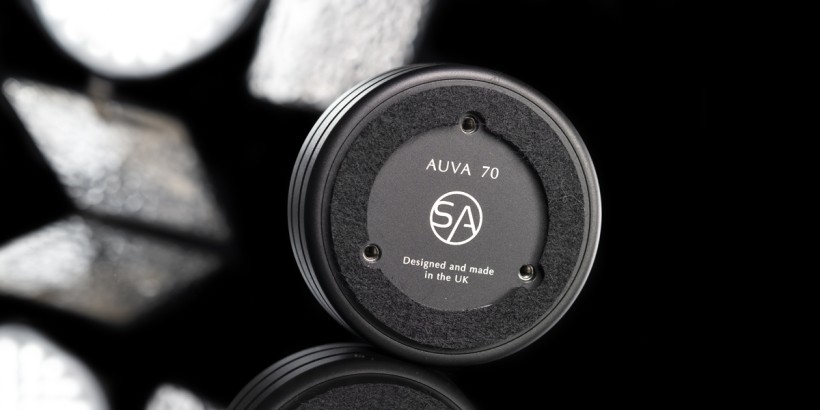
At first glance, it might have seemed that the power front of my system required nothing beyond what was already in place—but the two latest Firewall 640x units were about to prove otherwise. Their ideal placement was fairly self-explanatory. I began by inserting a single unit just before the DAC, the part of my system most susceptible to noise-rejecting tweaks. The second Firewall was then added right between the wall outlet and the first distributor, allowing its effect to influence all the setup’s downstream components. After that, the first Firewall was moved between the preamplifier, server/streamer, and monoblocks to explore how its placement affected the performance of each individual element. More on the results of these triangulations shortly.  In my recently published Auva 70 review, I explained how a potent decoupling device can influence speaker performance: “Early on, its presence often manifests as a subtle drop in apparent volume, almost as if the system had taken a small step back. Then more tangible changes appear: bass extends deeper, gains speed, substance, and authority, becoming more anchored, defined, composed, powerful, elastic, and dynamically eager. Any residual hollowness or boominess that reinforces room chatter is noticeably reduced. Vocals shed excess edginess and grain, gaining color, density, smoothness, and articulation, with outlines rendered more precisely. The backdrop grows darker, cleaner, more engaging, and richer in nuanced detail that becomes easier to follow. The soundstage expands, develops additional layers, and increases in complexity, while all images remain in focus, expressive, and contrasting. Many anti-vibration devices I’ve sampled deliver these foundational improvements without major compromises, but they don’t sound the same; the crucial difference lies in their efficacy. The higher it is, the easier it becomes for our ears to register and appreciate the listed changes.”
While using the paragraph above may initially seem counterintuitive for today’s story, bear with me—it is highly relevant. Noise rejection is the primary function of anti-vibration accessories, just as it is for network switches, digital sorters, and power designs such as the Firewall 640x Stellar. This foundational action is their common “love language”, just expressed at different points throughout our systems. These products do not compete; rather, they support one another and compound their efficacy. Simply put, the description above ideally applies to the Firewall 640x Stellar. Even without prior exposure to it, its intended behavior is clear to me. There are, however, two unknowns that make listening to such designs mandatory, and every now and then also saucy. One is the sheer magnitude of the changes they produce in practice; the other is any special traits that go beyond the foundational noise-trimming function. This is where accessories diverge. Some deliver touchups that never rise above subtle reworks, while others introduce sonic transformations that trained ears recognize as no less than significant. Some emphasize speed and articulation over color and body, while others follow a reversed protocol. Against this backdrop, it’s fair to ask how impactful the Firewall 640x Stellar proved in my system—and whether it had any aces up its sleeve. Ach—well, that’s the fun part. In my reviews of accessories, I often note that they present demonstrable changes after just one or two back-and-forth rotations, so very little time is needed to assess them. The more effective these products are, the quicker I’m able to grasp what they actually do. With today’s product, familiarity with the brand’s house sound further helps—being well accustomed to it, I simply knew what to expect. Considering all this, the Firewall 640x struck me as yet another noise remover that didn’t beat around the bush about what it did exactly. Long story short, “profoundly effective” fits best to describe the impact a single unit had in my already highly resolving system. To be more specific, the difference in sound with and without the Lithuanian design was hardly subtle. With it on the job, some aspects I’m about to explain were very well pronounced. Without it, they were either greatly reduced or missing, so the entire musical intake felt different—far less engaging and pleasing to me. The Firewall 640x Stellar introduced this very notion without miss. While very costly for its non-mandatory status, it made a demonstrable difference without any second thoughts, thereby securing its first win. Now, let’s break its MO into more specific bits.
My recent musical discovery—Jon Lord’s “Miles Away”—once again proved invaluable. I focused on the track’s opening passage, where cello, expansive ambience, drums, piano, and a host of delicate background cues intertwine. With the Firewall 640x Stellar engaged, each image gained additional heft, moisture, and smoothness. The overall presentation shifted away from surgical precision and hard-edged specificity toward sweetness, calm, and a distinctly romantic hue, yet every instrument—and even the finest dust particles suspended in space—felt more sensual, organic, and alive. While the track accrued atmosphere, anchoring, substance, and fleshiness, it paradoxically became more intelligible, thanks to key instruments assuming finer outlines and projecting greater in-room presence. In effect, the Firewall 640x Stellar infused each note with deliberation and substance without sacrificing clarity, a balance I found deeply compelling. As I was soon to discover, this elegance born of noise reduction was merely one facet of a far broader design philosophy. The track “Doktor Civanım” by Dutch-Turkish psychedelic rock outfit Altın Gün was my next guilty pleasure. Driven by pulsing Anatolian folk grooves, sinuous bağlama lines, and a warmly saturated haze that fuses ritualistic repetition with dance-floor propulsion, it’s my go-to playlist choice whenever I crave funk as much as rhythm and snap. If “Miles Away” introduced the Firewall primarily as a masterful injector of color, density, and spatial vividness, this cut revealed just how accomplished it is in the realms of dynamic span, authority, elasticity, and sheer rhythmic flow. With the LessLoss engaged, the presentation grew larger, quicker, more punctual, immediate, immersive—and ruthlessly precise in landing each bass jab without a trace of fuzz or bloat. Remove it, and the same track turned lighter, more mechanical, tonally flatter, anemic, and markedly less elastic, as though its funkiest instincts had been quietly siphoned off. Was it still listenable? Absolutely. Would I willingly hear it without the latest Firewall in place? Ach—that’s the real question. Without exposure to a product this potent, we simply don’t know what we’re missing. And once we do—through subtraction—it becomes a negotiation with the wallet. Not knowing, in that sense, truly is bliss. As a reviewer, however… I’m not afforded that luxury. Ouch.
Acid’s “Creeper” was the next stop that allowed me to tap even deeper into the dynamic reserves the LessLoss had in store. I almost wish I hadn’t. Now I can’t unhear how my system performed with—and without—the Lithuanian device on this track, where its impact proved the most pronounced by far. The list of improvements was extensive: deeper low-bass reach with markedly superior control, impact, focus, and articulation; more precisely defined images surrounded by more tangible breathing space; higher contrast and an increased sense of effortlessness; and a vocal presentation that was not only clearer and more textured, but also blessedly free of the nasal, prickly edge it can otherwise exhibit. Despite the added gravitas—meat on the bones, if you will—and a more atmospheric, earthy tonal balance, the result remained highly resolving. In that moment, with that particular piece of music, I couldn’t have been happier. To verify all these observations—and possibly uncover something new along the way—I cued up “Isa” from Wardruna’s Runaljod – Ragnarok album. This is an absolute monster of a track, one I prefer to experience alone, lights off. Vast in scale, deeply atmospheric, and unrelenting in its intensity, it unfolds across an enormous canvas, gradually tightening its grip and drawing the listener ever deeper inside. With the LessLoss positioned ahead of my DAC, the entire soundscape seemed to pull me inward, enveloping me in its encompassing majesty, eerie allure, and elegiac sadness—meditative, almost spiritual in nature. The moment the filter was disengaged, that deeply personal connection vanished. The track remained exceptional, but by comparison it now felt ordinary. Its sadness persisted, yet in a generalized, abstract form; the subtle dynamic inflections, layered vocal strata, and atmospheric micro-textures that give the piece its haunting, overflowing presence were largely diminished. What I’m ultimately trying to convey is something rather unusual by my own standards: this device elicited an emotional response that felt both genuine and profound, elevating the experience to an entirely different plane. The Firewall didn’t alter the song’s core emotion—it unlocked it, allowing me to inhabit the sadness rather than merely observe it. If this reads as lofty or overly colored, so be it. I report what I hear and feel, and in this case, the result struck me as deeply telling.
Just so we’re clear, one LessLoss unit fully sufficed to get there. Truth be told, anything beyond that is pure luxury—and costly business. As with all other LessLoss designs, however, this one compounds efficacy by a margin you can actually hear. Two Firewall 640x Stellars did more of the same wicked work than one—just not twice as much. Diminishing returns applied. If I now had the coin to finance two of these black beauties, one would front my DAC, while the other would go right between the wall outlet and first power distributor, simply because there it clearly did more for my system than it did just before my preamp or streamer. That’s all she wrote on the matter. Let’s wrap.


Products like today’s Firewall are, in the strictest sense, entirely unnecessary. Your system will produce sound without one. If that were the only benchmark, a generic power strip, standard cables, basic spikes under the speakers, and off-the-shelf footers beneath the components would suffice. And they do—just nowhere near the level a listener even contemplating the LessLoss Firewall 640x Stellar would accept.
Yes, it can appear to be a frivolous indulgence. And yes, the price tag has a way of making wallets flinch. But chances are it will outlast most DACs, amplifiers, and even loudspeakers, because it is fundamentally indifferent to its surroundings. In that sense, it becomes a one-time investment willing to serve faithfully for years to come. Of course, it still has to work decisively enough to make its asking price feel… fair.
On that front, the Firewall 640x doesn’t merely shine—it radiates. I found it remarkably potent, and frankly amused by how much it managed to extract from a system whose power delivery already felt dialed in to a degree most listeners would never pursue. That, ultimately, is its true appeal. If you’re running a fully sorted, high-end platform yet remain open to radical measures to push it further, the LessLoss Firewall 640x Stellar may be precisely the reminder—delivered in no uncertain terms—of just how much more your system can still give, even when you believed you had reached the limit.
Associated Equipment:
- Amplifier: Trilogy 995R, FirstWatt F7, Enleum AMP-23R
- DAC: LampizatOr Horizon360 (Stradi 5U4G + Psvane Summit 4x KT88 / 2x 6SN7)
- Speakers: Boenicke Audio W11 SE+, sound|kaos Vox 3afw
- Transport: Innuos Statement, fidata HFAS1-S10U
- Preamplifier: Trilogy 915R, Thöress DFP
- Speaker cables: Boenicke Audio S3, LessLoss C-MARC
- Headphones: HifiMan Susvara Unveiled, Campfire Audio Cascade, Vision Ears VE5
- Speaker signal conditioning: LessLoss Firewall for Loudspeakers, Boenicke ComDev
- Anti-vibration conditioning: 6x Carbide Base Diamond (under streamer), 6x Carbide Base Micro Diamond with TwinDamp inserts and spikes (under DAC and pre), Vibra 68 (under speakers), 12x LessLoss Giant Steps (under streamer, DAC and pre)
- Interconnects: LessLoss Entropic Process C-MARC, Boenicke Audio IC3 CG
- Power components: Gigawatt PC-3 SE EVO+/LC-3 EVO, LessLoss C-MARC, LessLoss Entropic C-MARC, LessLoss Stellar C-MARC, LessLoss Power Distributor into Boenicke Audio Power Gate, ISOL-8 Prometheus
- USB components: AudioPhonique Desire USB
- Rack: Franc Audio Accesories Wood Block Rack 1+3
- Network: Fidelizer EtherStream, Linksys WRT160N
- Music: NativeDSD
Retail prices of reviewed components in EU (incl. VAT):
- LessLoss Firewall 640x Stellar: $1’972/ea.
Manufacturer: LessLoss